Circularity.fm
Circularity.fm is a podcast focused on understanding, building, and managing circular business models. Most episodes showcase a specific organization operating in the circular economy, whether a startup, established SME, or corporate business unit. The interviews cover both founding and funding circular ventures as well as transforming linear businesses into circular ones across the globe. It highlights real-world experiences from Europe, North America, South America, Asia, Africa, and Australia.
Folgen
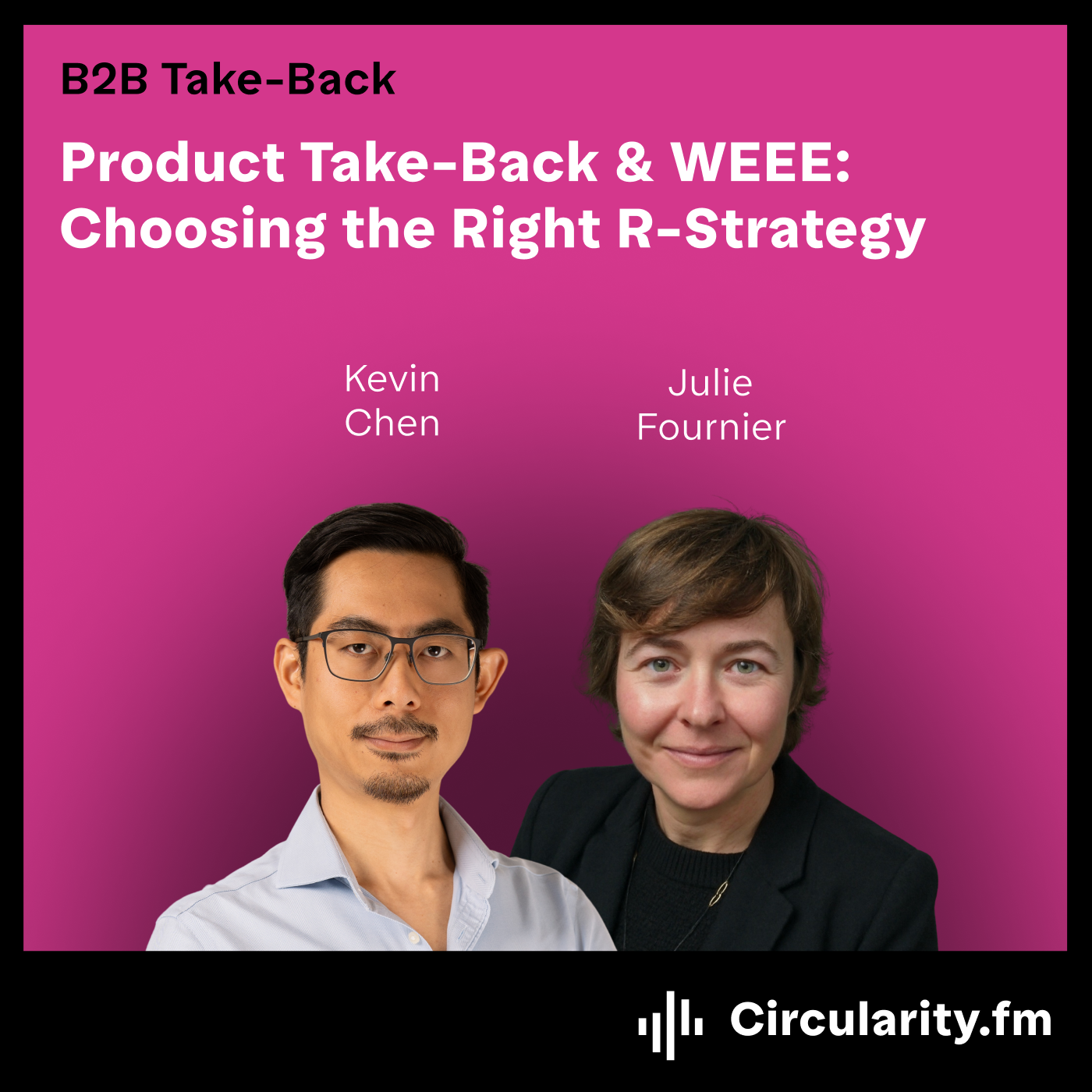
Product Take-Back & WEEE: Choosing the Right R-Strategy
Which products are worth refurbishing, and how can manufacturers get them back in usable condition?
Julie Fournier, responsible for circular economy at Legrand, and Kevin Chen, Director of Consulting at Circul'R, discuss how to select the right circular strategies for different products and organize take-back systems across a portfolio of more than 300,000 product references.
What you'll hear in
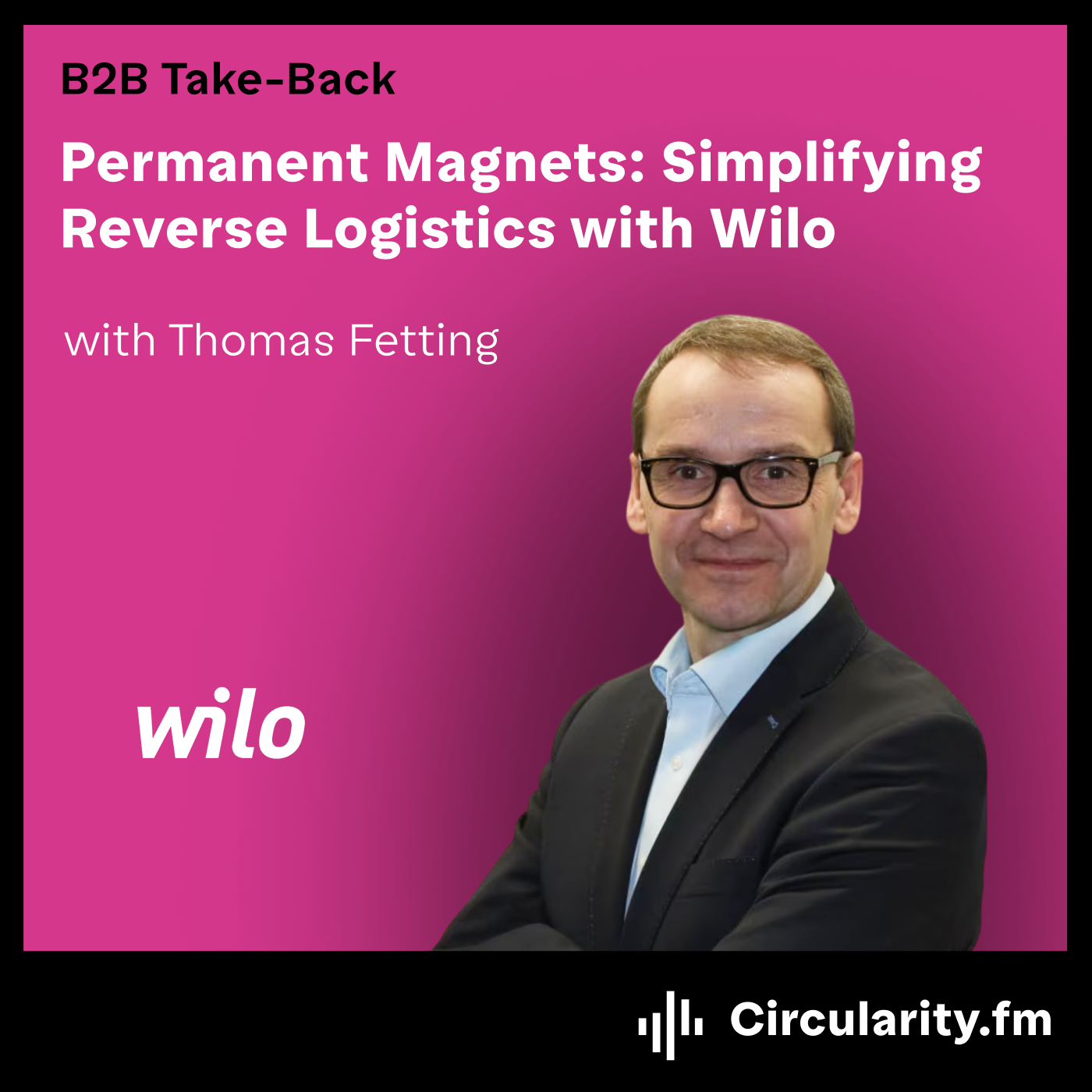
Permanent Magnets: Simplifying Reverse Logistics with Wilo
Wilo's take-back system works without contracts, deposits or payments. Instead, the company focuses on making returns as simple as possible for installers. And that works.
Thomas Fetting, explains how the company collects used pumps and brings recovered components and materials back into production.
What you'll hear in this episode:
• How to motivate participation in take-back systems without f
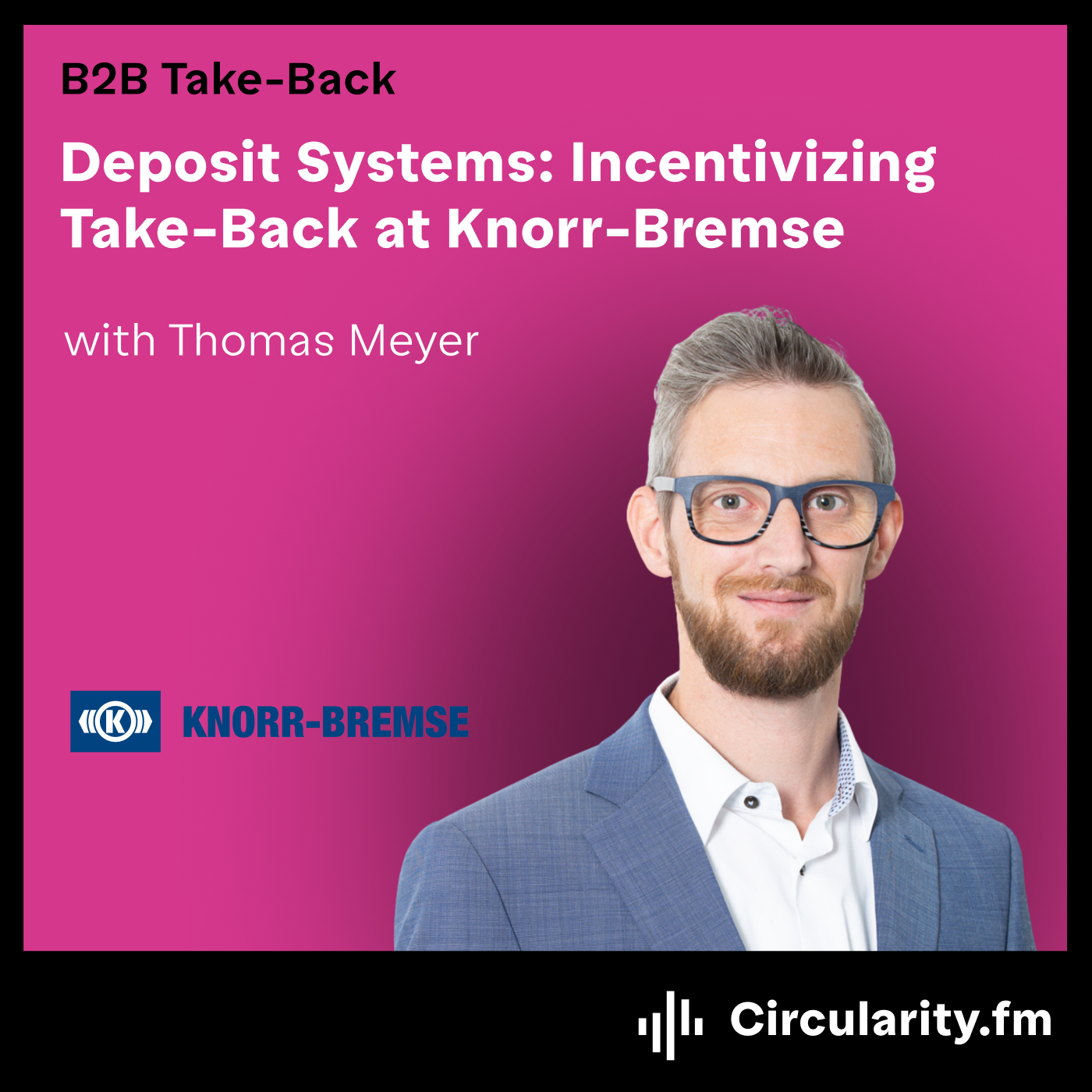
Deposit Systems: Incentivizing Take-Back at Knorr-Bremse
Remanufacturing depends on getting used products back. Can a deposit system give customers an incentive to return them?
Thomas Meyer, responsible for remanufacturing, repair and reuse activities within Knorr-Bremse TruckServices, explains how Knorr-Bremse uses a core deposit in the independent aftermarket to bring parts back for remanufacturing.
What you'll hear in this episode:
• Why the deposi
Take-Back Obligation: How DERIX Makes It Work
For DERIX, the take-back obligation is both a commitment to circularity and an economic advantage.
Antonia Görg, Project and Sustainability Manager at DERIX, and Markus Steppler, Managing Director at DERIX, explain how the timber construction company has built a take-back obligation into its contracts.
What you'll hear in this episode:
• How DERIX's take-back obligation works, from the contract
Scaling Circular Construction with Digitalization
How can digitalization help scale circular construction?
In this episode of circularity.fm, Kilian Eckle, founder of RoofUz, and Timo Walraven, researcher at the University of Applied Sciences Utrecht, discuss how digital twins, building data, standardization, and modular construction can make circular construction more economically feasible.
What you’ll hear:
• How digital twins can be used to
Circular Construction: Environmental, Economic and Social Aspects
How can rooftop extensions create housing that is ecologically regenerative, socially valuable, and profitable?
In this episode of circularity.fm, Dirk Hengst, founder of Denk.mal.Bau., and Lewin Fricke from TRIQBRIQ talk about their rooftop extension project in Dresden.
The conversation covers:
• The project's economic, social, and environmental dimensions.
• Material choices designed for a hea
The Business Case for Rooftop Extension
What is the business case for rooftop extensions?
Thijs Müller, Co-founder of Creative City Solutions, and Didier Mignery, Founder of UpFactor, explain how adding housing on top of existing buildings can address several challenges at once: housing shortages, energy renovation and urban land use.
This episode covers:
• When rooftop extensions make economic sense, and the technical, regulatory and
Designing Germany's Circular Textile EPR System
What are the system-wide recommendations for Germany’s Textile EPR scheme to influence companies' design and portfolio decisions?
Carina Hofmann-Wellenhof talks about CIRCULAR REPUBLIC’s System Design Report for Germany’s textile EPR, developed with 20 organisations and more than 50 stakeholders across the textile value chain.
She explains the main recommendations for designing the system, from
Unpacking the EPR Legislation for Textiles
Will the EPR regulation create incentives for a more circular textile industry?
Alexander Sustal, Lawyer at Redeker Sellner Dahs, explains how Extended Producer Responsibility (EPR) will change the economics of textile collection, sorting and recycling in Germany. The episode covers the status quo, the actors and financing flows an EPR scheme introduces, and the wider legal questions an EPR schem
Textile Collection, Sorting & Recycling: The challenges we need to overcome
How can Europe build a commercially viable circular textile system?
In this episode, Louisa Hoyes, who has worked on building up textile circularity for the past 7 years, explains why building a circular textile system requires much more than advances in recycling technology.
What you'll hear in this episode:
• Why collection, sorting and recycling should be designed as one connected value chai

How Textile EPR Will Influence Brands’ Business Model
From a brand's point of view, how should extended producer responsibility (EPR) be designed so that circularity pays off?
Philipp Bonaventura from Schöffel explains where circular design already works, why the economics hold it back, and what the system needs to change.
What you'll hear in this episode:
• Why the barrier is economic, not technical: low collection volumes, weak sorting, and repai
Textile EPR in Germany: What Brands Need to Know
How can extended producer responsibility (EPR) pay for the infrastructure that circular textiles need?
This is the first episode of the Textile EPR series. We talk to Lisa Oelze from Messe München about why textiles has become the most unsettled waste stream in Europe, and Jelica Ramirez from GRS PRO Textil about how extended producer responsibility will work in Germany.
What you'll hear in this
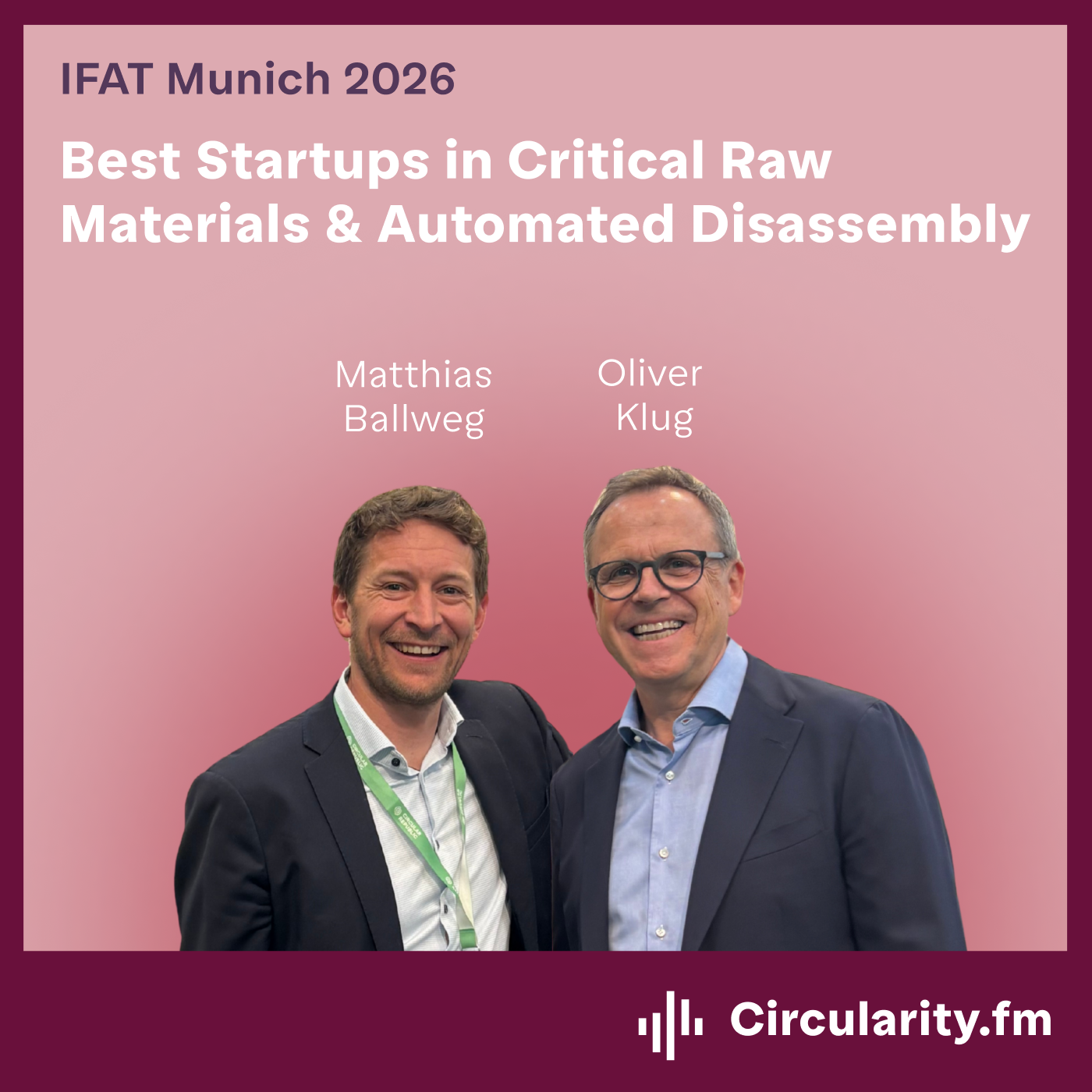
Best Startups in Critical Raw Materials & Automated Disassembly
Which startups are solving Europe’s two key circular economy challenges: automated disassembly and critical raw materials recovery?
This episode covers the Circular Technology Award, launched by Circular Republic and Knorr-Bremse, to back startups working in both fields.
Matthias Ballweg, co-founder of Circular Republic, and Oliver Klug, Chief Strategy and Transformation Officer at Knorr-Bremse,
Circular Economy Startup Landscape 2026
Which areas of circular economy are attracting the most startup activity in Europe, and which ones are being left behind?
Leonhard Teichert, Program Lead at Circular Republic, presents the findings of the Circular Economy Startup Landscape 2026. Bruno Rudnik, Managing Partner at SEF Ventures and host of the startup area at IFAT, adds the investor's view on financing and scaling hardware startups
BDI & BCG Study: Where Circularity Pays Off
What is the economic potential of circularity?
The Federal Association of the German Industries (BDI) asked Boston Consulting Group (BCG) to answer that for German industry. The report's authors, Claas Oehlmann of the BDI's Circular Economy Initiative and Alexander Meyer zum Felde of BCG, walk through the findings, with Nadine Braun of E.ON bringing the view from a company perspective.
What you'
Circular Sovereignty Forum
Can Europe secure the critical raw materials it needs without stepping back from global trade?
Recorded at the Circular Sovereignty Forum at IFAT Munich, with Susanne Kadner of Circular Republic, João Merico of the Ellen MacArthur Foundation, and Roland Gauß of EIT Raw Materials, on the link between circularity, geopolitics, and supply security.
What you'll hear in this episode:
• What companies
Startup Collaboration: How to Build Win-Win Partnerships
Why do startups and corporates need each other, and what makes the partnership work?
Florian Fehr, Managing Director of NEEW Ventures, joins Patrick at IFAT and interviews three founders: Rajiv Singhal from Grensol, Stefan Delinde from Minimise, and Gary Lewis from Resourcify about their businesses and what makes a startup-corporate partnership work.
What you'll hear in this episode:
• Why start
Sustainability Reporting: Turning ESG into Decisions
How does ESG reporting influence how a company is financed, run, and perceived?
in this episode, Fabian Böhmer, Head of Sustainability at EEW, joins Patrick to discuss how ESG reporting can serve bankability, reputation, and internal decision-making.
What you'll hear:
• Why the business case matters in sustainability, and what happens when ecological, social, and economic dimensions are treated
100th Episode: Key Lessons from Six Years of Circularity.fm
What are the learnings after 100+ conversations with circular economy experts?
For our 100th Episode Special, Celinne de Paula from the Circularity.fm team takes over as host and interviews Patrick Hypscher on what six years of conversations with founders, investors, and professionals has taught him.
What you'll hear in this episode:
• The skills needed to make circular projects succeed
• The ov
Carbon Capture: How Waste-to-Energy Cuts CO2
How does carbon capture actually work, and what does it take to make it commercial?
Jörn Jakob, Director Innovation at EEW, and Eike Diedecke, who oversees the carbon capture pilot at the Delfzijl site, share what they are learning from the pilot project.
What you'll hear in this episode:
• Where the CO2 in waste actually comes from, and the impact of different waste compositions
• How the captu
Waste as a Resource: How Data and AI Cut Recycling Costs
What is the value of knowing what's in your waste stream?
Wasteer founder Benedict von Spankeren talks about how data and AI improve profitability and prevent dangerous accidents for waste management companies.
What you'll hear in this episode:
• The economic gap between recycling and waste-to-energy margins, and what this means for market entry and finding customers.
• How dynamic pricing chang
Waste Incineration: Its Role in Circular Economy
What role does waste incineration play in the circular economy and in the transition away from fossil fuels?
Sebastian Siewers, Head of Energy at EEW, talks about the contribution of waste-to-energy plants to the circular economy, and the energy system.
What you'll hear in this episode:
• The business model behind waste to energy: where the revenue comes from, what drives costs, and why CO2 is b
Waste Incineration: How Waste-to-Energy Really Works
Do you know how a waste-to-energy plant actually turn household waste into electricity, heat, and steam?
Philipp Böhm, Managing Director of NEEW Ventures walks through the full process at a plant in Premnitz, from the truck pulling up at the gate to energy entering the grid.
What you'll hear in this episode:
• How waste companies make money: they don't buy their fuel. They charge producers to ta

Business Interruption Insurance: When Circularity Pays Off
How do circular practices enable better risk management and what's that means for insurance premiums?
Nadin-Shirin Zimmermann from Nexarus breaks down the business logic of insurance products and where circularity changes the equation. Before founding Nexarus, she spent years as a corporate underwriter at Allianz and XL Capital.
What you'll hear in this episode:
• How business interruption insur

Insurance Claims: How Tryg Made Repair the Default Choice
Can an insurance company make repair the default choice across the entire supply chain?
Søren Frederiksen from Tryg explains how a repair-first claims policy was built and scaled across Denmark, starting from a market where nine out of ten damaged car bumpers were replaced instead of repaired.
What you'll hear in this episode:
* Why repair in insurance claims is rarely more expensive than replac
Climate Resilience: How Allianz Evaluates Supply Chains
How does climate risk exposure connect to supply chain decisions, and where does circularity come in?
Michael Bruch, Global Head of Risk Consulting Advisory Services, and Lena Fuldauer, Head of Resilience & Business Development at Allianz Risk Consulting, talk about how companies can assess climate risk across their locations and supply chains, and what role circular strategies play in strengthen
Circularity at Airbus: How SecondLife Cuts Waste and Costs
How can a reuse marketplace for unused industrial assets reduce costs and waste at scale?
In this episode, Nathalie Clement, Amanda Fiorillo, and Bernd Schmid from Airbus Defence and Space explain how Airbus built SecondLife, a digital platform where employees trade unused equipment. In three years, 160 tons of waste were avoided and 1,600 tons of CO₂ were saved.
What you'll hear in this episode
Breitling Rewind: Repair as a Heritage Business Model
Can the value of a product increase over time instead of declining?
In this episode, Aurelia Figueroa, Chief Sustainability Officer, and Gianfranco Gentile, Global Head of Heritage at Breitling, discuss how heritage, repair, and brand identity interact to create a circular model where product value appreciates over decades. The episode is co-hosted by Karel J. Golta, Executive Director at Indeed
Circular Strategy at Philips: Turning Trade-Ins Into Revenue
How can a 100+ year old linear company transform its processes to make circularity commercially irresistible?
In this episode, Patrick Lerou, Global Lead for Circularity, and co-host Florian Witt, Director of Technology at INDEED Innovation, discuss how Philips built a circular system for high-value medical equipment that turns trade-ins into revenue, parts harvesting into supply chain resilience
Direct-to-Consumer: Whirlpool Corp's Certified Refurb Strategy
How do you build a successful certified refurb program for major appliances?
In this episode, Samantha Truesdell, Enterprise Circularity and Climate Strategy Manager, and Caio Doranti, Global Sustainability Senior Manager at Whirlpool Corporation, explain how Whirlpool launched a certified refurbishment program for large home appliances, selling returned units direct to consumer through brand web
MedTech Recycling: Johnson & Johnson’s Waste-to-Value Model
How can take-back programs move beyond compliance to become a primary sales driver and scaling mechanism?
In this episode, Daniel Unger, Environmental Sustainability Manager at Johnson & Johnson MedTech Germany, and Michael Leitl, Executive Director at Indeed Innovation, discuss how J&J’s collection system solves a core operational problem for its customers: the waste management costs for hospita
Circular Furniture: How Vitra Circle Scales Refurb via Dealers
How do you scale refurbishment through existing dealer networks?
In this episode, Rolf Keller, Head of Circularity, explains how Vitra built its circular model around buying back, refurbishing, and reselling furniture through its dealers, saving 60 to 90% CO2 compared to new products.
Co-hosted by Heiko Tullney, Executive Director at Indeed Innovation, this conversation focuses on:
• The role
Circular Design: Systemic Innovation
How do you design circular systems, not just circular products?
In this episode, Anne Farken from Designworks, a BMW Group Company, talks about why circular design is not only about the product itself, but about the ecosystem around it. The conversation looks at the gap between saying design should be integrated from the beginning and actually thinking product and business model together from day
Circular Design: Rethinking Products
How can rethinking product design drive innovation, circularity and reduce costs?
In this episode, Nicola Stattmann, Co-founder and CEO of OMC°C, explains why circular product development, when integrated from the start, leads to less investment needed.
The conversation looks at how rethinking material and component choices enable innovation and simplify manufacturing, using the Nike Flyknit's
Circular Design Principles: Overcoming Material Barriers
What should designers know about materials before product development?
In this episode, Andreas Maegerlein, Head of the Creation Center Europe at BASF, talks about circular design from a material perspective, focusing on how material choices enable or limit circularity.
The conversation looks at how product design is affected when materials are developed to last for decades, while products are o
The Commercial benefits: Using recyclates in Washing Machines by V-ZUG
How do you identify and act on the biggest levers in your environmental footprint?
In this episode, Marcel Niederberger, Head of Sustainability, and Marc Vetterli, Sustainability Expert in Engineering, explain how V-ZUG used life cycle assessment to discover that material intensity (and not just energy efficiency) drives environmental impact in home appliances.
What you'll hear in this episode:
Feasibility & Desirability: How Bosch built a drill from post-consumer recycled plastics
Can recycled technical plastics meet quality, performance, and price requirements at the same time?
In this episode, Isabelle Gola from Bosch Power Tools explains how Bosch developed a closed-loop pilot for power tools using recycled technical plastics while maintaining the same quality and performance standards, at the same price point for the end consumer.
What you’ll hear in this episode:
• H
Post-Consumer Recyclate: How to get organisational buy-in - The Vorwerk Case
How do you get organisational buy-in for sustainable initiatives?
In this episode, Nhung Kieu, Head of Sustainability at Vorwerk Group, and Michael Kroh, Fellow Materials Engineering and Sustainability Officer at Vorwerk Engineering, share how Vorwerk increased the use of recycled plastics in products such as Thermomix and Kobold vacuum cleaners.
Based on Vorwerk’s experience, we discuss how org
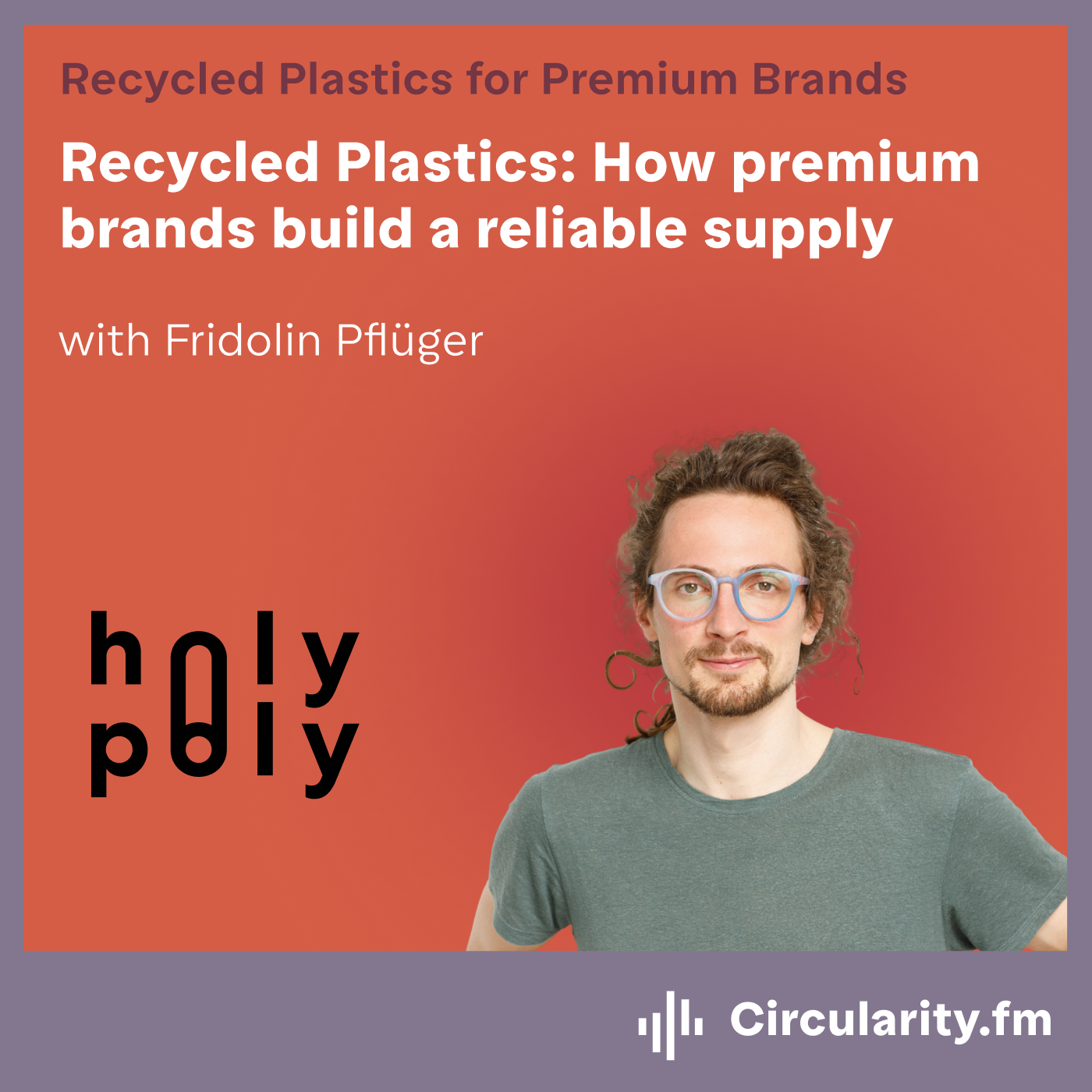
Recycled Plastics: How premium brands build a reliable supply - the HolyPoly approach
Mandatory recycled-content targets are expanding, while recycling capacity is not.
In this episode, Fridolin Pflüger, co-founder and CEO of HolyPoly, looks ahead to how regulatory recycled-content requirements and carbon pricing are likely to reshape plastics supply chains over the next decade.
This conversation explores the future of plastics recycling, highlighting the challenges and opportun
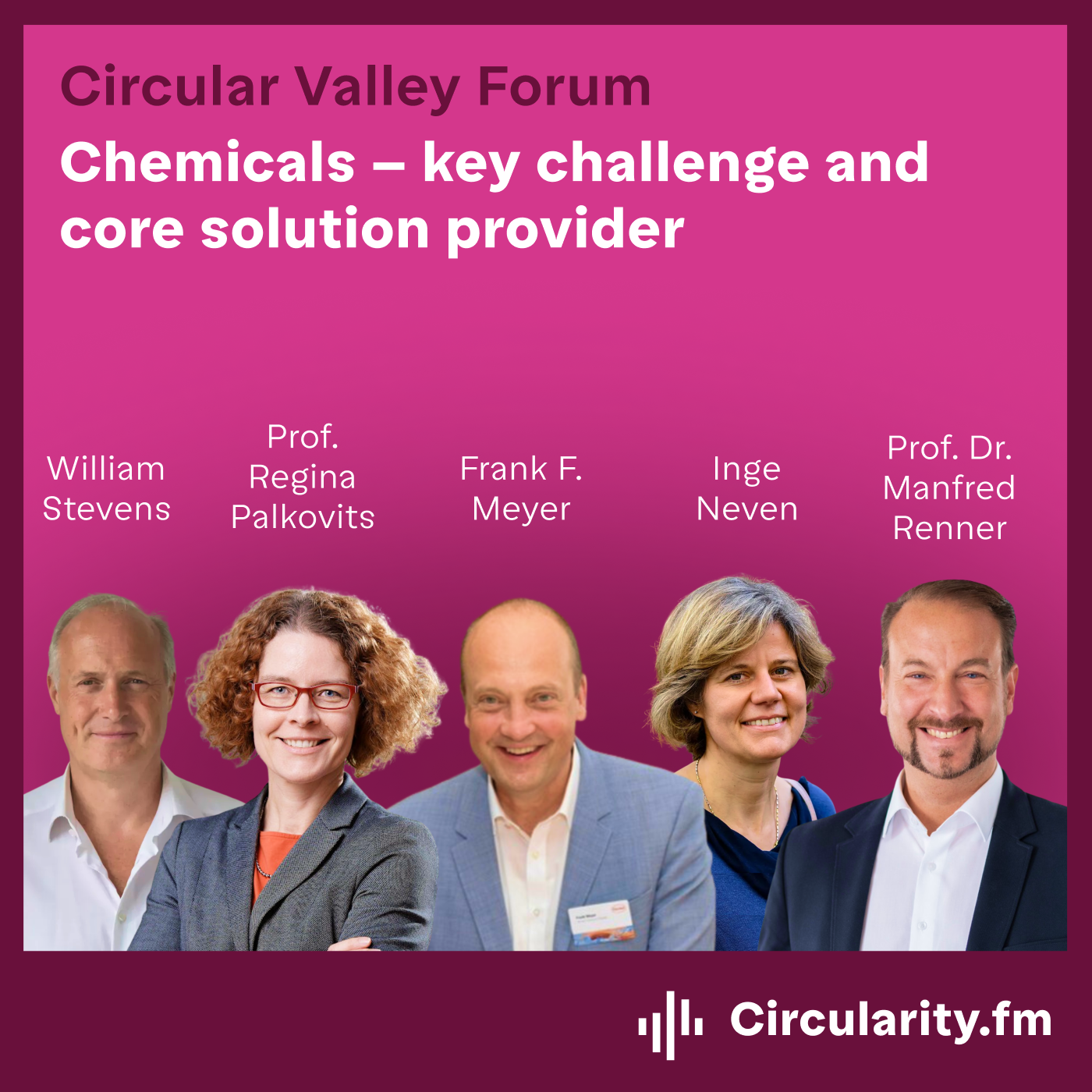
Chemicals – key challenge and core solution provider
95% of all products contain chemicals, which makes chemistry central to every industrial value chain. But what would it take to make this foundation of European production more circular?
In this episode, Frank F. Meyer from Henkel Consumer Brands, Inge Neven from VITO, Prof. Regina Palkovits from RWTH Aachen and the CATALAIX program, Prof. Manfred Renner from Fraunhofer UMSICHT and Fraunhofer CCP
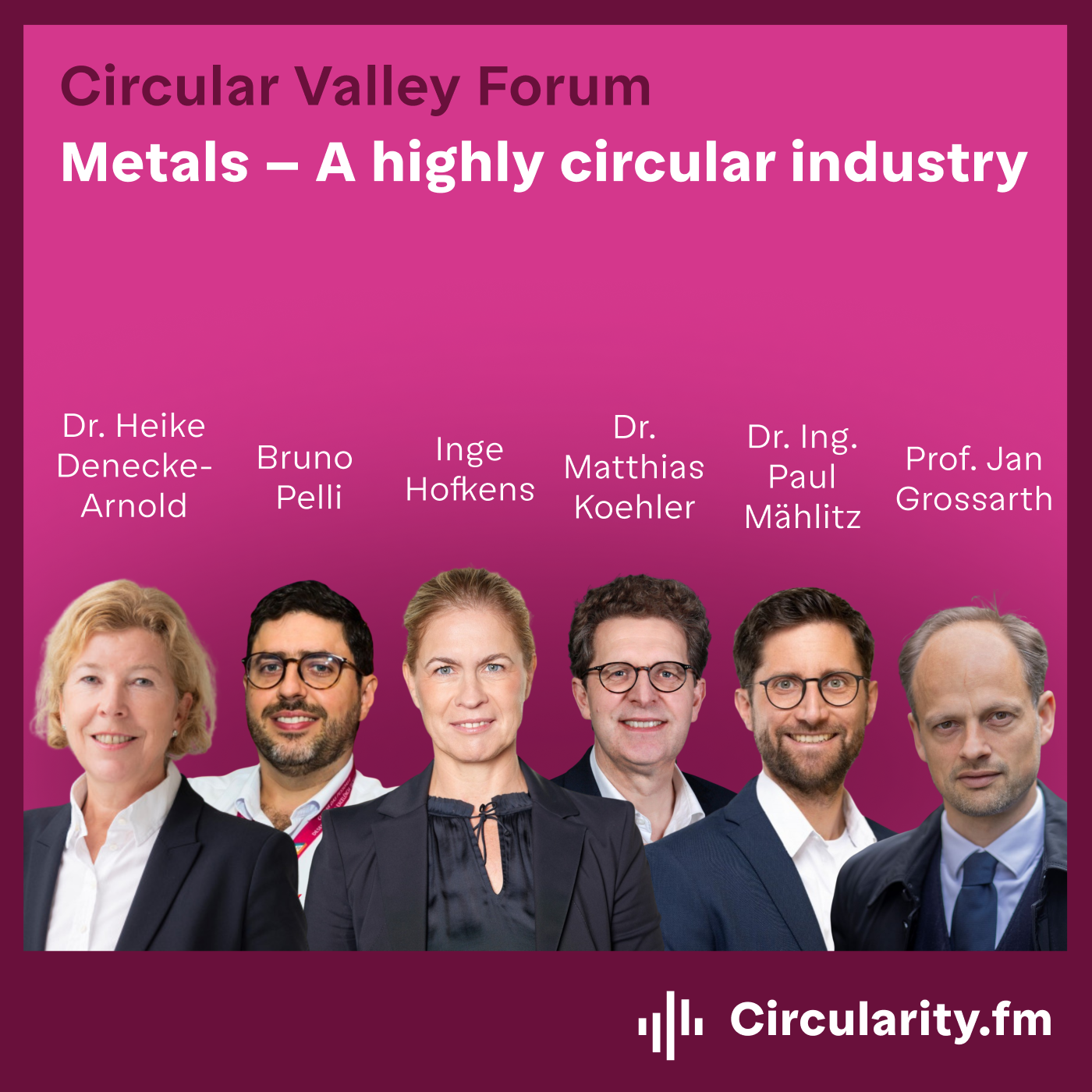
Metals – A highly circular industry
How can the metals sector advance circularity while navigating rising demand, resource scarcity and geopolitical pressure?
In this panel from the Circular Valley Forum 2025, industry and policy leaders discuss the opportunities and constraints of creating a more circular metals system. The speakers include Inge Hofkens, COO at Aurubis, Dr. Heike Denecke-Arnold, CEO of Salzgitter Flachstahl, Bruno
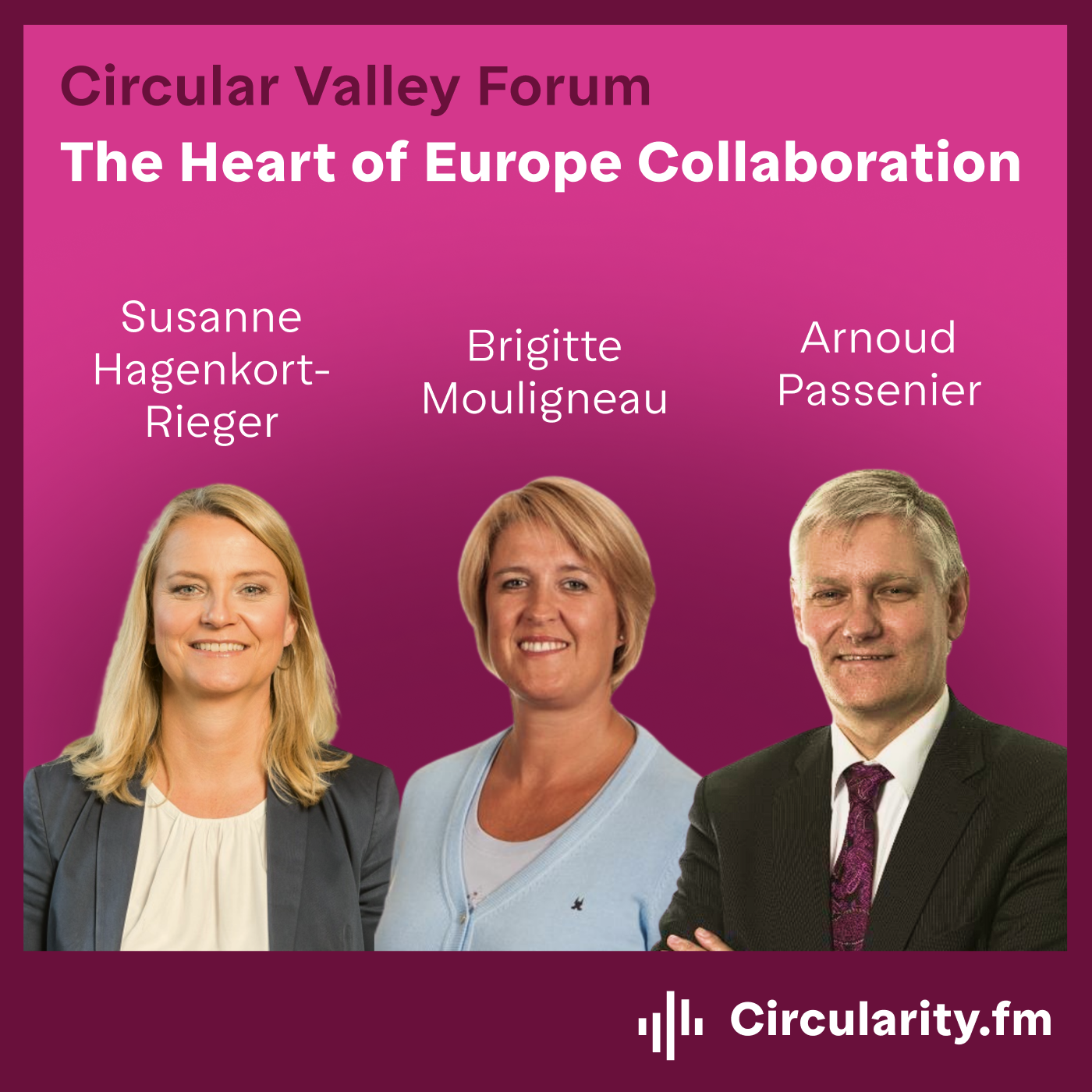
The Heart of Europe Collaboration
How can cross-border cooperation accelerate the transition to a circular economy in Europe’s industrial heartland?
This panel from the Circular Valley Forum 2025 brings together three senior public-sector leaders: Susanne Hagenkort-Rieger, Director General of the Economic Policy Department at the Ministry of Economy in North Rhine-Westphalia; Brigitte Mouligneau, Transition Manager at OVAM and Ci
Close the Gap - Refurbishing Electronics to Close the Digital Divide
How to create a successful circular hub for electronics that holistically integrates social and commercial aspects into the model?
In this episode, we speak with Timothy Washira, Operations Manager at Close the Gap's Circular Economy Hub in Mombasa, Kenya.
Close the Gap first started in Belgium in 2003 with the mission to provide high-quality pre-owned computers and bridge the digital divide. T
PadMad - Upcycling Textiles for Menstrual Health & Girl's Education
How can a reusable pad company address education, employment, and environmental waste simultaneously?
In this episode, Madhvi Dalal, founder of PadMad, talks about why and how she built a social enterprise to tackle period poverty in Kenya, a country where 65% of women and girls cannot afford menstrual products. This crisis leads to girls missing school and exams, forces them to improvise pads wi
Sea Ventures - Turning Fish Waste into Animal Feed
How can fish waste solve a national animal feed crisis and empower local communities?
In this episode, Faith Mwende from Sea Ventures explains how her startup tackles the massive post-harvest losses in Kenya's fishing industry, where 60-70% of the catch becomes waste.
You'll hear how Sea Ventures creates a circular economy model by collecting this fish waste and processing it into high-quality a
E-Waste Initiative Kenya - Repairing and Reusing Electronics
How do you build a sustainable e-waste management system in Kenya?
In this episode, Jane Muriithi and Thuo Lawrence from E-waste Initiative Kenya (EWIK) talk about their approach to e-waste management across Kenya. Jane describes EWIK's collection model through drop-off points and door-to-door pickups across multiple cities, their repair and refurbishment process, and the challenges of managing d
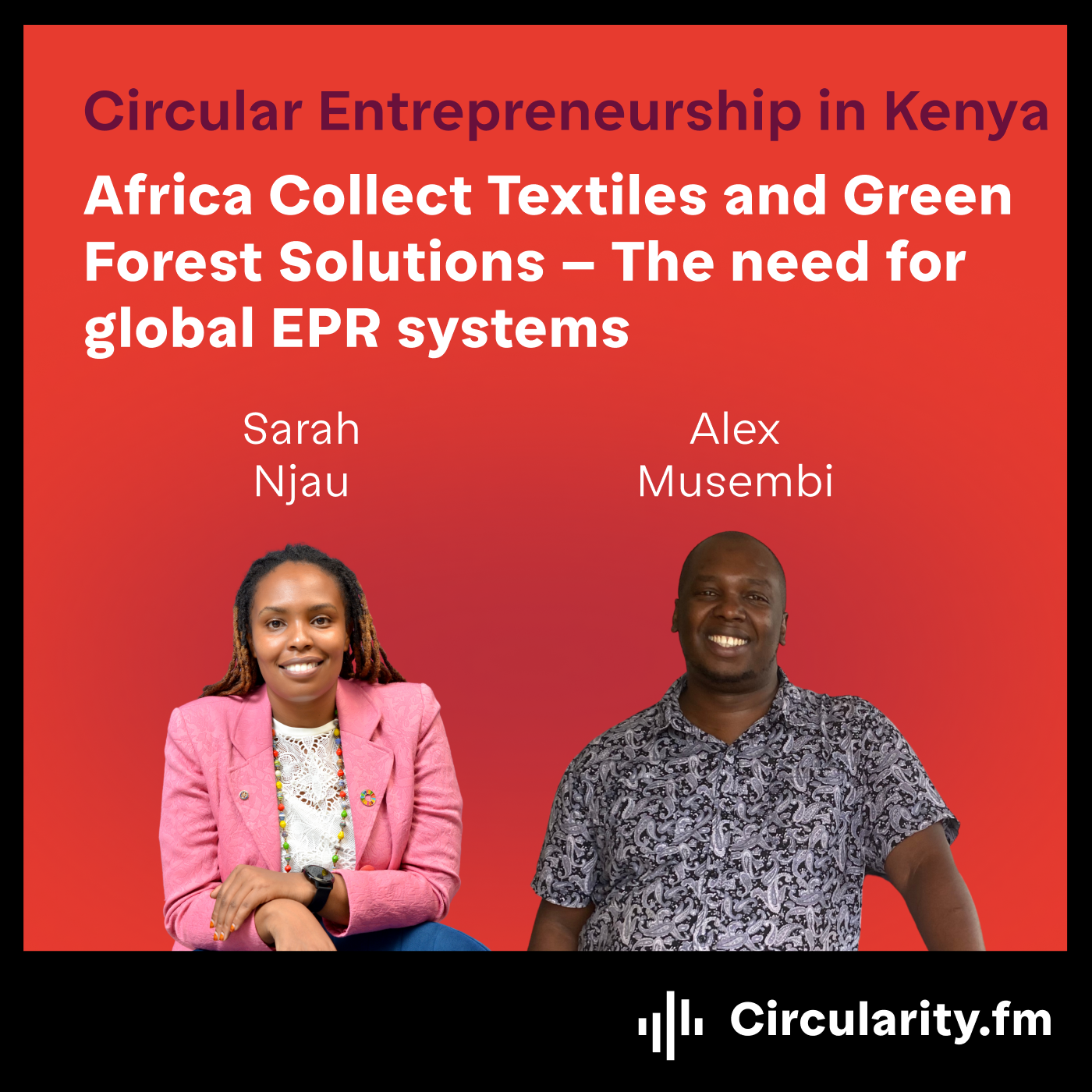
Africa Collect Textiles and Green Forest Solutions - The need for global EPR systems
How can we transform the textile industry in Kenya to embrace a circular economy?
In this episode, Alex Musembi from Africa Collect Textiles (ACT) and Sarah Njau from Green Forest Solutions discuss their collaborative efforts to streamline textile recycling and reuse in Kenya. Alex describes ACT's model of collecting post-consumer textiles through drop-off points and door-to-door pickups, sortin
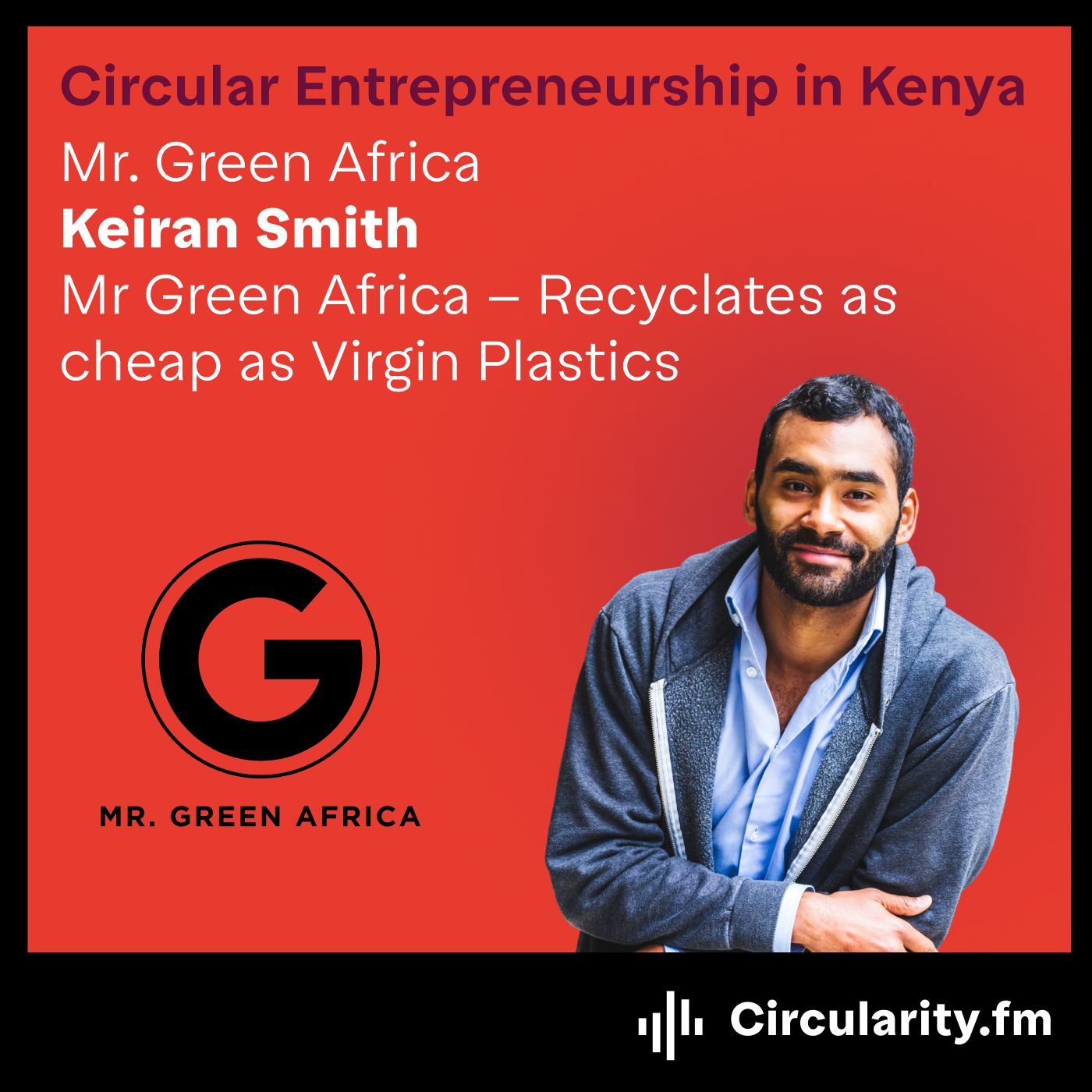
Mr Green Africa - Recyclates as cheap as Virgin Plastics
How do you build a circular economy for plastic that includes the informal sector?
In this episode, Keiran Smith from Mr. Green Africa explains their approach to plastic recycling, which is built on integrating the informal waste collection sector into a formal business. Keiran details their model: a decentralized system of buy-back centers that use a proprietary app for transparent payments, a p
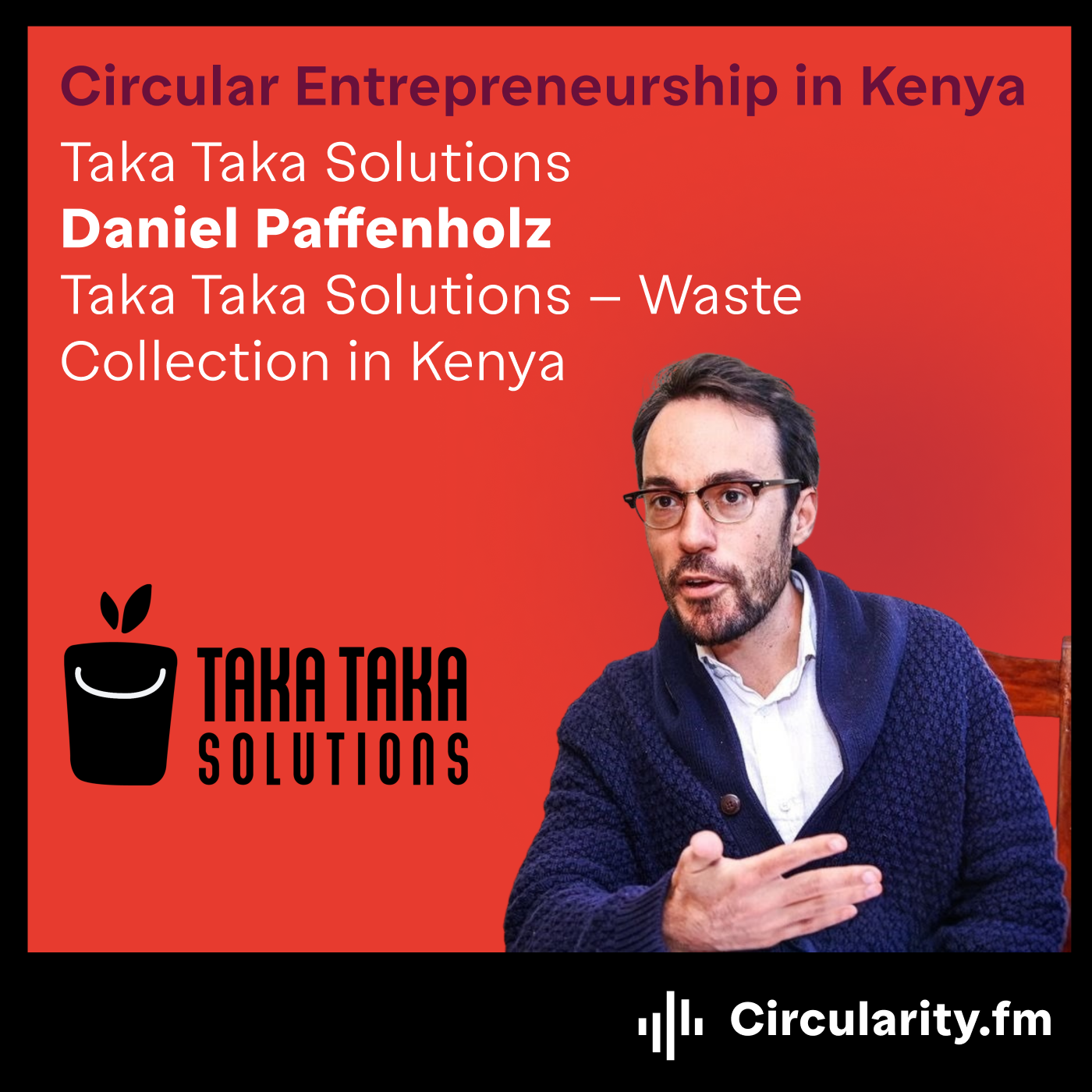
Taka Taka Solutions - Waste Collection in Kenya
What does it take to operate a waste management company in a market where you have to compete with a dump site fee of just one dollar per ton?
In this episode, Daniel Paffenholz from Taka Taka Solutions details the realities of building an integrated waste management and recycling company in Kenya. He explains the immense challenge of scaling in a heavily fragmented and informal market, where you
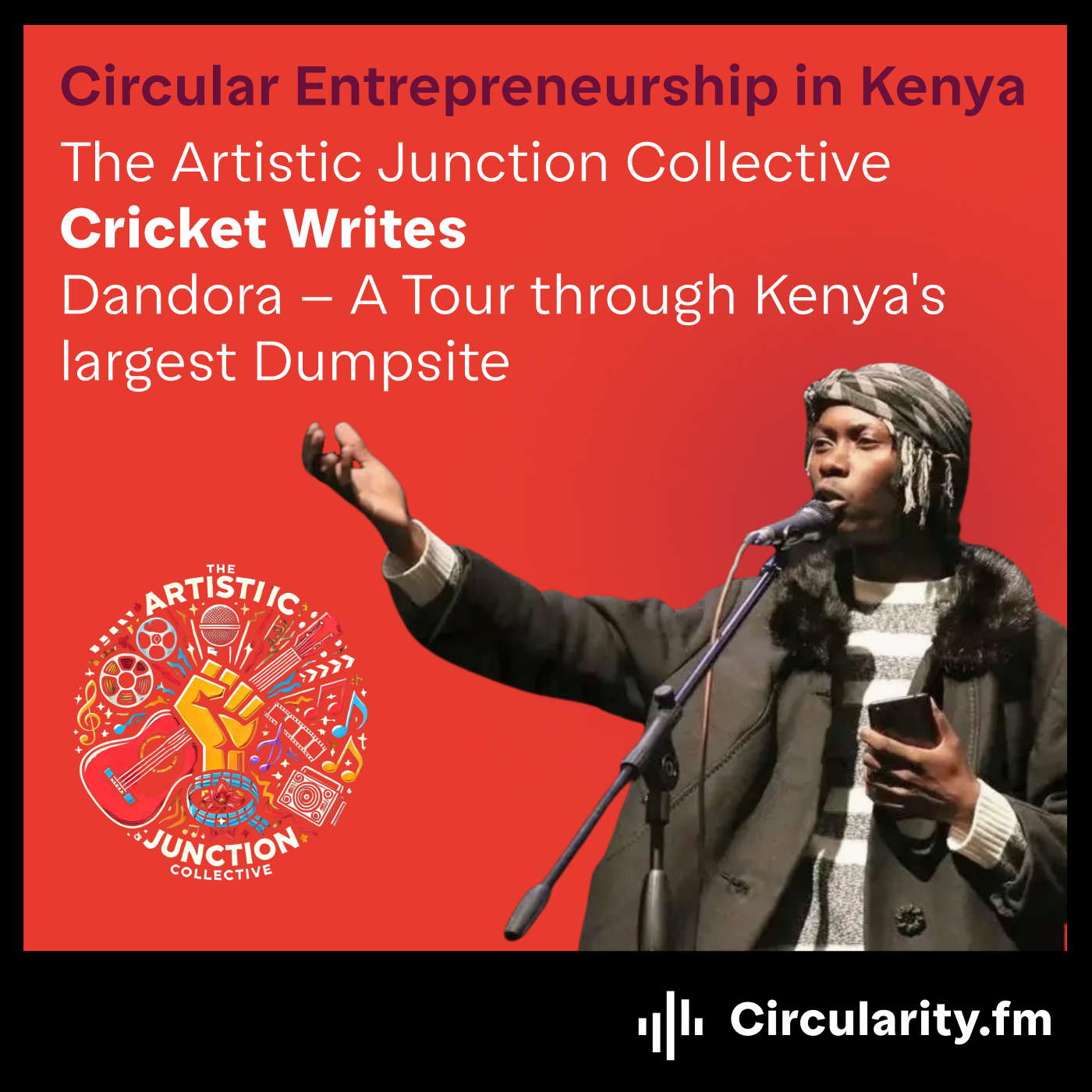
Dandora - A Tour through Kenya's largest Dumpsite
What does it take to build community in one of Africa's largest dumpsites?
In this episode, Cricket Writes from The Artistic Junction Collective talks about the reality of daily life at Dandora Dumpsite and community efforts to create change through art and collective action. Cricket walks us through the physical site and the social structures that govern it: the hierarchy between "big fish" and
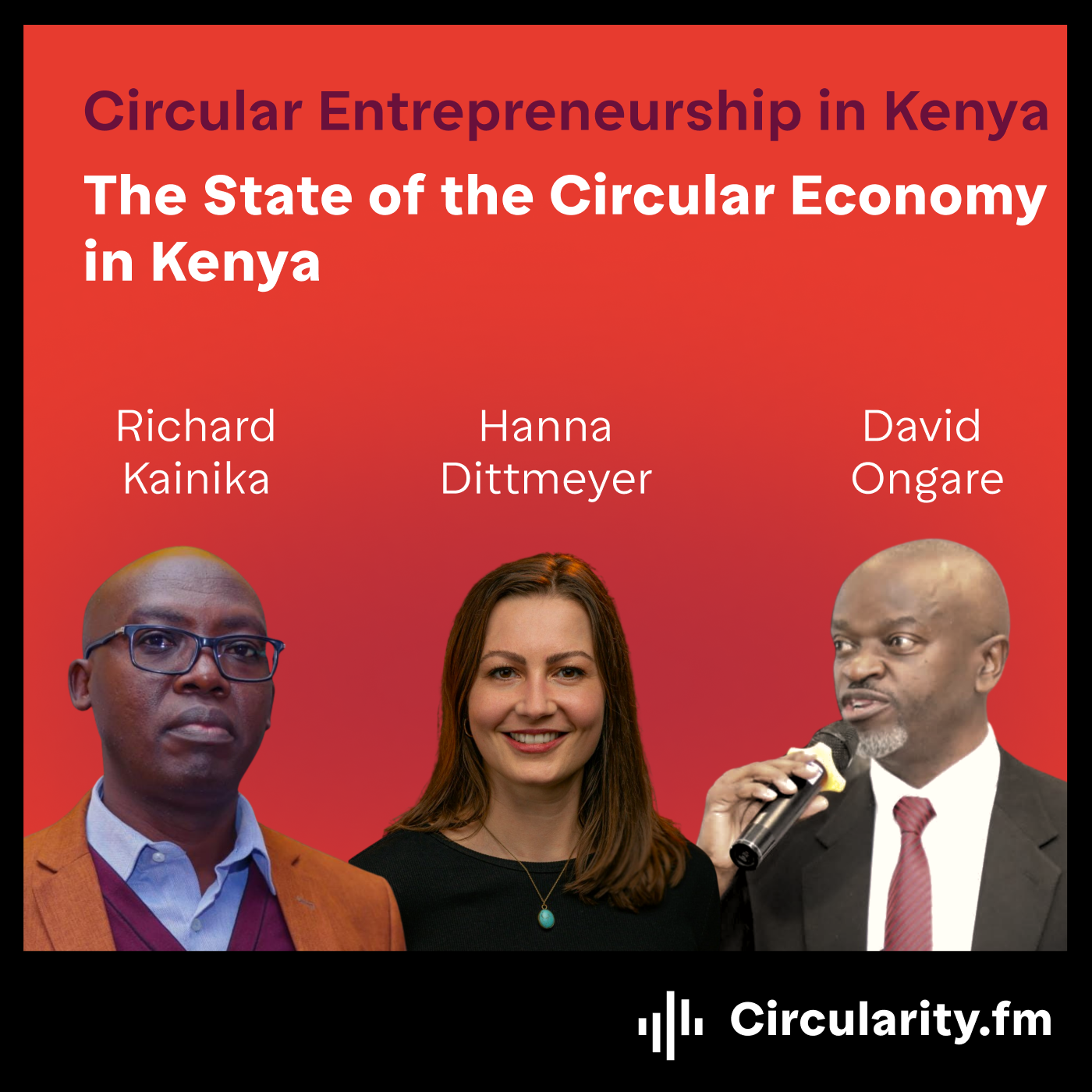
The State of the Circular Economy in Kenya
Can circular entrepreneurship reshape Kenya’s waste economy?
In this episode, Richard Kainika (Kenya Association of Waste Recyclers), David Ongare (National Environment Management Authority), and Hanna Dittmeyer (AHK Services Eastern Africa Ltd) share how Kenya is building circular systems from the ground up through informal networks, selective regulation, and everyday business ingenuity.
From s
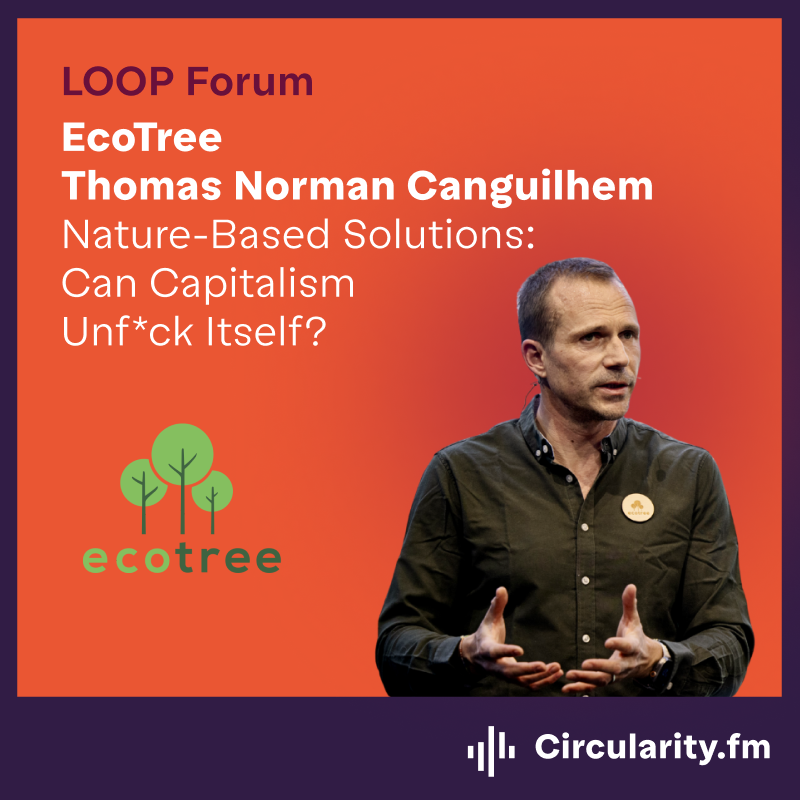
Nature-Based Solutions: Can Capitalism Unf*ck Itself?
How can we create a business case for restoring nature instead of exploiting it?
In this episode, Thomas Norman from EcoTree explains how to turn environmental action from a cost into an asset by making people actual owners of trees. Inspired by Denmark's successful bottle recycling system that achieves 92% return rates through financial incentives, Norman shows how this approach can be applied t
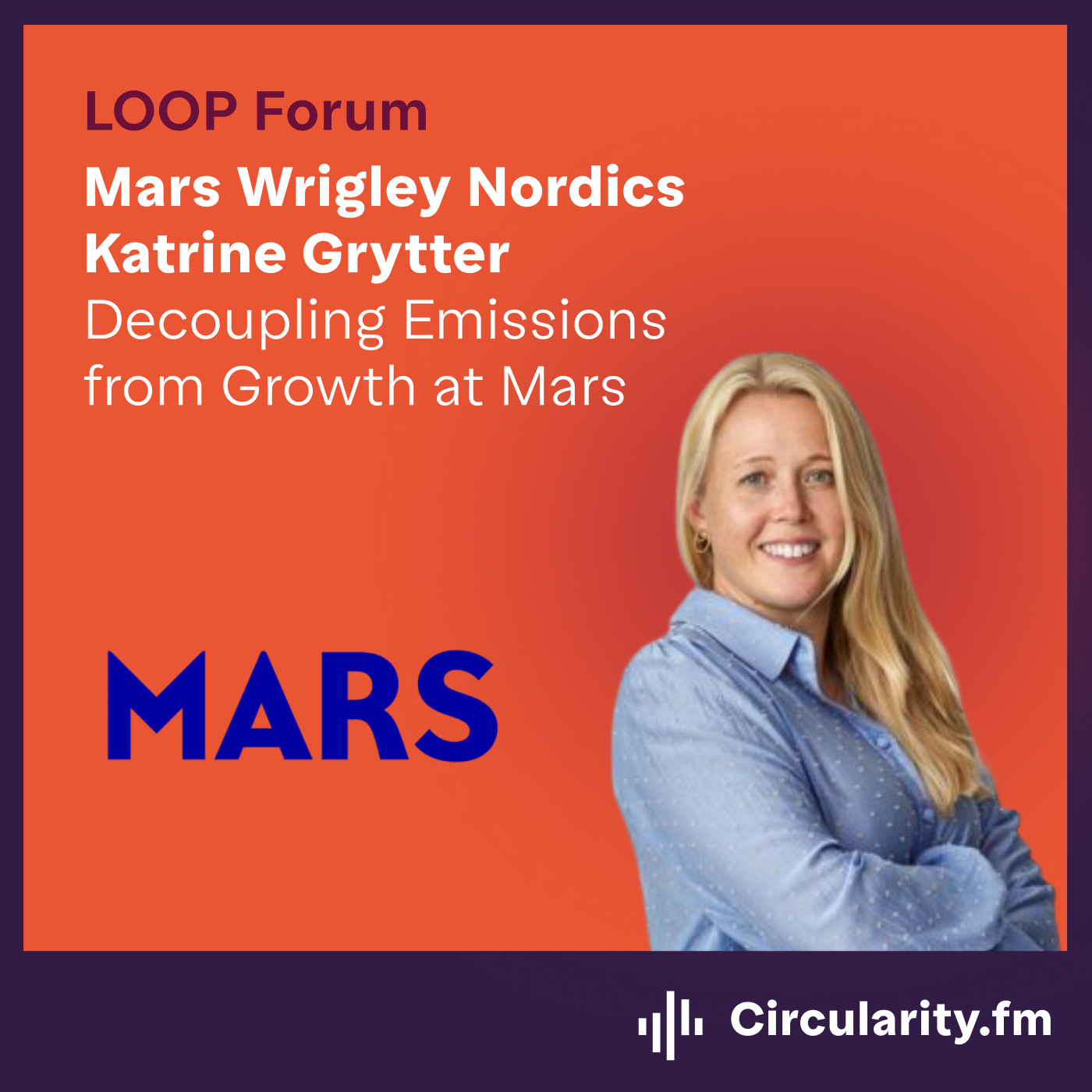
Decoupling Emissions from Growth at Mars
How can a global company cut emissions while growing their business by 37%?
In this episode, Katrine Grytter, Corporate Affairs Director at Mars Incorporated, shares how the company is working toward net zero while expanding their business. Mars has reduced emissions by 23% since 2018 while growing sales significantly, showcasing that sustainability and growth can work together.
Grytter explains
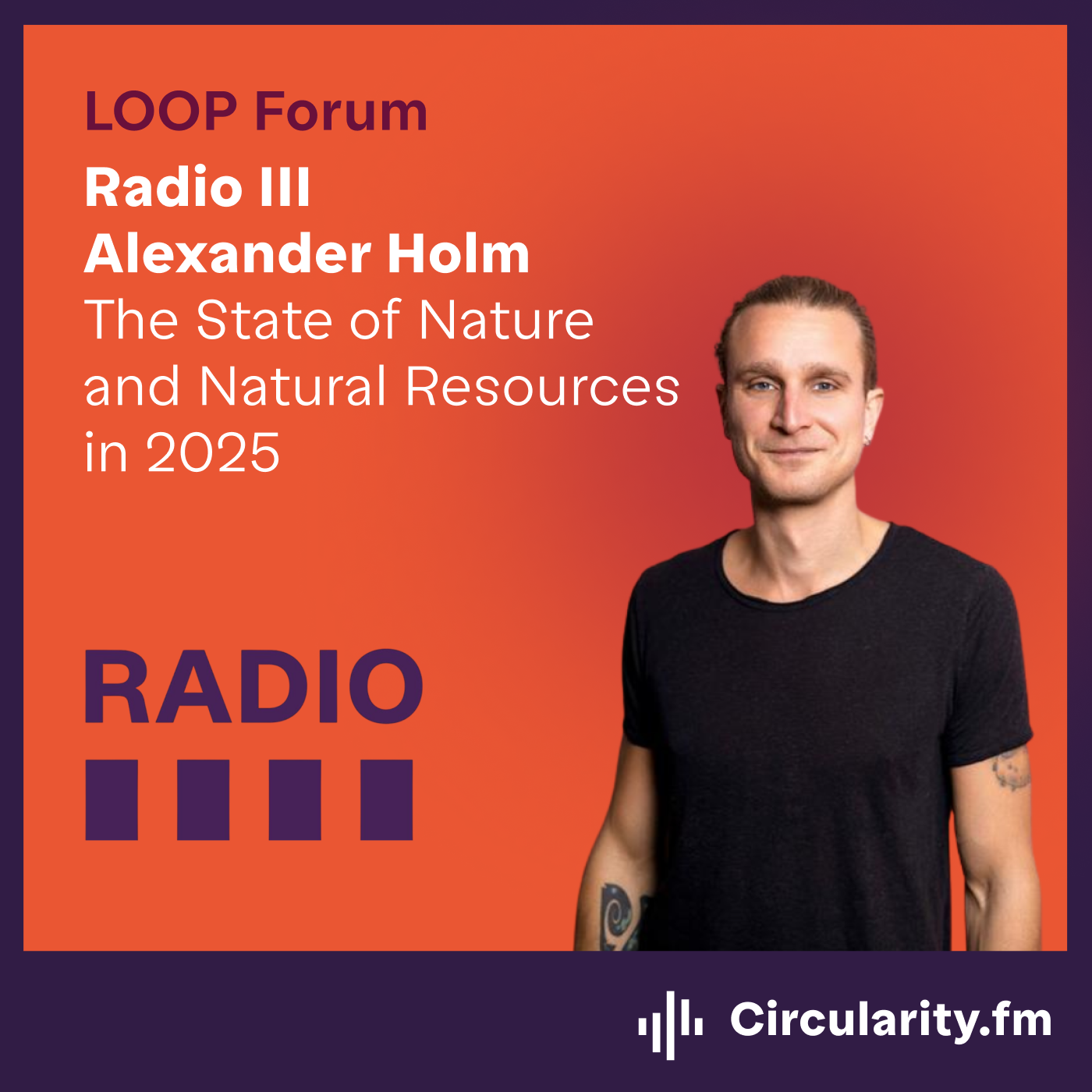
The State of Nature and Natural Resources in 2025
What happens when businesses destroy the very resources they depend on to survive?
In this episode, biologist and radio host Alexander Holm explains the biodiversity crisis and reveals how industries are systematically eliminating themselves through overexploitation of natural resources.
Nature provides essential services like cleaning water, holding soil together, and pollinating crops that wou
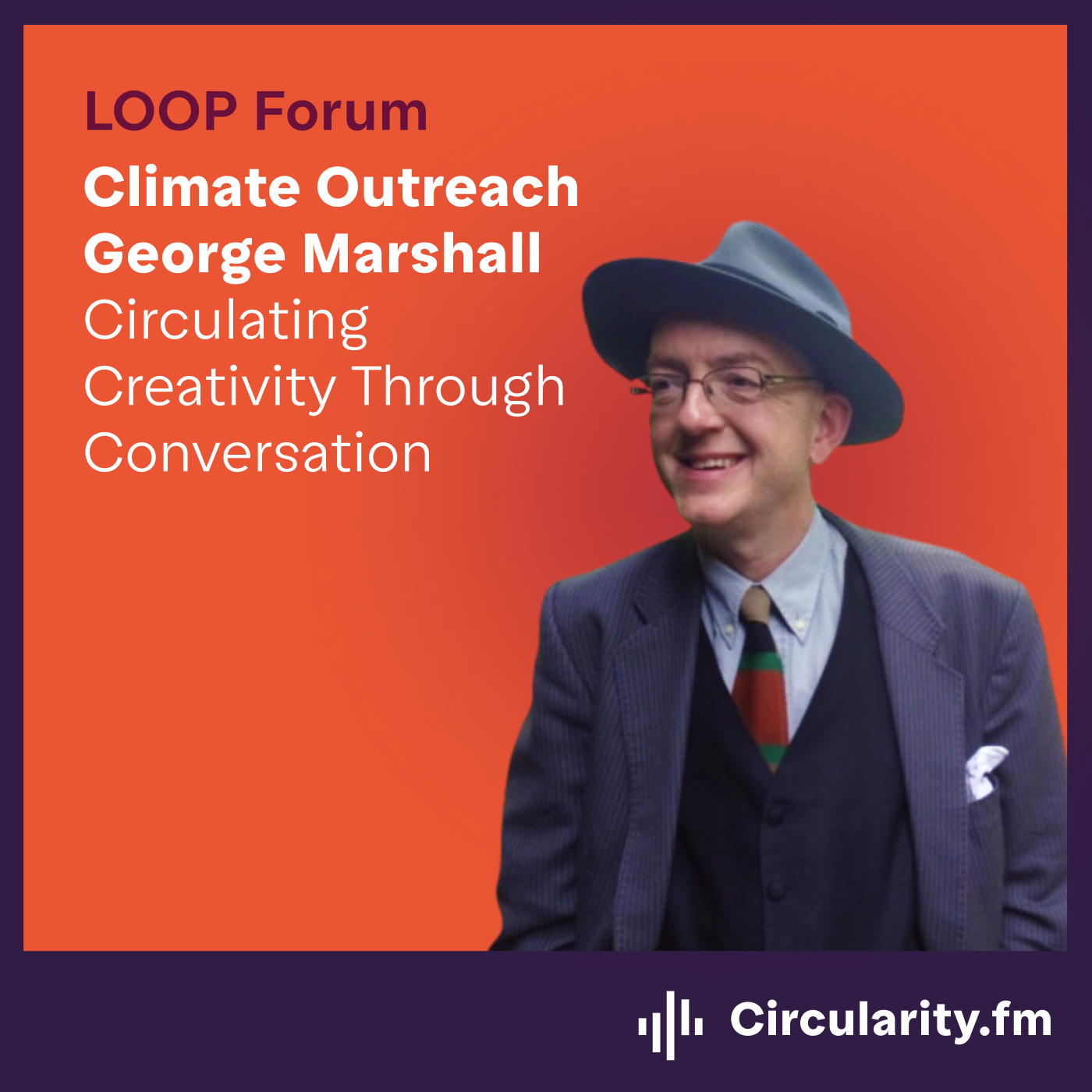
Circulating Creativity Through Conversation
How can conversation become a real driver of circular transformation?
In this episode, George Marshall explains why conversations are central to circular change and how to design them to build trust, reach across difference, and motivate action.
Circular economy strategies often focus on systems and structures but lasting change only happens when people connect new behaviors to their own identit
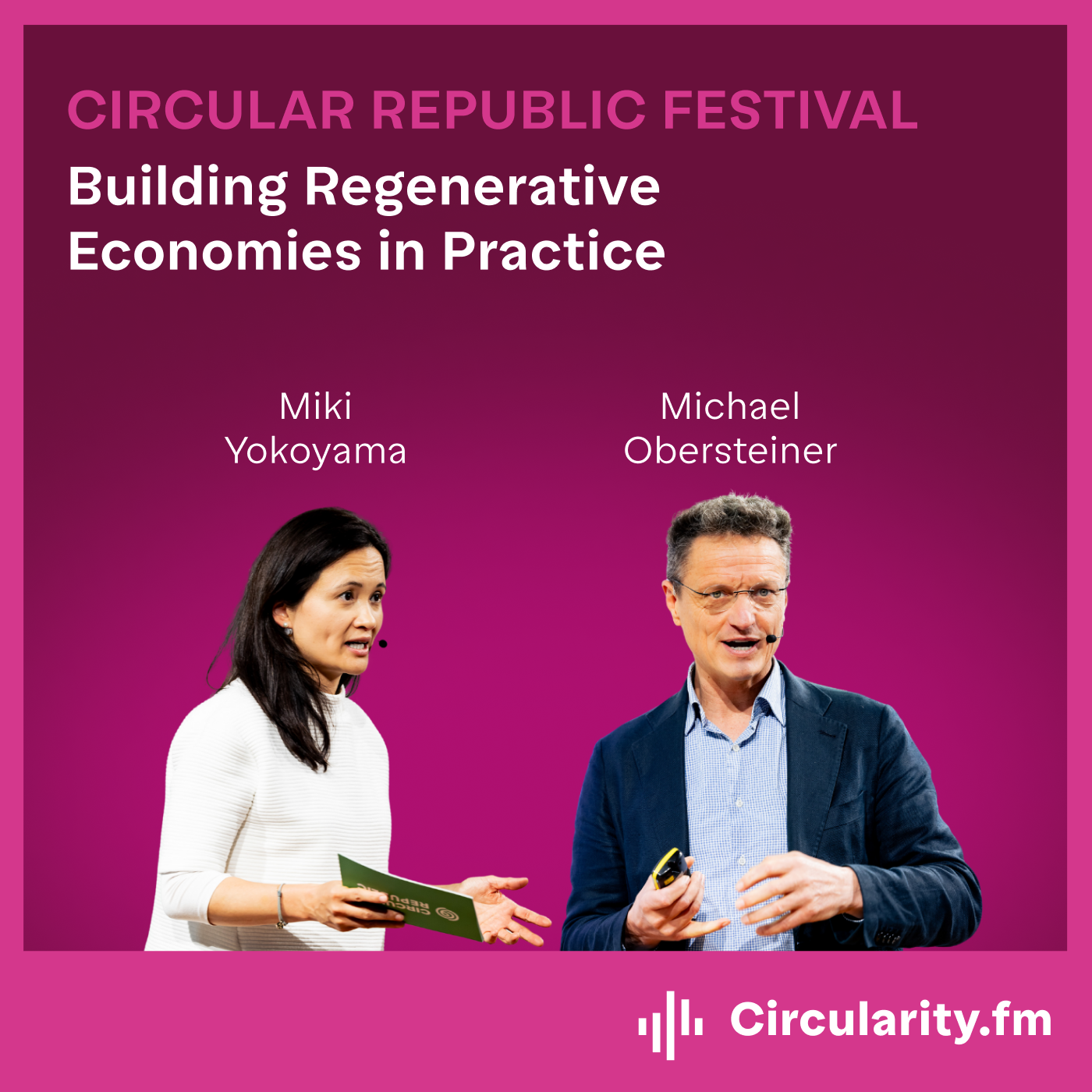
Building Regenerative Economies in Practice
What does it take to build truly regenerative economies?
Circularity is not just about recycling or material flows. It also requires transforming how we use land, manage ecosystems, and design business models that work with and not against the biosphere.
In this episode, speakers explore how to move beyond technical fixes and address the broader environmental and economic systems that shape rege
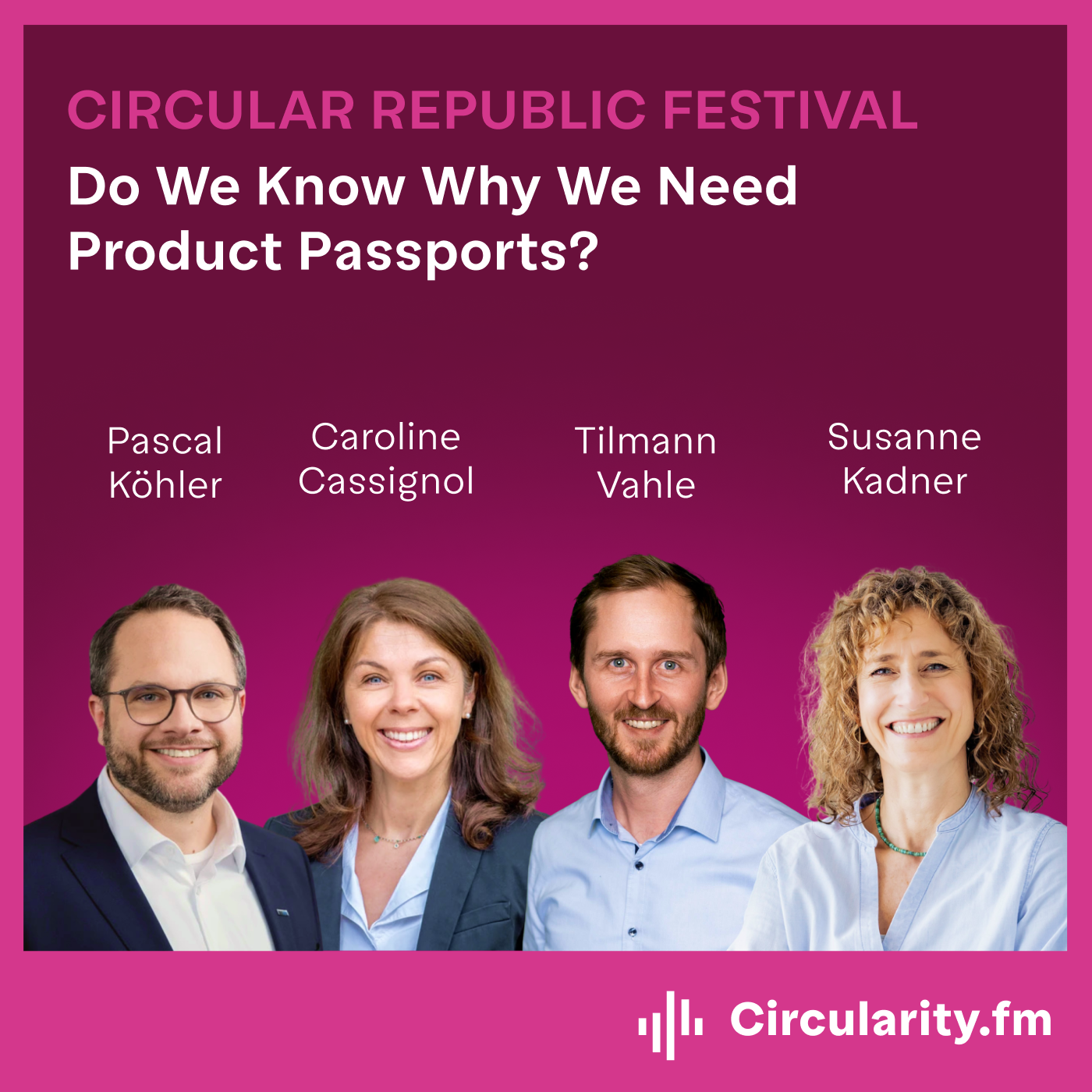
Do We Know Why We Need Product Passports?
Do we really understand the value of product passports?
As regulations like the Digital Product Passport take shape, many companies are focused on compliance. But the deeper question is whether we are using product data strategically: across lifecycles, across systems, and for actual circular value creation.
In this episode, speakers explore how data can move beyond reporting requirements to bec
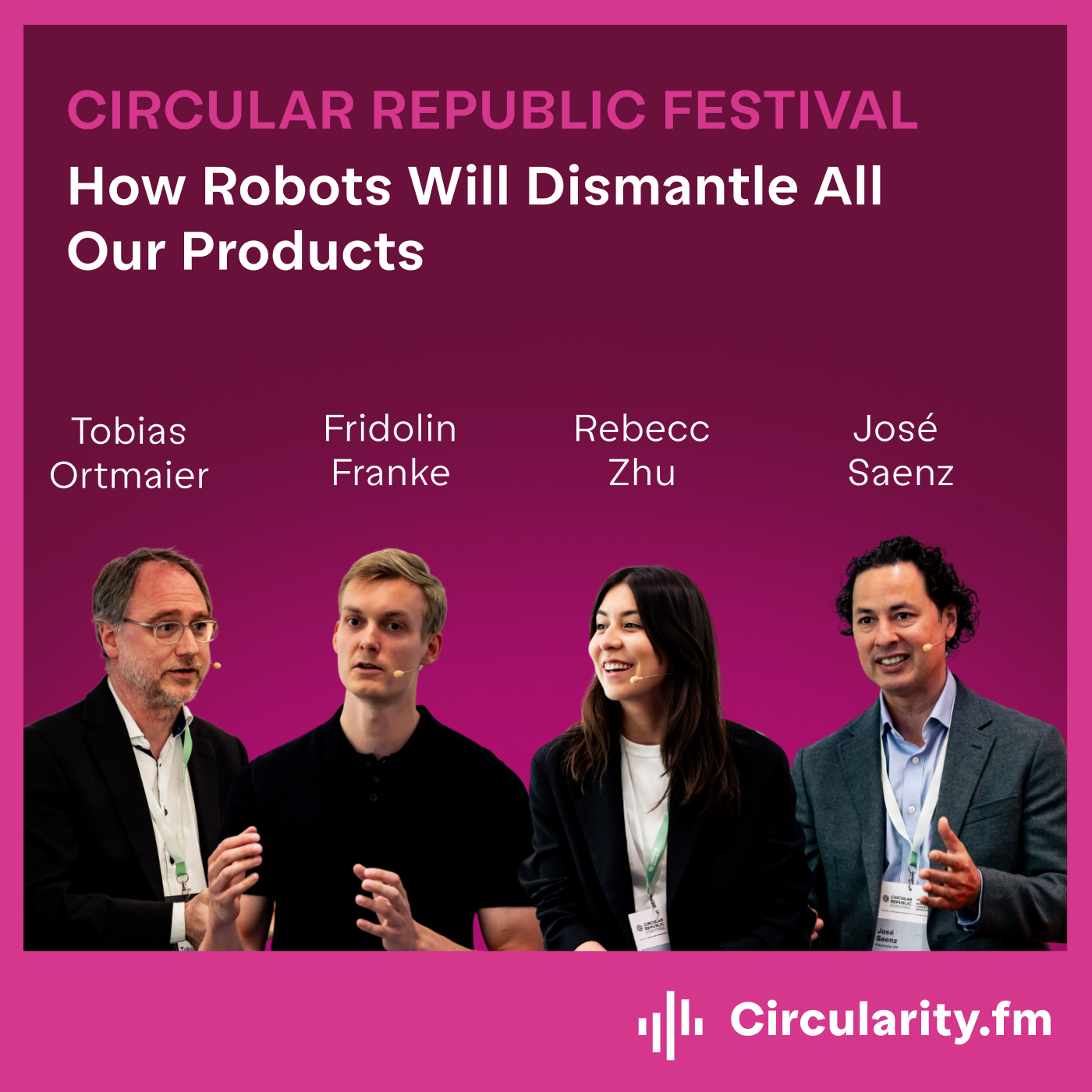
How Robots Will Dismantle All Our Products
Can robotics make large-scale disassembly a reality for the circular economy?
Automated disassembly is emerging as a key enabler for circular strategies such as repair, remanufacturing, and high-quality recycling. But turning this vision into scalable practice requires technical integration, economic viability, and alignment across industries.
In this episode, speakers from robotics, recycling,
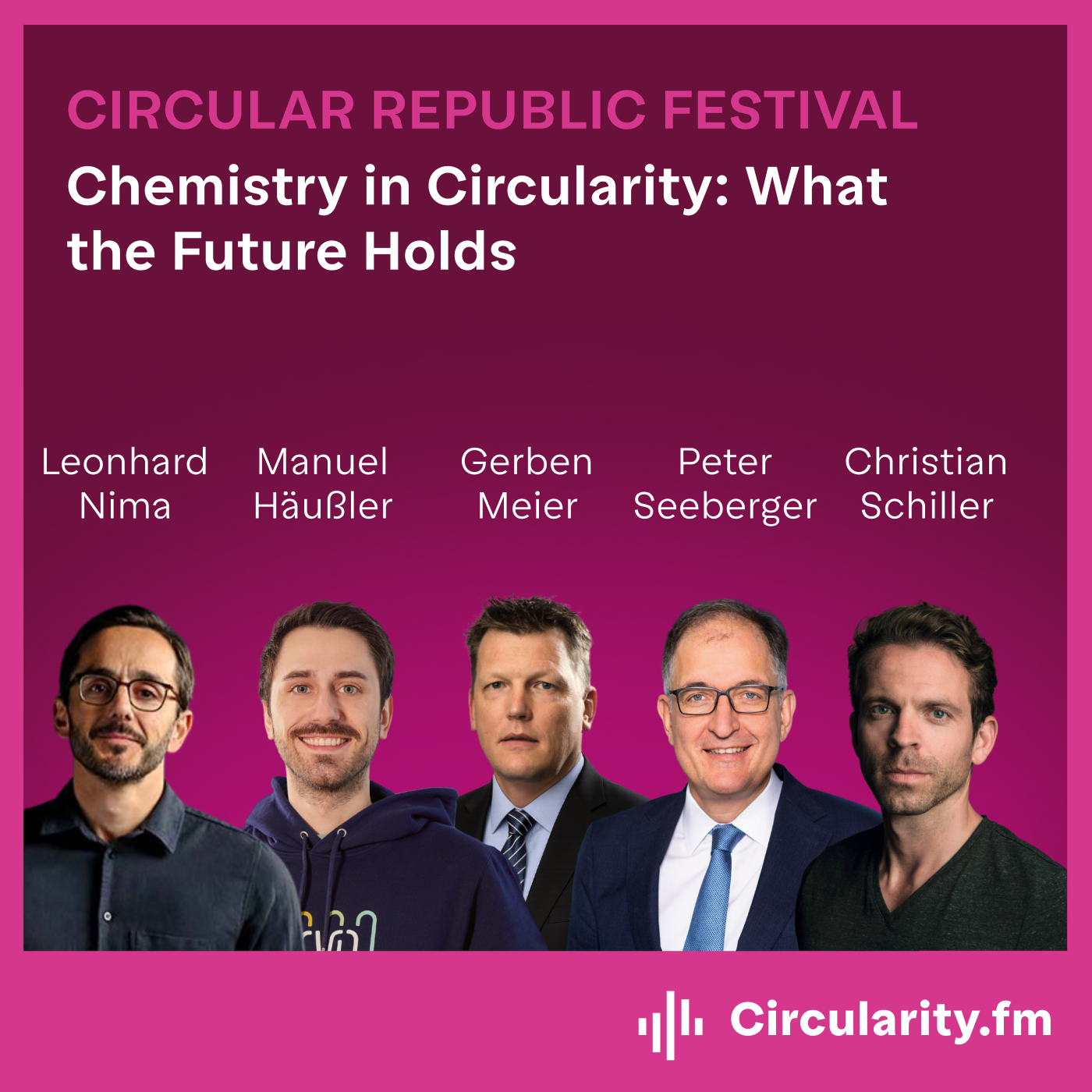
Chemistry in Circularity: What the Future Holds
How can the chemical industry become a driving force for a circular economy?
From molecular design to large-scale production, the chemical sector underpins nearly every material stream in the global economy. But transforming it for circularity means rethinking not just processes, but business models, regulation, and collaboration between industry and science.
In this episode, speakers from start
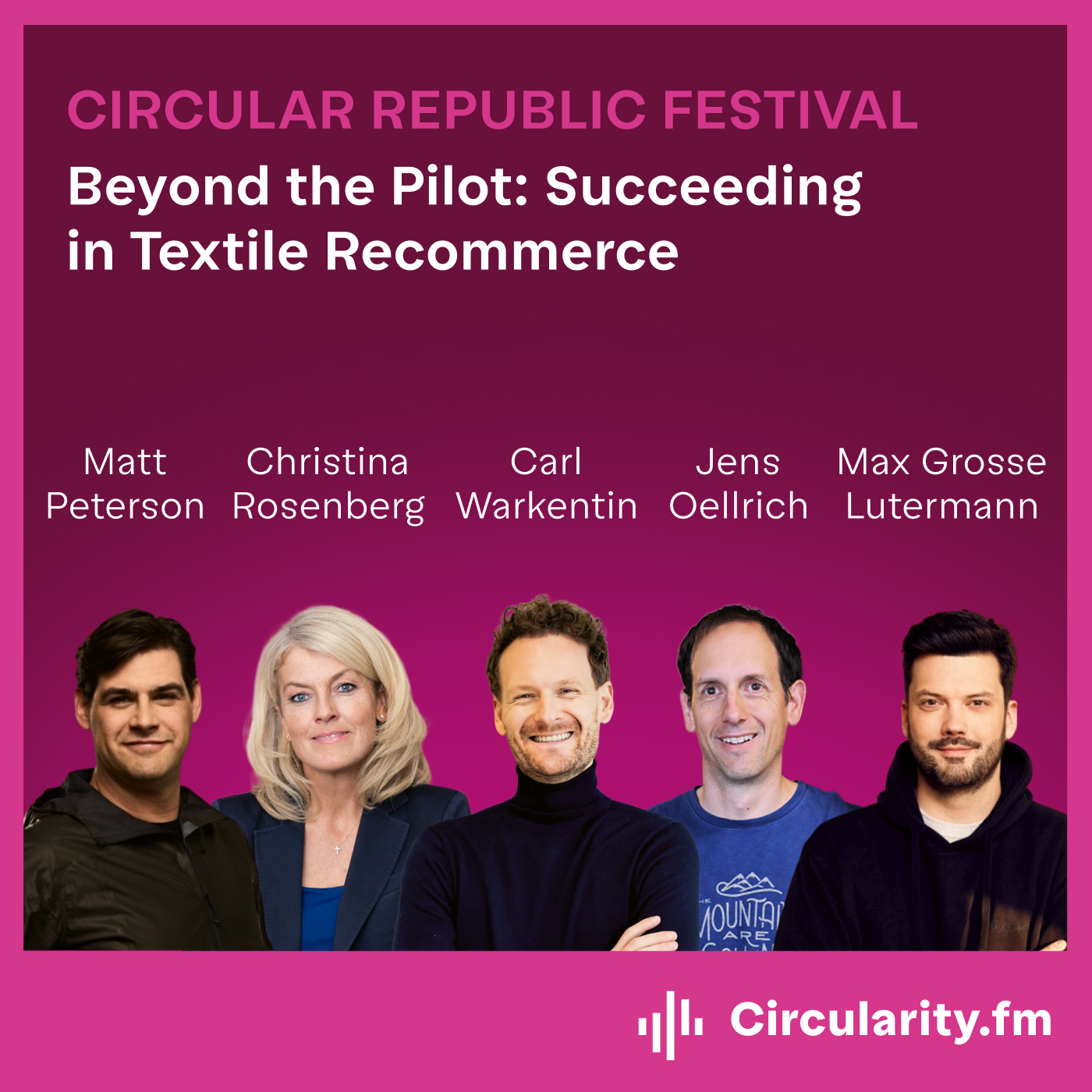
Beyond the Pilot: Succeeding in Textile Recommerce
What does it really take to build a successful textile recommerce model?
Product lifetime extension and recommerce are widely seen as pillars of a circular economy, but moving beyond pilot projects requires more than ambition. Brands must confront operational, financial, and customer-facing challenges to scale recommerce in a way that delivers both impact and profit.
In this episode, speakers fr
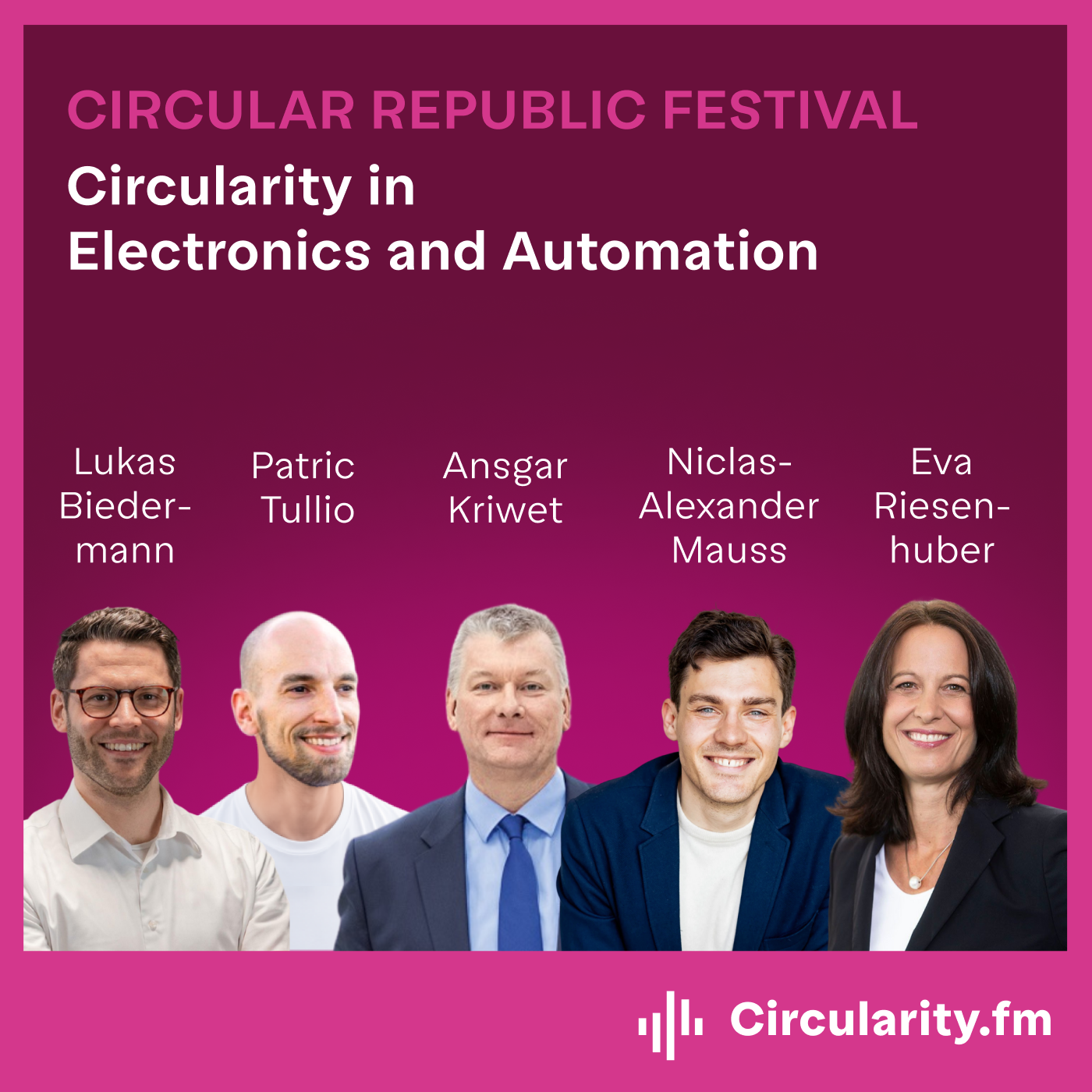
Circularity in Electronics and Automation
Is circularity the next frontier for German engineering?
From industrial automation to in-vehicle electronics, high-performance systems depend on complex, globally sourced materials. This creates serious challenges for sustainability and supply security - but also opens new opportunities for circular strategies that extend product lifespans and recover critical resources.
In this episode, speake
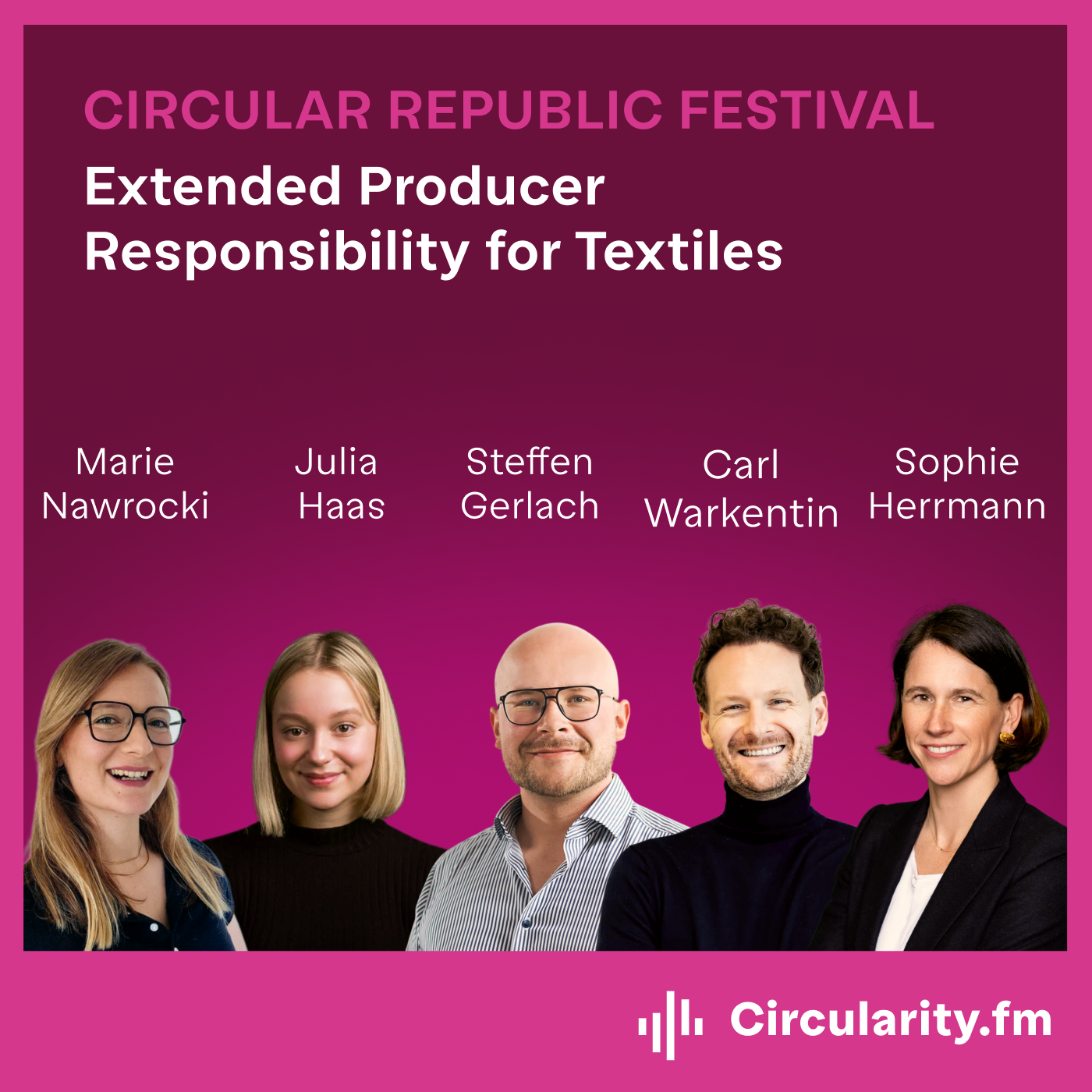
Extended Producer Responsibility for Textiles
How can Germany design a workable EPR scheme for textiles?
With Extended Producer Responsibility approaching, the textile sector in Germany faces increasing pressure to develop systems that are both legally compliant and operationally feasible. But turning regulation into practice requires coordination across brands, recyclers, and service providers.
In this episode, speakers from across the tex
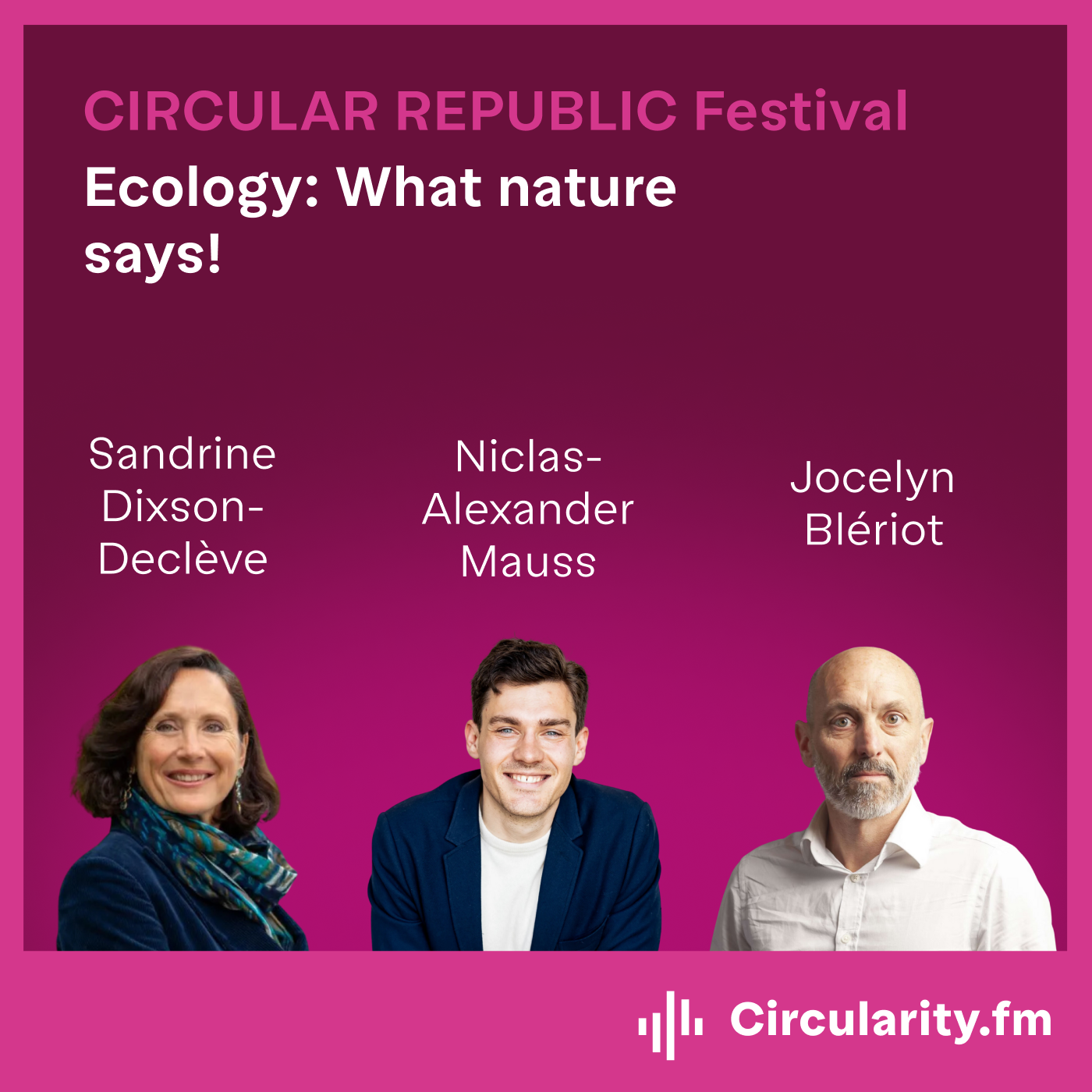
Ecology: What nature says | CIRCULAR REPUBLIC Festival 2025
Are we truly shifting beyond the linear economy or just circling around it?
Despite growing pressure on natural systems and the depletion of critical resources, the shift toward a circular economy remains slow and complex. While pioneering efforts have demonstrated circular potential, questions persist about whether we are replacing the linear model or simply repackaging it.
In this episode, San
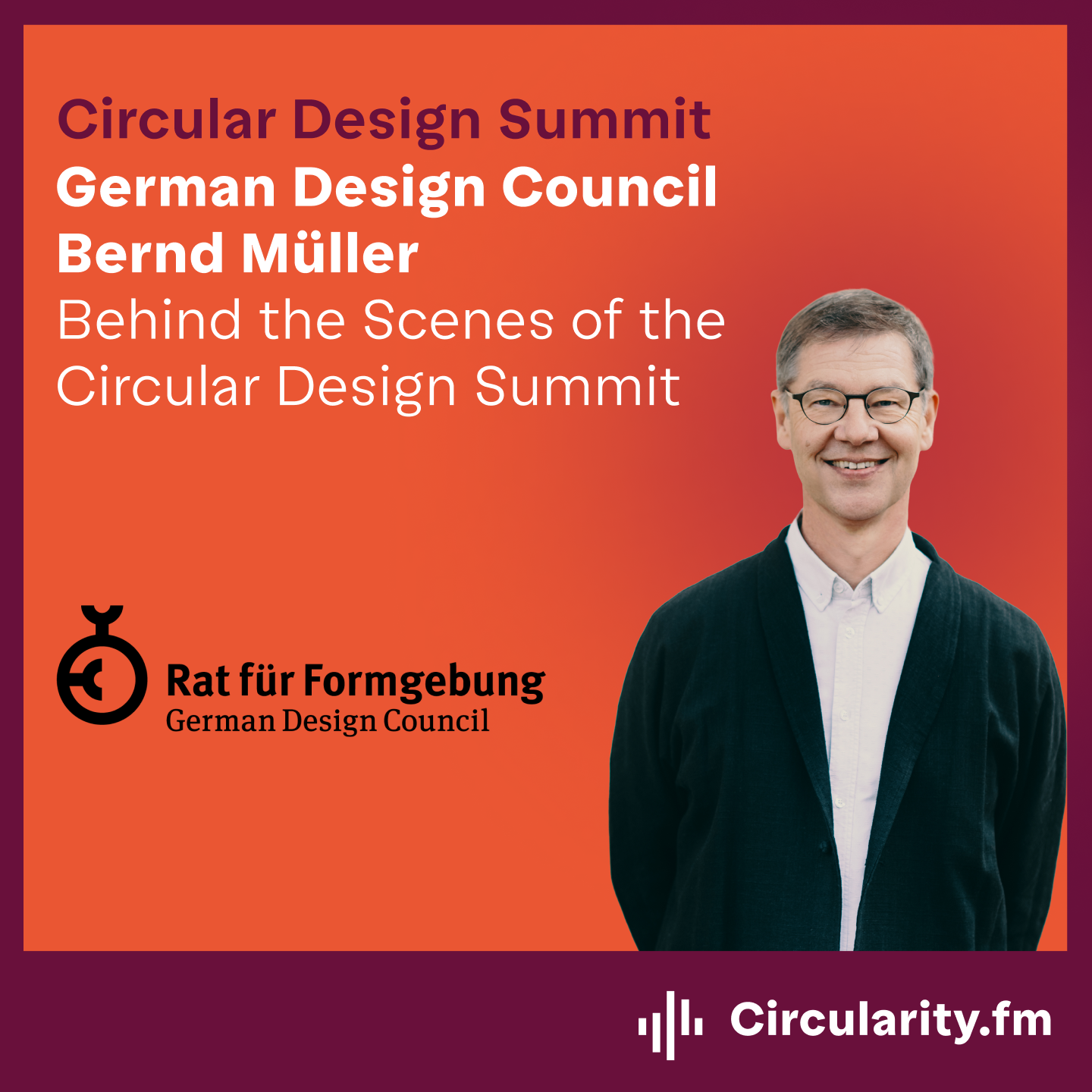
Behind the Scenes of the Circular Design Summit with Bernd Müller
Why is design still overlooked in Germany’s circular economy events?
Most circular economy events in Germany focus on engineering, technology and economic policy. But design, where 80% of a product’s environmental impact is determined, rarely takes center stage.
In this episode, Bernd Müller, Director of Relations and Sustainability at the German Design Council, explains why they created the Cir
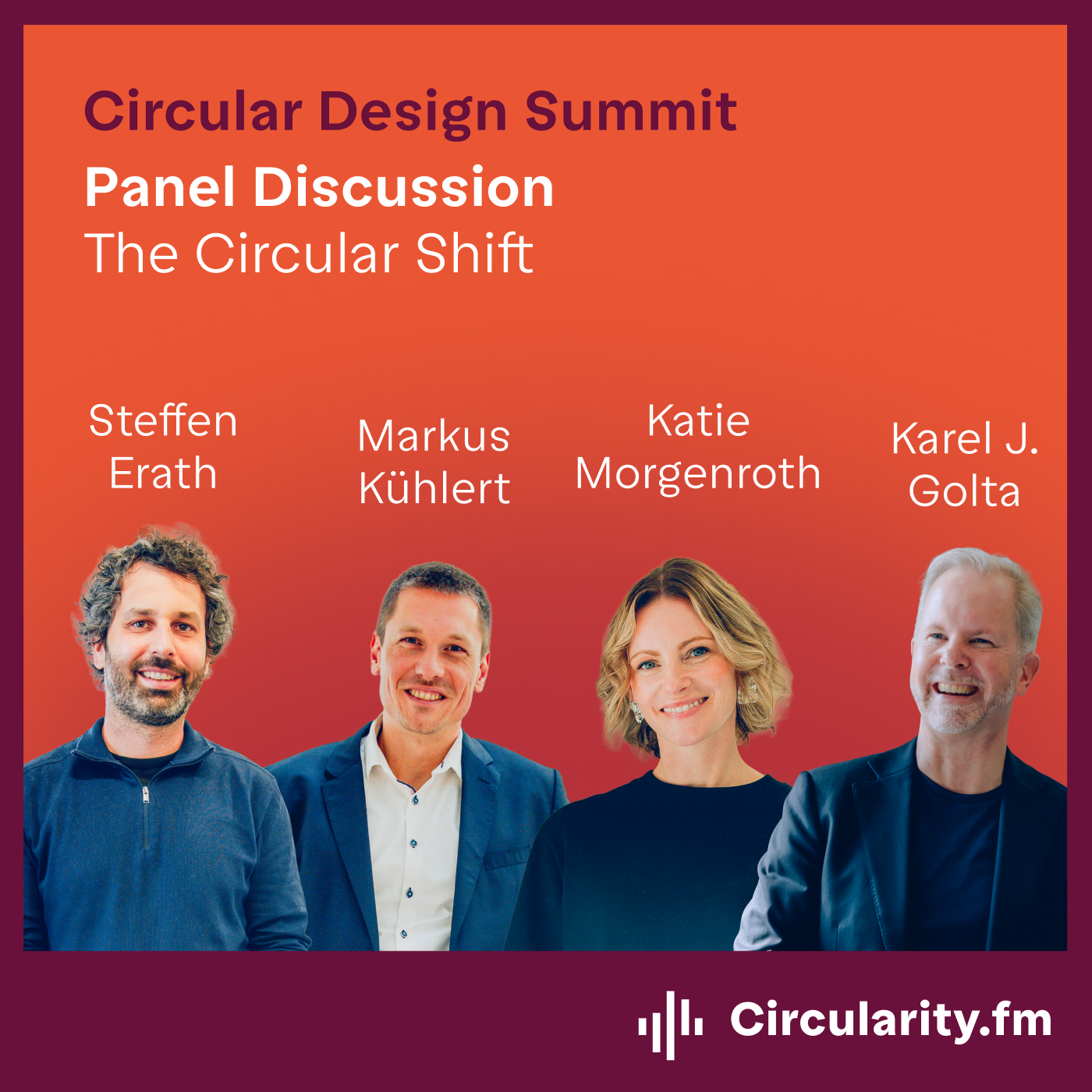
The Circular Shift Panel Discussion | Circular Design Summit 2025
This episode is a recorded panel session from the Circular Design Summit 2025 explores how design can accelerate the shift toward a circular economy by rethinking roles, materials, and systems. Moderated by Karel J. Golta, the conversation brings together perspectives from Kathie Morgenroth (Google), Steffen Erath (Hansgrohe), and Markus Kühlert (Wuppertal Institute).
The panelists discuss the n
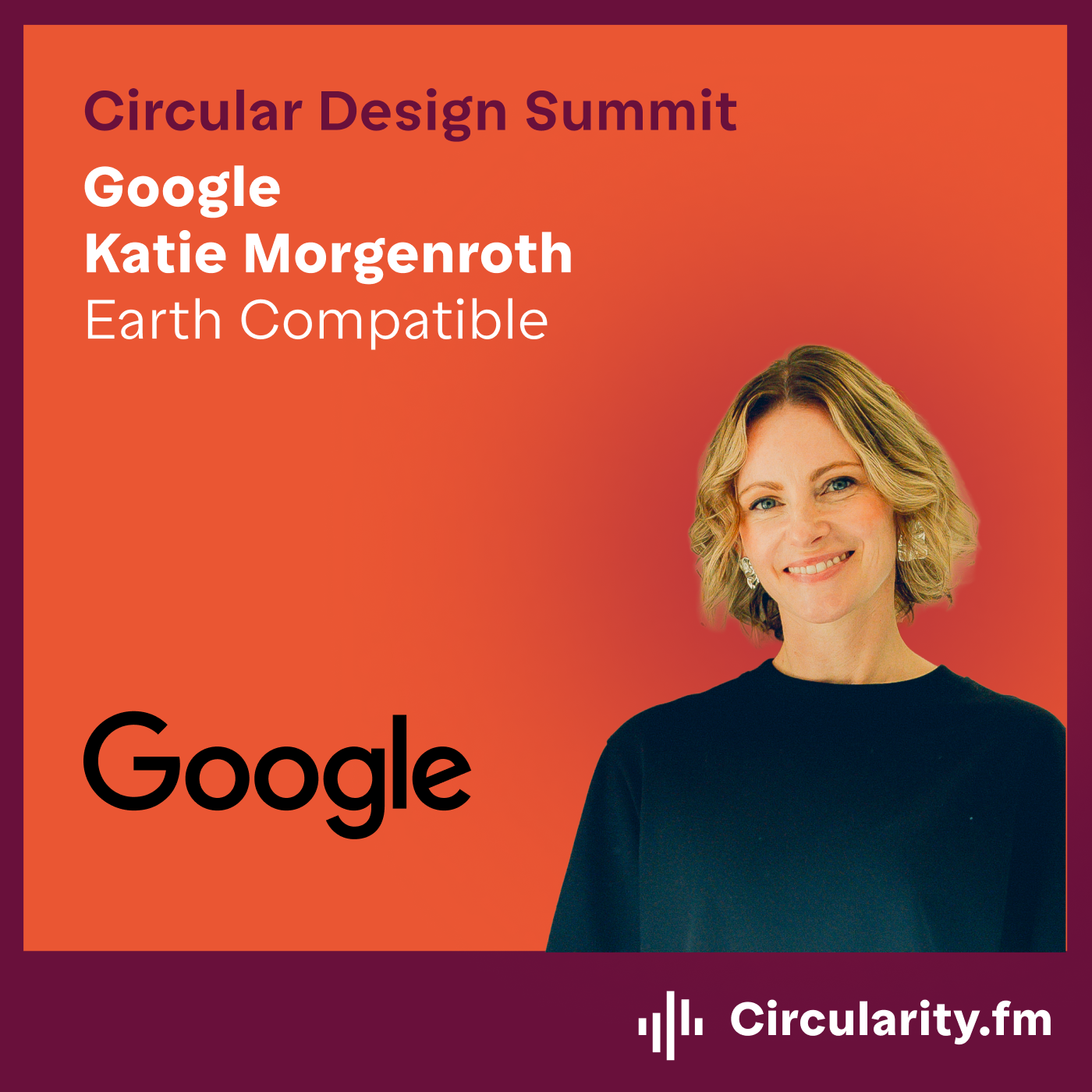
Earth Compatible by Katie Morgenroth from Google | Circular Design Summit 2025
How can design help tackle the global e-waste challenge?
In this episode, Katie Morgenroth, Head of Sustainable Design at Google, explains how her team works across hardware products like Pixel, Nest, and Fitbit to reduce environmental impact. She shares Google's approach to using recycled materials in metals and textiles, extending software support to make devices last longer, and developing 100
How can Venture Capital be Regenerative with Alessa Berg from Top Tier Impact
Regeneration is gaining traction, but what does it take to finance and scale truly regenerative businesses? In this episode, Alessa Berg, founder of Top Tier Impact, explains why regeneration requires a systemic mindset, how financial instruments can support regenerative models, and what founders need to consider before taking funding.
Alessa shares practical distinctions between debt, grants, eq
Selecting the right investors for your materials startup with Jakob Röskamp from Traceless Materials
What does it take to secure funding for asset-heavy, circular startups?
In this episode, Jakob Röskamp, CFO at Traceless Materials, shares how customer validation builds investor confidence, why off-take agreements are key to de-risking CapEx-heavy models, and how combining equity, debt, and grants can reduce the cost of capital.
While this series looks at how VCs select circular startups, it’s
How Purpose-Driven Investors and Impact Founders Accelerate Systemic Change with Tina Dreimann from Better Ventures
How can purpose-driven founders and investors work together to build the solutions our economy urgently needs?
Many startups are building solutions that target the root causes of today’s biggest challenges. But purpose-driven angel investors still have to evaluate each team individually, making it hard to fund impact at scale.
In this episode, Tina Dreimann, founder of better ventures, explains
New Critical Materials, Supply Chain Infrastructure, and Modular Solutions in the Circular Economy with Aly Bryan
What will it take to recover more critical materials when demand is growing and recovery systems aren’t keeping up?
With the growing deployment of solar panels, wind turbines, electric vehicles, and data centers, demand for metals and minerals is rising fast. But current systems for recovering and reusing these materials are limited, inefficient, or missing entirely.
In this episode, Aly Bryan,
How to Get VC funding for Circular and Impact-driven Startups with Charlotte Lafont from Ring Capital
What does it take for circular and impact-driven startups to raise funding from VCs?
In this episode, Charlotte Lafont, Principal at Ring Capital, explains how funds can integrate impact into every stage of the investment process, from evaluating impact intentionality to setting KPIs that are audited and tied to carried interest. Charlotte highlights what circular founders need to demonstrate to
How a global leader in building solutions invests in circular startups with Bengt Steinbrecher from Holcim Maqer Venture
What does it take to invest in circularity in construction - an industry defined by waste, emissions, and long scaling cycles?
In this episode, Bengt Steinbrecher of Holcim MAQER Ventures shares how one of the largest building materials companies works with startups to decarbonise the sector. From reusing 10 million tons of demolition material to testing carbon-storing concrete across Europe, Hol
Leveraging New Technologies to Decarbonise the Economy with Mark Windeknecht from World Fund | Venture Capital
Decarbonising the economy is a political goal and a commercial opportunity. How can circular startups benefit as well?
In this episode, Mark Windeknecht, Principal at World Fund, discusses the connection between decarbonisation and the circular economy. By examining the battery recycling startup Cylib, the food startup Planet A Foods and the consumer tech startup Faircado, Mark provides insights
Plastic waste as a business opportunity
in Asia & Latin America with Ellen Martin from Circulate Capital | Venture Capital
Ocean plastics are a danger to the environment and humans. Cleaning it up and avoiding it from happening is a business opportunity, though.
In this episode, Ellen Martin, Chief Impact Officer at Circulate Capital, presents how the circular startups in their portfolio tackle the plastics crisis while running profitable businesses. With venture capital investments in Asia and Latin America, Ellen h
Investing in Circular Business Models in
North America &
Europe with Maya Hassa from Circular Innovation Fund - VC
What is the better place to launch a circular statup, the US or Europe?
In this episode, Maya Hassa, Principal at Circular Innovation Fund, discusses regional differences in circular business models and stresses the possibilities a fund can offer startups when working with corporate limited partners.
This episode is part of VC for Circularity - the Venture Capital Perspective on Circular Econo
Veganz's Journey in Becoming a Cutting-edge FoodTech Company by Anja Brachmüller, Veganz | CIRCULAZE Summit
What happens when the local farmers refuse to work with you? You build your own vertical farming factory.
In this episode, Anja Brachmüller, COO at Veganz, shares the company's remarkable 13-year evolution from a single supermarket to an innovative food tech powerhouse with three factories across Europe. Discover how a small cashew cheese operation transformed Veganz's business model, and learn
The challenging “New Work World” in the circular economy by Andreas Jenne, REHAU | CIRCULAZE Summit
Everyone says that the circular economy needs cooperation. But how is that supposed to work?
In the KARE project, sixteen organisations are working to establish a regional competence centre for labour research into the circular economy of plastics. Companies of different sizes and degrees of maturity have to come together, as do competitors. In his talk at the CIRCULAZE Summit, Andreas Jenne, Hea
Transitioning From the Linear to Circular Value Chain for Solar PVs by Pamela Ong, E.ON | CIRCULAZE Summit
The expansion of Solar energy is progressing rapidly. But how do we keep this new equipment in circulation?
Pamela Ong presents a systematic analysis of the solar panel supply chain. It covers product design and stakeholder collaboration as well as supply chain incentives and regulation. Pamela's talk is based on a new report from Cambridge Institute for Sustainability Leadership, E.ON Group Inno
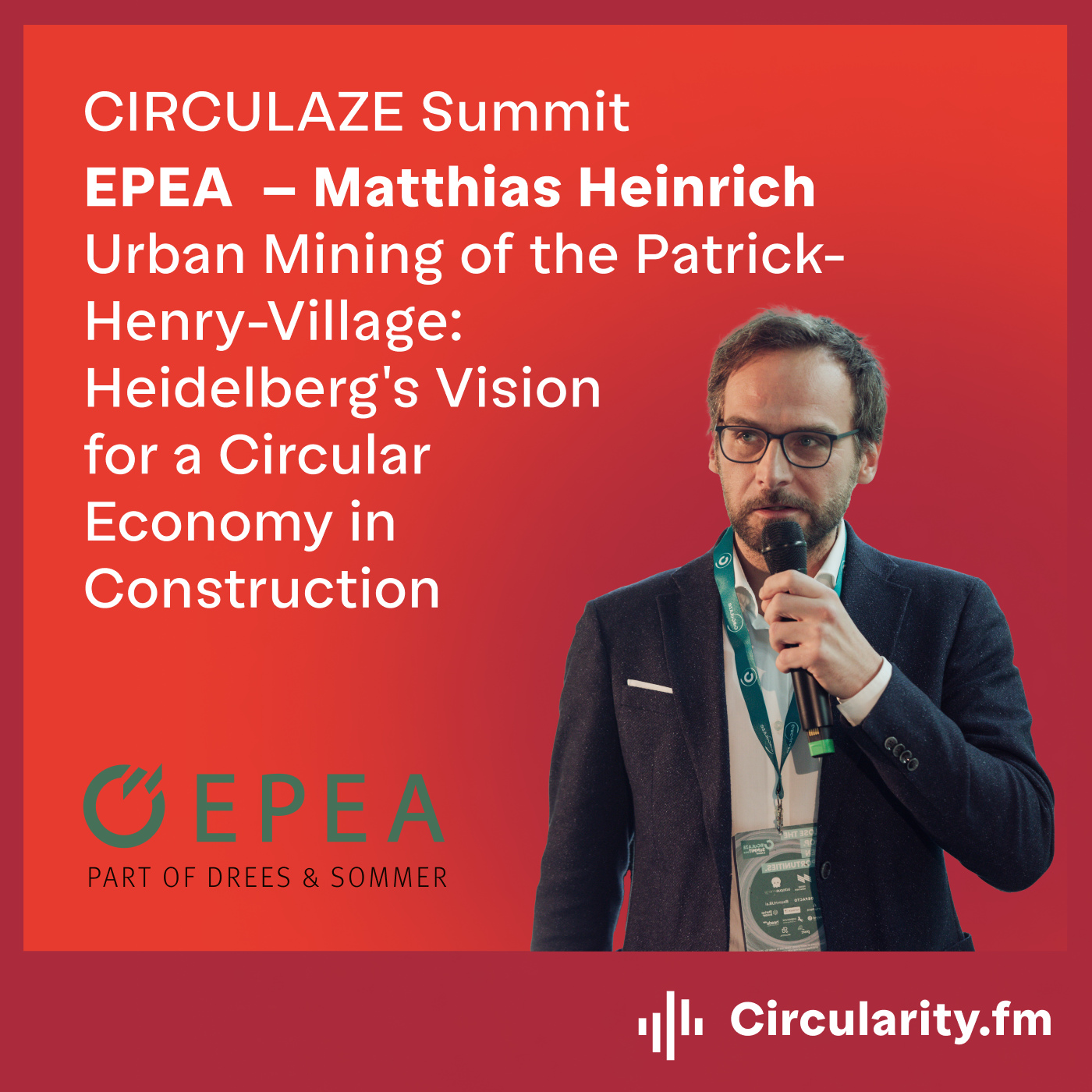
Urban Mining of the Patrick-Henry-Village: Heidelberg's Vision for a Circular Economy in Construction, M. Heinrich, EPEA
The construction industry consumes the most new resources. At the same time, they have access to an enormous reservoir of materials: old buildings. But how can these urban mines be tapped?
In his presentation, Matthias Heinrich uses the example of the Patrick Henry Village in Heidelberg to explain what is needed to reuse old buildings. You can find his presentation with illustrations on the episo
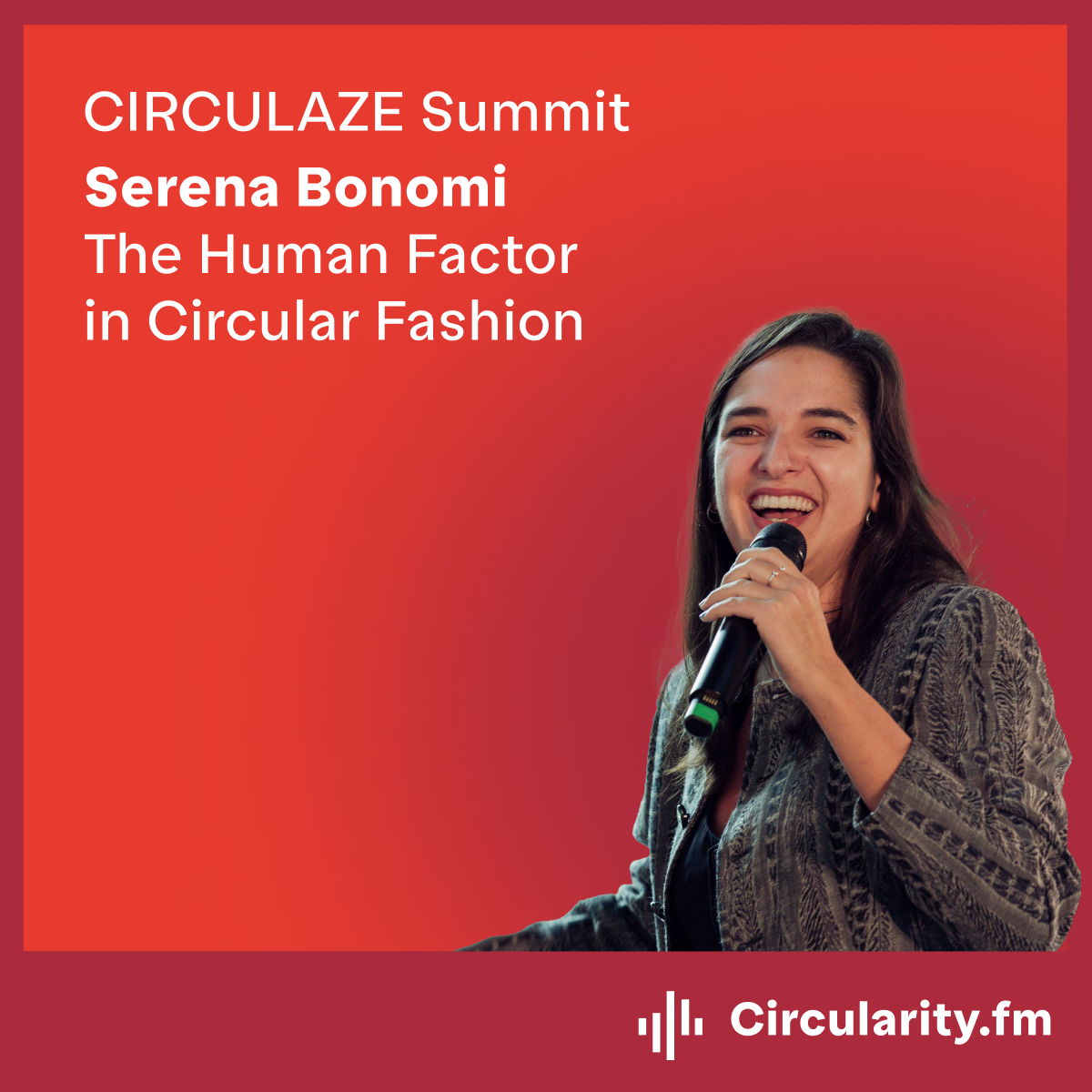
The Human Factor in Circular Fashion by Serena Bonomi, On | Circular Fashion
The circular gap is immense, even in the fashion industry. Why is it not possible to do business more circularly?
Serena Bonomi cites several reasons: from emotionality to incentives to the question of the economic system. Hear for yourself how a pioneer in circular fashion outlines problems and solutions.
This episode is part of the series about the CIRCULAZE Summit from November 2024.
Empfohlen
Lanz + Precht

Easy German: Learn German with native speakers | Deutsch lernen mit Muttersprachlern
Blautöne – Podcast der AfD-Fraktion im Bundestag

Audio Porno – Erotische Hörspiele & Kopfkino

unter den linden - Podcast

PRIMO MEDICO Fachärzte Talk: Podcasts aus Gesundheit & Medizin

WDR 2 Jörg Thadeusz - Der Talk

Nicos Weg – German course A1 | Videos | DW Learn German

heiseshow

Wohnsinnig vernetzt

5 Minuten Märchen - Josephine die kleine Maus - kurze Hörspiele für kleine Abenteurer
Elefantenrunde
