
Hertie School
The Hertie School is a private university in Berlin that focuses on public policy, governance, and international affairs. This podcast likely features discussions, lectures, and interviews with faculty, students, and experts on contemporary political and societal issues. It aims to inform and engage listeners on topics that shape our world today and tomorrow.
Folgen
S3 Episode 11: Exploring hybrid threats with Alex Romero
In this episode, David Backovsky interviews Alex Romero, visiting professor at Sciences Po and founder of Alto Intelligence. They discuss all things hybrid threats – what they are, their history and how the rise of subthreshhold operations challenges the geopolitical status quo. Listen now to find out more!
S3 Episode 10: All things cyber conflict with Matthias Schulze
In the 10th episode of Season 3 David Backovsky interviews Matthias Schulze of the IFSH on all things cyber conflict. They discuss the developing perspectives on what role cyber conflict can play in general and in relation to kinetic operations, and beyond. They also discuss the impacts of recent conflicts including the Russian Invasion of Ukraine on cyber. If you want to get a comprehensive overv
S3 Episode 09: The cyber dimension of the Russian full-scale invasion of Ukraine with Nadiya Kostyuk
In this episode David Backovsky interviews Professor Nadiya Kostyuk of Carnegie Mellon University about the cyber elements of the Russian invasion of Ukraine. They discuss what the expectations were before the war, what this special empirical case study teaches us about cyber conflict and much more.
Tune in and find out more!
S3 Episode 08: Creating secure and responsible AI systems with Rumman Chowdhury
In today's episode David Backovsky sits down with Rumman Chowdhury, CEO of Humane Intelligence and the United States Science Envoy for Artificial Intelligence to discuss the recent developments in AI systems and how to ensure that AI is developed in a secure and responsible way. David and Rumman touch on many aspects of AI, including the anthropomorphisation that it falls victim to, AI red-teaming
S3 Episode 07: On unlawful digital surveillance and spyware with Elina Castillo Jiménez & Rebecca White
Are you interested in better understanding spyware and the digital surveillance industry?
Berlin Security Beat host David Backovsky interviews two experts from Amnesty International's Security Lab, Elina Castillo Jiménez & Rebecca White. Together they discuss what unlawful digital surveillance entails, the great cost that its use has on its victims and what can be done about it. The episode also
S3 Episode 06: On digital state repression with Anita Gohdes
In this episode David Backovsky interviews with Anita Gohdes, Professor of International and Cyber Security at the Centre for International Security and the Hertie School. Anita has recently published, "Repression in the Digital Age: Surveillance, Censorship, and the Dynamics of State Violence" with Oxford University Press. They sat down to discuss what digital state repression looks like, how it
S3 Episode 05: U.S. cyber foreign policy with William Klein
Would you like like to better understand the role of the United States in cyber diplomacy?
This episode features William Klein, a former U.S. State Diplomat with over two decades of experience with a special focus on China. William and David discuss a range of issues including the evolution of U.S. cyber foreign policy, China, export controls, digital arms control and more. William Klein is now a
S3 Episode 04: Cyber policy without a template with Heli Tiirmaa-Klaar
Do you want to learn more about how cyber policy institutions were built across the last two decades?
In our newest episode David Backovsky of the Berlin Security Beat interviews Heli Tiirmaa-Klaar, Director of the Digital Society Institute at the ESMT in Berlin, on what it was like to build up cyber policy & diplomacy institutions across the Ministry of Defense of Estonia, Ministry of Foreign Af
S3 Episode 03: Cyber Crime and the Human Factor with Rutger Leukfeldt
In the second episode of our two-parter on cyber threats we focus on cybercrime. David Backovsky talks to Rutger Leukfeldt, Professor of Governing Cybercrime at Leiden University and Senior Researcher at the Netherlands Institute for the Study of Crime and Law Enforcement. We discuss everything from hackers to criminal nexuses to hacktivists, ransomware and social engineering. How cyber criminals
S3 Episode 02: Threat Intelligence, State Actors & China with Jiro Minier
In the first half of our two-parter on cyber threats we'll be discussing cyber threat intelligence (CTI) and state actors with one of Berlin's leading threat intelligence experts, Jiro Minier. We cover the basics of CTI and then explore the geopolitical side with China as a case study of how state threat actor nexuses operate.
Jiro Minier is Lead, Threat Intelligence Research and Analysis at the
S3 Episode 01: Entering Cyber Security with Kritika Roy & Finn Hagemann
In the opening episode of the 3rd season, we interview two Hertie School alumni, Kritika Roy and Finn Hagemann on their transition to the industry, what their work in cybersecurity entails and what advice they'd have for newcomers on entering the industry. Tune in to find out more!
S2 Episode 06: Working for NATO with Vlasta Zekulic
In this episode we delve into the work of NATO with the Branch Head for Strategic Issues Engagements at NATO Allied Command Transformation. We cover a wide range of issues, from Vlasta's experiences as one of the few female recruits at Citadel, to her insights on the organizaitonal dynamics of NATO and the core skills and tools that young professionals need to succeed in NATO's operational environ
S2 Episode 05: From academia to policy with Gorana Grgić
In this episode we interview Dr. Gorana Grgić, Senior Lecturer at the Department of Government and International Relations and the United States Studies Centre at the University of Sydney. Gorana is a world expert on U.S. and transatlantic security policy and has collaborated with a range of institutions from the EU to NATO to the Australian Ministry of Defence. In this episode we discuss a wide-r
S2 Episode 04: How to be a nuclear analyst with Ankit Panda
In this episode of the Berlin Security Beat, we welcome Ankit Panda, a renowned nuclear analyst and Stanton Senior Fellow at the Carnegie Endowment's Nuclear Policy Program. Ankit, known for his expertise on the Asia-Pacific, nuclear strategy, arms control, and emerging technologies, gives a glimpse into the life of a nuclear analyst. He shares his insights on the obstacles upcoming professionals
S2 Episode 03: What intelligence work is really like with Cato Stensland
In this month’s episode we interview Cato Stensland, former intelligence officer in the secret services in Norway. We cover a wide-range of issues from the nature of intelligence work, to open source intelligence, to the issues with security clearances.
S2 Episode 02: Creating nuclear strategy with Brad Roberts
In this episode we speak with Brad Roberts, director of the Center for Global Security Research at Lawrence Livermore National Laboratory about what it takes to be part of the nuclear strategic community, his work for the Obama administration and some advice for future nuclear analysts.
For more information on the Center for Global Security Research, please visit: https://cgsr.llnl.gov/
For mor
S2 Episode 01: From journalism to think tanks with Constanze Stelzenmüller
In the pilot episode of the second season, Constanze Stelzenmüller recounts the development of her career, from journalism to becoming a director at Brookings, and the challenges and transitions that came with her path.
Theme Copyright: Music by amaksi from Pixabay
S1 Episode 13: “Sports and Autocrats”
Dr. Christian Gläßel, postdoctoral researcher at the Centre for International Security at the Hertie School, and Dr. Adam Scharpf, incoming assistant professor at the Department of Political Science at the University of Copenhagen, both experts on authoritarian regimes, join Dr. Katharina Emschermann, Deputy Director at the Centre, to talk about “sportswashing”, i.e. the instrumentalization of spo
S1 Episode 12: “Nobel Peace Prize Special: State Repression of Journalists”
Anita Gohdes, Professor of International and Cyber Security at the Hertie School, and an expert on contentious politics in the cyber realm, joins Dr. Katharina Emschermann, Deputy Director at the Centre for International Security, to talk about journalist killings. They discuss:
- the conditions that put journalists in danger in institutional democracies,
- the instrumentalization of social media,
S1 Episode 11: “When Sanctions Do (Not) Work”
Alistair Wellmann, a Practice Fellow at the Centre for International Security at the Hertie School, and an expert on sanctions implementation and effectiveness, joins Dr. Katharina Emschermann, Deputy Director at the Centre for International Security, to talk about sanctions. They discuss:
• why states impose sanctions,
• different sanction types,
• when sanctions work and when they don’t, and
• h
S1 Episode 10: “20 Years of ‘War on Terror’”
Julian Wucherpfennig, Professor of International Affairs and Security at the Hertie School, and an expert on ethnic civil war and terrorism, joins Dr. Katharina Emschermann, Deputy Director at the Centre for International Security, on the eve of the 20th anniversary of the 9/11 attacks to talk about terrorism. They discuss:
• what terrorists want,
• what went wrong in the so-called war on terror,
S1 Episode 09: “Nuclear Weapons, Then and Now”
Marina Henke, Professor of International Relations at the Hertie School and Director of the Centre for International Security, an expert on nuclear security, military interventions and European defense policy, joins Dr. Katharina Emschermann, Deputy Director at the Centre for International Security, to talk about nuclear security. They discuss:
• the Centre’s newest research project “Understanding
S1 Episode 08: “Cyber (In-)Security”
Tarah Wheeler, a Cyber Project Fellow at the Belfer Center for Science and International Affairs at Harvard University’s Kennedy School of Government, and an expert on information security and international conflict, joins Dr. Katharina Emschermann, Deputy Director at the Centre for International Security, to talk about cyber security. They discuss:
• the difference between cyber espionage and cyb
S1 Episode 07: "Peacekeeping - Politics. Practice. Impact."
Andrea Ruggeri, Professor of Political Science and International Relations at the University of Oxford, and an expert on peacekeeping and civil wars, joins Dr. Katharina Emschermann, Deputy Director at the Centre for International Security, to talk about UN peacekeeping. They discuss:
• why and how peacekeeping works,
• when to deploy peacekeepers – and when not to,
• how to use diversity in miss
S1 Episode 06: “Power Struggles in the South China Sea”
Sara Mitchell, Professor of Political Science at the University of Iowa, and an expert on international conflict, esp. territorial, river and maritime issues, joins Dr. Katharina Emschermann, Deputy Director at the Centre for International Security, to talk about maritime disputes. They discuss:
• the ins and outs of the disputes in the South China Sea,
• how climate change increases the risk of
S1 Episode 05: “Libya, 10 Years Later”
Brian McQuinn, Assistant Professor of International Studies at the University of Regina, Canada, and an expert on armed groups and peace building, joins Dr. Katharina Emschermann, Deputy Director at the Centre for International Security, to talk about Libya. They discuss:
• the origins of the 2011 Libyan uprisings,
• the “who’s who” of the ensuing conflict,
• his experience living among rebels i
S1 Episode 04: "Grand Strategy for the Global Disorder"
Stacie Goddard, Professor of Political Science at Wellesley College and an expert on international order and global power politics, joins Dr. Katharina Emschermann, Deputy Director at the Centre for International Security, to talk about grand strategy. They discuss:
• grand-strategic successes and failures,
• why talk isn’t cheap,
• how to keep a U.S.-China “Cold War 2.0” from becoming a self-f
S1 Episode 03: “Germany’s Post-Merkel Foreign Policy”
Kai Oppermann, Professor for International Politics at the Chemnitz University of Technology and an expert on German Foreign Policy and the dynamics of coalition governments joins Dr. Katharina Emschermann, Deputy Director at the Centre for International Security, in dissecting Europe’s “top risk” in 2021 – the German Federal Election and its foreign policy implications. They discuss:
• how to lo
S1 Episode 02: “Conflicts We Can (Not) Predict”
Nils Metternich, Associate Professor in International Relations at the University College London and an expert on civil conflicts and the prediction of their dynamics joins Dr. Katharina Emschermann, Deputy Director at the Centre for International Security, in looking to the future. They discuss:
- what we can and cannot predict in international security,
- why a Nobel Peace Prize winner we
S1 Episode 01: "What Joe Biden's Win Means for the World"
Sarah Kreps, Professor of Government at Cornell University, U.S. Air Force veteran and seasoned policy advisor joins Katharina Emschermann, Deputy Director at the Centre for International Security, to discuss key challenges for the next U.S. administration, the crisis of NATO and how (not) to overcome it, Trump’s vs. Biden’s approach to China, and why military restraint might not be the new foreig
What does it take to be a digital transformation leader - in government and beyond?
Listen to a discussion with Siim Sikkut, former government CIO of Estonia, about his new book 'Digital Government Excellence: Lessons from Effective Digital Leaders'. The event took place on September 23 at the Hertie School and was moderated by Luciana Cingolani with an introduction by Gerhard Hammerschmid.

Challenges in International Security: The limits of our understanding of cyber warfare
Scholars have become more interested in secret statecraft in global
politics, especially in its digital manifestations. Unfortunately, the
self-hiding nature of the phenomena make them hard to study.
Jon Lindsay, Associate Professor at the School of Cybersecurity and Privacy and Sam Nunn School of International Affairs at the Georgia Institute of Technology, points out that this is true in spade
Challenges in International Security: An introduction to the art and science of deterrence
This year's iteration of our speaker series Challenges in International Security examines the concept of deterrence, often defined as “the action of discouraging an action or event through instilling doubt or fear of the consequences” (Oxford Dictionary).
In the realm of international security, deterrence is one of the most widely used political strategies, yet it’s application is very complex a
Preventing nuclear proliferation and reassuring America's allies - 10 May, 2021
In recent years, questions about the credibility of the US nuclear guarantee have re-emerged, leading to debates among some US allies about potential alternatives to US extended deterrence. A new task force report, chaired by Chuck Hagel, Malcolm Rifkind and Kevin Rudd with Ivo Daalder, analyzes the risk of potential nuclear proliferation among US allies and provides a set of policy recommendation
Does NATO’s nuclear sharing arrangement in Europe have a future?
NATO's nuclear sharing arrangement – the deployment of some 200 U.S. nuclear weapons in five European NATO member states as part of NATO's nuclear deterrence strategy – has come under pressure. Some analysts see the current nuclear-sharing arrangement as technologically outdated and no longer capable of deterring possible aggression against NATO. For others, the immediate elimination of these weap
Challenges in International Security: Far-right extremism in the world today
The signs of growing far-right extremism are all around us, and communities across the globe are struggling to understand how so many people are being radicalized and why they are increasingly attracted to violent movements. In this talk, Cynthia Miller-Idriss argues that instead of focusing on the how and why of far-right radicalization, we might seek answers in the physical and virtual spaces wh
Book launch: "Limits of Supranational Justice"
With its contextualised analysis of the European Court of Human Rights' (ECtHR) engagement in Turkey's Kurdish conflict since the early 1990s, "Limits of Supranational Justice" makes a much-needed contribution to scholarships on supranational courts and legal mobilisation. Based on a socio-legal account of the efforts of Kurdish lawyers in mobilising the ECtHR on behalf of abducted, executed, tort
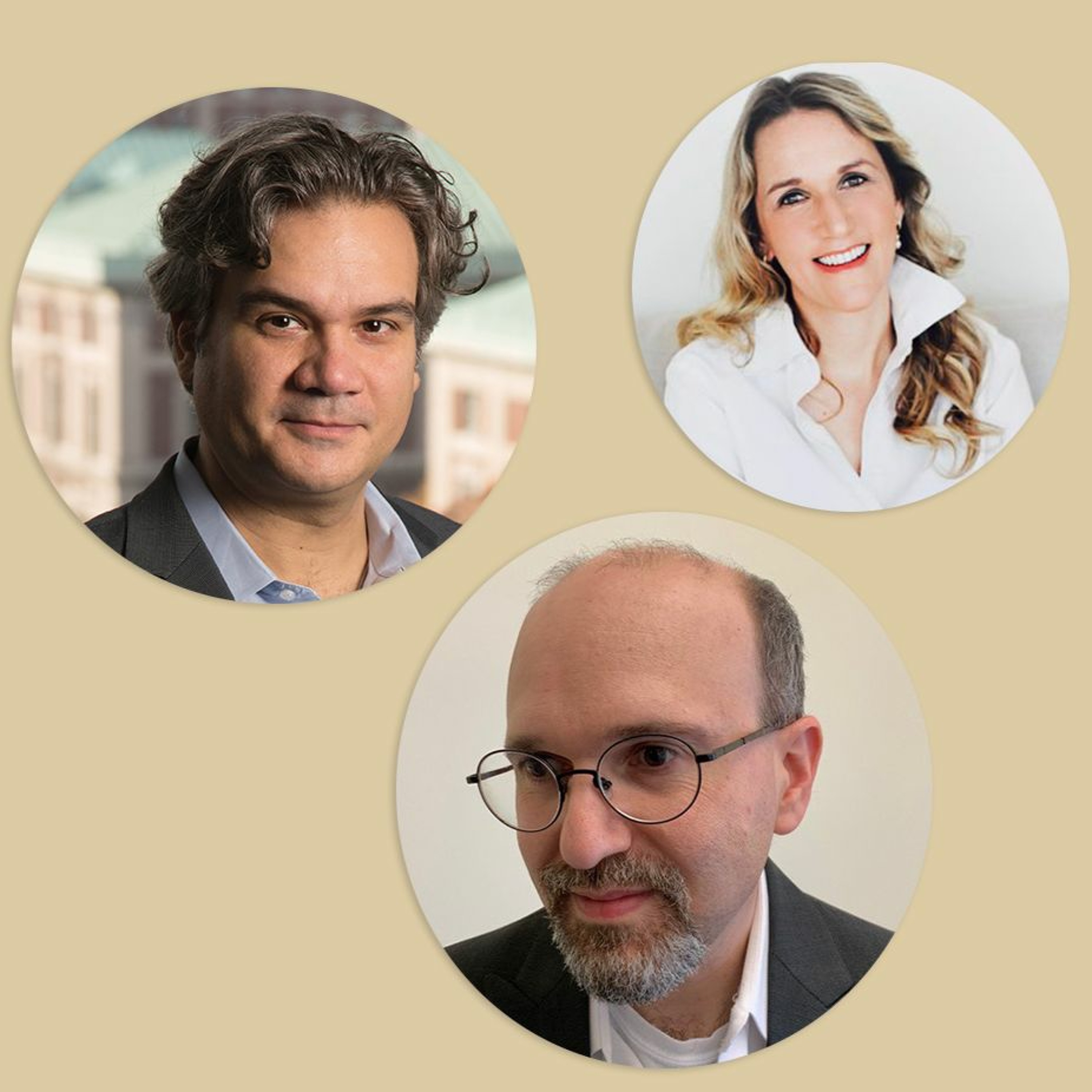
Challenges in international security: Why Biden can’t restore US global hegemony
Listen to a presentation by Daniel Nexon and Alexander Cooley based on their recent book Exit from Hegemony: The Unravelling of American Global Order.
In Exit from Hegemony, Cooley and Nexon explore three processes that have eroded US leadership: exit from above via great-power challengers, exit from below via weaker states leveraging the availability of new patrons, and exit from within via coun
The German Constitutional Court: A Threat to European Unity?
Germany’s Constitutional Court has long been a powerful actor within the German political system. Recent decisions of the Court, however, indicate its increasing willingness to flex its muscles in European politics too. The German Court’s action have received a torrent of criticism: that it is undermining EU law, overstepping its judicial mandate and even lending implicit support to governments un
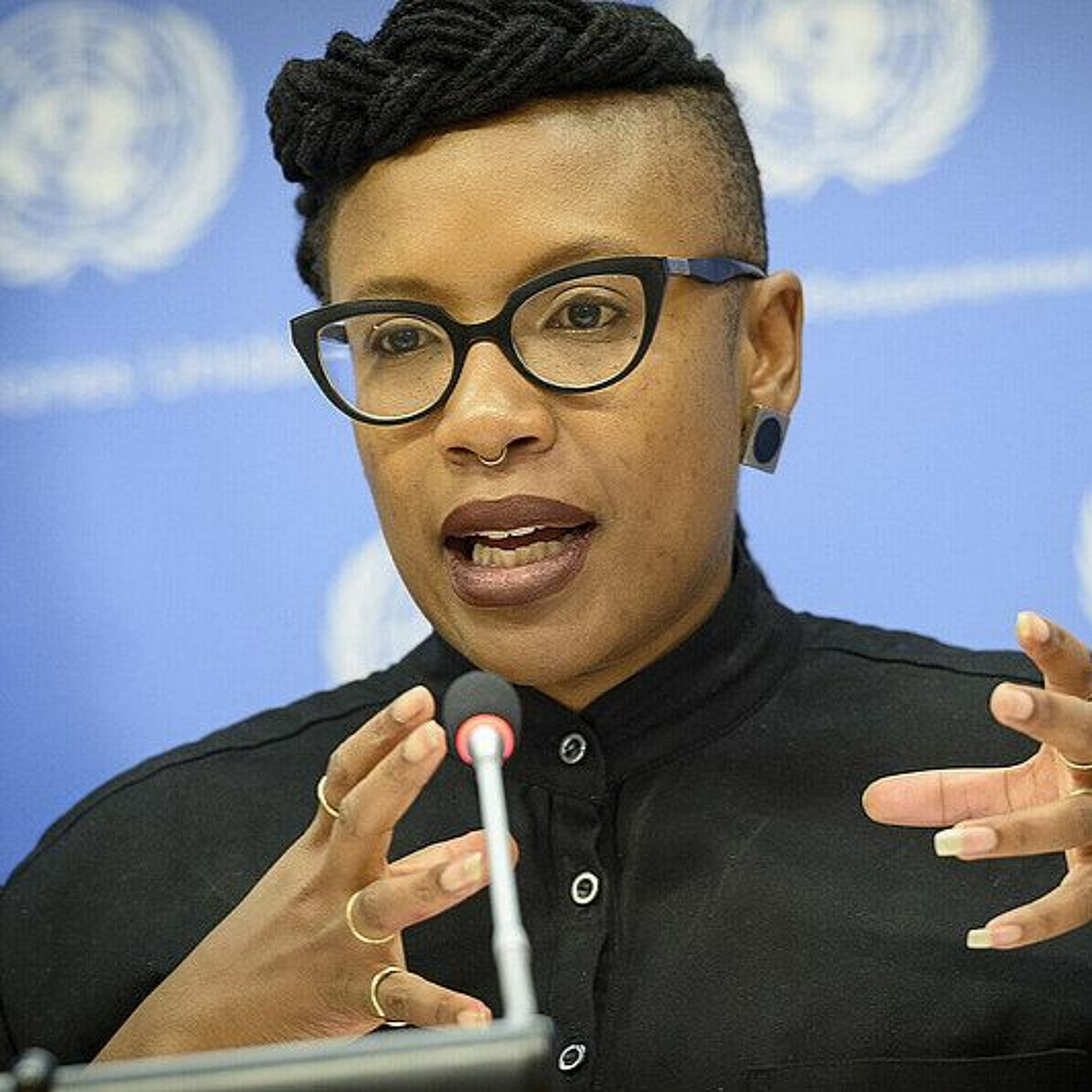
Racial borders - a presentation by Tendayi Achiume
he Centre for Fundamental Rights is honoured to welcome Tendayi Achiume for a talk on racial borders. This presentation will aim to discuss the intersection between racial injustice and migration governance from international law perspective.
Tendayi Achiume is Professor of Law at the University of California, Los Angeles School of Law, and a research associate of the African Center for Migration
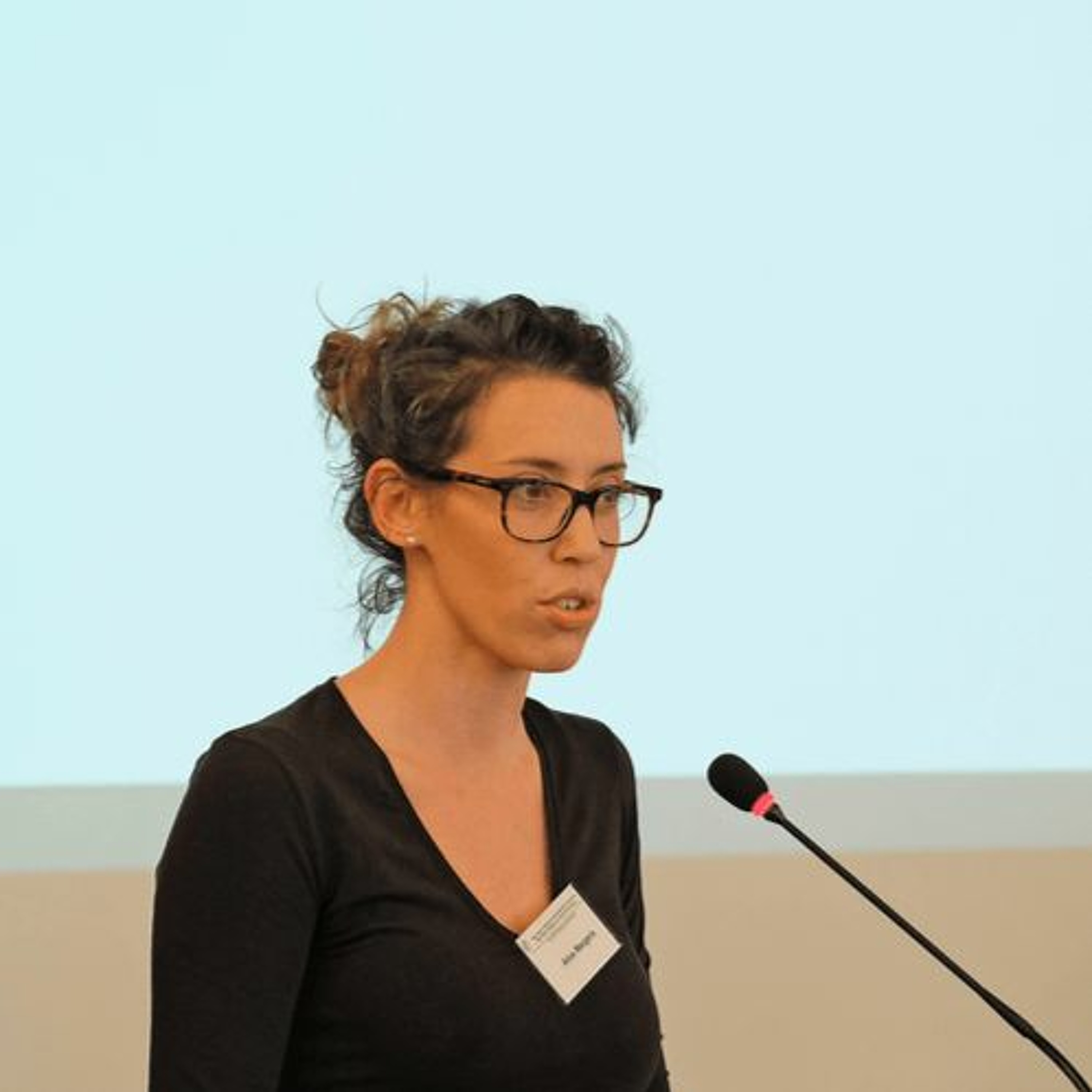
Book launch: "The Construction of Fatherhood"
On 16 September, Alice Margaria opened the programme of the Fundamental Rights Research Colloquium for the new academic year with a presentation of her book, The Construction of Fatherhood: The Jurisprudence of the European Court of Human Rights (Cambridge University Press, 2019). Michaela Kreyenfeld will be a discussant of the book.
Spotlight on hotspots and the new EU Migration Pact
In November 2019, the head of the EU Fundamental Rights Agency described the EU ‘hotspot’ in Moria, Lesbos, Greece, as “the single most worrying fundamental rights issue that we are confronting anywhere in the European Union.” An overcrowded place of confinement for those seeking refuge in the EU, it was destroyed in a devastating fire days ago, leaving nearly 13,000 men, women, and children with
Fundamental rights in EU policy-making: The effects and advantages of institutional diversity
In an online presentation on 20 May, Mark Dawson, Professor of European Law and Governance at the Hertie School, discussed how the EU’s political process affects the level of rights protection afforded by EU law. During the presentation the two stages of the political process affects were discussed: first, the analysis of how institutional politics plays an important role in the evolution of the

Covid-19 and the German Constitution
How far does the German constitution, compared to other legal orders, allow for fundamental rights to be restricted in times of crises? How far can the German State change its institutional set-up as well as its legislative procedure to adjust to crisis mode? Where are the constitutional limits to restrictions such as curfews, social distancing and forced closure of businesses and has the German S
Fundamental rights during and after the COVID-19 pandemic
A webinar presentation by Başak Çalı, Professor of International Law and Director of the Centre for Fundamental Rights at the Hertie School.
Fundamental rights-based analysis offers an important legal and ethical yardstick to evaluate the responses of states to the COVID-19 pandemic: Have states around the world tackled the pandemic through rights-protecting and rights-respecting policies? Have
What are the positive aspects of moving online? | Online Education Training Series #4
In Episode 4 of our Hertie School Online Education Training Series, we talk about why it can be a good thing to be online and take the innovation with us back on campus
This podcast series is created by Annika Zorn, Director Digital Learning and PhD Programmes at the Hertie School. Annika is the founder of the Florence Online School of Regulation, trainer of early-career researchers in teaching
Out of sight, out of mind. How to stay in touch. | Online Education Training Series #3
In Episode 3 of our Online Education Training Series, we talk about how to stay in touch with your students.
+++ Formative feedback to get a better insight into what is happening in class +++
In your course, you assess the learning of your students - often at the end of the semester or, for example, as a mid-term exam. Students might have to give a presentation or submit other graded assignments.
Why it is a good idea to pre-record your lecture | Online Education Training Series #2
In Episode 2 of our Hertie School Online Education Training Series, we talk about why it is a good idea to pre-record your lecture (anyway).
+++ Tools and ideas in this podcast +++
Warm-up your voice before you start recording your lecture:
Many professional speakers use tongue twisters to do so. Find some examples here that warm up your voice and mouth for different sounds: https://www.ef.com
Getting your online class off the ground | Online Education Training Series #1
In Episode 1 of our Hertie School Online Education Training Series, we talk about why your first class online might be especially challenging.
+++ Tools and ideas in this podcast +++
Create a word cloud in your first class to see where people are connecting from and share it on the main screen. Two tools you can use to do that:
- PollEveryWhere: https://www.polleverywhere.com/word-cloud
- Answer

The next state of digital public services: Experiences from Estonia
Estonian govt CIO Siim Sikkut and Gerhard Hammerschmid discuss Estonia’s digital transformation.
Siim Sikkut, the Republic of Estonia's Chief Information Officer and Gerhard Hammerschmid, Professor of Public and Financial Management and Director of the Hertie School Centre for Digital Governance discussed on 11 March what lessons Germany and other countries might draw from Estonia's digital tran
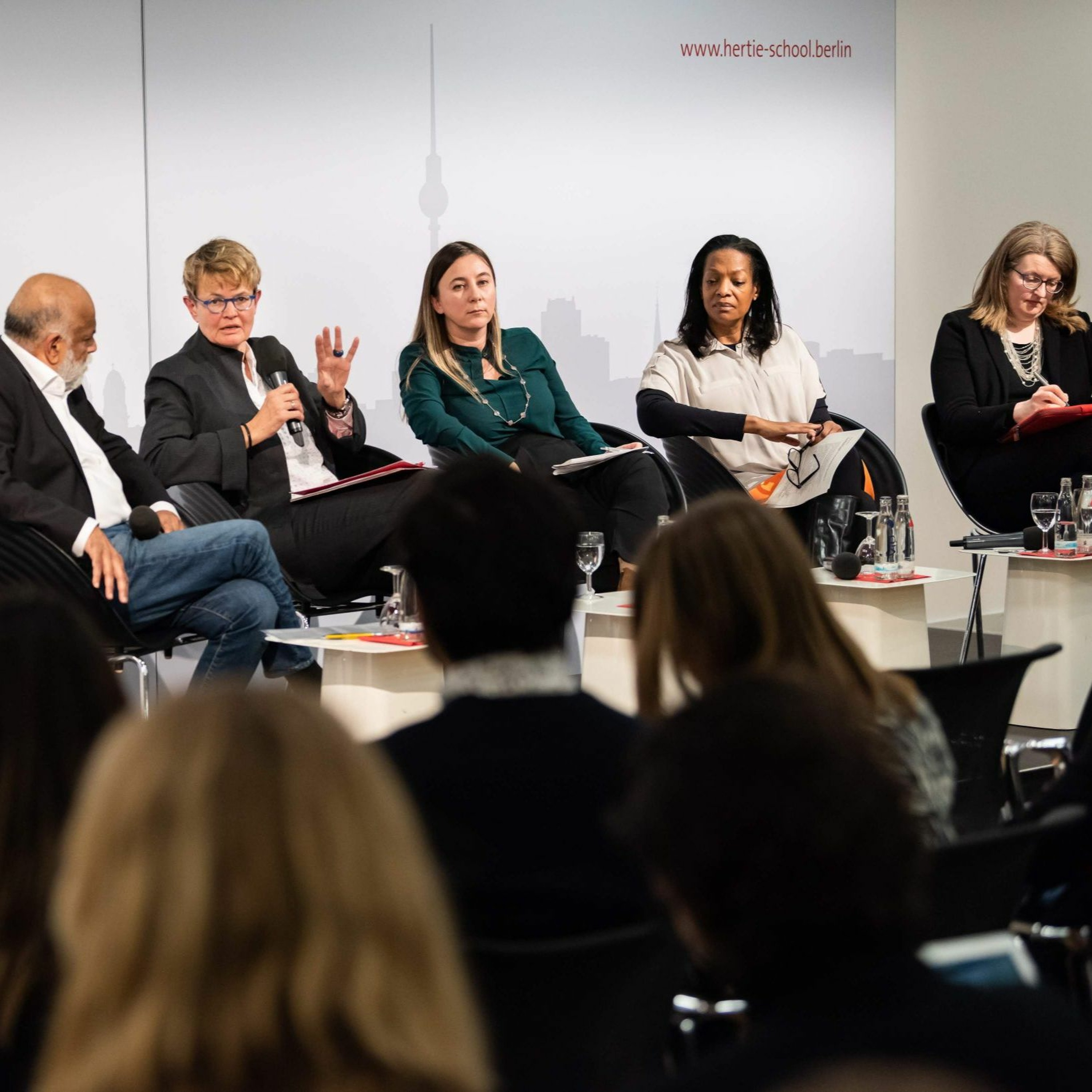
Centre for Fundamental Rights: Are fundamental rights losing or gaining ground?
Global trends suggest that norms and institutions of fundamental rights are losing ground. Many governments and political movements explicitly deny fundamental rights' primacy, and some even violate them with impunity. Some political actors and scholars question the centrality and utility of fundamental rights, claiming that they undermine other values such as security, cultural identity, econom
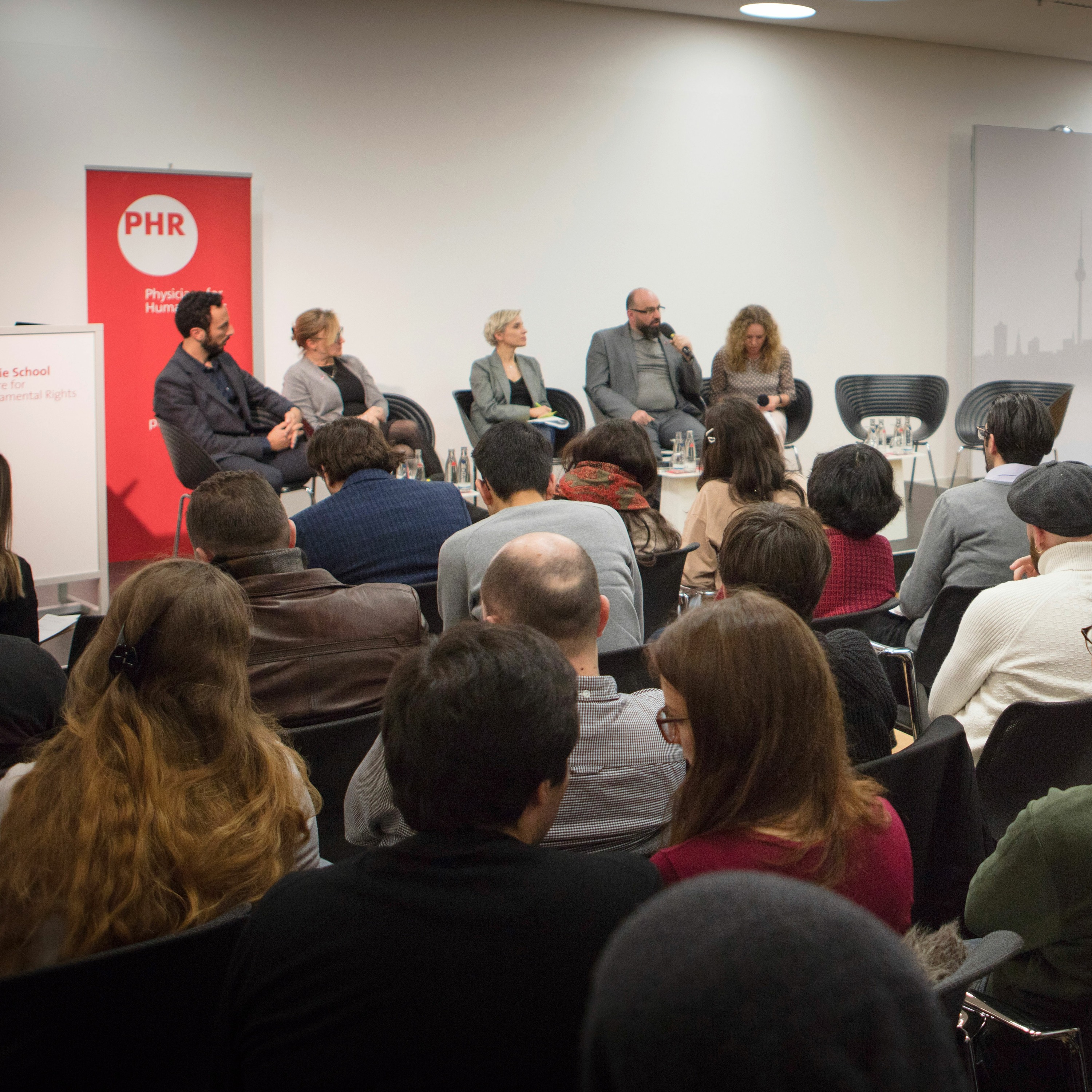
The arrest, detention, and torture of health workers by the Syrian government
Panel discusses findings of the Physicians for Human Rights report at Centre for Fundamental Rights event.
Physicians for Human Rights (PHR) presented research into the arrest, detention, and torture of health workers by the Syrian government at an event on 4 December hosted by the Hertie School Centre for Fundamental Rights. The report, “'My only crime was that I was a doctor': How the Syrian g
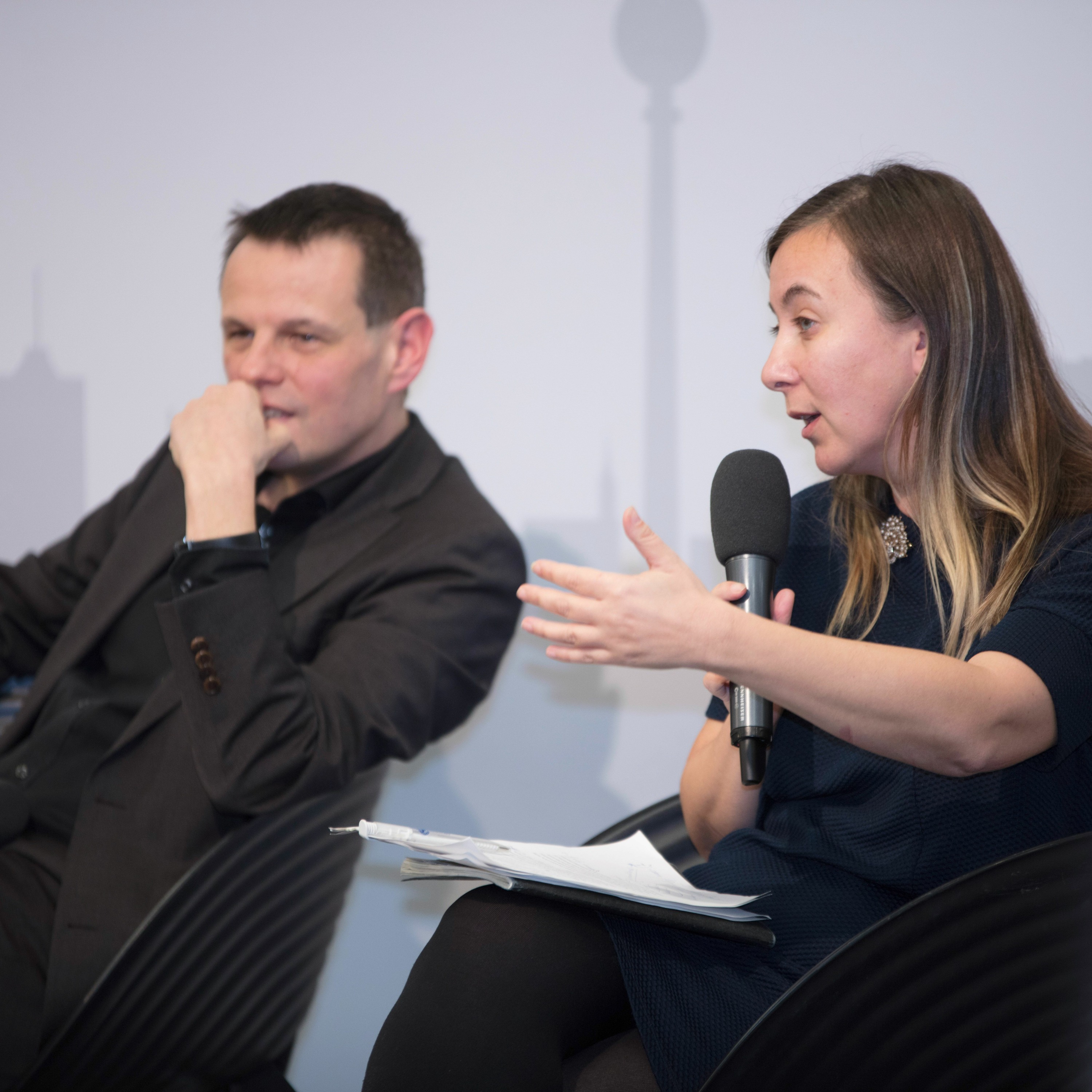
Squaring the circle? Fundamental right to a minimum standard of living and welfare conditionality
A discussion following the German Federal Constitutional Court’s decision on 5 November 2019 declaring the sanctions imposed on recipients of unemployment benefits in part unconstitutional.
Hosted by the Hertie School Centre for Fundamental Rights.
The “Hartz IV” German labour market reform of 2005 has long been controversial - in particular, placing conditions on welfare recipients to receive b
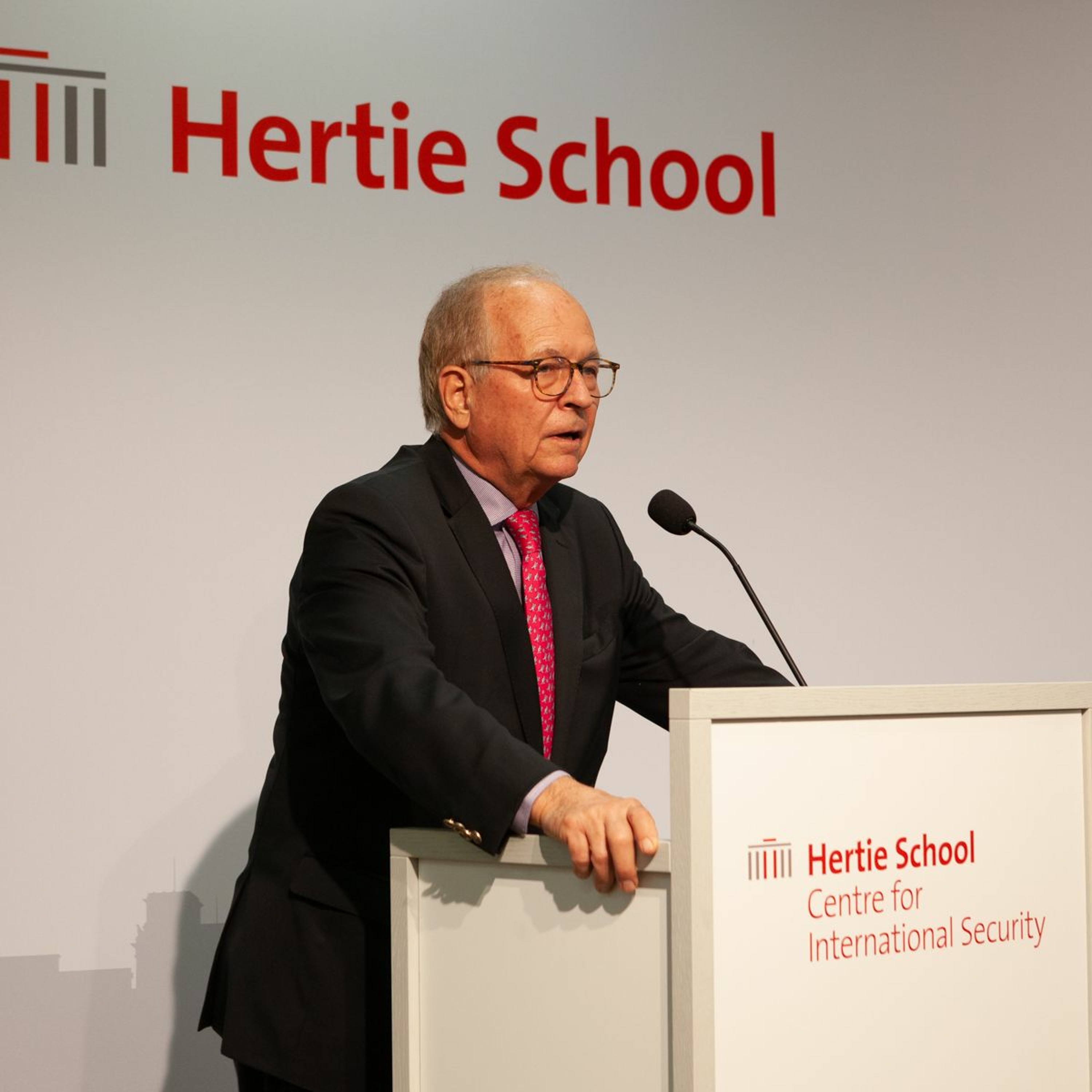
Security and climate change: Fixing the missing links?
Climate change is increasingly considered a security threat with potentially far-reaching implications for the geostrategic environment. Through large-scale migration, increased border tensions, and greater demands for rescue and evacuation efforts, climate change potentially impacts the individual security of people and the viability of vulnerable states to an extent that exceeds existing disaste
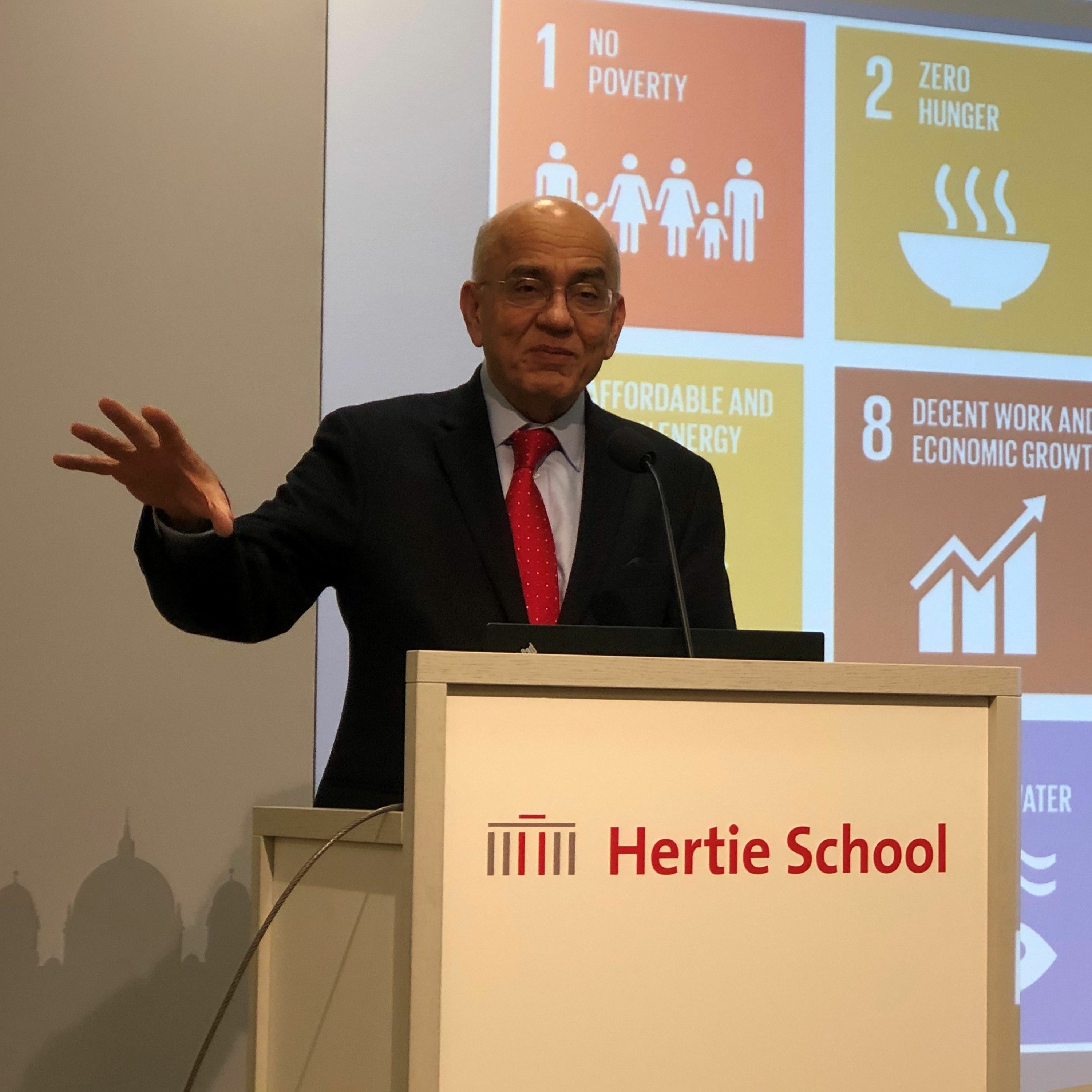
Closing the SDG financing gap
Keynote and discussion with Masood Ahmed, President of the Center for Global Development.
Major constraints to achieving the Sustainable Development Goals (SDGs) include limited financing, inadequate infrastructure, poor quality institutions, and social norms. In this talk, Masood Ahmed focuses on the financing challenges related to achieving the SDGs. He discusses the low levels of private inves
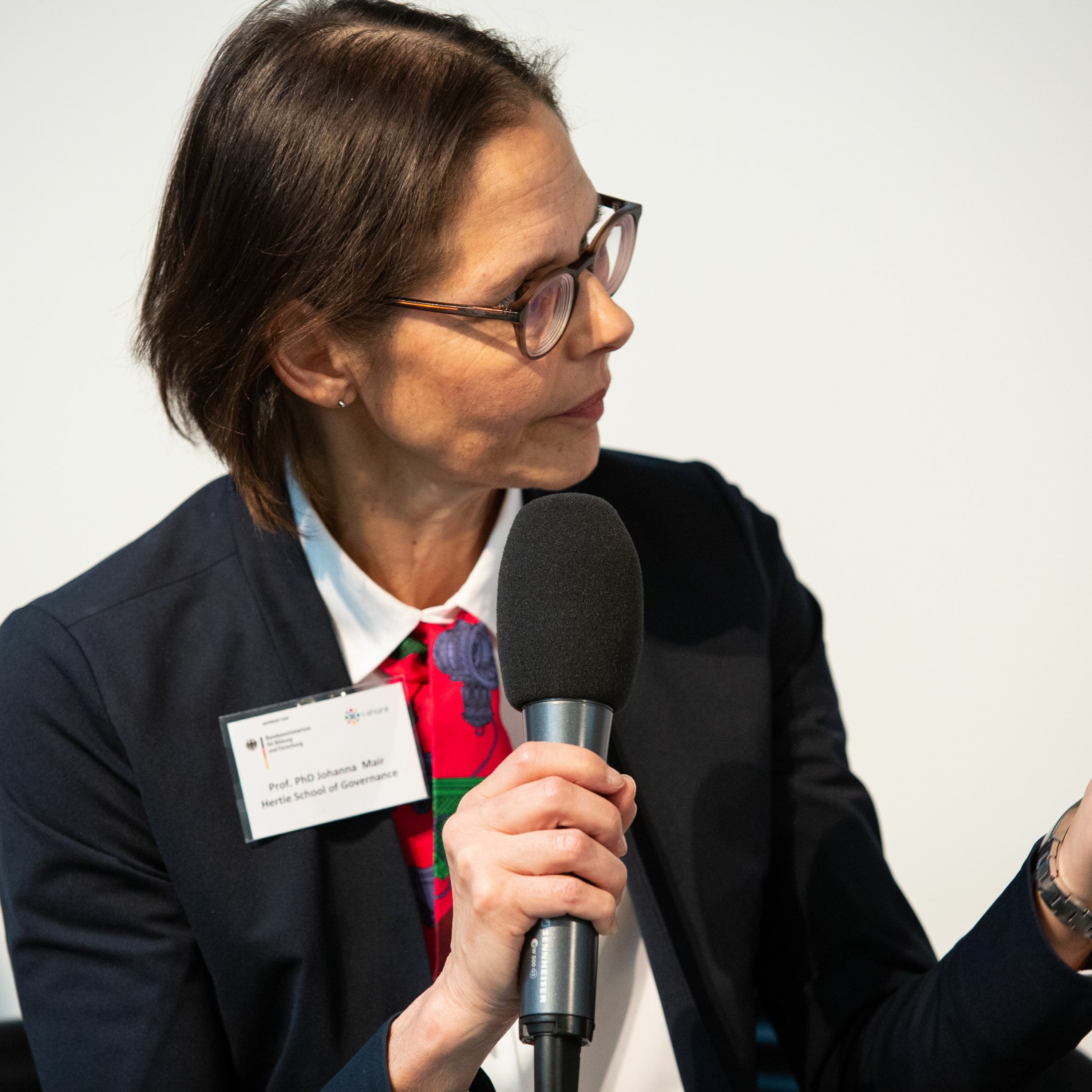
Why do some ideas catch on? Johanna Mair examines systemic power in fields.
Why do some ideas take hold in fields and become standard practice while others are passed over and forgotten? What happened to these ideas that were “lost” along the way and may have pointed to an alternative path, one that was not necessarily wrong or bad? Hertie School Professor of Organization, Strategy and Leadership Johanna Mair and co-authors look at how forms of systemic power arise in a p
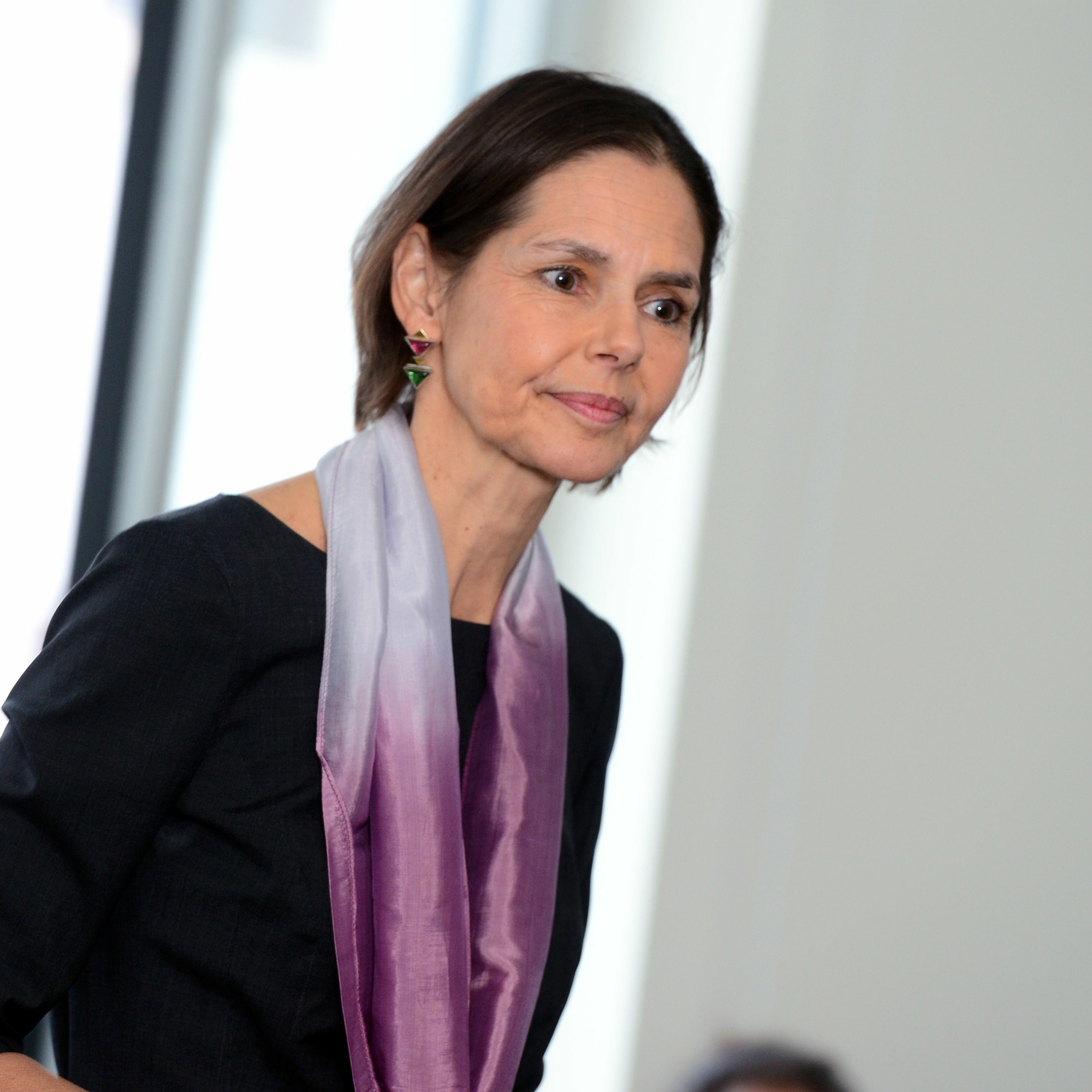
Organising in and for society — Johanna Mair on social innovation and "wicked problems"
How do you solve some of the world's most "wicked problems"? In her keynote on social innovation at the Hertie School's 2019/2020 Opening of the Academic Year, Johanna Mair, Professor for Organization, Strategy and Leadership, discusses insights from her research. Social innovation on its own is not enough to solve these big world problems, she says. Instead, we need "scaling" to really make an i

How to regulate the internet?
Tech companies have recently been criticised for not doing enough to control the negative effects of the internet. Spreading false information and hate speech, fomenting conflict, discontent and polarisation, and threatening peace and stability are among some of the most discussed issues. On the other hand, many tech companies have invested in this field and argue that it shouldn’t be them, but go
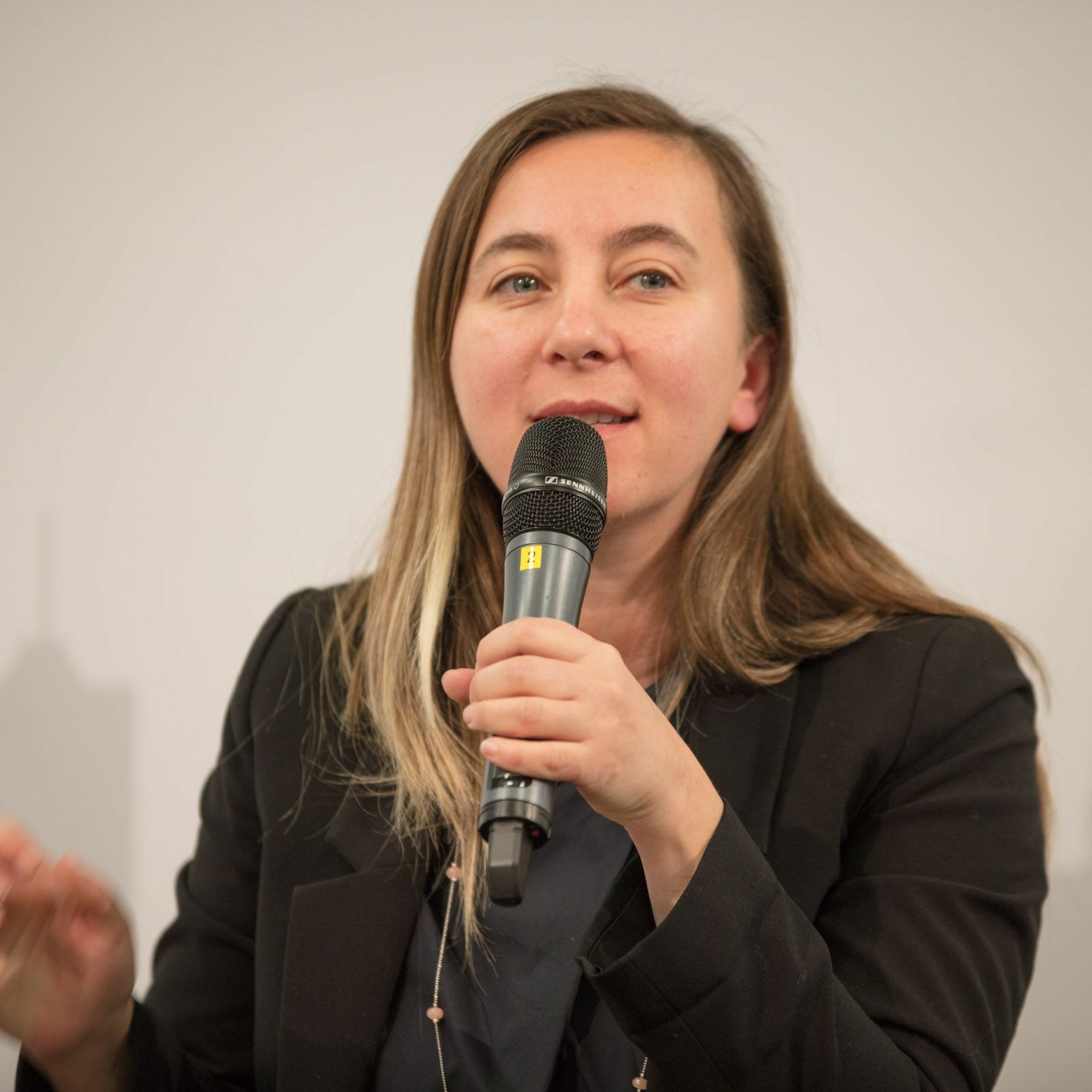
Debating the future of strategic human rights litigation
Turning to domestic and international courts through strategic litigation has been central to global human rights activism for decades. It is a strategy that has been used to create long lasting social change in laws and public policies with the goal of advancing human rights. For some, litigation in the name of human rights has been a great success, making the human rights movement stronger by in

The political economy of populism
How can we explain the geographical variation of populism in Europe? In the North, right-wing populism dominates, while for many years left-wing populism has been the common in the South. Outside Europe, for example in Latin America, governments frequently shift between left and right populist presidents. In a talk at the Hertie School, Philip Manow discussed populist protest in various political
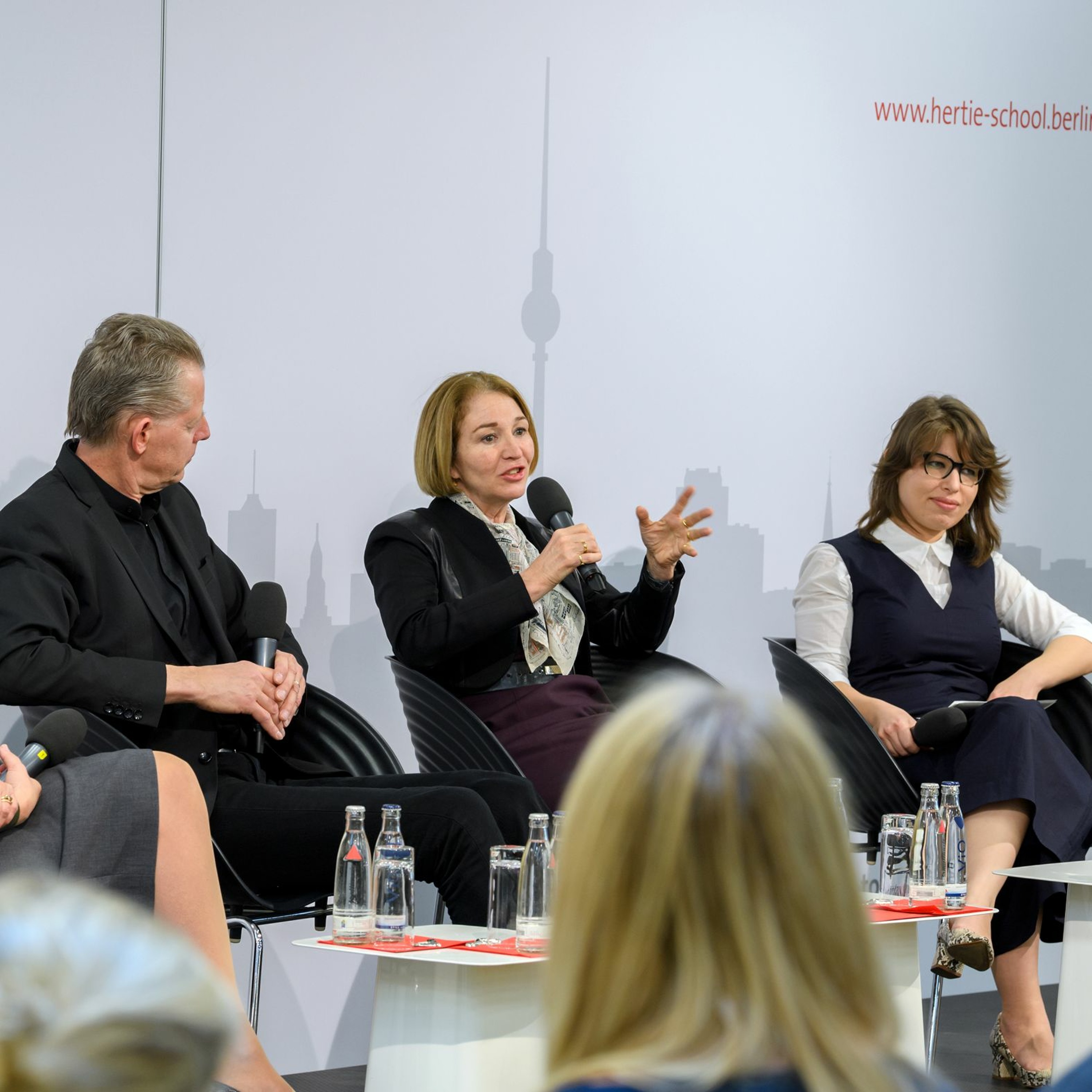
Anne-Marie Slaughter speaks on changing roles of men and women in society
Panel discussion centres on work, care-giving and how to bring about real equality in today’s world.
Long-held notions of both women’s and men’s roles in society need re-thinking to allow people to reach their full potential, both privately and professionally, said Anne-Marie Slaughter, CEO of the New America Foundation and the 2018 recipient of the Dr. Michael Endres Prize, in a panel discussion
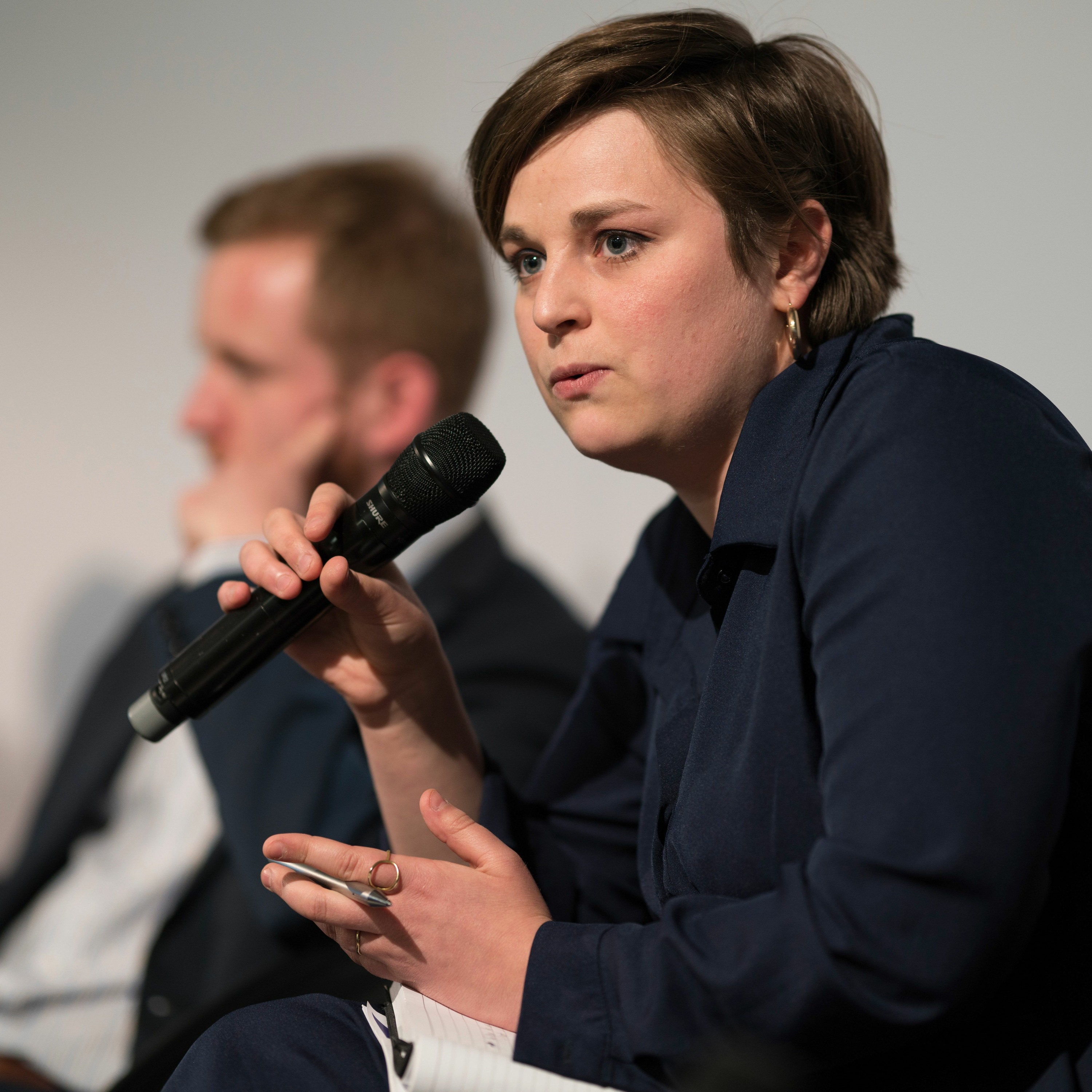
A young vision for Europe
Four young European Parliament candidates discussed their vision for Europe at the Hertie School on 11 April. On the panel were Hannah Neumann, 35, from Bündnis 90/Die Grünen in Germany, Vojtěch Vais, 26, a member of TOP 09 Party from Czechia, Marco Candela, 34, with Podemos in Spain, and Caroline Flohr, 25, a candidate for the pan-European party Volt in Germany.
The event was part of the The Gov
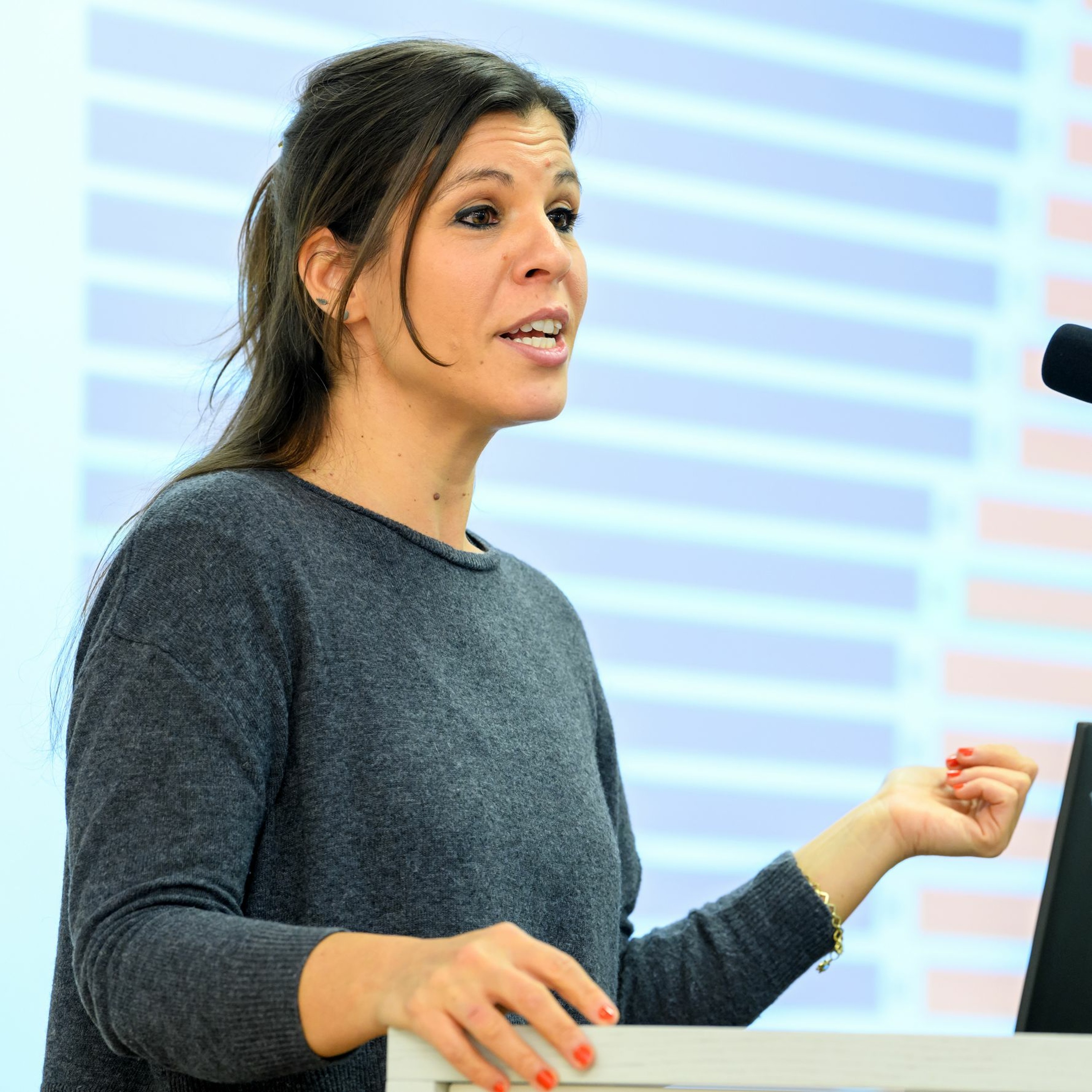
The rise of populism and the 2019 European Parliament election: Causes and implications for Europe
The upcoming 2019 European parliament election is increasingly portrayed as a fundamental turning point in the process of European integration. Following electoral gains in previous European and national elections in recent years, anti-EU populist parties are expected to increase their support even further, challenging the European project at its core. How can we explain the support of these parti
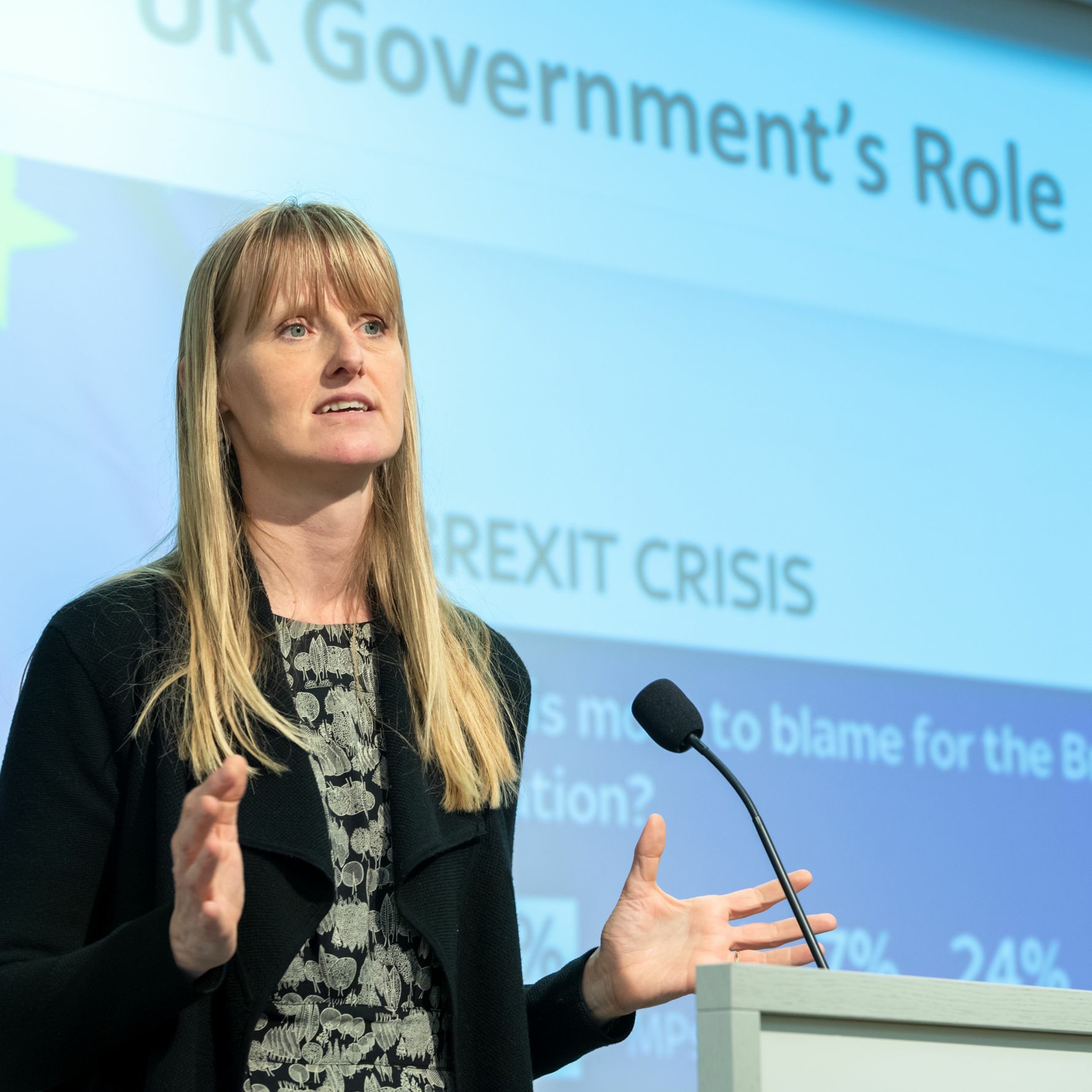
Brexit, euroscepticism and the rise of populism
Catherine de Vries discusses how to move the European project forward ahead of the EP elections.
Catherine de Vries is Professor of Political Behaviour in Europe at the Vrije Universiteit Amsterdam and a Hertie School Board member.
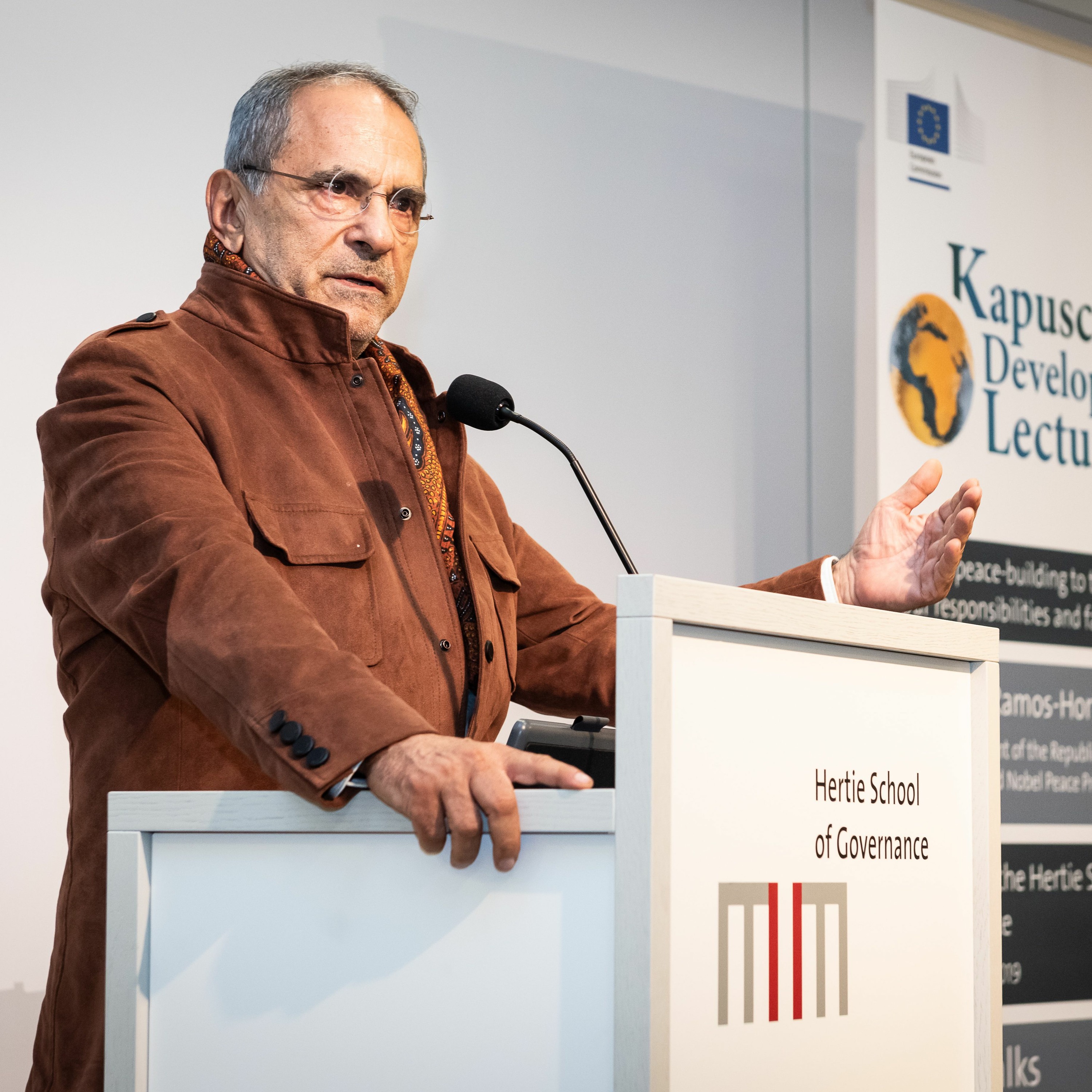
Taking peace-building to the world: Our responsibilities and failures
Kapuscinski Development Lecture with H.E. José Ramos-Horta, former President of the Republic of Timor-Leste and Nobel Peace Prize Laureate.
"We are living in very dangerous times. Right here in the heart of Europe forces of good and of intolerance are on a collision course. Across the English Channel there are forces bent on wrecking a magnificent social, political and security architecture built
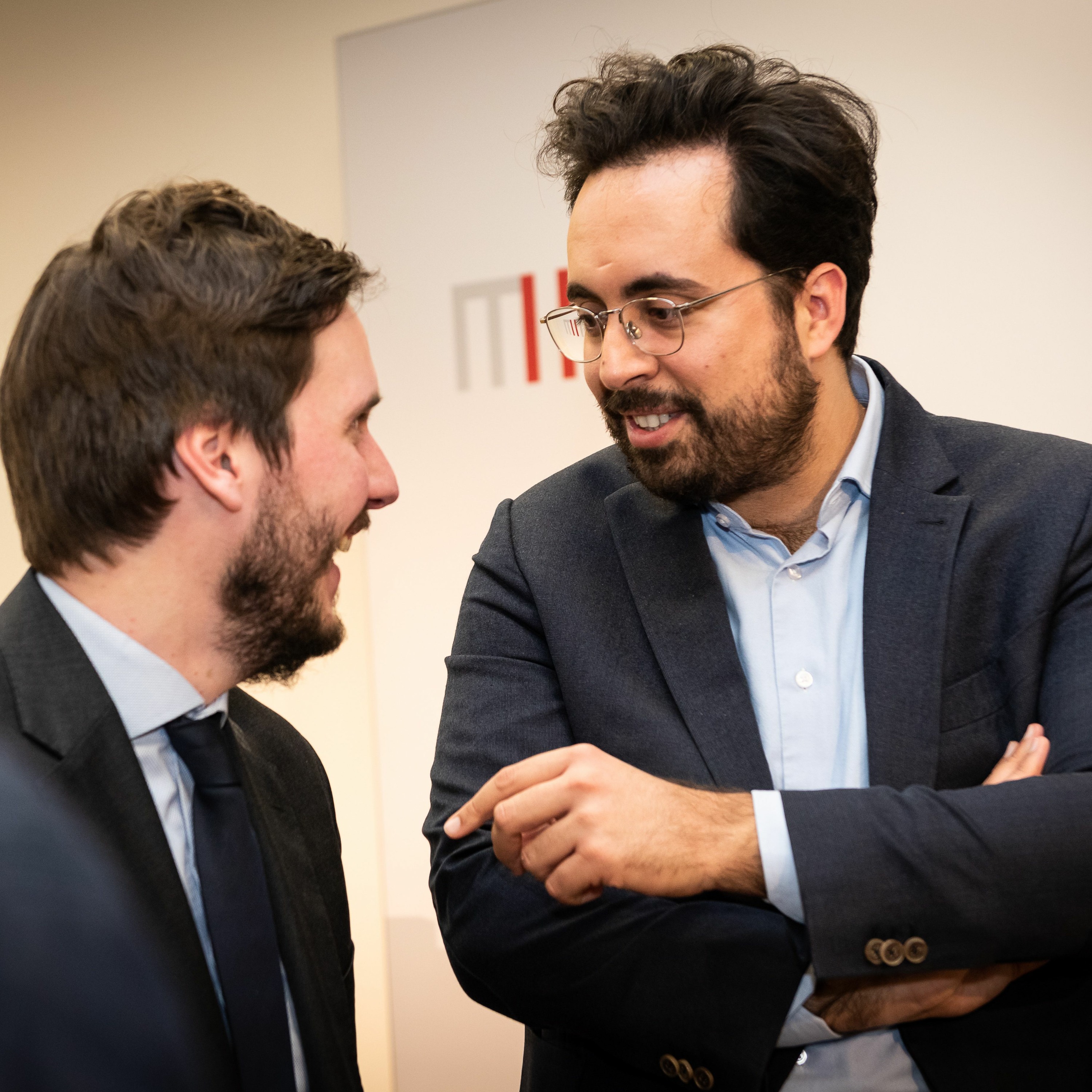
Digital dictates: What digital priorities should the next European Commission set?
The next European Commission faces a broad array of challenges in regulating the evolving digital world. What are the ethical implications of artificial intelligence, how can you regulate competition and what are the implications for diversity in the digital era? In a discussion between France’s State Secretary for Digital Affairs Mounir Mahjoubi, Stephanie Kaiser, Founder and Managing Director of
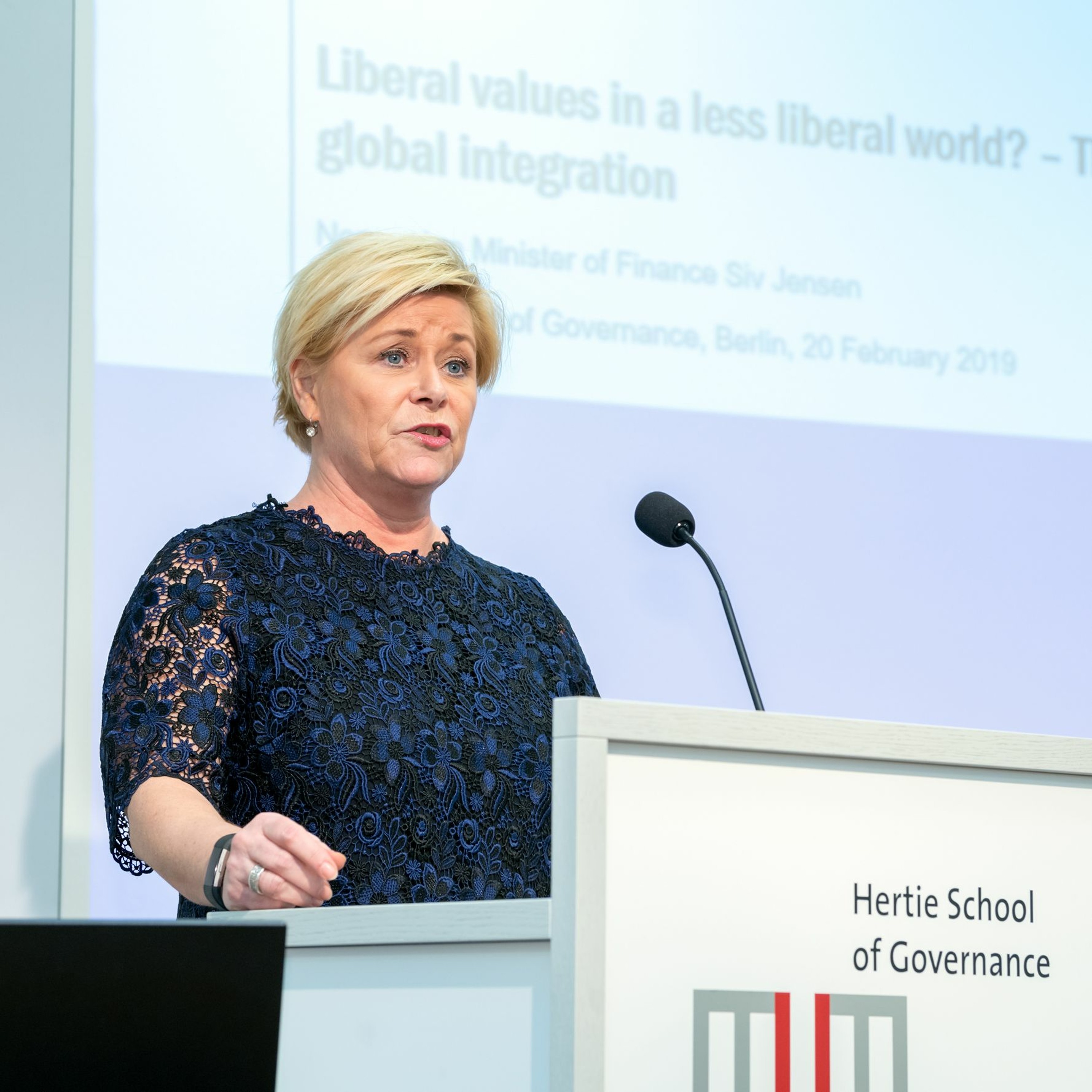
Liberal values in a less liberal world? The economic case for rules-based global integration.
Siv Jensen, Norwegian Minister of Finance, and Mark Hallerberg discussed the economic case for rules-based global integration.
Liberal values have guided international cooperation over decades, based on the view that an open economic architecture with common rules is a shared interest, both regionally and globally. A common set of rules has promoted the development of free and open markets across
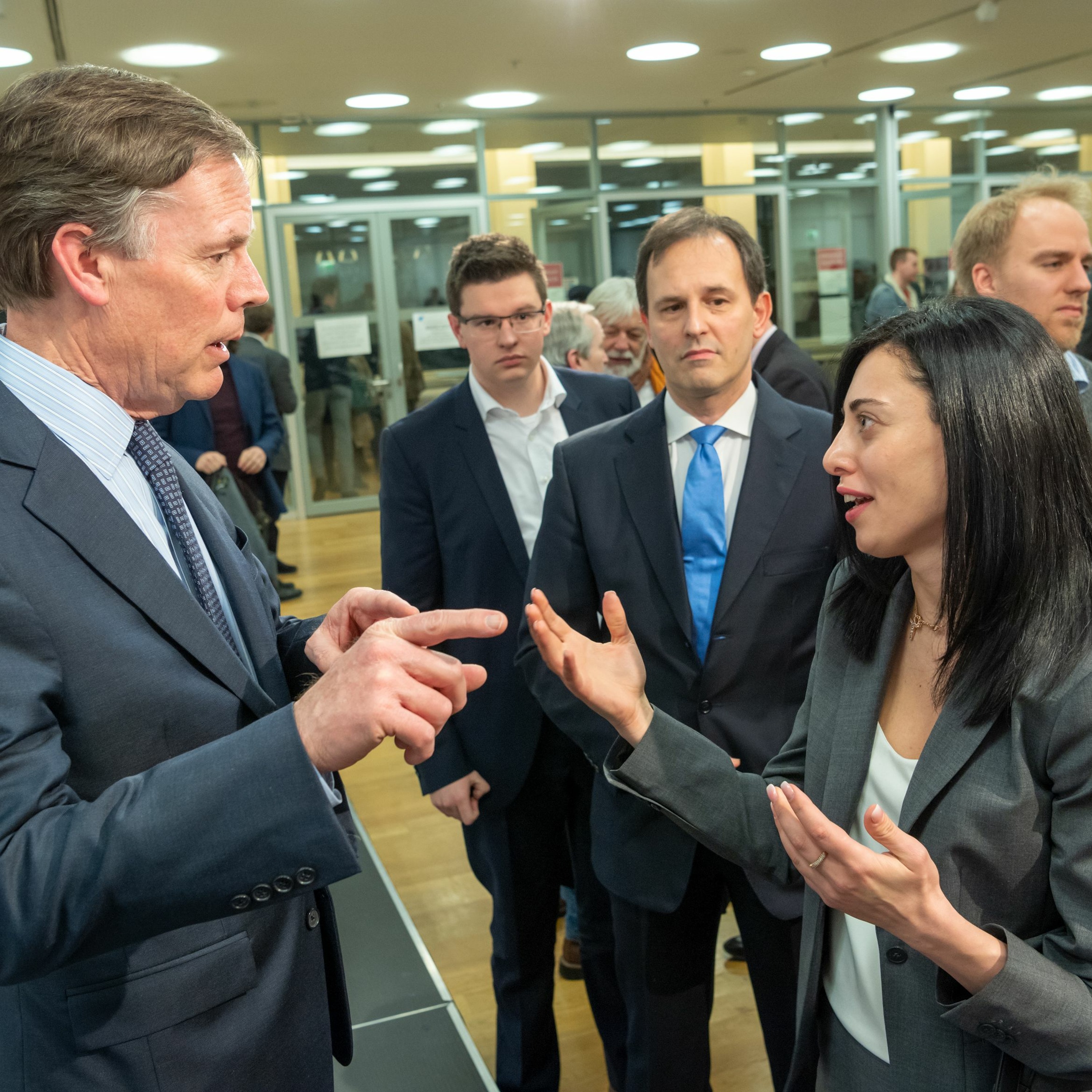
Post-MSC talk: Picking up the pieces — What's ahead for global security
The Hertie School of the Governance convened top foreign policy thinkers from the United States and Germany on 18 February, directly after the 55th Munich Security Conference. Discussants reflected on the key issues, conclusions and critical challenges to international security raised at the conference, before a packed audience hosted by the school’s Centre for International Security Policy (CISP)
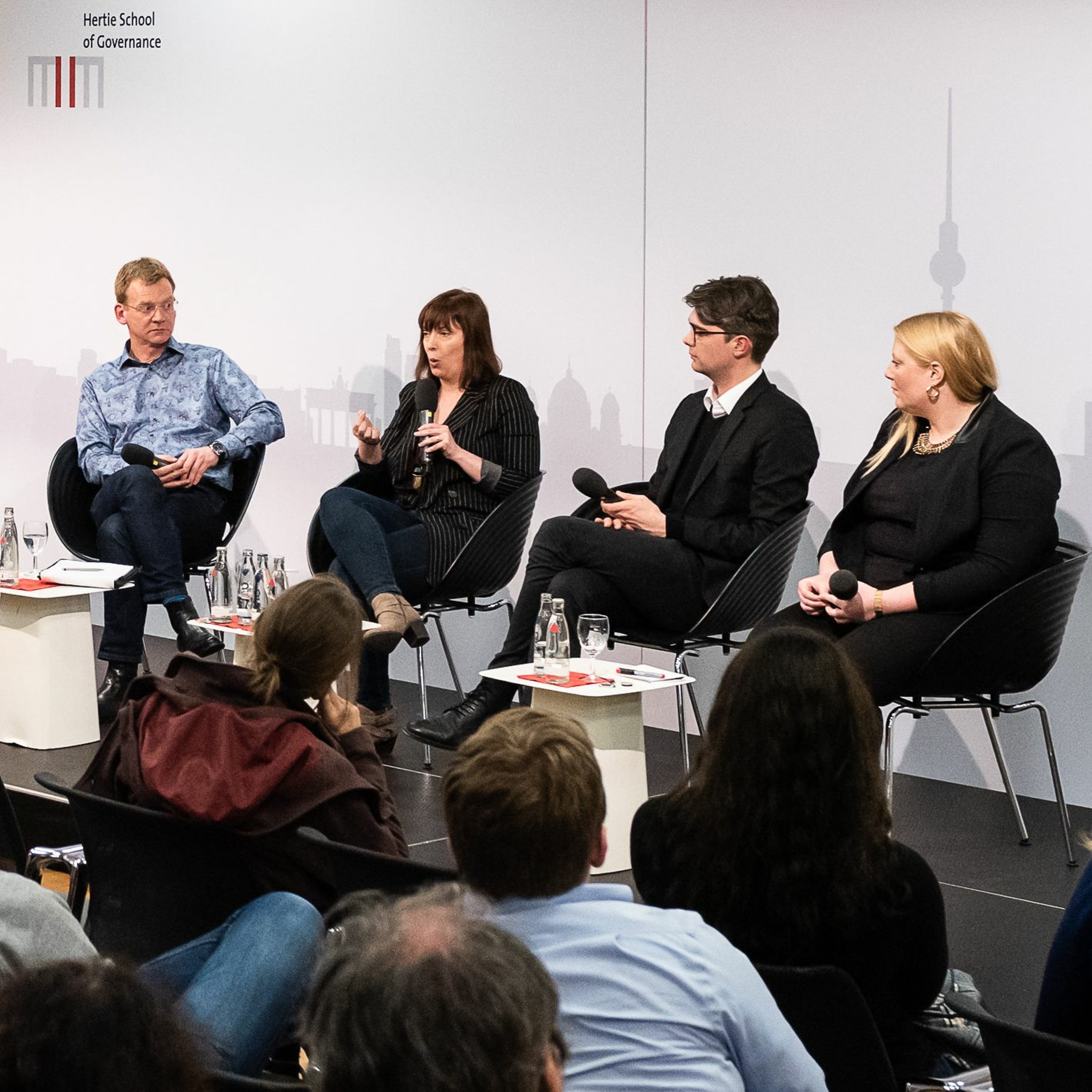
Getting our facts straight: Disinformation and the 2019 European Elections
At the end of 2018 the European Union launched a “war against disinformation” in an attempt to protect the upcoming European Parliament elections in May 2019. The proposed measures include a rapid alert system to support member states in identifying disinformation campaigns, an increased budget of €5m for the detection of disinformation, and pressure on tech companies to get on board with weeding
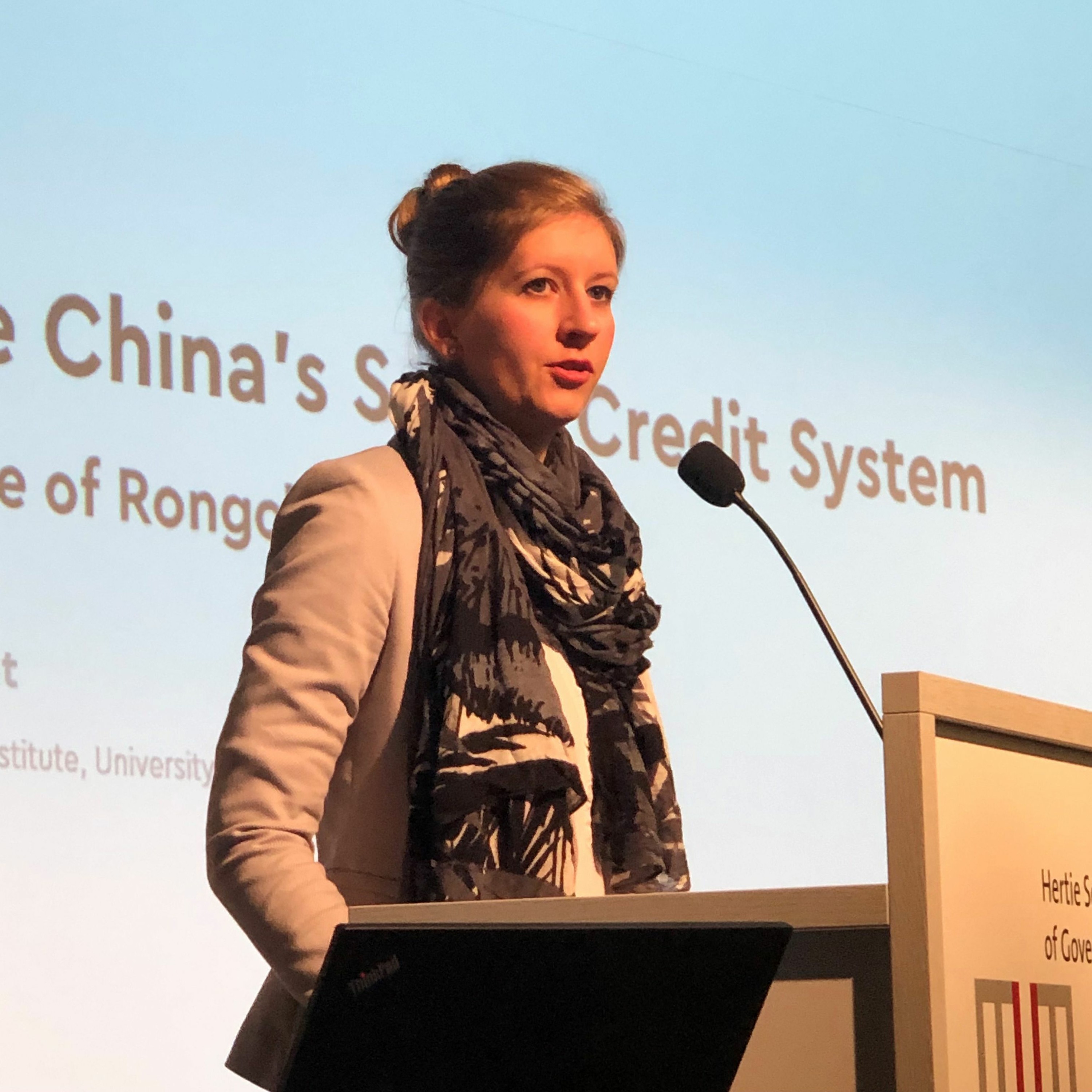
Reward and punishment: Inside China’s social credit system
Reward and punishment: Inside China’s social credit system by Hertie School

The European jihadism wave of the 2010s: Lessons and prospects
A lecture by Thomas Hegghammer on 3 December 2018 on the causes, evolution, and revival prospects of the latest jihadism wave. This event is chaired by Julian Wucherpfennig, Assistant Professor of International Affairs and Security at the Hertie School of Governance, and was a continuation of the lecture series 'Frontline research on terrorism' at the Centre for International Security Policy at
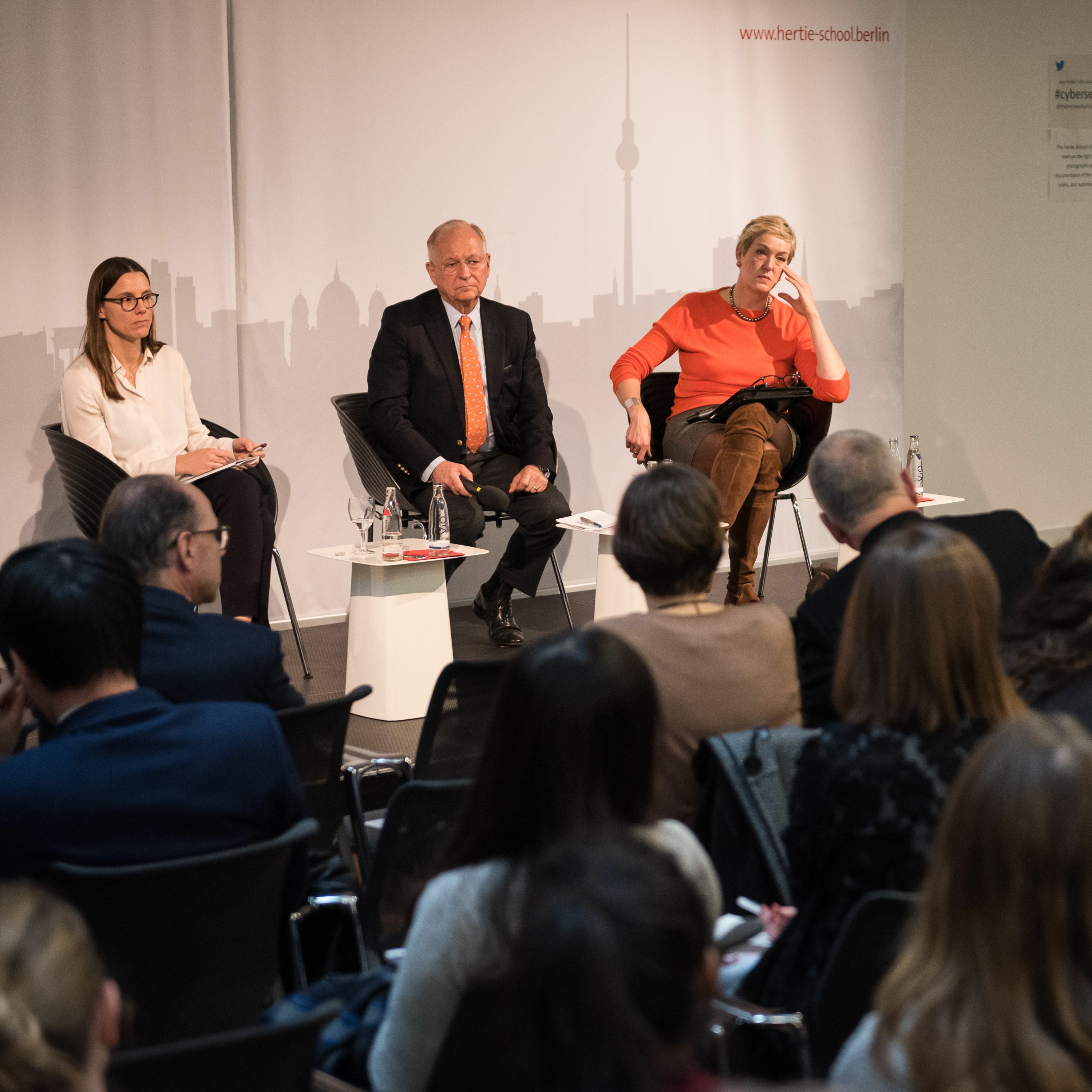
Defence, cybersecurity and artificial intelligence
Panelists Katrin Suder, Chairperson of the Advisory Council on Digitalisation to the German Federal Government, Constanze Stelzenmüller, inaugural Robert Bosch Senior Fellow in the Center on the United States and Europe at the Brookings Institution, and Ambassador Wolfgang Ischinger, Senior Professor for Security Policy and Diplomatic Practice at the Hertie School of Governance and Director of the
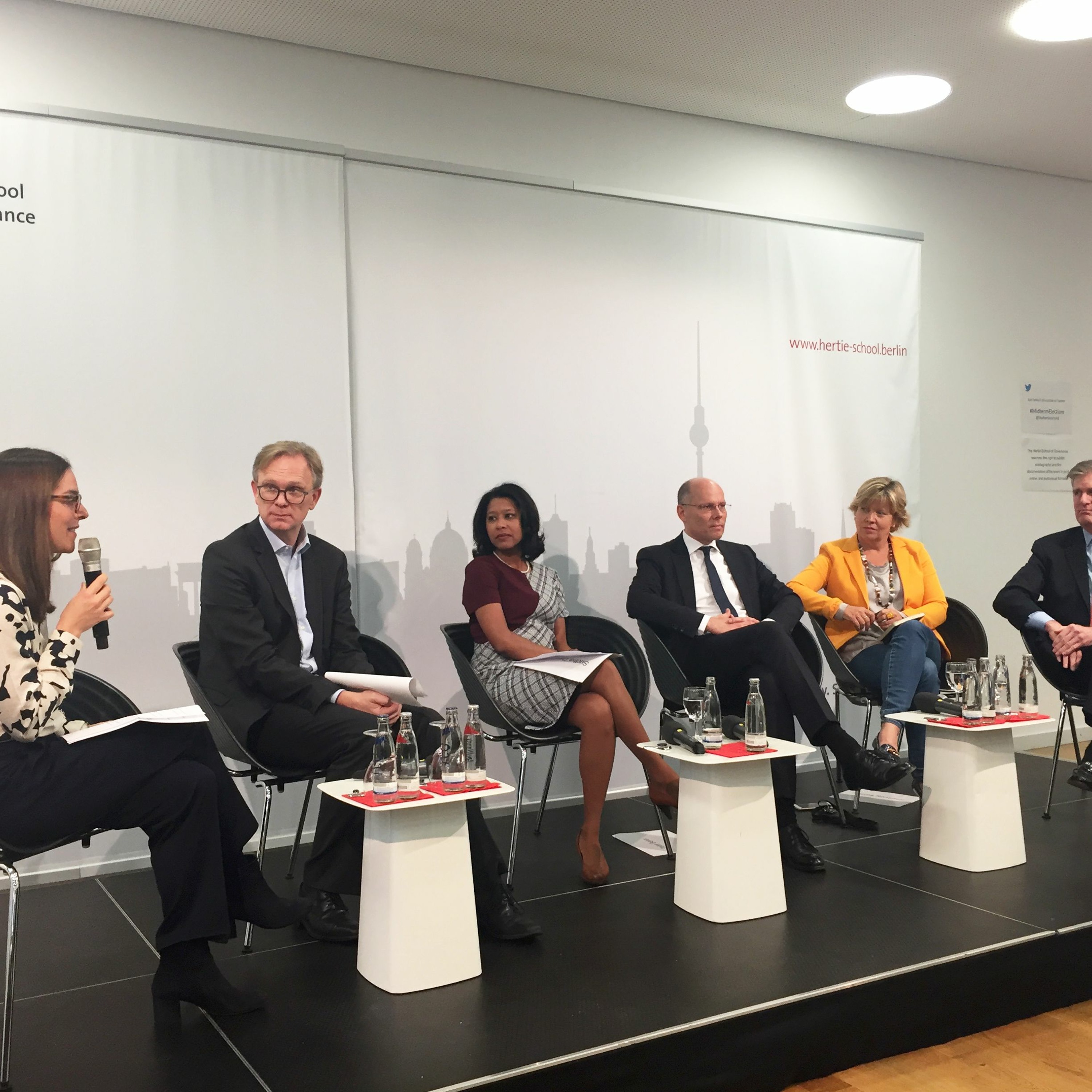
"Blue wave" meets "red wall" in US mid-term election
Panelists discuss future of US political parties, implications for transatlantic relations and what’s in store for 2020.
A "blue wave" has now met a "red wall" – this is how Nelson Cunningham, former advisor to President Bill Clinton and co-founder of political consultancy McLarty Associates, described the election results to an audience of 130 at a 2018 US election post-mortem at the Hertie Sch
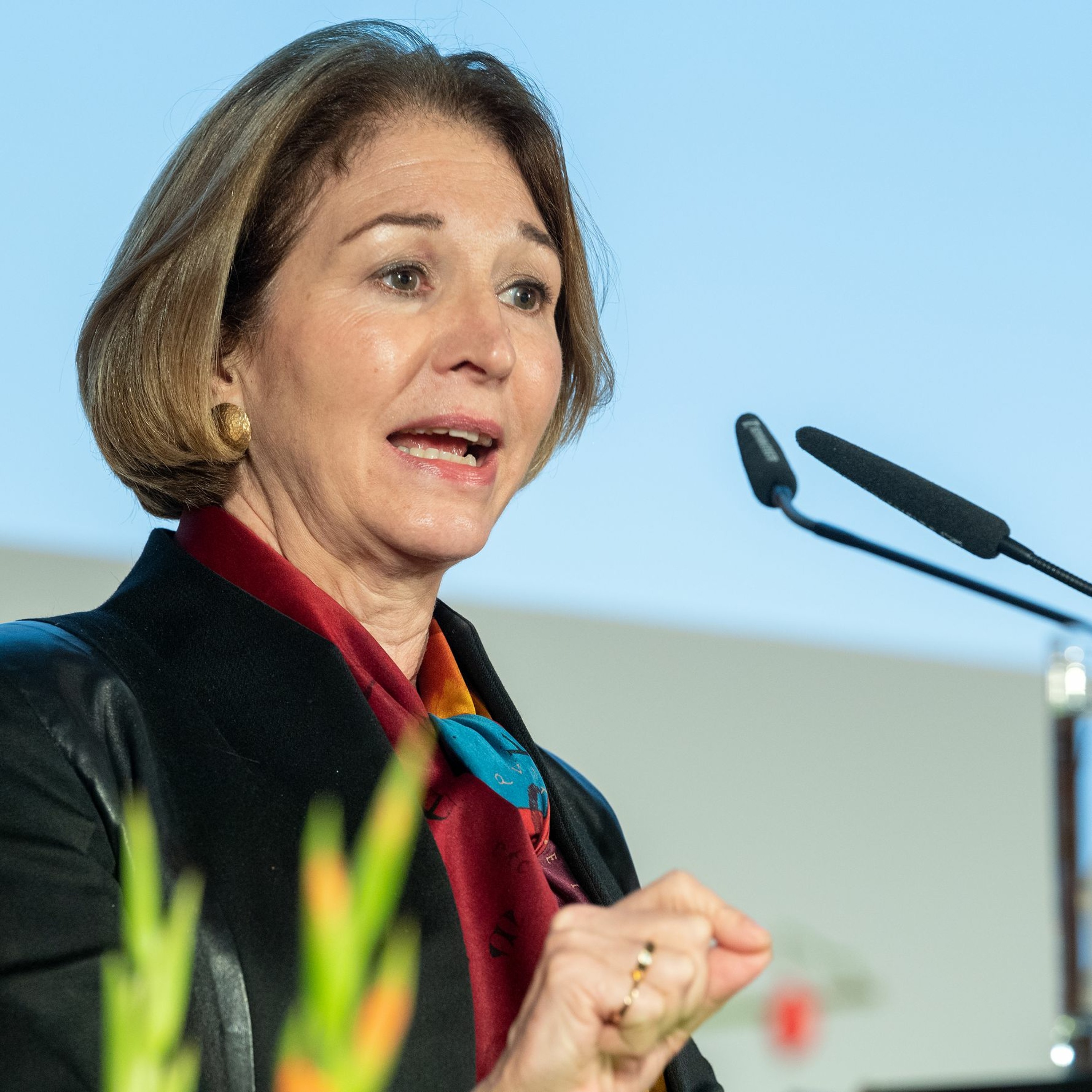
Anne-Marie Slaughter, CEO of New America, accepts Dr Michael Endres prize
“People-centred, inclusive, experimental, data-enabled and connected,” – these are the five elements of the “new practice of public problem-solving,” according to US political scientist Anne-Marie Slaughter. Slaughter outlined her vision for how government, civil society and the private sector must work together to solve problems like climate change, homelessness or work-life balance, in an accept

International security: Counterterrorism
In his spring 2018 International Security course, Professor Julian Wucherpfennig tasked first-year Master of International Affairs (MIA) students to produce podcasts focussing on a singular aspect of security – climate change, digital technology, migration, to name a few. This is an example of the students’ work.
Understand today. Shape tomorrow.
https://www.hertie-school.org
This podcast is

International security: In the dark
In his spring 2018 International Security course, Professor Julian Wucherpfennig tasked first-year Master of International Affairs (MIA) students to produce podcasts focussing on a singular aspect of security – climate change, digital technology, migration, to name a few. This is an example of the students’ work.
Understand today. Shape tomorrow.
https://www.hertie-school.org
This podcast is f

International security: Climate and security
In his spring 2018 International Security course, Professor Julian Wucherpfennig tasked first-year Master of International Affairs (MIA) students to produce podcasts focussing on a singular aspect of security – climate change, digital technology, migration, to name a few. This is an example of the students’ work.
Understand today. Shape tomorrow.
https://www.hertie-school.org
This podcast is f
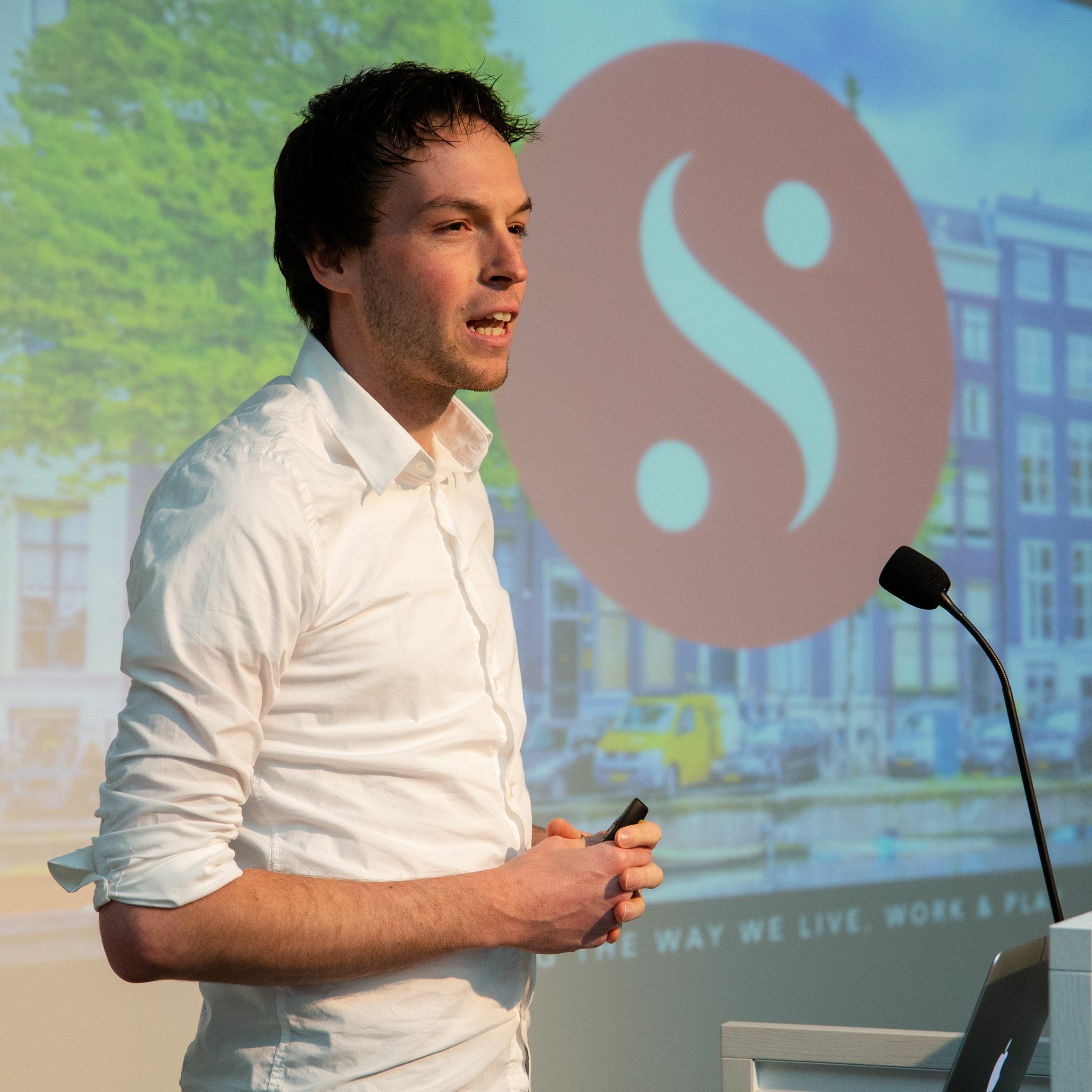
Pieter van de Glind on future of the sharing economy
Pieter van de Glind gave this keynote as part of the 4th symposium of the research project “i-share: The sharing economy’s impact in Germany” that is sponsored by the German Federal Ministry of Education and Research. The symposium took place at the Hertie School of Governance on 26 April 2018.
*This keynote lecture has been edited slightly for the purpose of this podcast.
Understand today. Shap
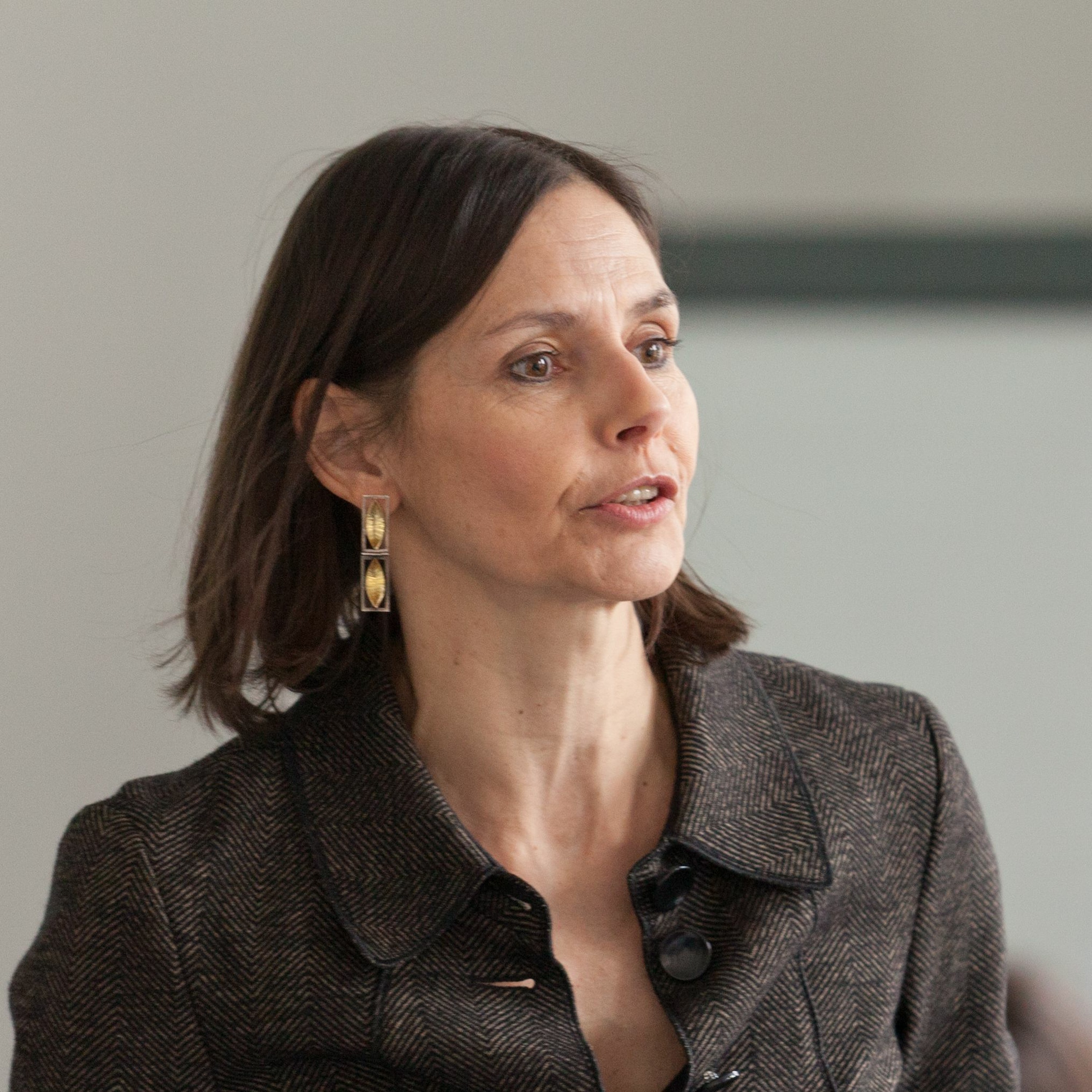
A learning journey towards social innovation – Johanna Mair
Johanna Mair guides Executive MPA students on a quest to discover the secret to creating impact.
Learn more about the seminar: https://www.hertie-school.org/en/socialinnovationseminar/
Understand today. Shape tomorrow.
https://www.hertie-school.org
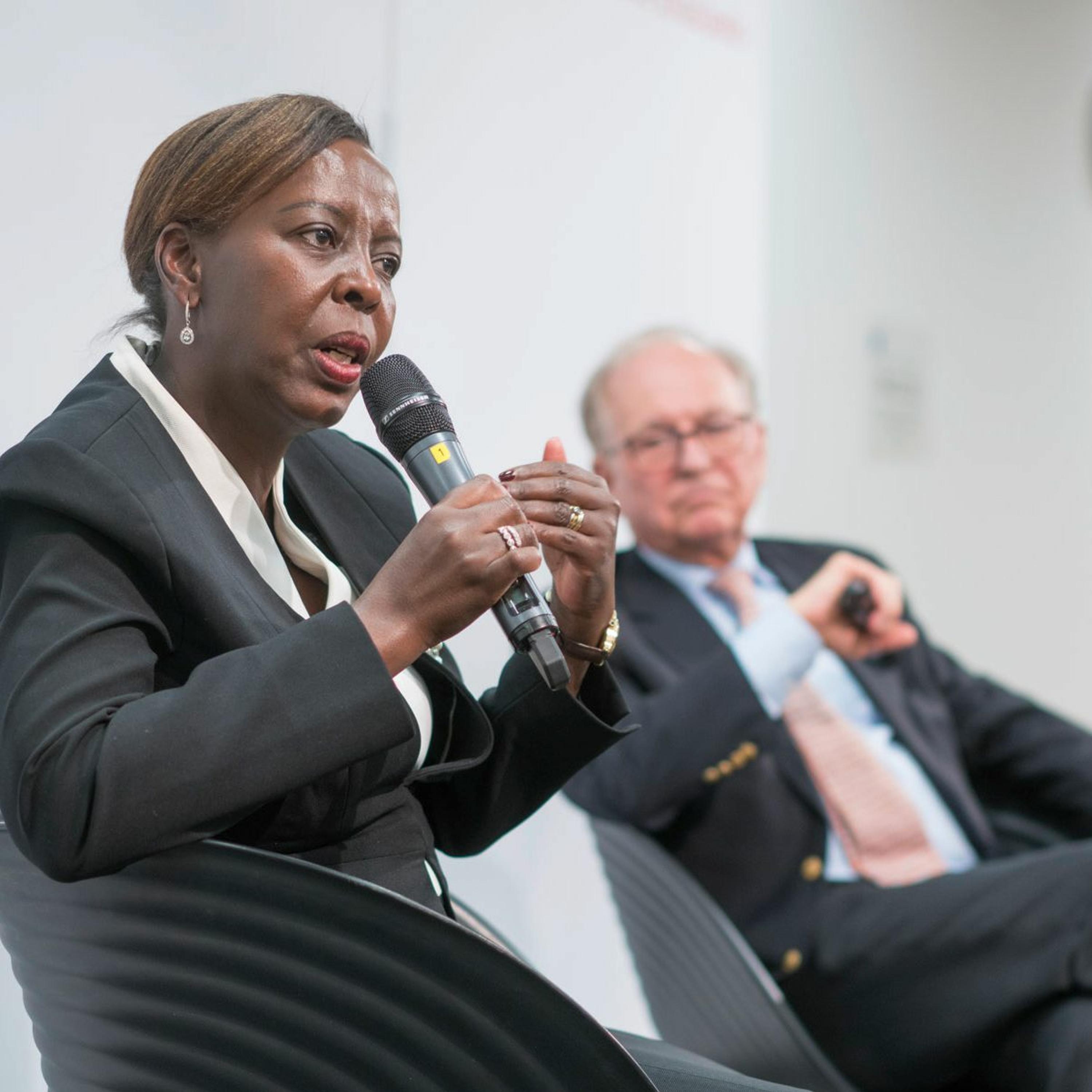
Post-MSC 2018 discussion: Louise Mushikiwabo & Wolfgang Ischinger
In a post-Munich Security Conference discussion held at the Hertie School of Governance in Berlin on 19 February, Wolfgang Ischinger asked Louise Mushikiwabo, Minister of Foreign Affairs of the Republic of Rwanda, about the possibility of permanent UN Security Council representation for Africa.
Understand today. Shape tomorrow.
https://www.hertie-school.org
*This audio highlight has been edited
Empfohlen

Beats & Bones

Wenn Sie wüssten...

Learn German, one step at a time

Easy German Dialogues - Deutsch lernen mit Dan

phoenix runde - Podcast

Das Wichtigste heute Morgen

Deutsch To Go

Crashkurs - Wirtschaft trifft Geschichte

Lange Nacht

REMEMBER WHO YOU ARE - Wanda Badwal

Easy German

tagesschau in 100 Sekunden: Das aktuelle News-Update (Audio)
