
The smarter E Podcast
Der smarter E Podcast richtet sich an die Gestalter der neuen Energiewelt. Er behandelt aktuelle Trends und Entwicklungen in einer erneuerbaren, dezentralen und digitalen Energiebranche. Gastgeber Jonathan Gifford begrüßt und interviewt Persönlichkeiten, die die Branche prägen und Entwicklungen vorantreiben. Jede Woche donnerstags erscheint eine neue Episode.
Folgen
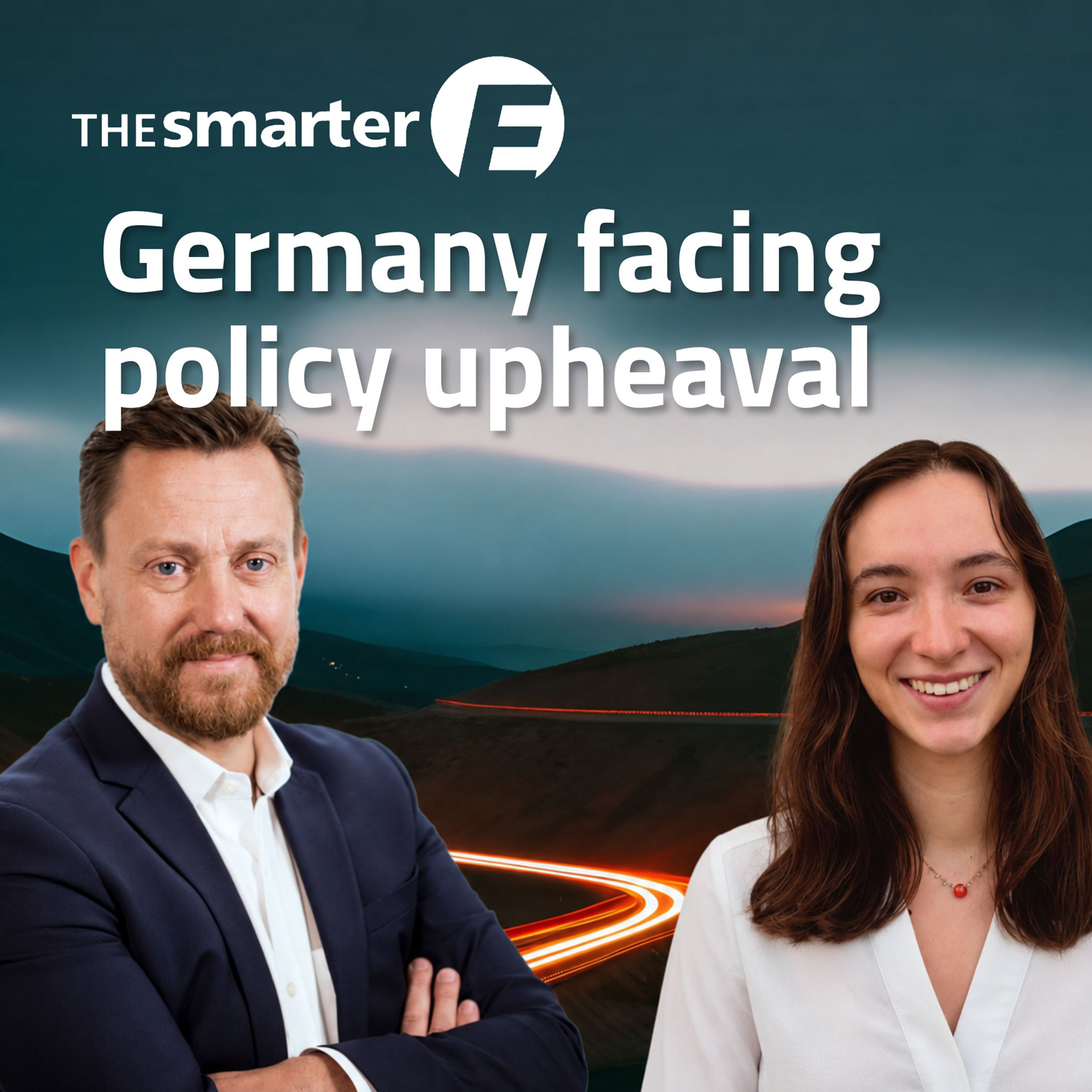
New policy reforms could shrink Germany’s solar market – with David Wortmann and Salomé Perperot
Germany helped pioneer the political frameworks that made solar a global success. But with daytime electricity prices falling, solar companies under pressure, and significant policy reforms taking shape, could the impressive solar and battery installation rates of recent years slow dramatically?
This week, host Jonathan Gifford speaks with David Wortmann, founder and CEO of Berlin-based consultanc
.jpg)
The challenge in turning Europe’s PV research into an industrial reality – with Gaëtan Masson and Delfina Muñoz
Europe has some of the world’s best solar researchers and strongest local markets. So why is so much of the PV manufacturing happening somewhere else?
Recorded at the recent EU PVSEC scientific conference and exhibition in Rotterdam, host Jonathan Gifford explores this question with Gaëtan Masson, CEO of the Becquerel Institute and co-chair of the European Solar Manufacturing Council. They examine
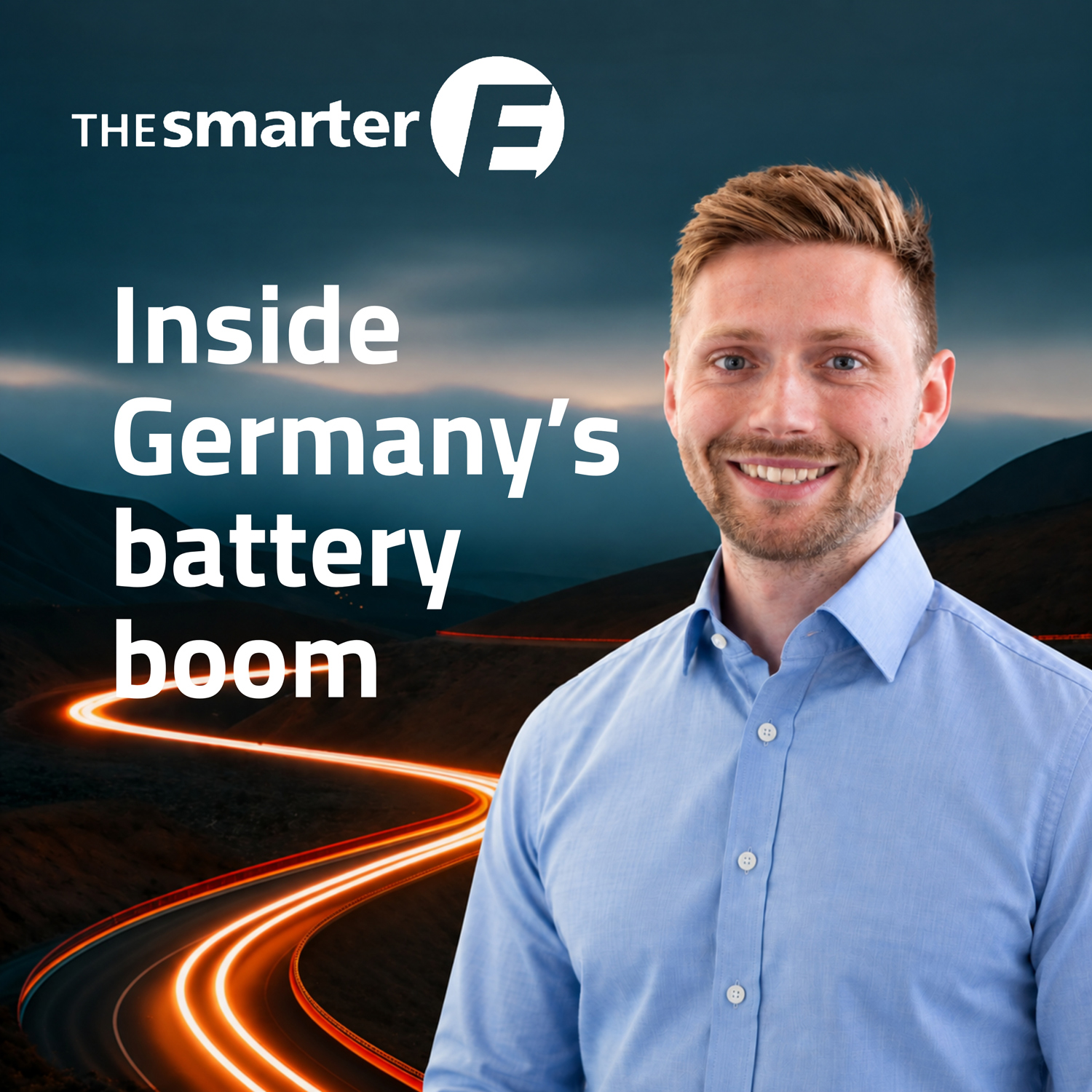
Stack ‘em up: Germany’s big battery inflection point – with Thaddäus Kreisig
Germany’s utility-scale battery deployment is hitting an inflection point.
After years of projects piling up in development pipelines, utility-scale storage is arriving at gigawatt scale – just as Germany’s huge solar fleet drives electricity prices towards zero, or below, during sunny hours.
For batteries that can shift that power into higher-priced periods, the opportunity is enormous.
Host Jona
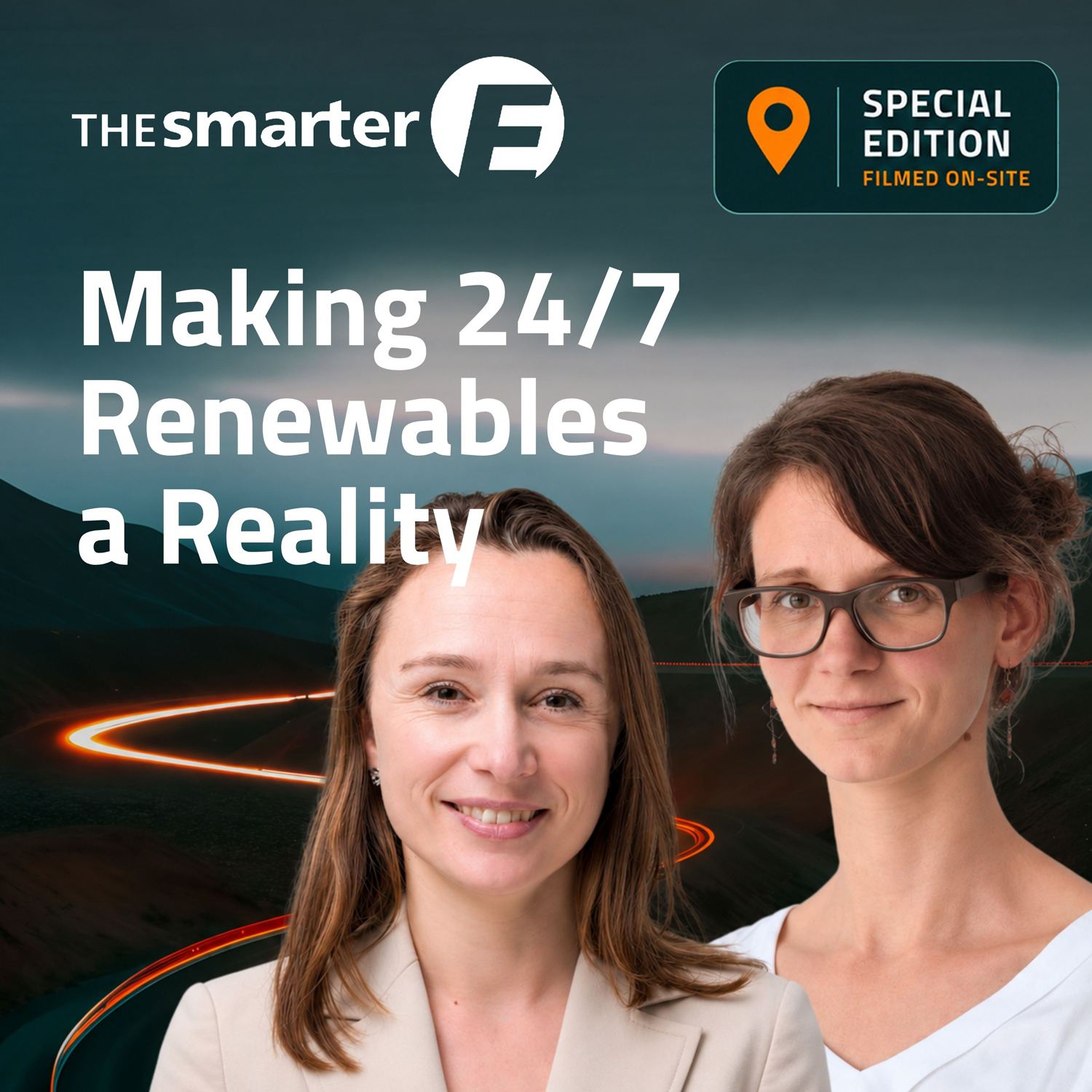
Update on global solar and inside “24/7 renewable Germany” – with Charlotte Senkpiel & Sonia Dunlop
The Dunkelflaute has become one of the most persistent arguments against a fully renewable energy system. When the sun isn’t shining and the wind isn’t blowing, where is our energy supposed to come from?
Detailed new modeling from Germany’s Fraunhofer ISE suggests these “dark doldrums” are a challenge – but should not be enough to halt the energy transition. The bigger challenge to be overcome is
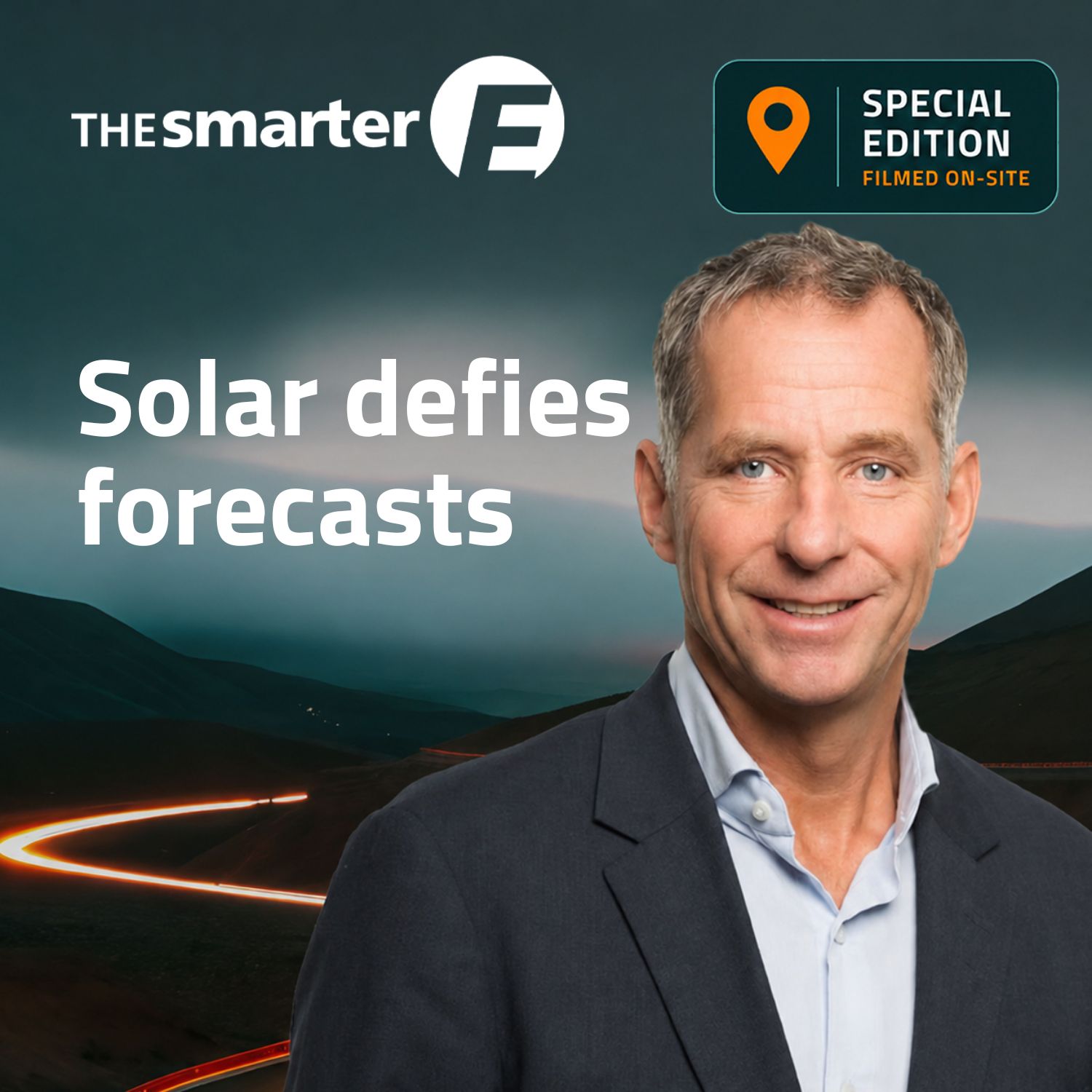
Why modelling the energy transition matters – with Jarand Rystad
Despite claims that the energy transition is losing momentum, solar and battery deployment continues to run ahead of forecasts – profoundly impacting electricity markets and the wider global energy system.
Recorded at The smarter E Europe 2026 in Munich, host Jonathan Gifford is joined by Jarand Rystad, founder and CEO of energy analysts Rystad Energy, to examine where the transition stands today.

Effective responses to power markets in flux – with Edurne Zoco and Barbara Rubim
An increasing number of solar marketplaces have entered a new phase – one where achieving strong, ongoing installation rates depends heavily on system flexibility. Recorded live at The smarter E Europe 2026 in Munich, this episode of pod brings together two conversations that examine how solar marketplaces are changing in the face of this new reality, which includes falling capture prices and the

How U.S. innovators are reshaping solar – with Howard Wenger and Aaron Thurlow
Innovation in solar business models and technology is front-and-center on this episode of The smarter E Podcast. Featuring two leaders from the U.S. solar industry, it explores how innovation across the solar value chain is taking the global energy transition in new directions. Recorded live at The smarter E Europe 2026 in Munich, host Jonathan Gifford speaks with two executives from companies tha
.jpg)
What EV acceleration means for the grid – with Thomas Raffeiner and Petrouschka Werther
As Europe faces rising energy-security concerns, volatile electricity markets and growing grid congestion, a new generation of energy solutions is emerging that could turn these challenges into opportunities. Recorded live at The smarter E Europe 2026 in Munich, this episode explores how EVs, smart charging, and vehicle-to-grid technology are transforming cars into active participants in the elect

Can Renewables Deliver 24/7 Power? | Live from The smarter E Europe 2026 – with Tim Meyer and expert guests
The future of energy was on display in Munich last week — and this isn’t hyperbole! While some still question how an industrialised nation like Germany can be powered by renewable energy 24 hours a day, 7 days a week, 365 days a year, The smarter E Europe 2026 offered some compelling insights. Through a major new study, an interactive exhibition, and the countless innovations showcased across the
.jpg)
Perovskites: the race for the future of PV? – with Rutger Schlatmann and Angelika Harter
Recorded at the Tandem PV Workshop in Berlin, this week’s episode explores one of the most exciting frontiers in solar technology: perovskite-based tandem photovoltaics. Featuring two leading researchers from Helmholtz Zentrum Berlin (HZB), the conversations dive into why perovskites could unlock the next major step forward in solar efficiency – and what still needs to happen before the technology
From EVs to BESS: Why capital is flowing to batteries – with Laurent Segalen and Stefan Müller
Recorded at two recent industry events – the SolarPower Summit in Brussels and the Battery Business & Development Forum in Frankfurt – this week’s episode explores why batteries have become one of the most dynamic areas of the global energy transition. Featuring two industry heavy hitters, the conversations cover how BESS is transforming everything from electric mobility and charging infr
Will soaring fuel costs make eMobility mass market? – with Marcel Rümenapf
Recorded at the historic Berlin campus of technology and engineering giant Siemens, this week’s episode explores why Europe’s logistics industry is rapidly accelerating towards electrification – driven not only by decarbonization goals, but increasingly by energy security, operational resilience, and cost control.
We’re joined by Marcel Rümenapf, Head of Sales for eMobility Europe at Siemens, to u
.jpg)
It’s Eurovision! Solar Startups Edition (live from the SolarPower Summit) – with Jenny Chase and the European Solar Startup Award finalists
Recorded on-site at the SolarPower Summit in Brussels, this week’s episode captures the market developments and innovative young companies shaping Europe’s clean energy transition.
We kick things off with renowned BloombergNEF solar analyst Jenny Chase, who joins us to unpack why batteries have become the defining technology conversation across Europe’s solar sector. As PV penetration rates contin
Keep calm and deploy solar (and batteries) – with James Allston and Marko Topič
With the Strait of Hormuz disruption continuing to drive fossil-fuel costs higher, businesses big and small have been left looking for ways to cut energy costs.
But, in contrast to energy crises of the past, today’s clean energy technology is mature, cost competitive, and ready to fill the gap.
This week on the pod, we speak to James Allston of Orkestra Energy for a view on how European businesses
Beating the blockade with EVs and batteries – with Gautham Ram and Ruben Valiente
As global energy markets face renewed volatility – from geopolitical flashpoints to supply disruptions – a key question is back in focus: how do we deliver energy security when fossil-fuel supply is no longer guaranteed?
In this episode, we explore how flexibility – powered by EVs and batteries – is emerging as a frontline solution to energy security challenges.
First, Gautham Ram (TU Delft) chang
How solar is delivering energy security – with Timothy Shen and Dr. Rethabile Melamu
Energy security is back at the top of the global agenda and new ways to secure supply are evolving fast. In this episode of The smarter E Podcast, we explore how solar is moving beyond generation to play a critical role in stabilizing power systems and delivering energy security.
First, Wood Mackenzie analyst Timothy Shen breaks down the rapid evolution of solar inverters – and how they are w
Digitalizing the grid to meet today’s energy crisis – with Simon Evans and Akshat Rathi
As geopolitical tensions once again send shockwaves through global energy markets, the pressure to accelerate the energy transition has rarely been greater. In this episode of The smarter E Podcast, we explore how digital technologies and electrification are reshaping the energy system—and why smarter, more connected grids are becoming essential in navigating today’s crisis.
Our first guest, Simon
Are today’s solar modules built to last? – with Chiara Baretta and Steven Xuereb
Recorded live in Barcelona at the Solar Quality Summit in February, this episode of The smarter E Podcast examines a critical question for the PV industry: are today’s solar modules built for long-term durability?
As manufacturers push for higher efficiencies, larger formats, and lower costs, quality data is flashing warning signs. Drawing on insights from Kiwa PI Berlin’s latest Module Manufactur
Battery capacity is going through the roof – with Carolina Cruz and Pete Tillotson
Battery capacity is getting bigger, storage duration longer, and batteries more central to how power systems operate.
In this episode of The smarter E Podcast, we look at what’s driving the surge in battery capacity and why expectations for storage are shifting so quickly.
Projects that would have seemed unrealistic just a few years ago are now moving into planning and achieving financial close. L
.png)
Has Vehicle-to-Grid Reached the Tipping Point? – with Adriana Fricke and Robin Berg
In this episode of The smarter E podcast, we unpack how bidirectional EV charging is reshaping Europe’s energy and mobility landscape, from market signals to real-world deployment at scale.
We begin with a policy perspective, speaking with Adriana Fricke from Hubject – a company that is working at the intersection of e-mobility, regulation, and energy systems.
As Europe pushes toward electrif
.png)
Inside 2026’s PV pricing reset – with Alex Barrows, Molly Morgan and Sonia Dulop
After a prolonged period of rock-bottom prices and manufacturing oversupply, solar PV pricing is starting to shift – and the implications could ripple across the global industry in 2026.
In this episode of The smarter E podcast, host Jonathan Gifford digs into what’s changing beneath the surface of the PV supply chain, and why pricing dynamics are becoming impossible to ignore.
In the first p
Big BESS is here to save the day – with Anna Darmani
Big batteries are taking off in Europe and are set to become a major contributor to the energy transition worldwide.
In Europe, deployment has now reached a critical inflection point. Annual utility-scale BESS installations doubled between 2024 and 2025, while cumulative capacity surpassed 100 GW for the first time over the same period.
These insights come from new analysis by Wood Mackenzie, led
Staying home, with smart energy management – with Irene Guerra Gil and Mark Bruno
Home may be where the heart is – but it’s also becoming a major player in the energy transition.
In this episode of The smarter E Podcast, we explore how smart home energy management systems (HEMS) help households get the most out of distributed energy assets such as rooftop solar, home batteries, EV chargers, and heat pumps – making for lower energy bills, deeper decarbonization, and me
.png)
What’s next in PV cell and module tech – with Renate Egan
UNSW has played an outsized role in the development of crystalline-silicon solar technology and the modern solar industry. Through its leadership of the Australian Centre for Advanced Photovoltaics (ACAP), it continues to help shape the future of solar innovation.
ACAP brings together leading Australian solar research programs, works across the entire solar value chain, and collaborates closely wi
_(1).png)
China’s massive solar market in transition – with Frank Haugwitz
Where China goes, so goes the global energy transition. With its dominance across solar and energy storage supply chains, China’s every policy shift ripples through global clean tech markets.
In 2025, that landscape is shifting fast: after nearly 200 GW of new solar capacity added early in the year, installations have slowed as the industry adapts to new policies. Meanwhile, manufacturers are faci
.jpg)
#TSEP 242 Start-Ups as Drivers of Innovation and Change to Expand and Optimise the Grid
Today, we dive into one of the most exciting areas of the energy transition: the expansion and optimisation of our power grids and the role that startups play in this. There's no question that the big players in the energy industry are important. But more and more often, it's the young, courageous companies that are driving change in the system with fresh ideas, new technologies, and unusual busin
#TSEP 241 Mehrfamilienhaus – Mehr Energiewende! Wie Hausgemeinschaften zu einer erneuerbaren Energieversorgung 24/7 beitragen können
In Deutschland leben über 60 Prozent der Bevölkerung in Mehrfamilienhäusern, so viele wie in kaum einem anderen EU-Land. Rund 3,3 Millionen Mehrfamilienhäuser gibt es hierzulande. Gleichzeitig entfällt rund ein Viertel des gesamten Endenergieverbrauchs in Deutschland auf private Haushalte, 2022 waren es etwa 630 TWh. Das Potenzial von Mehrfamilienhäusern und ihren Bewohnern, einen entscheidenden B
#TSEP 240 Energy Transition in Central Asia – Strategies, Structures, Opportunities
Today, we're examining a region that's rarely in the spotlight in the international energy debate, yet has enormous potential: Central Asia. Specifically five countries characterised by a long tradition of fossil fuels, but also by an abundance of sun, wind, and water: Kazakhstan, Uzbekistan, Kyrgyzstan, Tajikistan, and Turkmenistan. Are these countries already tapping into their potential for a s
#TSEP 239 Neue Speicher und ihre Wirkungsgrade. Was kann die Multi-Level-Technologie?
Betreiber von Solaranlagen kommen künftig kaum an PV-Heimspeichern vorbei. Gründe sind das Auslaufen der EEG-Förderung, das neue Solarspitzengesetz und variable Stromtarife. Damit sich PV-Anlagen weiterhin rechnen, muss der Solarstrom zwischengespeichert werden. Dabei werden zumeist traditionell DC-Speicher und Wechselrichter verbaut. SAX Power bietet dazu eine Alternative: Einen AC-Stromspeicher,
.jpg)
#TSEP 238 Smart Grids, Smarter AI: The GenAI Revolution
The European energy system is undergoing profound change, driven by the urgent need to combat climate change and secure a sustainable energy future. Underneath initiatives such as the European Green Deal this transition, opens up enormous opportunities but also brings with it considerable complexities. One Key to Smart grids is central to effectively managing this change, and smart grids - mo
#TSEP 237 Das Potenzial der Gebäudehülle nutzen mit bauwerkintegrierter Photovoltaik
Die technische wie gestalterische Integration von Solartechnik in Bauwerke ist ein wesentliches Element für einen erfolgreichen Photovoltaikausbau. Durch die Verschmelzung von Gebäude und PV-Anlage werden neue Potenziale für die Stromerzeugung aus erneuerbaren Energien erschlossen. Bauwerkintegrierte Photovoltaik trägt dazu bei, die Akzeptanz für die erneuerbaren Energien weiter zu erhöhen.
Wir di
#TSEP 236 Double Harvest: How AgriPV Combines India's Energy Transition and Agriculture
In this episode, we take a look at a topic that combines agriculture and the energy transition: agri-photovoltaics in India. India is considered one of the largest agricultural markets in the world and at the same time a hotspot for solar energy. But how can these two worlds be successfully combined in practice? Which technologies are gaining ground? And which political conditions are accelerating

#TSEP 235 AI Needs Energy Justice: Who Gets Left Behind in the Race for Power?
“Every solar panel is also a gateway to digital justice,” says Payel Farasat. But what does AI have to do with renewable energy? More than we think. AI is not neutral—it reflects our networks, our data, and our values.
By 2050, one in four people on Earth will be African. Yet nearly 600 million people in sub-Saharan Africa still live without electricity.
The next wave of AI inclusion will not be d
.jpg)
#TSEP 234 Wie könnte Deutschland die PV-Industrie wieder zurückholen?
Wie könnte Deutschland die PV-Industrie wieder zurückholen? Daran forscht das ISC Konstanz seit Jahren und sieht gute Chancen. Im Gespräch mit Dr. Kristian Peter erläutert dieser, wo die Chancen, Notwendigkeiten und Schwierigkeiten liegen.
Über Dr. Kristian Peter
Dr. Kristian Peter ist seit 2005 Vorsitzender des Vorstandes des ISC Konstanz e.V., seit 2007 Mitglied der Geschäftsführung und wiss. M
#TSEP 233 Groß gedacht, klug gespeichert: Warum Batteriespeicher das Rückgrat der Energiewende sind
Durch den stetigen Ausbau erneuerbarer Energien und den damit einhergehenden Abbau von Kraftwerken fossiler Energieträger ist der Ausbau einer Speicherinfrastruktur zu einem wesentlichen Baustein der Energiewende geworden. Vereinfacht gesagt, geht es im Kern um die Energiemengenverschiebung vom Zeitpunkt der Erzeugung in den Zeitraum des Verbrauchs. Unser Gesprächspartner, Franz-Josef Feilmeier vo
#TSEP 232 Elektrifizierung von Nutzfahrzeugen und Aufbau kosteneffizienter Ladeinfrastruktur
Unterstützt durch die Politik der Regierungen, technologische Weiterentwicklungen und die Anstrengungen der Verbraucher, die Co2-Emissionen zu reduzieren, wird der EV-Markt erheblich wachsen. Aber es gibt auch eine hohe Volatilität des Marktes, hauptsächlich durch schwankende Subventionen und die Einführung neuer Technologien. Angesichts dessen müssen die Betreiber von Ladepunkten die Kapazität de
#TSEP 231 Elektrochemische Wasserstoffseparation (EHS) für eine wirtschaftliche Wasserstoffgewinnung
Wasserstoff bietet ein enormes Potenzial für die Energiewende und die Industrie. Von der Mobilität über die Energieversorgung bis hin zur industriellen Nutzung wird Wasserstoff als Lösung für eine klimafreundliche Zukunft diskutiert. Er kann Energie speichern und transportieren, kommt jedoch kaum in reiner Form in der Natur vor. Um ihn nutzbar zu machen, sind technische Verfahren wie die Elektroly
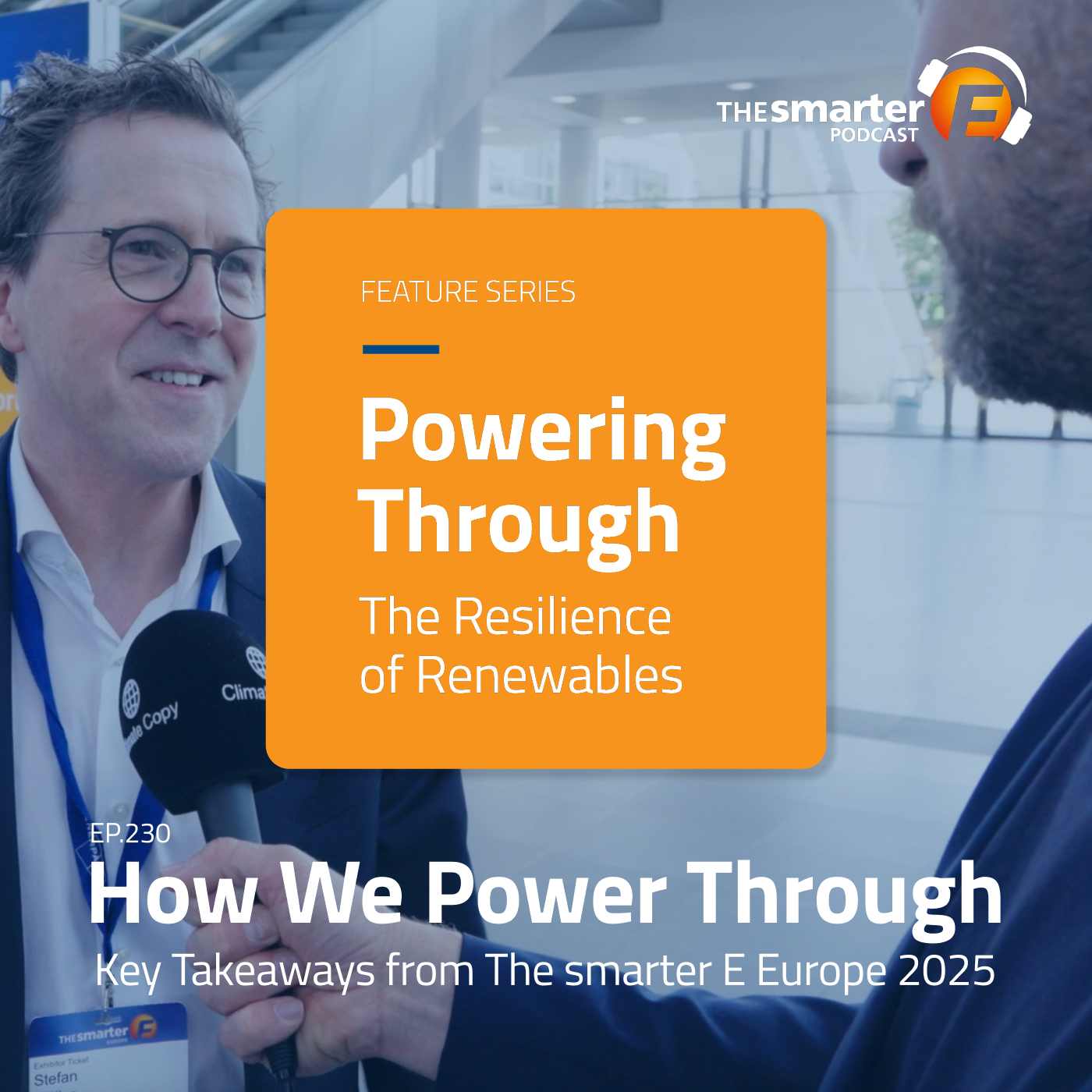
#TSEP 230 How We Power Through: Key Takeaways from The smarter E Europe 2025
The final episode of Powering Through, The smarter E podcast’s special feature series, takes a look forward, by looking back. It revisits the most compelling insights and recurring themes from the wide-ranging conversations that shaped the series.
The key highlights include:
- How solar power is meeting surging electricity demand, and, when coupled with energy s
#TSEP 229 Weil er gut ankommt – Unterwegs mit dem Elektrotruck
Batteriebetriebene Schwerlaster sind in Deutschland immer noch eine Seltenheit. Doch der Berufskraftfahrer Tobias Wagner ist regelmäßig mit einem unterwegs und berichtet darüber auch in seinem YouTube-Kanal @elektrotucker. Auf der Power2Drive Europe hat er mit seinem Truck auf dem Messestand von EcoG gestanden.
Wir unterhalten uns heute mit ihm über seine Erfahrungen und Erlebnisse mit dem Elektro
#TSEP 228 The Fundamentals of Renewable Energy: How Research Drives Clean Technology
When we talk about clean energy, the focus can often be on what’s most obvious: solar panels, EVs, wind turbines, or batteries. However, what’s often overlooked is the incredible technology inside those systems – the innovations in PV modules, batteries, and balance-of-system components that make the energy transition possible.
Behind these breakthroughs are researchers working conscientiously in
#TSEP 227 High Power Charging – Die Evolution des Schnellladens
Der Weg der Elektromobilität macht vor Schwerlast- und Mischflotten nicht halt. Für deren Bedürfnisse muss die Ladeinfrastruktur weiterentwickelt werden. Was muss diese leisten? Gibt es Unterschiede in den globalen Märkten? Welchen Einfluss hat die Politik? Und wie geht man als Anbieter von Leistungselektronik und High Power Charger damit um?
Das sind einige der Herausforderungen, die wir mit Phi
#TSEP 226 Built to Last: Business Resilience in the Renewables Industry
It’s not for the faint of heart: succeeding as a manufacturer in the fiercely competitive solar and energy storage industries. So, why do some companies thrive, while others fail?
As relatively young industries, clean energy markets offer rapid opportunities – but they can disappear just as quickly. The solar industry, in particular, has seen a long list of manufacturers rise and fall amid shiftin
#TSEP 225 Solar Meets Storage: Unlocking the Potential of PV Power Plants and Large-Scale Battery Systems
Hybrid solar, which combines solar energy with storage or wind, is key to Europe’s energy transition. It supports system flexibility, improves the cost-effectiveness of an asset and makes energy generation more reliable.
Overall, large-scale storage accounts for a significant portion of the current BESS storage growth. However, there are still a few hurdles to be overcome, and growth isn’t where i
#TSEP 224 Enabling Flexibility: Balancing the Grid with Storage & E-Mobility
We’re in the midst of a mobility revolution – one that’s reshaping not only how we move, but how we power our lives.
Electric vehicles (EVs) of all shapes and sizes are accelerating the rate of change, transforming the way we move and the framework of our energy systems. Because what’s especially interesting about EVs is that in addition to being vehicles, they’re also mobile batteries. And the wa
#TSEP 223 Ladeinfrastruktur optimal planen: Wissen für Installateure und Planer
Die Vorgaben der EU-Richtlinie zur Unternehmens-Nachhaltigkeitsberichterstattung (CSRD) und des Energieeffizienzgesetzes (EnEfG) haben der Industrie die notwendige Orientierung geben, die Umrüstung ihres Fuhrparks auf Elektromobilität voranzutreiben. Doch immer noch gibt es Unwägbarkeiten. Was steht im neuen Koalitionsvertrag? Was wollen die neuen Minister? Und Wie sollen Unternehmen nun vorg
#TSEP 222 Power Beyond Politics: Surviving the Storm When Policy Changes
“Powering Through: The Resilience of Renewables” is a feature series of The smarter E podcast, recorded on-site at The smarter E 2025 in Munich. Spanning six episodes, the series highlights the critical role of resilience in the global energy transition. It explores how electricity networks, renewable energy companies, research institutions, and public policy development intersect to build a more
#TSEP 221 Zukunft Wärmepumpe – Reizthema oder wichtiger Baustein der Energiewende?
Selten wurde etwas in der Politik und in der Gesellschaft so heftig diskutiert wie die Wärmepumpe. Tatsache ist jedoch, wer sich jetzt noch eine neue Gasheizung einbauen lässt, der setzt auf ein teures Auslaufmodell. Denn die neue Bundesregierung hat sich im Koalitionsvertrag dazu bekannt, am ETS2 für Gebäude und Verkehr (Europäische Emissionshandelssystem 2) festzuhalten. Aber ist die Wärmepumpe
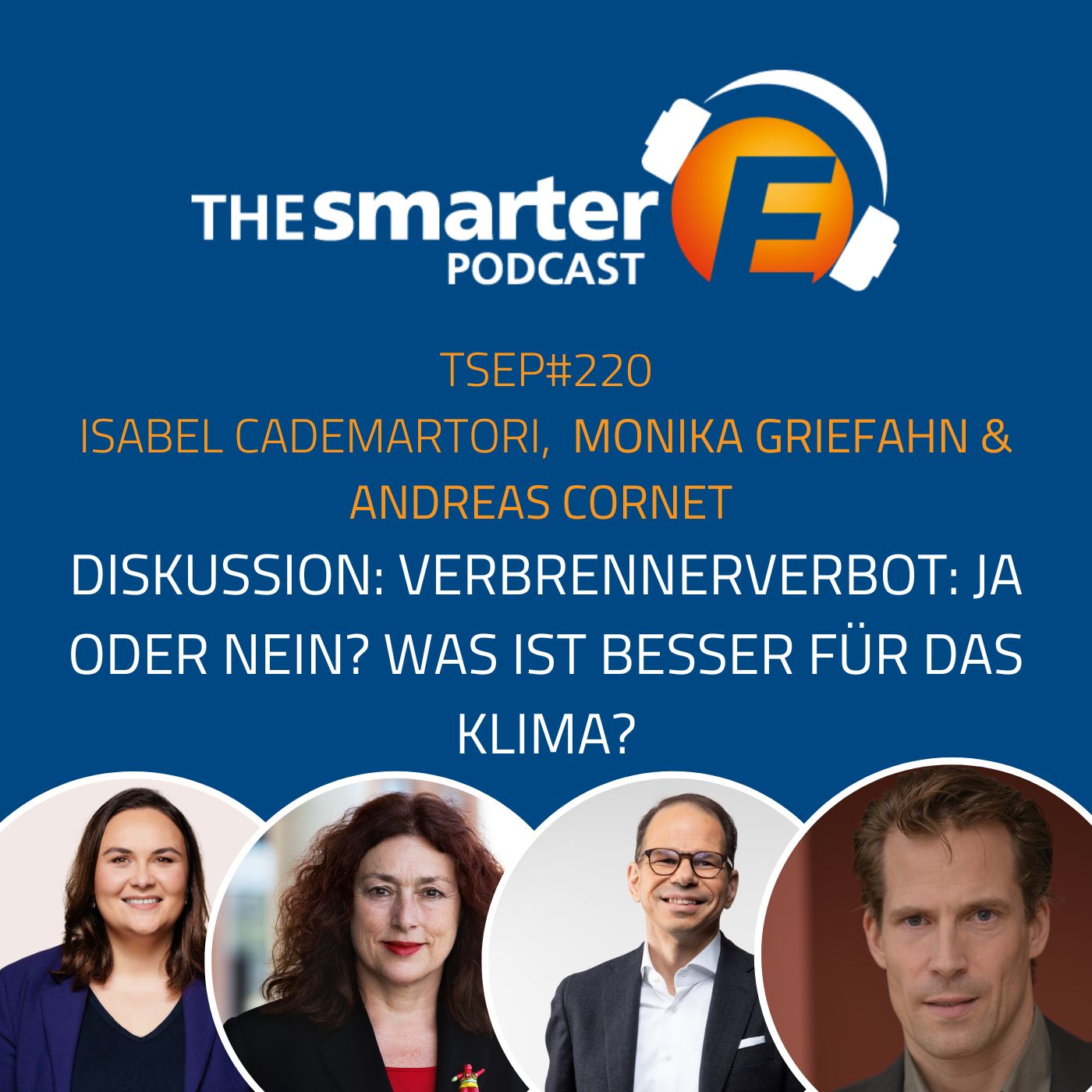
#TSEP 220 Diskussion: Verbrennerverbot: Ja oder Nein? Was ist besser für das Klima?
Podcast Einführung
In Deutschland wird mal wieder über den richtigen Weg zur Senkung der Treibhausgasemissionen im Straßenverkehr gestritten. Waren es in der Vergangenheit mehrfach die CO2-Flottengrenzwerte, die vor allem die deutsche Autoindustrie in Brüssel verhindern wollte, so geht es jetzt um das vor zwei Jahren beschlossene Verbrenner-Aus.
Das Verbrenner-Aus sieht vor, dass nach 2035 in der
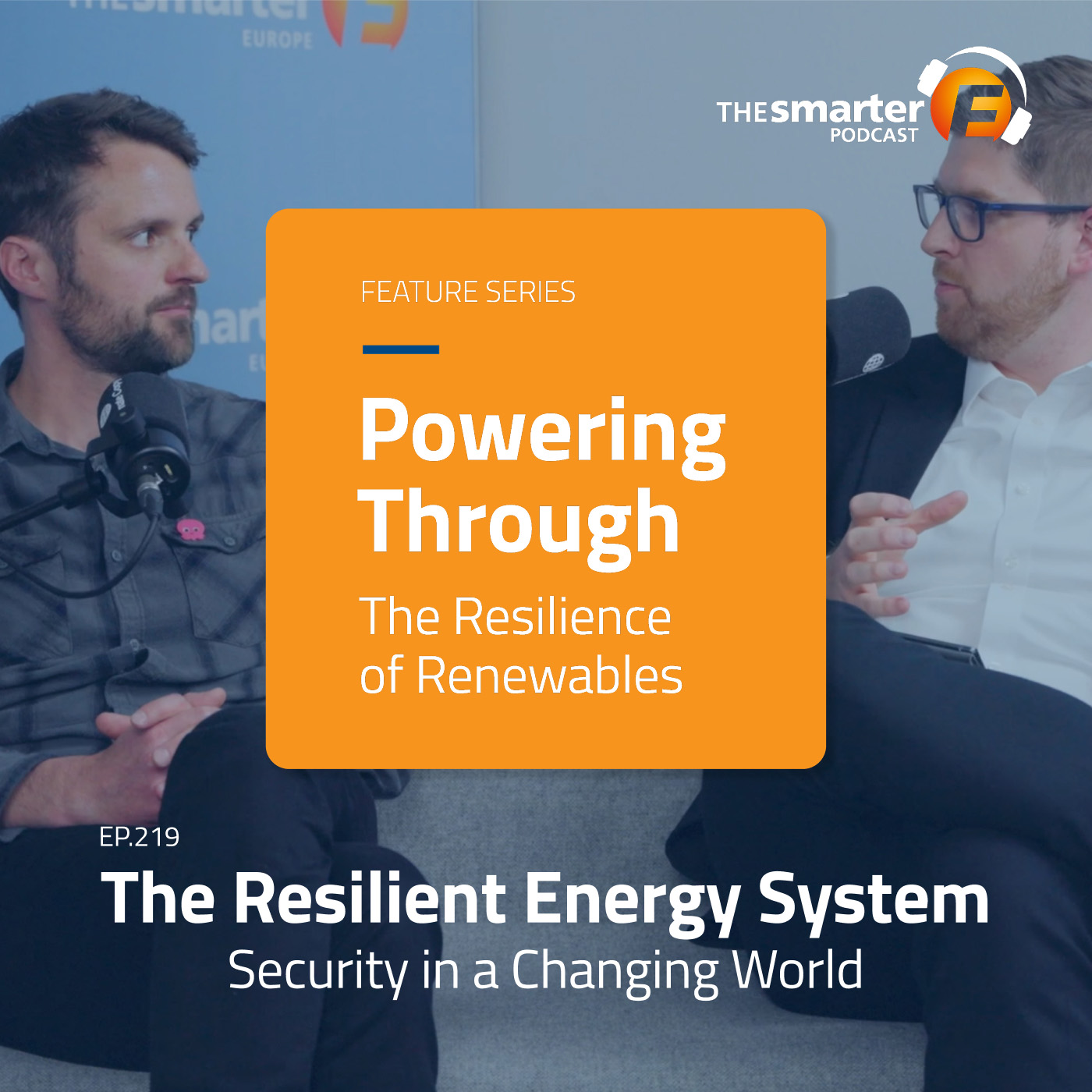
#TSEP 219 The Resilient Energy System: Security in a Changing World
Podcast Intro
“Powering Through: The Resilience of Renewables” is a feature series of The smarter E podcast, recorded on-site at The smarter E 2025 in Munich. Spanning six episodes, the series highlights the critical role of resilience in the global energy transition. It explores how electricity networks, renewable energy companies, research institutions, and public policy development intersect to
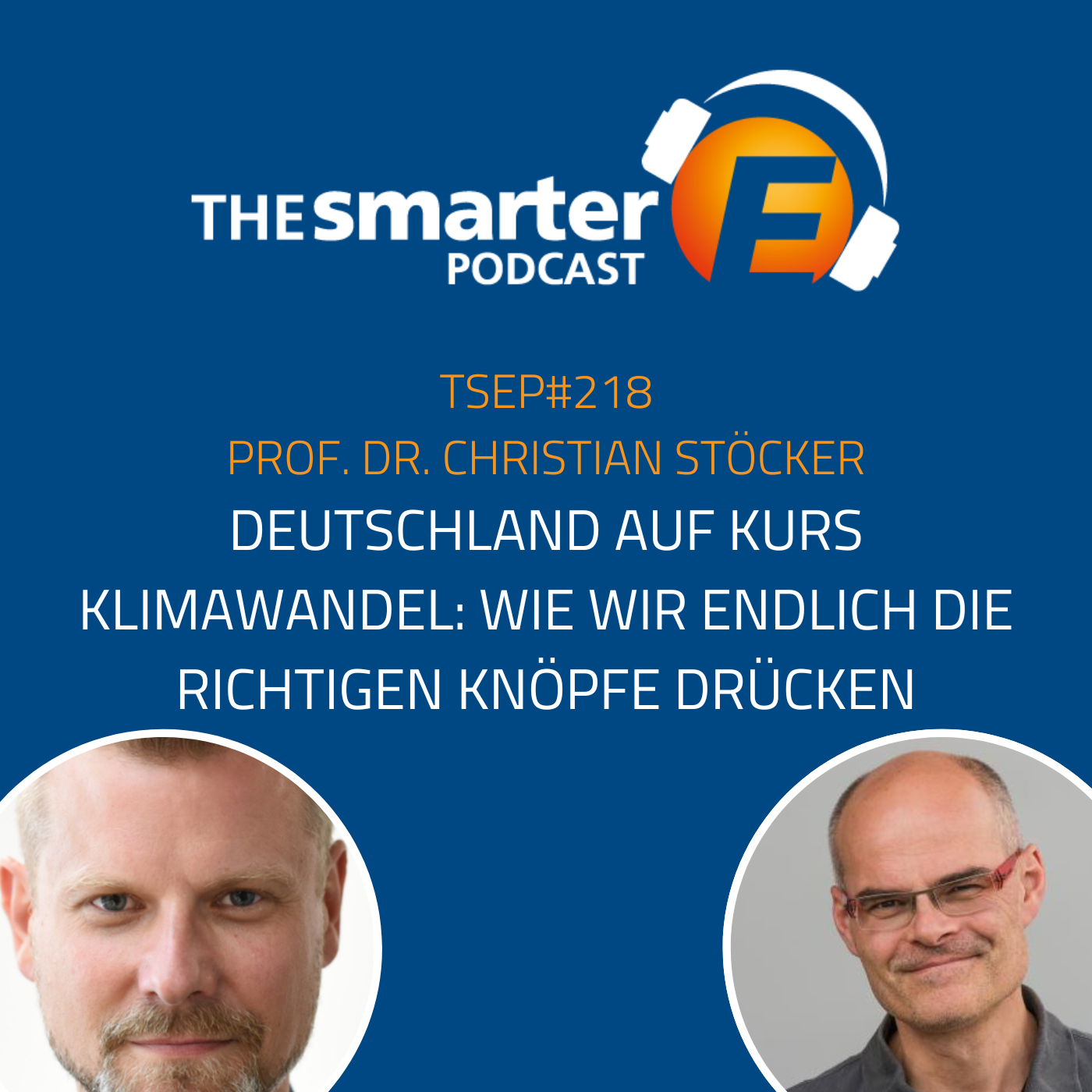
#TSEP 218 Deutschland auf Kurs Klimawandel: Wie wir endlich die richtigen Knöpfe drücken
Obwohl den Menschen bekannt sein müsste, welche Folgen der Klimawandel hat, gibt es Akteure, die unbeirrt weitermachen, die das ganze leugnen, die die Anstrengungen des Klimaschutzes ausblenden, die gezielt desinformieren. Warum ist das so? Was können wir dagegen tun? Wie können wir die Menschen für Klimaschutz begeistern? Darüber unterhalten wir uns mit Prof. Dr. Christian Stöcker von der HAW Ham
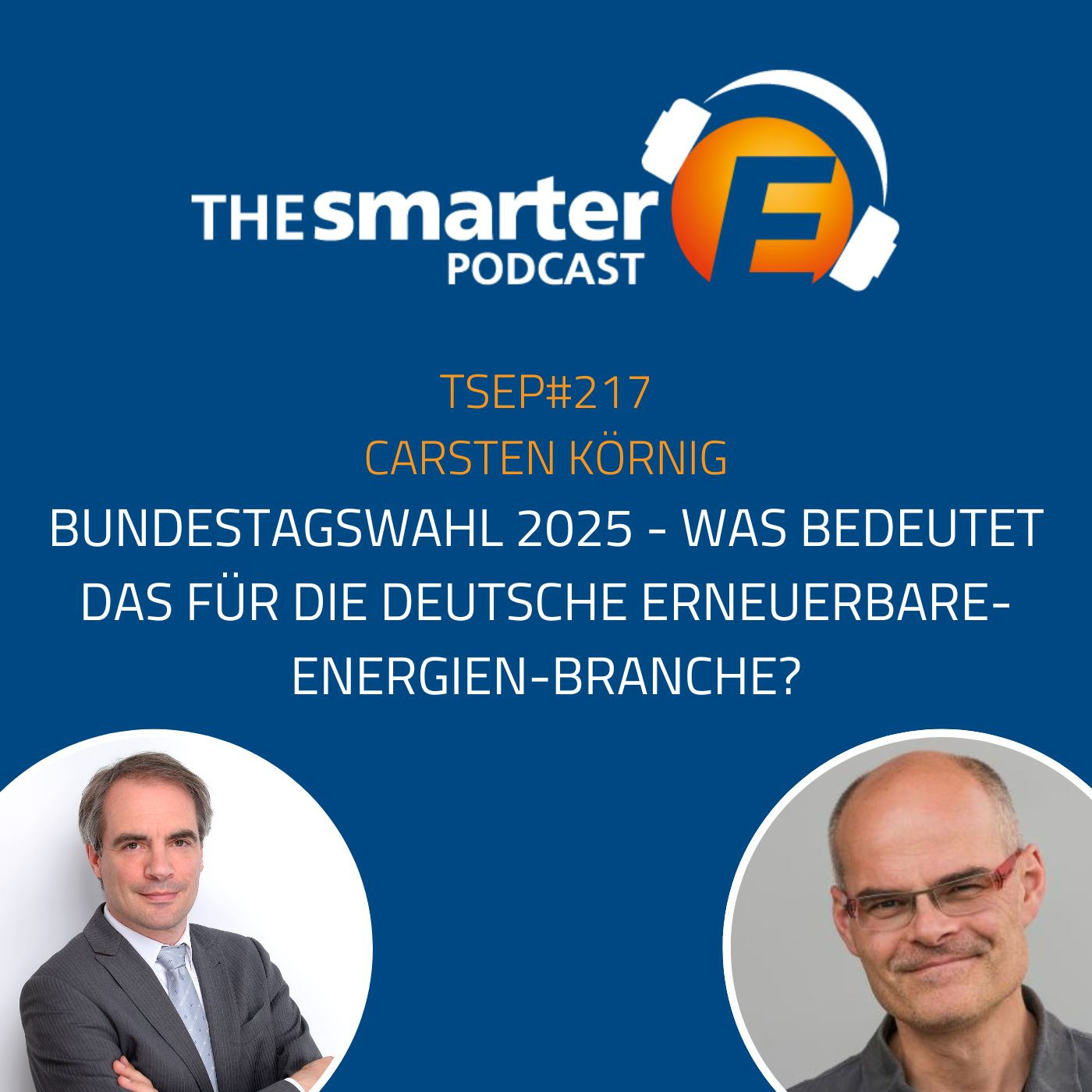
#TSEP 217 Bundestagswahl 2025 - was bedeutet das für die deutsche Erneuerbare-Energien-Branche?
Die Modernisierung, Flexibilisierung und Entbürokratisierung der Energieversorgung gehören vorne auf die politische Agenda. Saubere und preiswerte Erneuerbare Energien und ein möglichst hohes Maß an Energieunabhängigkeit sind essenziell für künftigen Wohlstand, Wohlergehen und Sicherheit in Deutschland. Das sagt Carsten Körnig, Hauptgeschäftsführer des Bundesverbandes Solarwirtschaft, und genau da

#TSEP 216 Technical Innovations in Inverter Solutions
Strong growth, technological innovations and increasing integration into intelligent energy systems characterise the current situation in the inverter market. Modern inverters are taking on increasingly complex tasks within energy systems. They are no longer responsible for converting direct current into alternating current, but also play a central role in grid stability and energy management. Tod
#TSEP 215 Energie der Zukunft: Power-to-Gas-Technologie für eine innovative Energieversorgung
Power-to-Gas (PtG) beschreibt eine Technologie, bei der nachhaltig erzeugter Strom in Gasform, wie Wasserstoff und Methan, umgewandelt und gespeichert wird. Mit dieser Technologie wird die fluktuierende Sonnen- und Windenergie gespeichert. Mit der Energie des grünen Wasserstoffs können Strom und Wärme sowie Kälte zur Verfügung gestellt werden, wenn der Bedarf vorhanden ist. Die Herstellung von grü
#TSEP 214 Ladeverluste an der DC Ladesäule im ADAC Test
Tanken in Deutschland ist recht einfach: Das richtige Benzin wählen, Zapfhahn einführen, tanken, bezahlen, fertig. Aber wie funktioniert das beim Schnellladen? Genauso einfach? Gibt es Probleme? Oder müssen hier bestimmte Dinge beachtet werden?
In kaum einem Bereich der Elektromobilität wird global so viel geforscht wie beim Zusammenspiel von Ladesystemen und Batterien. Immer neue Laderekorde werd
#TSEP 213 More Power for Photovoltaics: The True Value of Monitoring Systems
The wiser one measures up. PV monitoring is becoming increasingly important. After all, photovoltaics is by far the most extensive application area today for replacing conventional power plants. However, photovoltaic systems must be monitored and maintained to reduce the system's levelised cost of electricity (LCOE).
In The Smarter E Podcast, we'll talk to Julius Beutel, the Vice President
.png)
#TSEP 212 Megawatt Charging: Data, Charging Profiles, and Smart Solutions
Technological developments in battery and charging technology drive the industry growth of battery-electric trucks. Slowly, we are coming closer to a sustainable long-distance transport of heavy goods vehicles. However, one of the key questions is always: how do we charge trucks fast enough during break times?
Together with the Combined Charging System (CCS), the Megawatt Charging System (MC

#TSEP 211 Flow Battery Technology: The Future of Energy Storage
The EU faces many challenges with decarbonising the economy, lowering energy prices and enhancing its industrial competitiveness. Big investments in renewable energy sources and energy storage facilities are required.
Leveraging flow batteries will be pivotal in helping to power energy systems in a flexible, stable and reliable way. But what exactly are flow batteries? And how can these batteries
TSEP#210 Stand der Europäischen Batterieindustrie
Die aktuelle globale politische Situation erfordert umfassende Unabhängigkeit von kritischen Komponenten wie die Lithium-Ionen-Batterie. Um in dieser Hinsicht die größtmögliche Unabhängigkeit zu erreichen, ist die Entwicklung verschiedener Industrien rund um die Lithium-Ionen-Batterie essenziell. Wenn es den Unternehmen gelingt, Kooperationen und Vernetzungen entlang der gesamten Wertschöpfungsket
TSEP#209 Navigating the Unique Recruitment Market in Germany and Europe for Solar, Wind and Battery Projects
The energy transition will accelerate the demand for labour.
As the European Green Deal unfolds and is now being paired with the Clean Industrial Act, it is crucial to monitor its impact on the labour market in terms of changes in demand and supply. The energy transition and the expansion of EU manufacturing capacity could require over 1 million new jobs by 2030 at a time when the indus
TSEP#208 From Concept to Blueprint: Battery Passports as Enablers of Transparent, Competitive, and Circular Value Chains
Batteries have become indispensable to our decarbonisation effort, powering electric vehicles and energy storage systems worldwide. However, their ecological and social impacts often remain hidden. The EU-wide mandatory digital battery passport, set to take effect in February 2027, aims to change this. It is designed to become a key instrument for ensuring the sustainable scaling of battery value
.jpg)
TSEP#207 1000 Kilometer für 10 Euro durch bidirektionales Laden – Frankreich macht es vor!
In der neuesten Folge sprechen wir mit Marcus Fendt, dem Geschäftsführer und CSO von The Mobility House, über das Thema bidirektionales Laden. Was steckt hinter dieser Technologie, die das Potenzial hat, unser Energiesystem effizienter zu gestalten und gleichzeitig Kosten zu sparen? Marcus Fendt erläutert, wie der Rollout von Vehicle-to-Grid (V2G) in Frankreich 2024 erfolgreich umgesetzt wurde, be
TSEP#206 Deep Talk: Strommarktdesign – Welche neuen Regeln braucht der Strommarkt?
Wind- und Sonnenenergie werden schon bald den meisten Strom im Netz erzeugen. Das ist gut, denn Wind und Sonne sind die bei weitem günstigsten Energiequellen und noch dazu klimaneutral. Allerdings schwanken sie stark, was inzwischen zu teils sehr hohen Strompreisen führt, wenn der Strom knapp ist. Aber auch zu sehr günstigen und immer öfter auch zu negativen Preisen, wenn das Stromangebot zu groß
TSEP#205 Deep Talk: Smart Meter – Warum stockt der Roll-out in Deutschland?
Smart Meter – Warum stockt der Roll-out in Deutschland?
Damit die Energiewende gelingt, brauchen wir noch deutlich mehr Wind- und Sonnenenergie in unserem Stromnetz. Das Problem dabei: Beide Energiequellen unterliegen großen Schwankungen. Im Stromnetz müssen Erzeugung und Verbrauch aber immer ausgeglichen sein.
Neben flexiblen Gaskraftwerken und vielen Batteriespeichern gelten Smart Meter als eine
.png)
TSEP#204 Solargründächer: Der Weg zu grüneren Städten?
Solargründächer: Der Weg zu grüneren Städten?
Solargründächer sind ein wichtiger Baustein, um die Energiewende und den Klimaschutz in den Städten voranzutreiben. Das hat man auch in der Politik erkannt: Die Hansestadt Hamburg führt ab 2027 sogar eine Solargründach-Pflicht für Gebäude mit bestimmten Merkmalen im Neubau und bei Dachsanierung ein. Wie hat sich der Markt für Solargründächer in den let
.png)
TSEP#203 Stromspeicher zwischen Boom und Krise: Perspektiven für die Energiewende
Andreas Piepenbrink, Gründer und Geschäftsführer von E3/DC, einem führenden Anbieter für Energiespeicherlösungen in Deutschland, verfolgt die aktuelle Marktdynamik in Bereich Heimspeicher hautnah. E3/DC hat über 150.000 Haushalte mit seinen Produkten ausgestattet und Andreas Piepenbrink kennt die Herausforderungen der Branche wie kaum ein anderer. In unserem The smarter E Podcast liefert er Einbli
.png)
TSEP#202 Back to the Future – Why the Past Was not Really Better!
If we look at the current state of the electricity market, we usually tend to all the obstacles and all the hurdles we still need to overcome to arrive at a satisfying state. However, imagine, you were a time traveler from the year 2000 would probably rub his eyes today at how much energy systems and markets have already changed since then. Artificial intelligence is making generation and consumpt
TSEP#201 Die Ampel ist aus: Wie steht es nun um die Vorfahrtsregeln für Smart Meter & Co.?
Der aktuelle Gesetzentwurf der Bundesregierung zur Änderung des Energiewirtschaftsrechts sieht vor, das Messstellenbetriebsgesetzes (MsbG) weiterzuentwickeln und die Markteinbindung von kleinen Prosumeranlagen zu erweitern. Der verpflichtende Smart-Meter-Rollout soll um einen Steuerungs-Rollout ergänzt werden, denn vom Messen allein wird das Stromsystem nicht flexibler. Dabei geht es auch um das K
.jpg)
TSEP#200 Bidirectional Charging: Is Europe Ready?
Bidirectional charging could be a game-changer for the energy transition—and your wallet. According to a recent study by Transport & Environment, bidirectional charging has the potential to save energy providers and EV drivers in the EU over €100 billion within the next decade. For individual EV owners, this translates to potential savings of over €700 annually.
But today, high public charging
TSEP#199 Die Zukunft der Energieintegration: Bidirektionales Laden trifft Multi-Level-Batterien:
Die Elektromobilität bleibt ein zentraler Baustein der Energiewende, und das bidirektionale Laden nimmt dabei eine immer wichtigere Rolle ein. Die Idee: Elektrofahrzeuge nicht nur zum Laden, sondern auch zur Rückspeisung von Strom ins Netz zu nutzen. In Pilotprojekten und ersten Anwendungen zeigt sich bereits das Potenzial. Jetzt bringt eine neue Technologie zusätzlichen Schwung in diese Entwicklu
TSEP#198 DeepTalk: Wasserstoff – Heilsbringer oder Energieverschwendung?
Wasserstoff gilt als unverzichtbar für das Gelingen der Energiewende. Schon seit Jahrzehnten umweht das leichteste Element des Universums den Hauch eines Heilsbringers in Energiefragen.
Doch die Produktion von grünem Wasserstoff ist noch mit hohen Verlusten behaftet und auch die Einsatzbereiche sind noch begrenzt. Bestimmte Branchen und Sektoren werden sich wohl aber ohne Wasserstoff nicht dekarbo
TSEP#197 Think Holistically, Design Flexibly – for a Successful Transformation of the Grid
The European distribution grids are facing major challenges. An estimated 600 GW of renewable energy, 50 million electric cars and 50 million heat pumps must be integrated into the power grids by 2030. All technologically feasible, but the factors of time, money, resources and regulation also play a role in the solution. And occasionally there are side effects that need to be taken into account as
TSEP#196 Noch ein Start-up, bitte! Wie Next Kraftwerke Gründer Jochen Schwill im Smart-Meter Markt neu durchstartet
Die Schlagzeilen waren 2021 groß, als Jochen Schwill und sein Geschäftspartner Hendrik Sämisch „ihr Baby“ an den Ölkonzern Shell verkauften. Gemeinsam hatten sie Next Kraftwerke 2009 gegründet und zu einem der größten Virtuellen Kraftwerke Europas aufgebaut. Nun hat Schwill 2023 mit SpotmyEnergy ein neues Start-up gegründet, das den Markt im Bereich von Energiemanagment, Smart Metering und dynamis
.jpg)
TSEP#195 What's Next for the Future of Silicon Solar Cells?
Silicon solar cells have been the backbone of the recent solar boom and will continue to be the driving force behind an energy transition with a high proportion of cost-effective solar power available in the future. The groundbreaking technological development of silicon PV technology has led to significant efficiency gains.
At the 15th Silicon PV International Conference on Crystalline Silicon Ph
TSEP#194 Automobilwirtschaft im Wandel: Retrofit als Retter der Elektrifizierung?
Die Zahl von E-Fahrzeugen auf den Straßen steigt weiter an. Es drängen immer mehr verschiedene Modelle auf den Markt. Jede siebte Neuzulassung in der EU war 2023 ein Elektroauto. Die Entwicklung scheint positiv voranzugehen – ganz besonders in China. Erst vor wenigen Tagen wurde medienwirksam von über 50 Prozent Elektroautos an Neuzulassungen im August im Reich der Mitte kommuniziert. Doch was ges
TSEP#193 Wie wird die Fuhrparkelektrifizierung wirtschaftlich und nachhaltig erfolgreich?
Die Elektrifizierung von Fuhrparks ist ein entscheidender Schritt zur Reduktion von CO2-Emissionen und zur Erreichung nachhaltiger Unternehmensziele. Dabei spielen technische und wirtschaftliche Optimierungsmaßnahmen eine zentrale Rolle. Welche Strategien und Technologien sind notwendig, um die Fuhrparkelektrifizierung wirtschaftlich erfolgreich zu gestalten? Wie können lokale Erzeugungsanlagen in
TSEP#192 BIPV: Solar Cells in the Roof – More Than Just a Niche?
Building Integrated Photovoltaics (BIPV) is a niche on the PV market – but its market share has been growing since manufacturing costs can be lowered and rooftop PV with BIPV characteristics, where piles of a roof are substituted by PV Modules, is gaining momentum. But manufacturing costs are still the defining variable that hinders BIPV to become a mainstream application. In this episode, we talk
TSEP#191 Maritime Elektromobilität – Zukunft oder Irrsinn?
Der Seeverkehr ist für etwa drei Prozent der globalen CO2-Emissionen verantwortlich und steht unter wachsendem Druck, seine Umweltbilanz zu verbessern. In der Vergangenheit hatte die Internationale Seeschifffahrts-Organisation (IMO) strengere Vorschriften eingeführt, um die Dekarbonisierung voranzutreiben. Dabei könnte die Elektrifizierung von Schiffen eine zentrale Rolle spielen. So könnten ein G
TSEP#190 Renewable Growth vs. Sustainability: Can We Balance the Footprint?
The world needs massive amounts of renewables to meet our climate goals and become net zero. But at what cost really? Did we look at how sustainability itself is thought of while implementing renewables and it's necessary infrastructure? With massive growth rates in PV, wind power and storage, it's quite obvious that renewables come with a sizable footprint themselves in terms of energy or explora
TSEP#189 KI-basiertes Energiemanagement: Die Zukunft ist Jetzt
Für günstigen, klimafreundlichen Strom müssen Erzeugung, Speicherung und Verbrauch optimal abgestimmt sein. Ein KI-basiertes Energiemanagement könnte hier in Zukunft eine wichtige Rolle spielen und eine optimale Nutzung der Erneuerbaren unterstützen. Wie aber funktionieren solche Tools? Wie können Millionen Stromverbraucher mit der Verfügbarkeit von Sonne und Wind in Einklang gebracht werden? Und
TSEP#188 Global Race for Green Hydrogen – Just Hype or the Key to a Sustainable Energy Future?
A net-zero world would require 306 million tonnes of green hydrogen to be produced annually by 2050, according to the International Energy Agency (IEA). That would require something in the region of 3,000GW of electrolysers and 6,000GW of renewable energy, based on current technology. Considering the world had only installed 3,371GW of renewables by the end of last year (according to the Internati
Empfohlen

Elefantenrunde

WDR 3 Meisterstücke

Klassik für Klugscheisser

Think in German

Zum Goldenen Bock - Zwei Freunde, viele Autos

Apokalypse & Filterkaffee - Presseklub mit Markus Feldenkirchen

Deutsche Podcasts
SWR Umweltnews

ARIKATE's Minecraft Videos

Inside Europe

Deutsch lernen - Deutsch-D1-Audio-Erlebnis
Löhr & Pennekamp
