History of the Germans
A narrative history of the German people from the Middle Ages to Reunification in 1991. Episodes are 25-35 minutes long and drop on Thursday mornings. The podcast covers major periods such as the Ottonian and Salian Emperors, the Hohenstaufen dynasty, the Hanseatic League, and the Teutonic Knights, among others.
Folgen
History of the Germans - Trailer
Hello and welcome to the History of the Germans Podcast, the podcast that does exactly what it says on the tin. What you get here is a narrative history of the German people from the early Middle Ages to German Reunification in 1991 in 35-40 minute episodes coming out every Thursday.We are 200 episodes in, but do not worry, you do not need to listen to all 200 for it to make sense. The sh
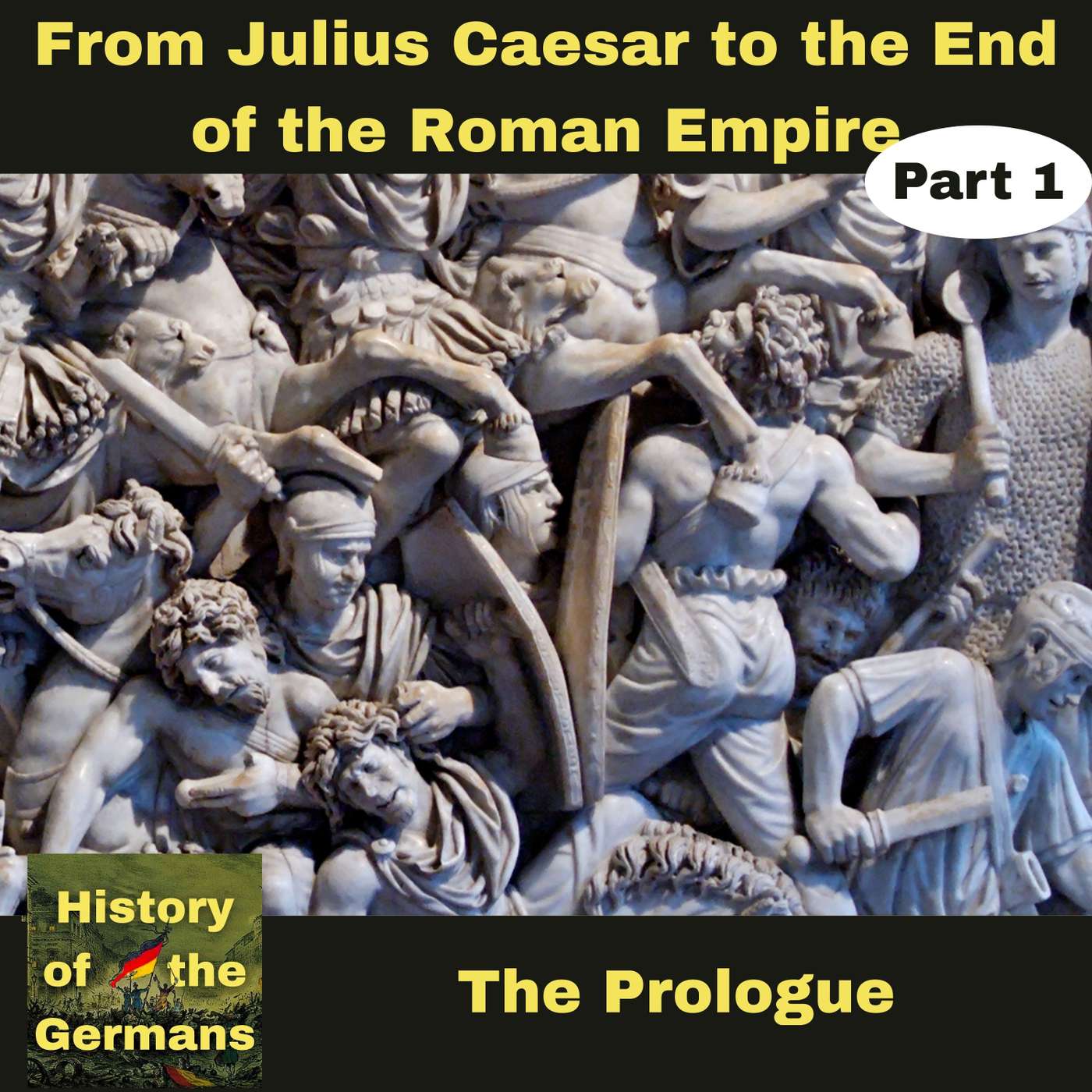
From Julius Caesar to the end of the Roman Empire - Prologue (Part 1)
Germany was invented by Julius Caesar who also believed Moose had no knees. Herman the German was an officer in the legions, ritual car washing dates back to the 1 century BC and Constantine relied on Frankish soldiers to gain control of the Roman empire. These and other stories about the first 500 years of German(ic) history are part of the Prologue in which I attempt to run through the
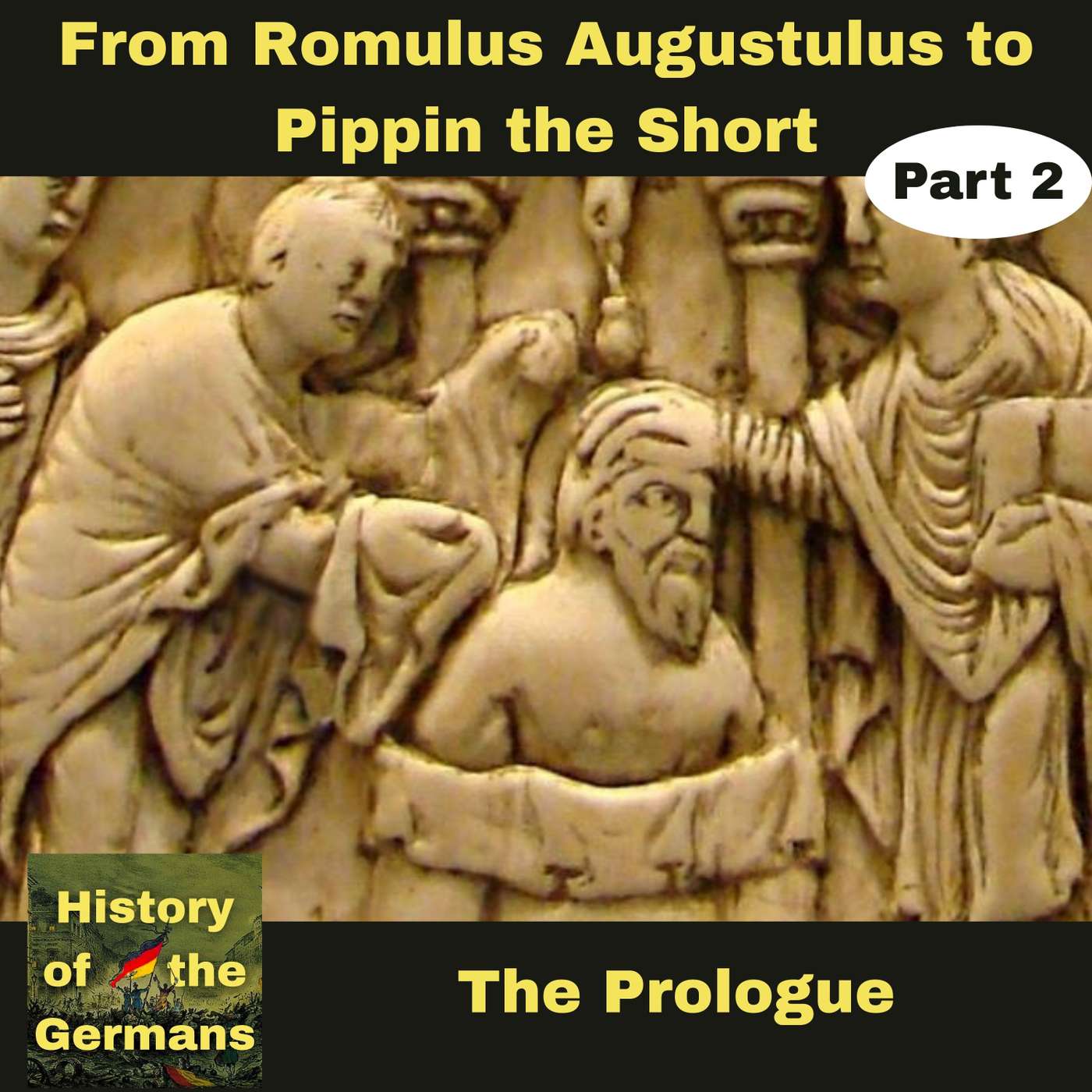
From Romulus Augustulus to Pippin the Short - Prologue (Part 2)
Part 2 of our Prologue to the History of the Germans kicks off with the last western emperor, Romulus Augustulus handing over the insignia of his reign to his German general Odoacer. The next two centuries are dominated by hair-obsessed crime lords, some long-haired gingers, others bearded Lombards. Clovis, first "King of France" and descendant of sea monster, chooses the correct faith to
Charlemagne and all that - Prologue (Part 3)
Part 3 of the Prologue is dedicated to Charlemagne, one of Europe's greatest rulers. and less because he conquered most of Europe and became the first Roman emperor for 325 years, but because he saved many books from antiquity, increased literacy and numeracy and made it possible for you to read this text comfortably.The music for the show is Flute Sonata in E-flat major, H.545 by Carl Ph
Ep. 1: Henry the Fowler (919-936) - A New Beginning
The year is 919 AD and things are not going well. The mighty empire of Charlemagne has splintered into a multitude of puny kingdoms. Its feeble rulers are being pushed around by their formidable barons. The frontiers are breached. In the north the Vikings and Danes are ransacking towns and villages along the coasts and even deep inland. In the east the Slavs are burning Hamburg. And in th
Ep. 2: Otto the Great (936-973) - A Dog's Breakfast
Henry the Fowler ended the tradition of splitting the kingdom amongst the male heirs.So far, so wise. But, and there is always a but, what he did not work out was what to do with the spares. And there were quite a few spares about, three in total. How will Henry's designated heir, Otto I manage?The music for the show is Flute Sonata in E-flat major, H.545 by Carl Phillip Emmanuel Bach (or
Ep. 3: Otto the Great (936-973) - A Series of Fortunate Events
His brother and his biggest vassals are rebelling, the kingdom remains under threat from Hungarians and Slavs - and now the king of France comes in on the side of the opposition. Only a series of very fortunate events can rescue king Otto, or a man of short stature, fierce temper, extraordinary bravery and a dislike of apples and women?The music for the show is Flute Sonata in E-flat majo
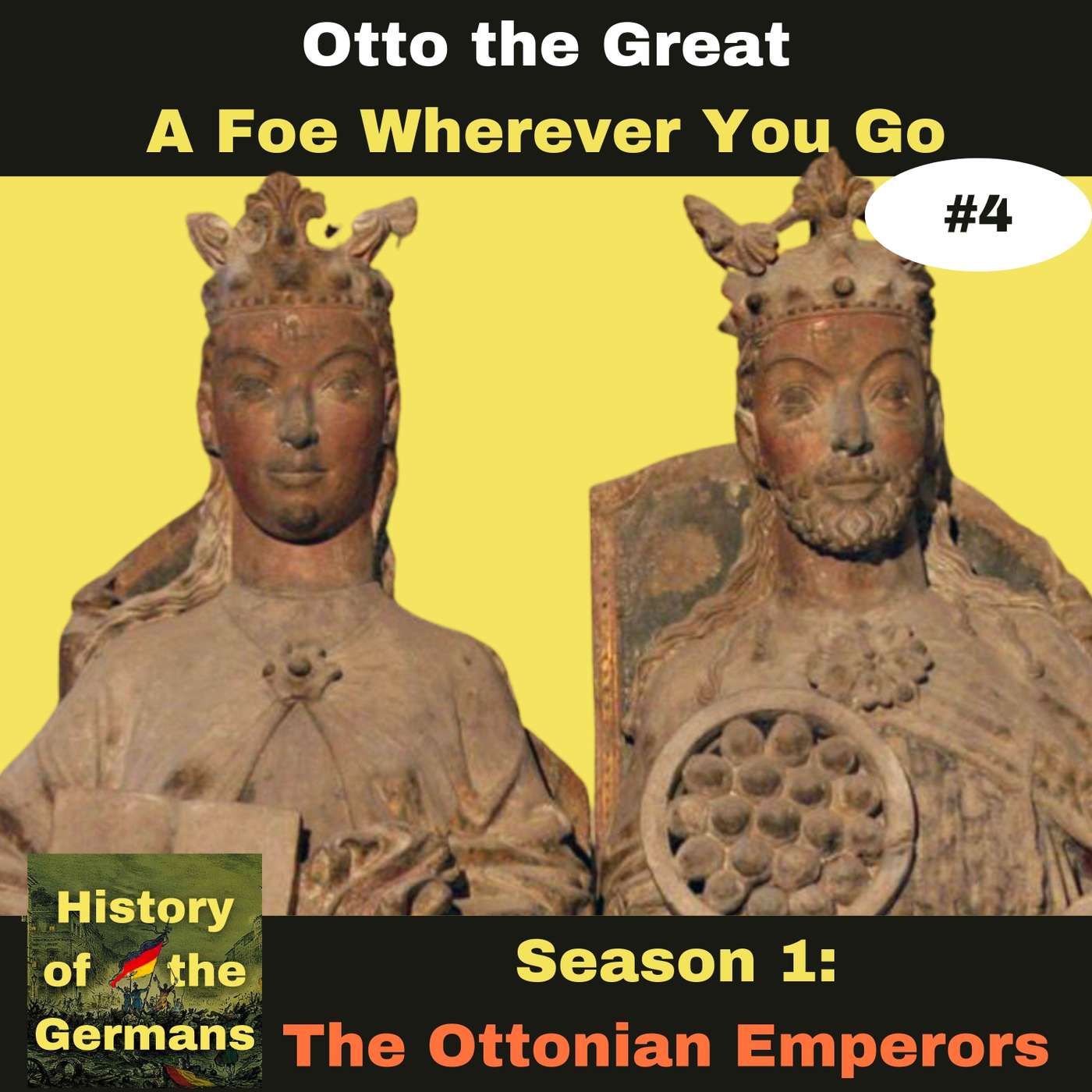
Ep. 4: Otto the Great (936-973) - A Foe Wherever You Go
After the civil war with his brother Henry Otto gets to reorganise the kingdom and focuses on foreign policy. There is conflict on all borders, with the Slavs, the Bohemians, the Hungarians, and the French. Great opportunities for the fine sports of pointless sieges, burning of crops as well massacring peasants. But what do you say to a magnate who offers to swallow seven Saxon lances in
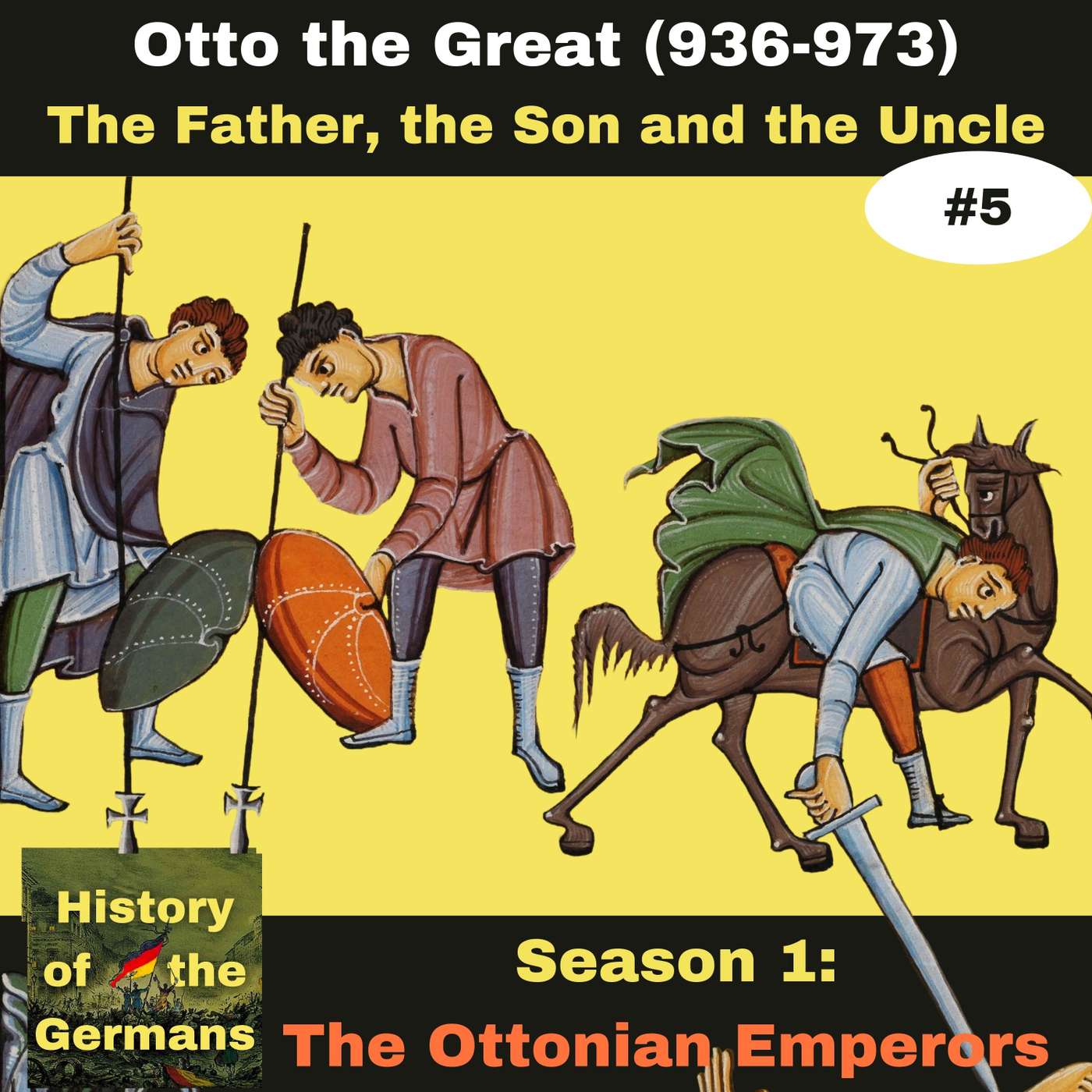
Ep. 5: Otto the Great (936-973) - The Father, the Son and the Uncle
Adelheid's rescue creates tension not only in the family of king Otto but across the realm. Younger members of the powerful families feel cheated out of the gains of the Italian campaign and worry about their prospects. And Otto makes again one of these mistakes he is so adept at, resulting in much bloodshed and pain...The music for the show is Flute Sonata in E-flat major, H.545 by Carl
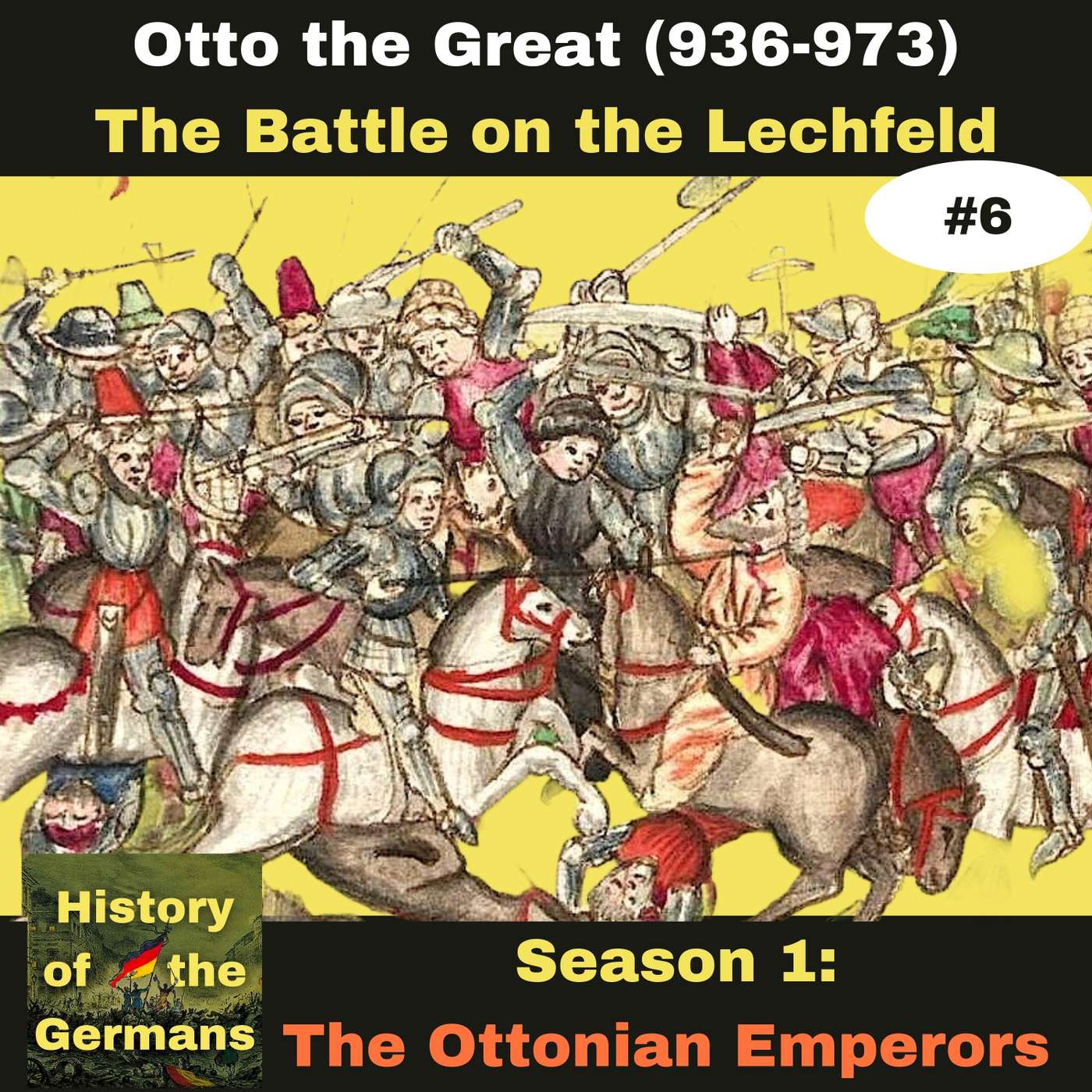
Ep. 6: Otto the Great (936-973)) - The Battle on the Lechfeld (955)
The devastation of the civil war lures in the largest Hungarian army anyone had ever seen anywhere. Enticed by the disinherited sons of former Bavarian dukes, the mighty host makes for Augsburg, a city whose walls are as weak as their defender is steadfast. This time they are here to conquer not just to plunder. Otto has to run hell for leather south gathering an army from wherever he can
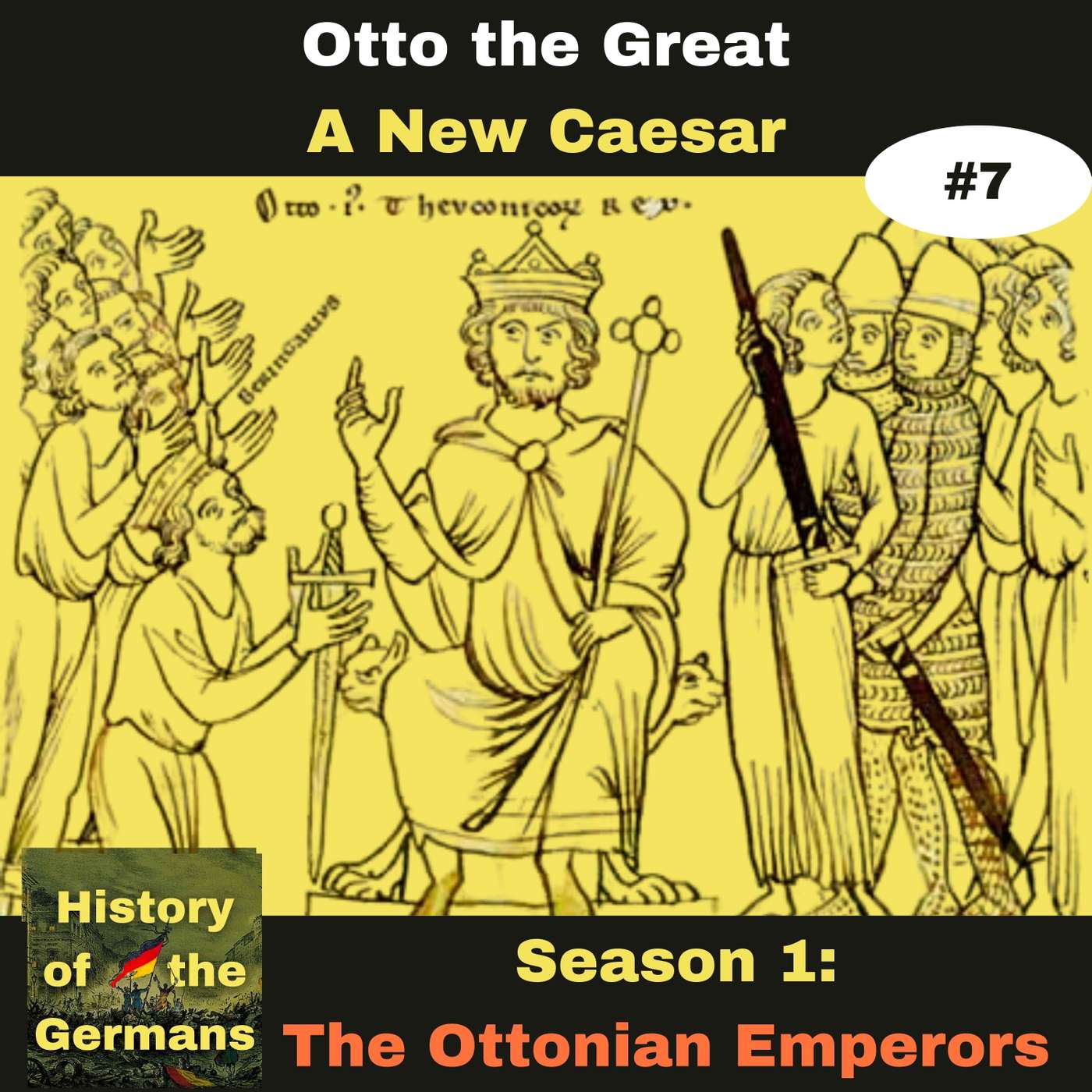
Ep. 7: Otto the Great (936-973) - Crowning A New Caesar
955-963 AD After the battle on the Lechfeld Otto has reached the zenith of his career. All he lacks is the formal recognition of his imperial position within the ancient realm of Charlemagne. For that he has to travel to the malaria-infested swamp that is 10th century Rome where a 23 year old promiscuous and duplicitous pope awaits him...The music for the show is Flute Sonata in E-flat ma
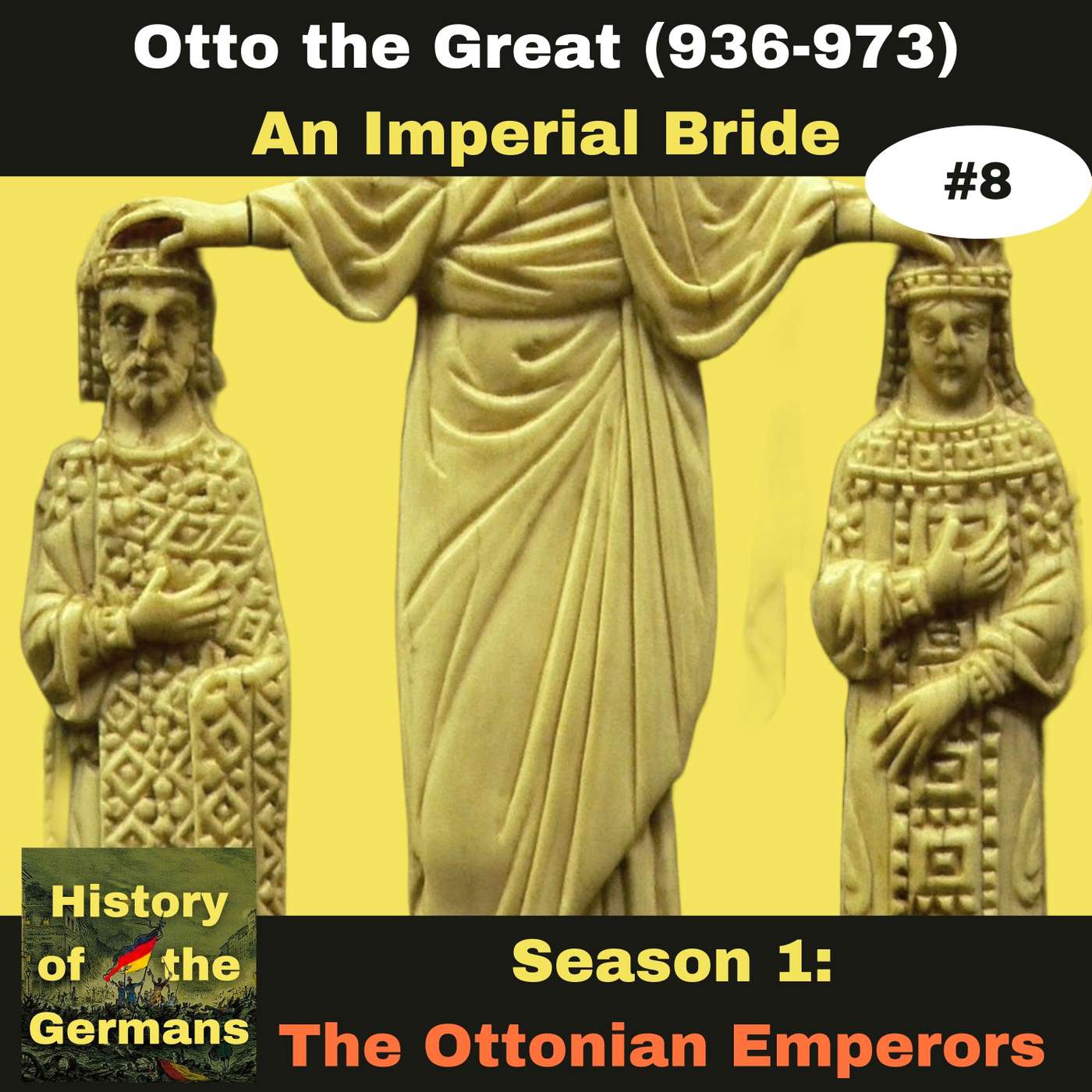
Ep. 8: Otto the Great (936-973) - An Imperial Bride
Otto's final desire is to be recognised as a fellow emperor by the Basileus in Constantinople. When the Byzantines refuse him the purple-born princess Anna he wages war. The new emperor, John Tzimiskis comes up with a better solution and sends across the most glamorous figure of German medieval history - Theophanu Skleraina...The music for the show is Flute Sonata in E-flat major, H.545 b
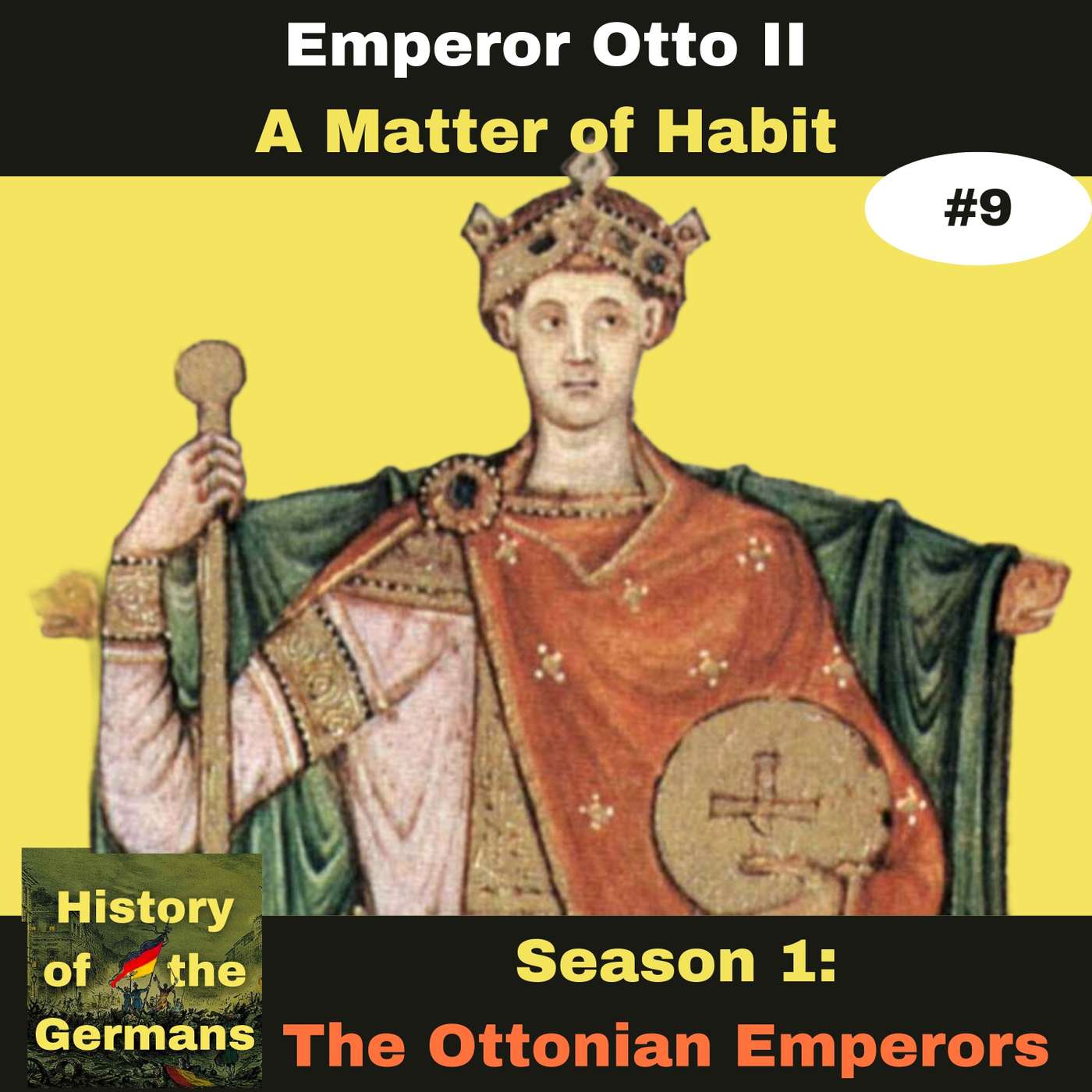
Ep. 9: Otto II (973-983) - A Matter of Habit
When Otto II succeeds his father Otto the Great he inherits a strange construct of interwoven rights, relationships and privileges. He might rely on the church's resources to a degree but to succeed he needs military skill, charisma, proof of the grace of god and luck. With his father being the luckiest man in German history is there any of that elusive substance left for his son...The mu
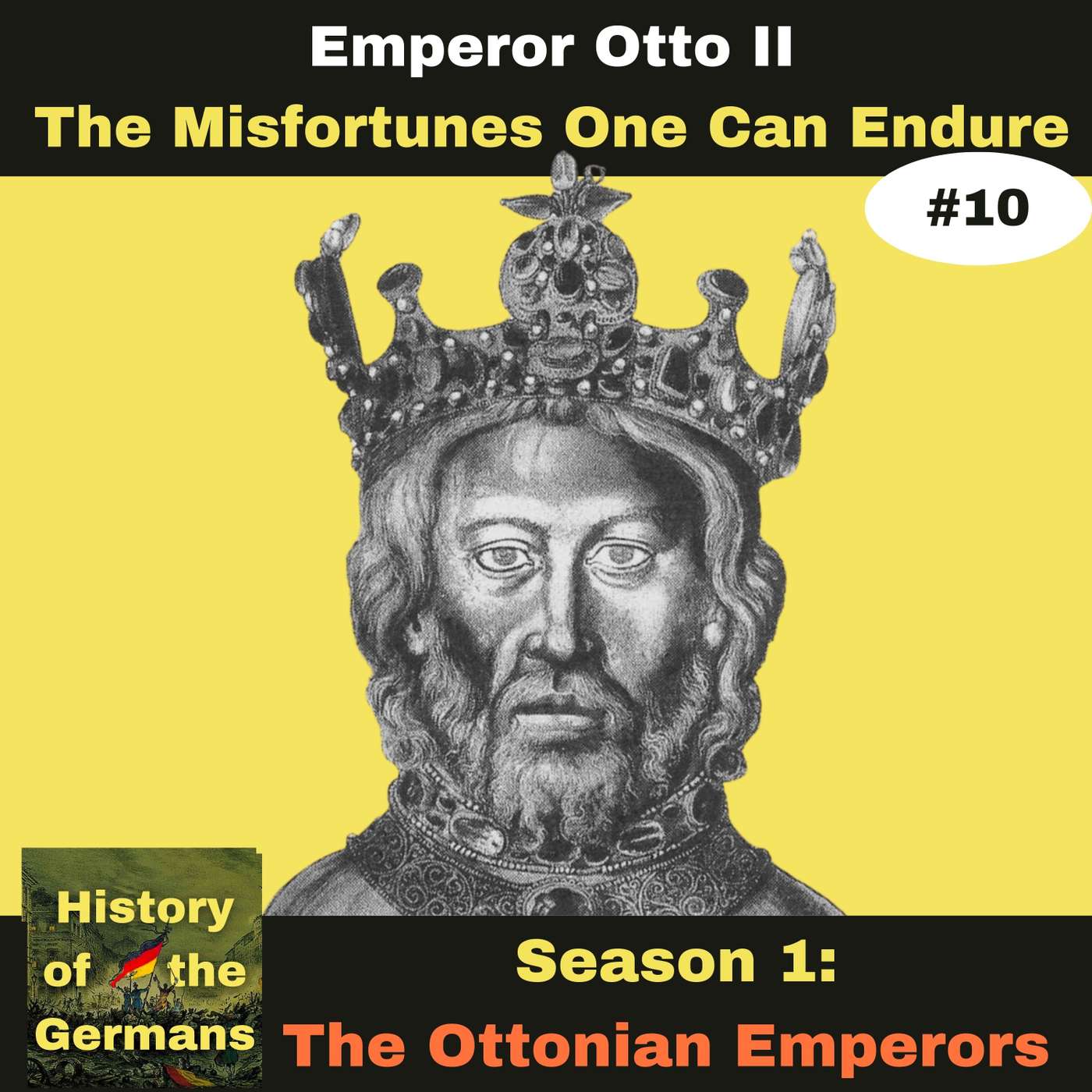
Ep. 10: Otto II (973-983) - The Misfortunes One Can Endure
Having suppressed the customary early reign rebellion, Otto II makes some poor appointments that result in war with France and estrangement from his mother. Once that has been patched up, he embarks on his major project, incorporating the south of Italy into the empire and thereby bottling up the popes.....The music for the show is Flute Sonata in E-flat major, H.545 by Carl Phillip Emman
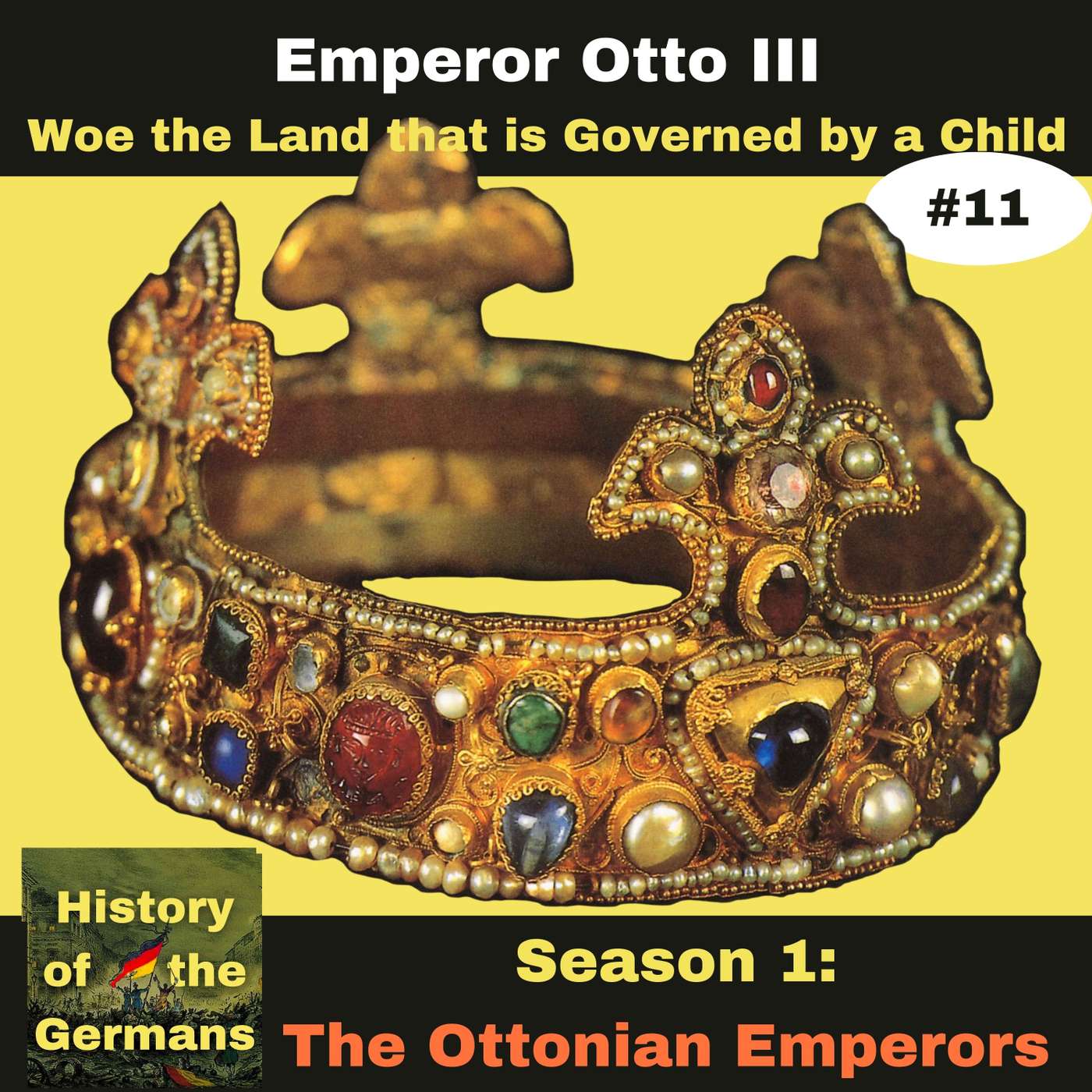
Ep. 11: Otto III (983-1002) - Woe the Land that is Governed by a Child
When 4-year-old king Otto III is crowned king riders bang on the door of Aachen Cathedral with news that his father, Otto II had died 16 days earlier. Immediately the archenemy of the family, Henry the Quarrelsome is released from prison where he was held for treason and is made guardian of the child. Otto III's chance of survival is bleak and his only hope is his mother, the Byzantine pr
Ep. 12: Otto III (983-1002) - The Regency of Theophanu and Adelheid
Having rescued the reign and possibly life of 4-year-old king Otto III his mother, the byzantine princess Theophanu and later his grandmother Adelheid continue Ottonian policies. This time gives birth to the election of the French dynasty that will rule until 1789 (1830), a length of reign only surpassed by the emperors of Japan. It also witnesses the emergence of Poland as a sovereign na
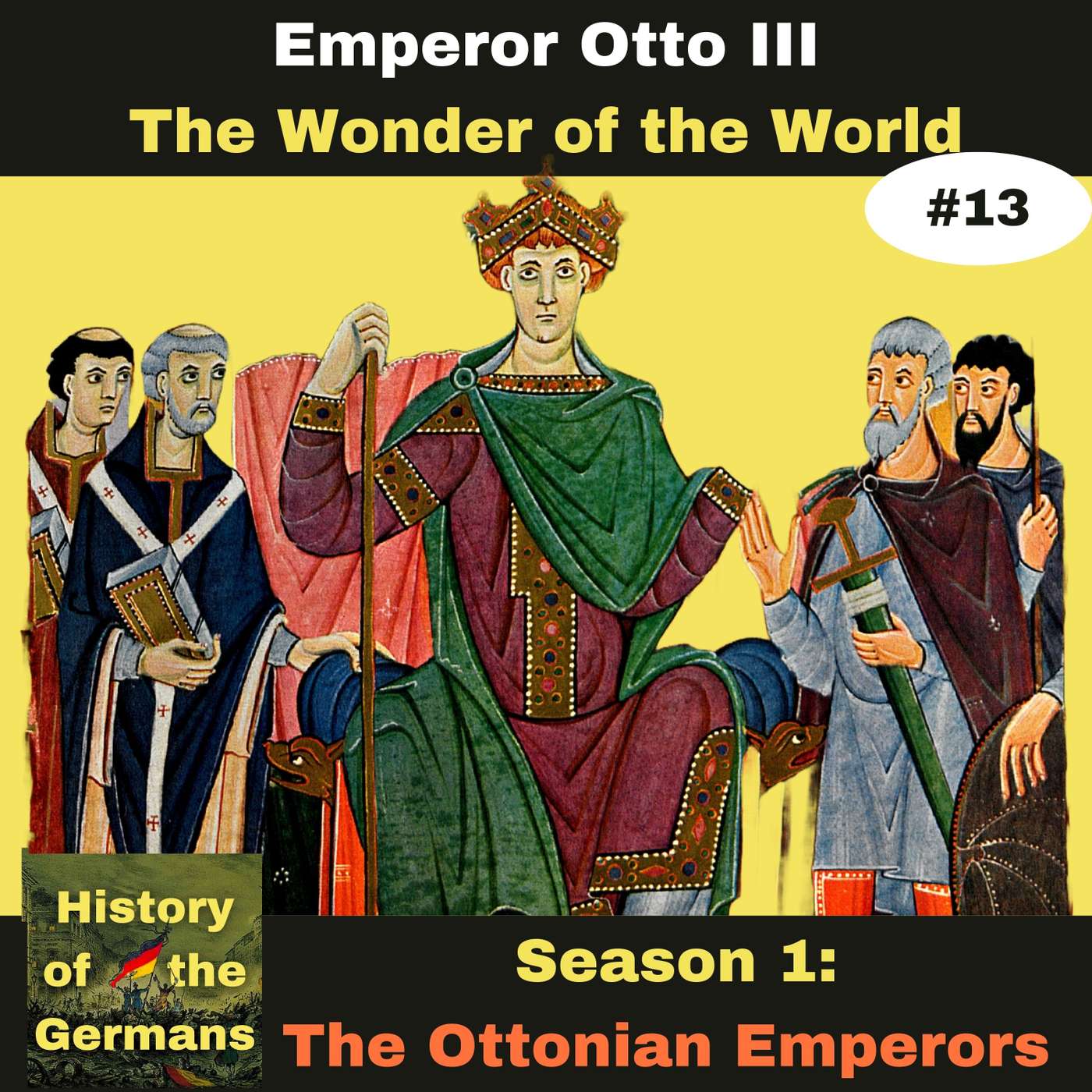
Ep. 13: Otto III (983-1002) - The Wonder of the World
Otto III is one of the most controversial emperor in German medieval history. Was he just an uncontrollable teenager with dramatic mood swings? Or did he plan the Restoration of the Empire of the Romans as his propaganda stated? Was he cruel man who executed and mutilated his opponents or was he a deeply spiritual man torn between his piety and the demands of the office?The music for the
Ep. 14: Otto III (983-1002) - The End of a Dream
After part one of Otto III's "Restoration of the Empire of the Romans" had been a bloody affair, he now embarks on a strenuous display of religious devotion. That includes a trip to Gniezno, the grave of his friend and mentor Saint Adalbert, a trip that has huge consequences for the development of Poland as an independent nation.His excessive ascetism, long periods of prayer and devotion
Ep. 15: Germany in the year 1000 - Climate, Agriculture, Economy and Medieval Hygiene
In this episode we talk about the economy, society, infrastructure and art at the turn of the first millennium. We will look at changes in climate, agriculture, monetary system and warfare. We will take a look at towns and cities, take a deeper dive into Cologne and Magdeburg, muse about the trade in Eunuchs and medieval bathing habits. It is the 10th century when society splits into thos
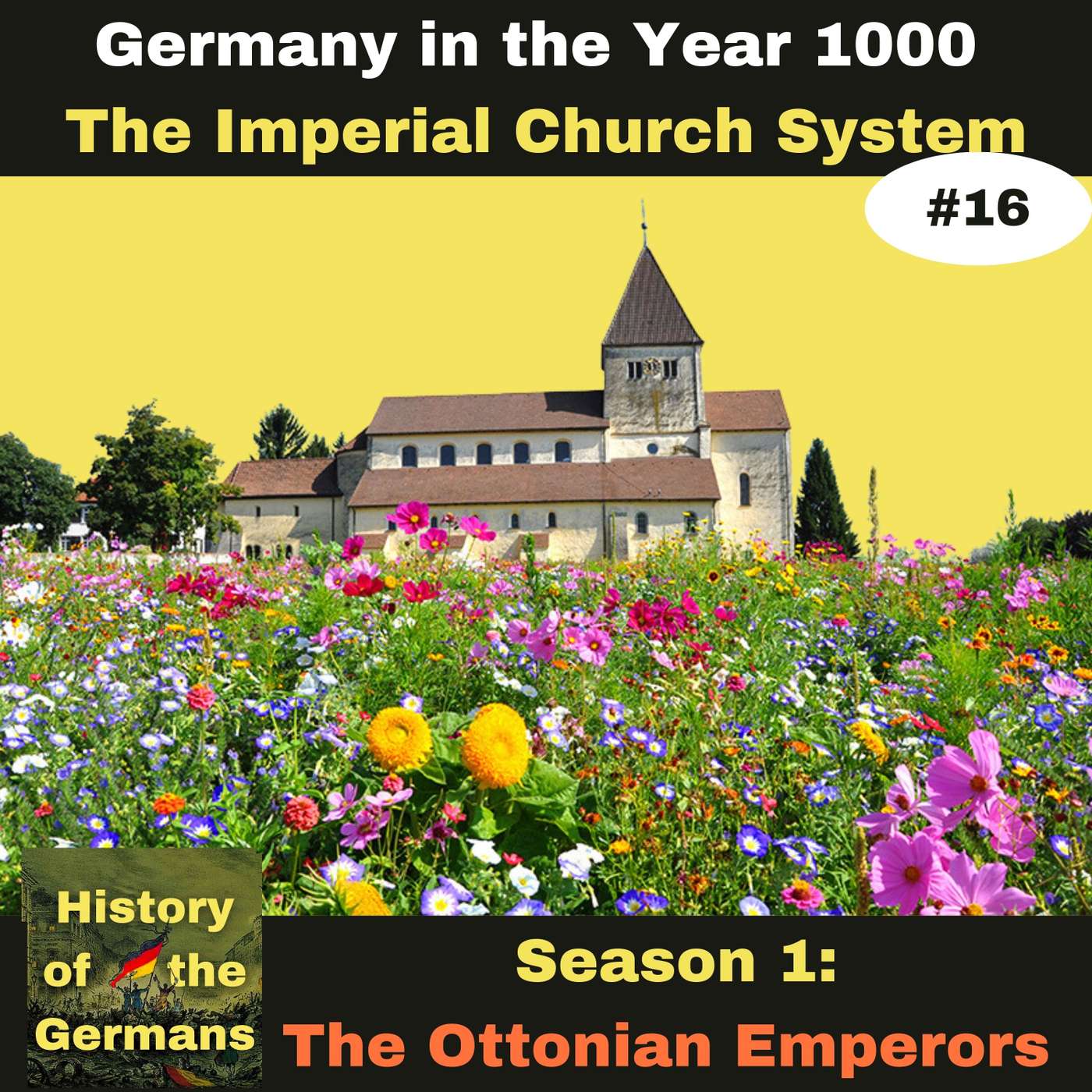
Ep. 16: Germany in the year 1000 - The Imperial Church System
This is part 2 of our rundown of the economic and social situation in Germany around the year 1000. The third and highest social strata were the "Oratores", those who pray, the priests, monks and bishops. We look at how a village priest is educated, why monasteries became so rich (spoiler, it is not about piety alone, money is key) and the role of bishops in the Imperial Church System tha
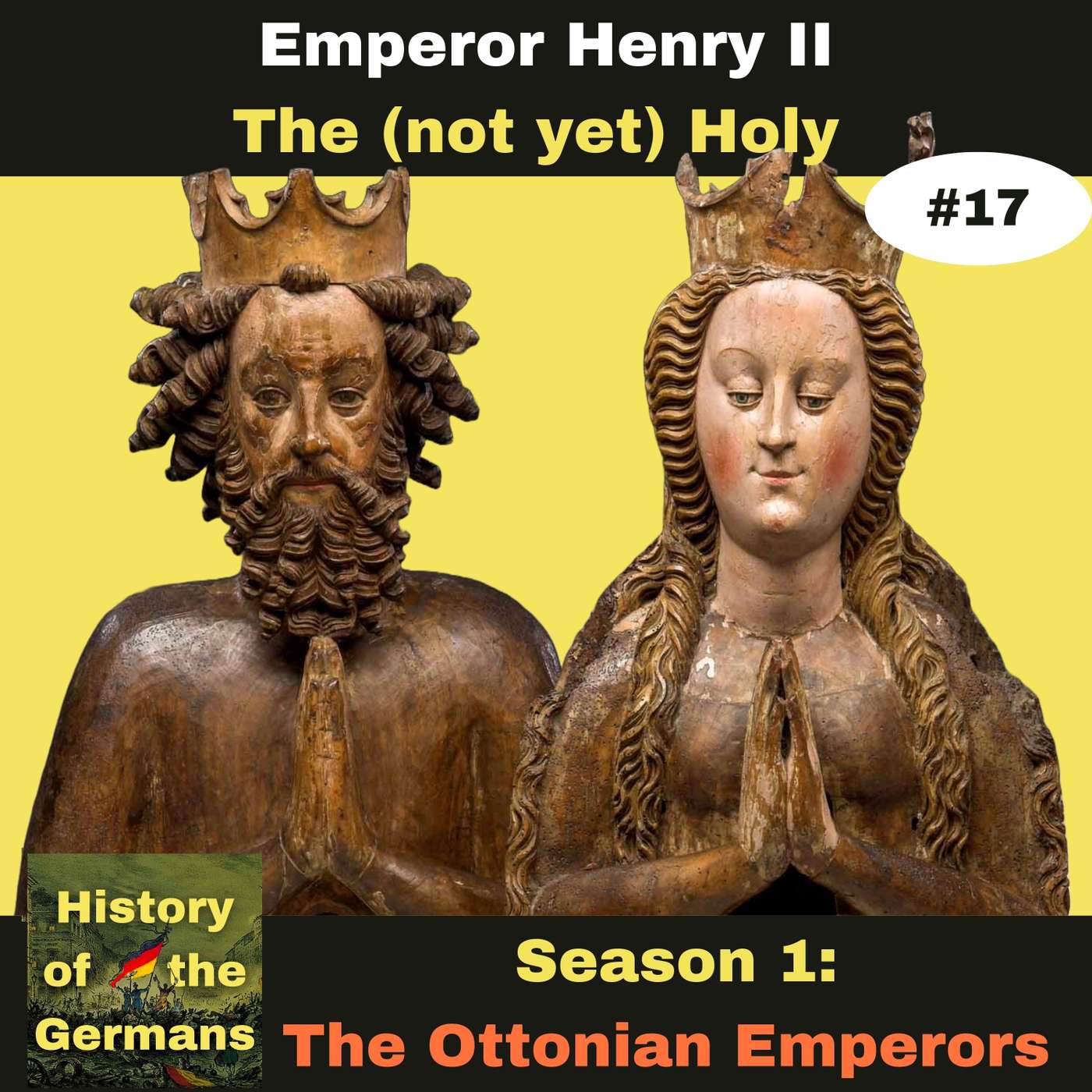
Ep. 17: Henry II (1002-1024) - The (not yet) Holy Emperor
As Otto III's dead body is brought home by his friends, all his dreams and policies collapse behind him. The Emperor had died aged 22 without an heir and he had no brothers or even uncles left. So who should be king? Will it be Hermann of Swabia, from the eternally loyal Konradiner family, Otto of Worms, the dead emperor's closest relative, Count Ekkehard of Meissen, the mighty warrior, C
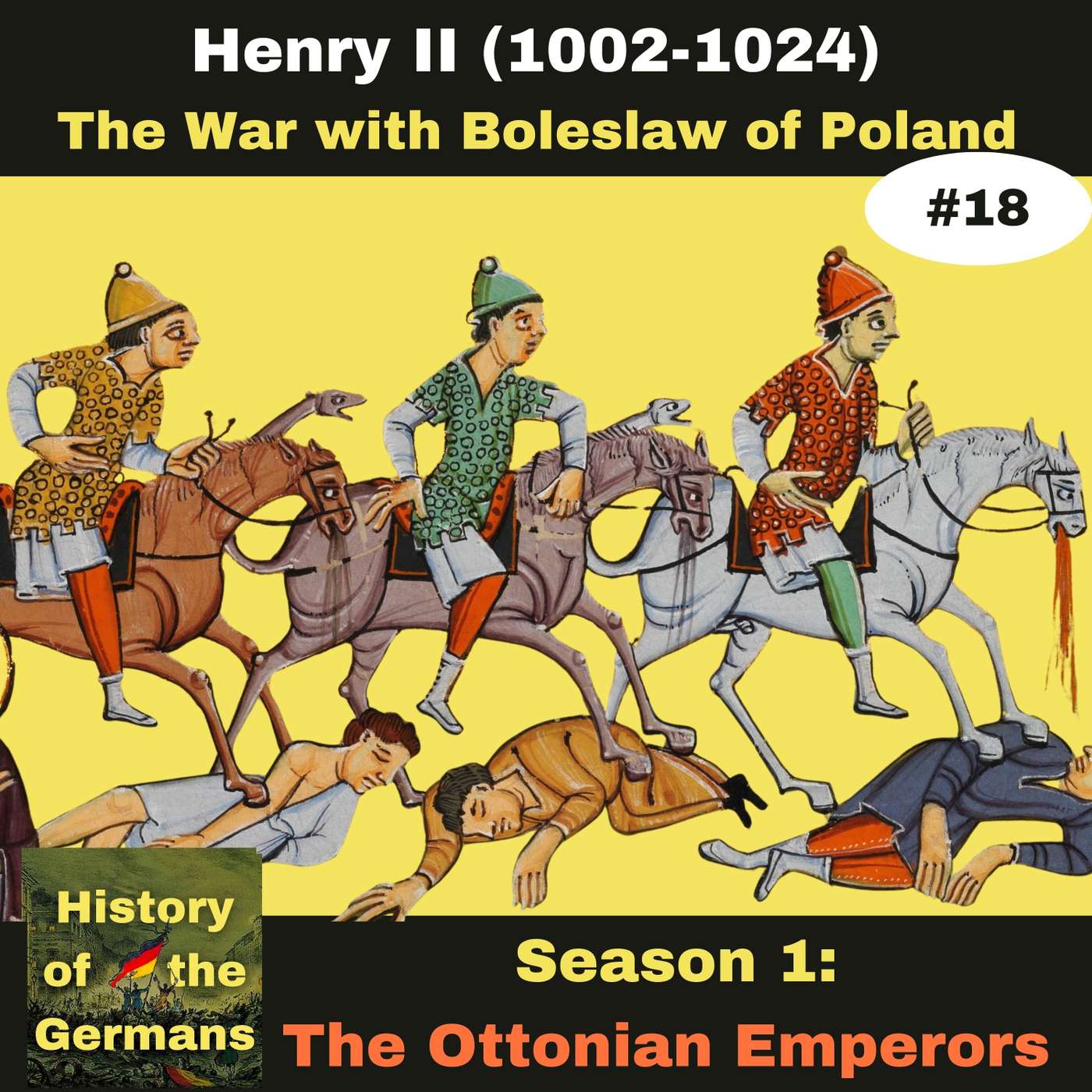
Ep. 18: Henry II (1002-1024) - The War with Boleslaw the Brave of Poland
1002-1018 AD Once king Henry II has established his rule, he has to face up to a new and increasingly powerful rival. Duke (later King) Boleslav the Brave of Poland has created a large and coherent polity to the east of Germany. When he takes over the counties of Meissen and Lausitz and even Bohemia, war becomes inevitable. Hampered by his own barons being tied to Boleslav by political in
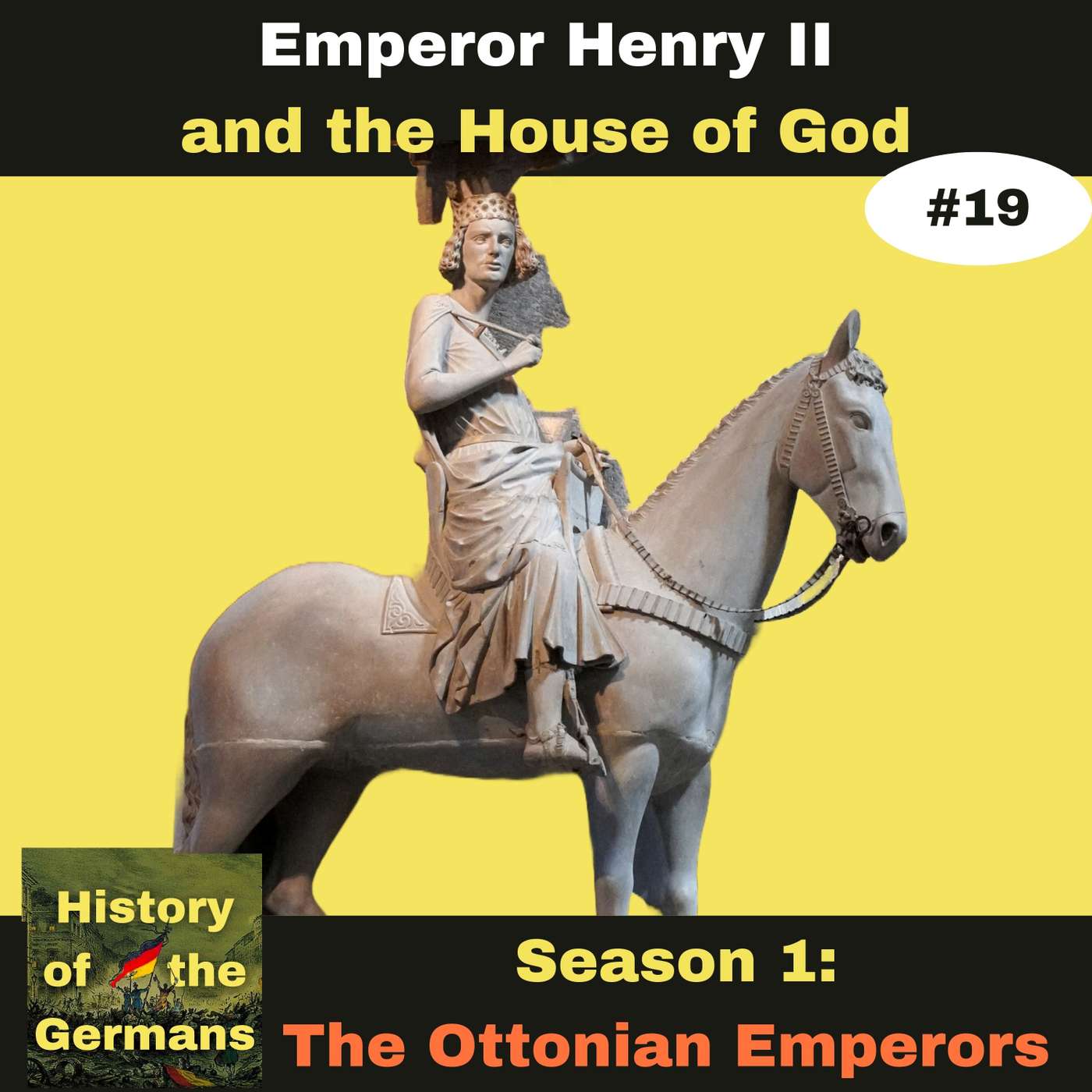
Ep. 19: Henry II (1002-1024) - The House of God
To understand Henry II you have to start at the end. When he died, he had made no succession plan whatsoever. He was convinced that he had moulded the kingdom into a House of god run by pious monks and observant bishops. If the House of God pleased the lord, he would appoint a new successor, and if not, well the good riddance.Though his policy of strengthening and dominating the church co
Ep. 20: What People thought about the Ottonians - A Blank Canvas
The Ottonian period (919-1024) has been a key reference point in German history ever since. Having only very few and not necessarily very enlightening documents to work from the period became a blank canvas on which historians and the population as a whole projected their own hopes, political beliefs and expectations. In the 19th century the German speaking people who felt humiliated by
Ep. 21: Questions & Answers
In this episode I answer your questions about the Podcast in general, specific topics relating to the Ottonian period, languages spoken and German history more broadly. Thank you so much for a really exciting and diverse set of questions.The music for the show is Flute Sonata in E-flat major, H.545 by Carl Phillip Emmanuel Bach (or some claim it as BWV 1031 Johann Sebastian Bach) performe
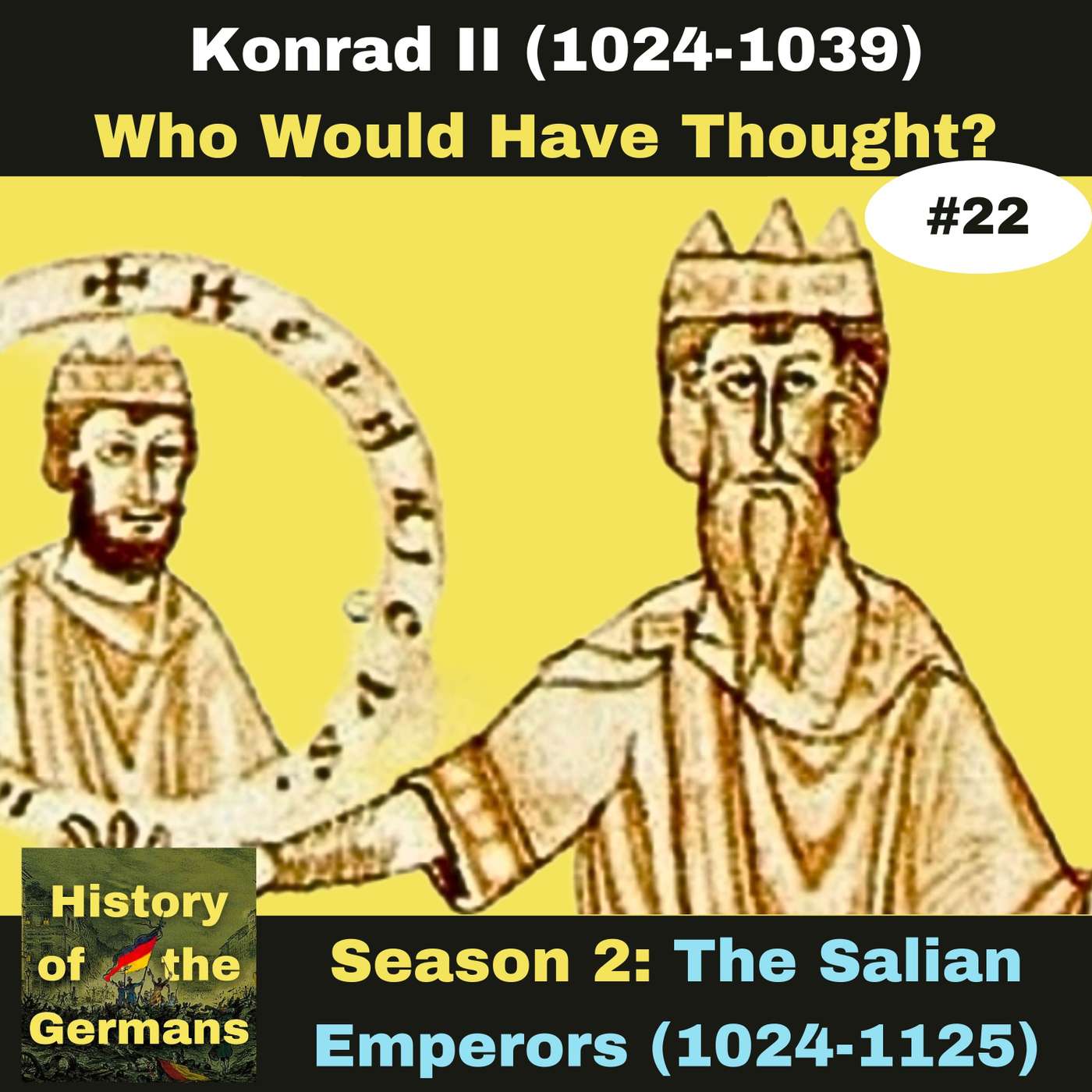
Ep. 22: Konrad II (1024-1039) - Who Would Have Thought
On July 13th, 1024 Emperor Henry II died without an heir. not only that, but his family has so comprehensively died out, there is not a single descendant in the male line left. Fear of unrest and civil war grips the inhabitants of the empire.An election is called for early September, as quickly as such things could be organised in the 11th century. The upper echelons of society debate a l
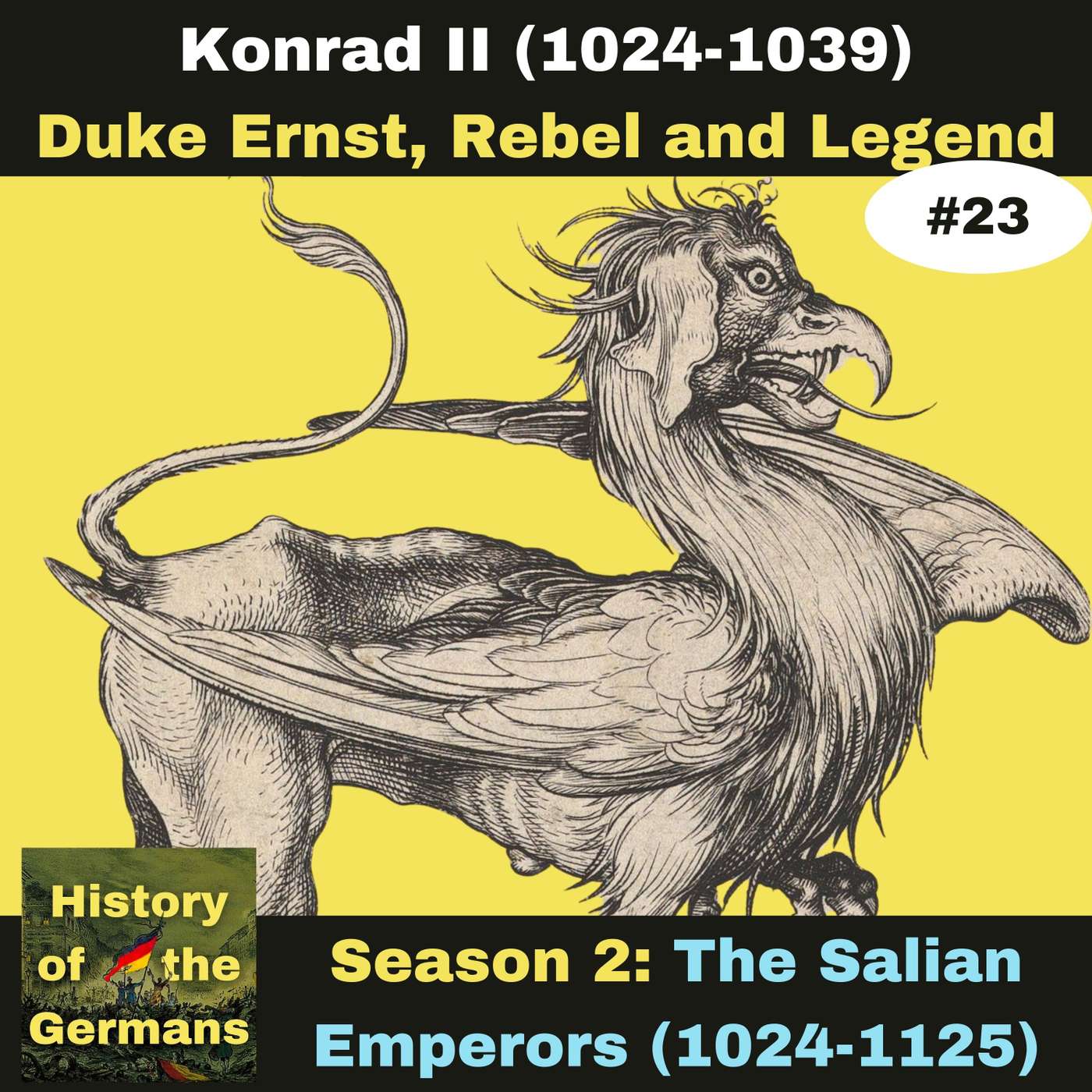
Ep. 23: Konrad II (1024-1039) - Duke Ernst, Rebel and Legend
In this episode Emperor Konrad II (1024-1039) consolidates his reign adding a secular leg to his control of the imperial church by placing his son Henry on the ducal throne of Bavaria,. This is the first of many ducal and royal titles he will acquire.This push for centralised control leads to a rebellion, led by the emperor's 16-year old stepson, duke Ernst II of Swabia (1012-1030). Ernst
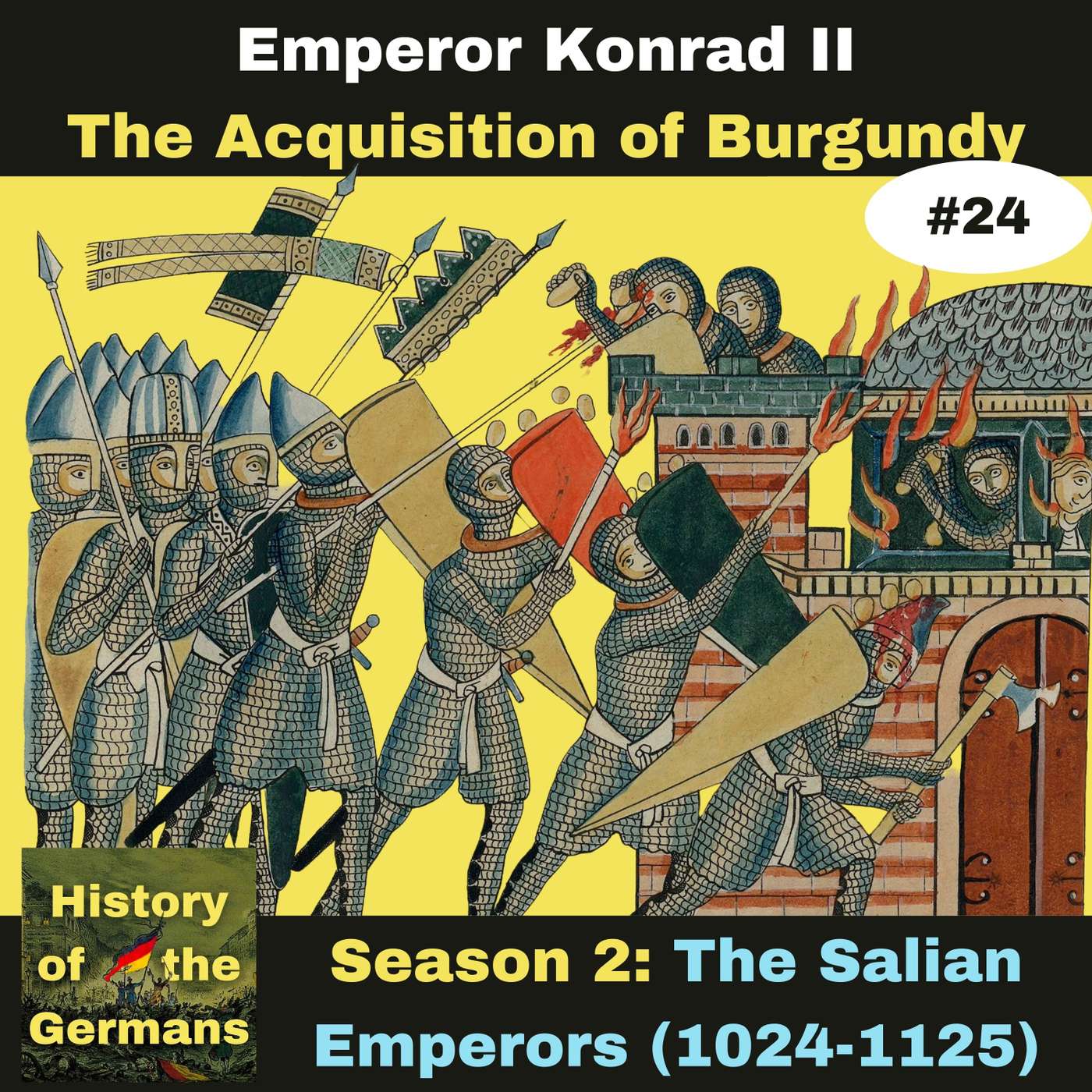
Ep. 24: Konrad II (1024-1039) - The Acquisition of Burgundy
The event looming over Imperial politics since around 1000 is the Burgundian succession. King Rudolf III is childless leaving several contenders with varying degrees of blood relations. If Henry II who was a nephew of Rudolf III had outlived the king of Burgundy, thigs would have been easy. But the old codger outlived the sickly emperor. His successor, Konrad II had no real inheritance ri
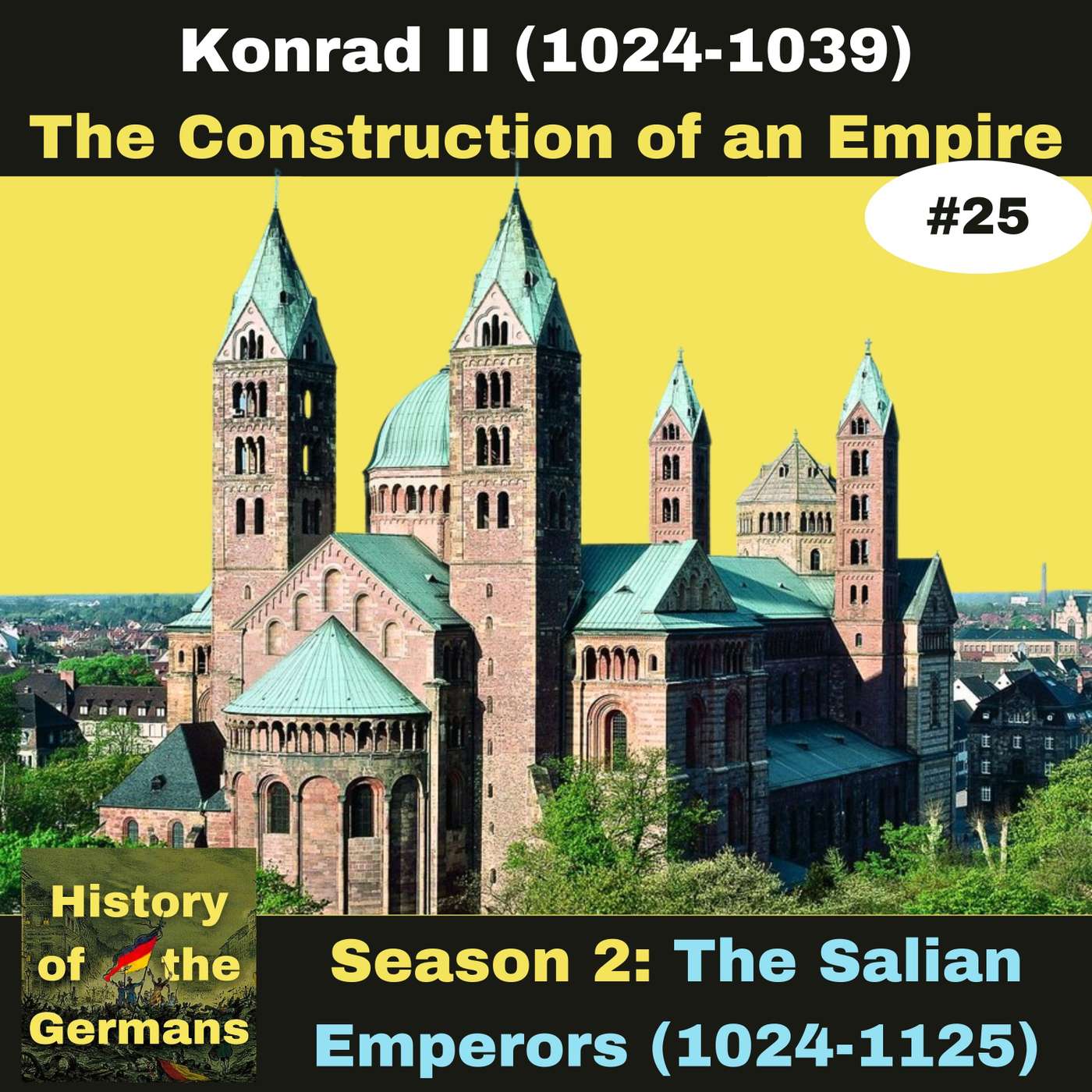
Ep. 25: Speyer Cathedral - Konrad II builds the Largest Church in Europe
In his last years Konrad tries to further strengthen his power, first by fighting the Hungarians, unseating the duke of Carinthia and a second Italian expedition. Al three of these endeavours backfire. The Hungarians win the war, the duke of Carinthia gets unexpected support from Konrad's son Henry III and the Italian campaign ends in a fiasco entirely of Konrad's making.Despite these set
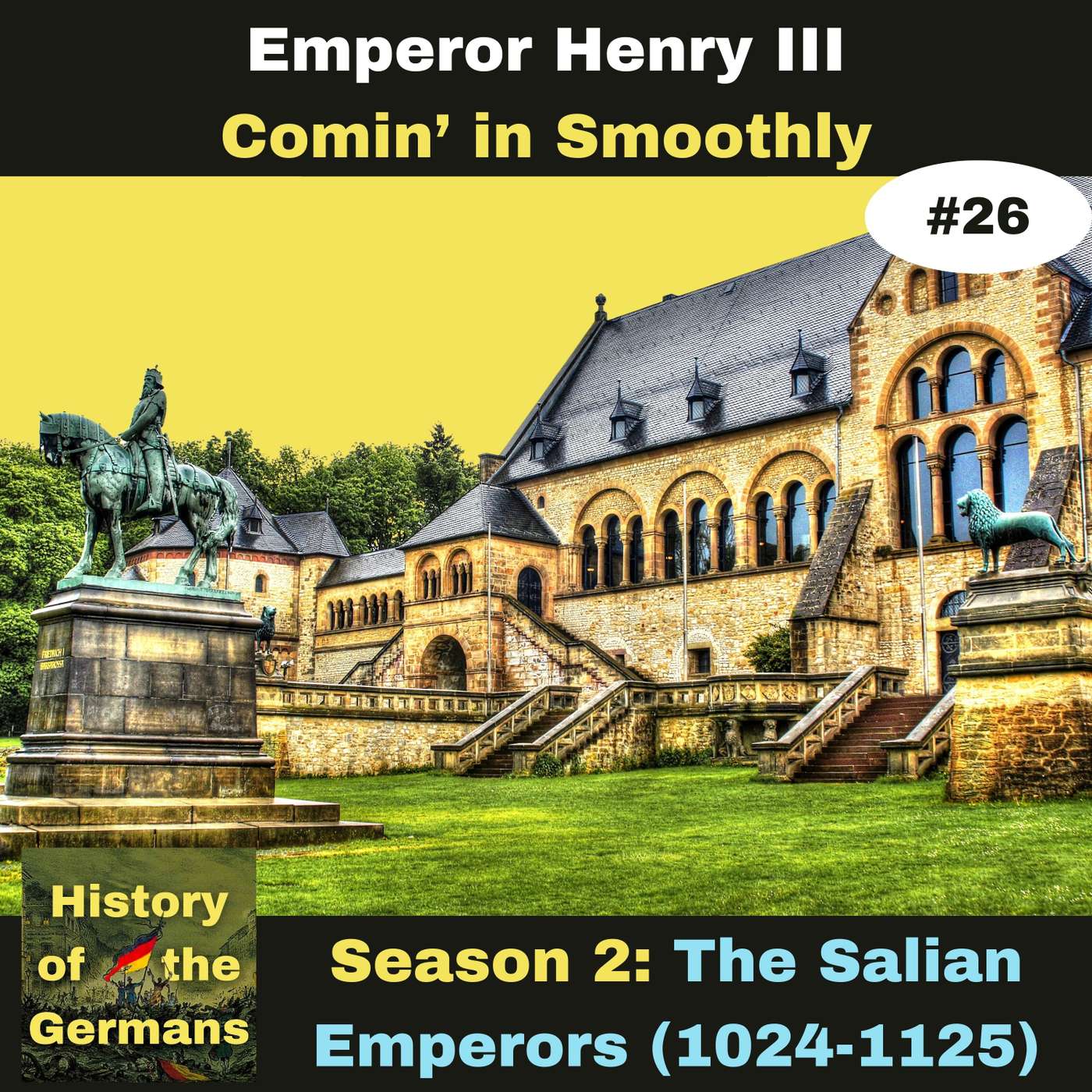
Ep. 26: Henry III (1039-1056) - Comin' in Smoothly
For the first time in almost 70 years the transition from one king/emperor to the next is smooth. Konrad II was not only one of the most successful medieval rulers, he also managed to live long enough for his son Henry III to grow up to adulthood before taking over.Henry III is outwardly quite different from his father, well educated, deeply immersed in the concepts of sacred kingship and
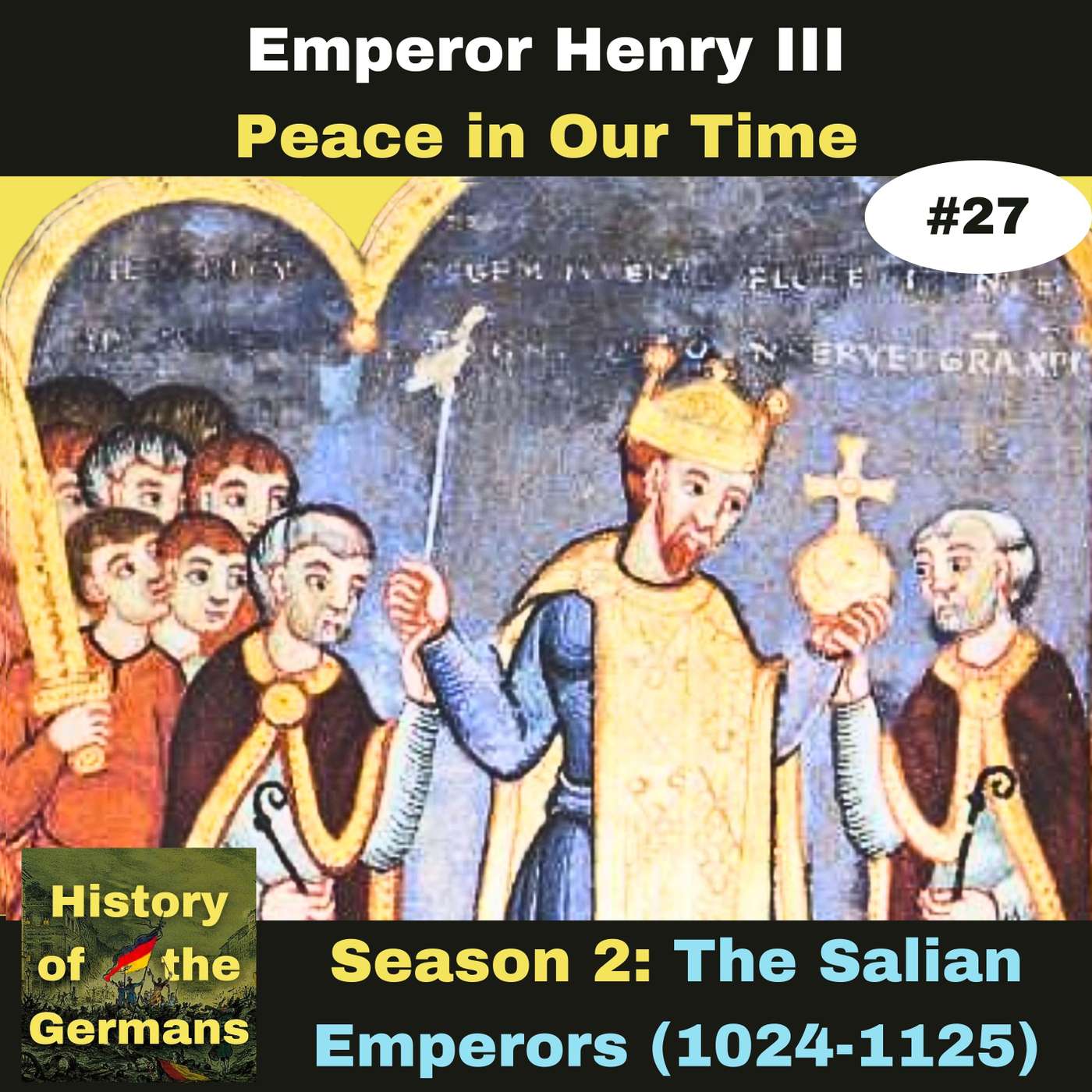
Ep. 27: Henry III (1039-1056) - Peace in Our Time
The main role of a medieval monarch is to bring peace to his subjects. Peace is not so much absence of major international conflict, but protection from feuding lords. Whilst in France central power is far too weak to maintain any semblance of order giving rise to the Peace of God movement, the empire under Henry III can rely on its monarch to fulfil his role.But his rule is not without t
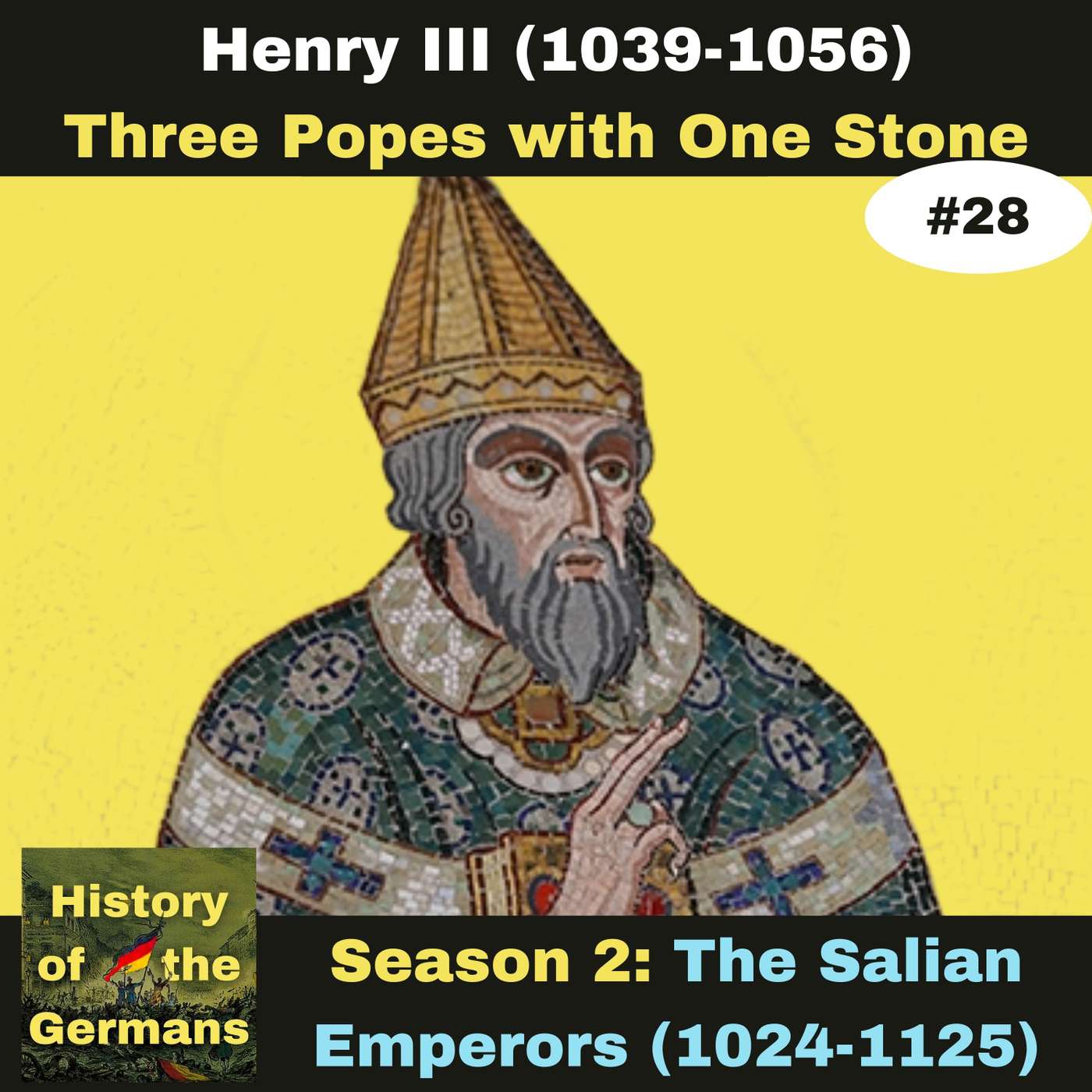
Ep. 28: Henry III (1039-1056) - Three Popes with One Stone
In 1046 Henry III finally has time to go to Rome and claim the imperial crown. All he wants is get in, get crowned and get out before the Malaria season. He encounters a problem when he finds out that the current pope Gregory VI has bought the papacy for cold hard cash, a sin that could invalidate his coronation. Henry III gets involved, deposes all three competing popes and inadvertently
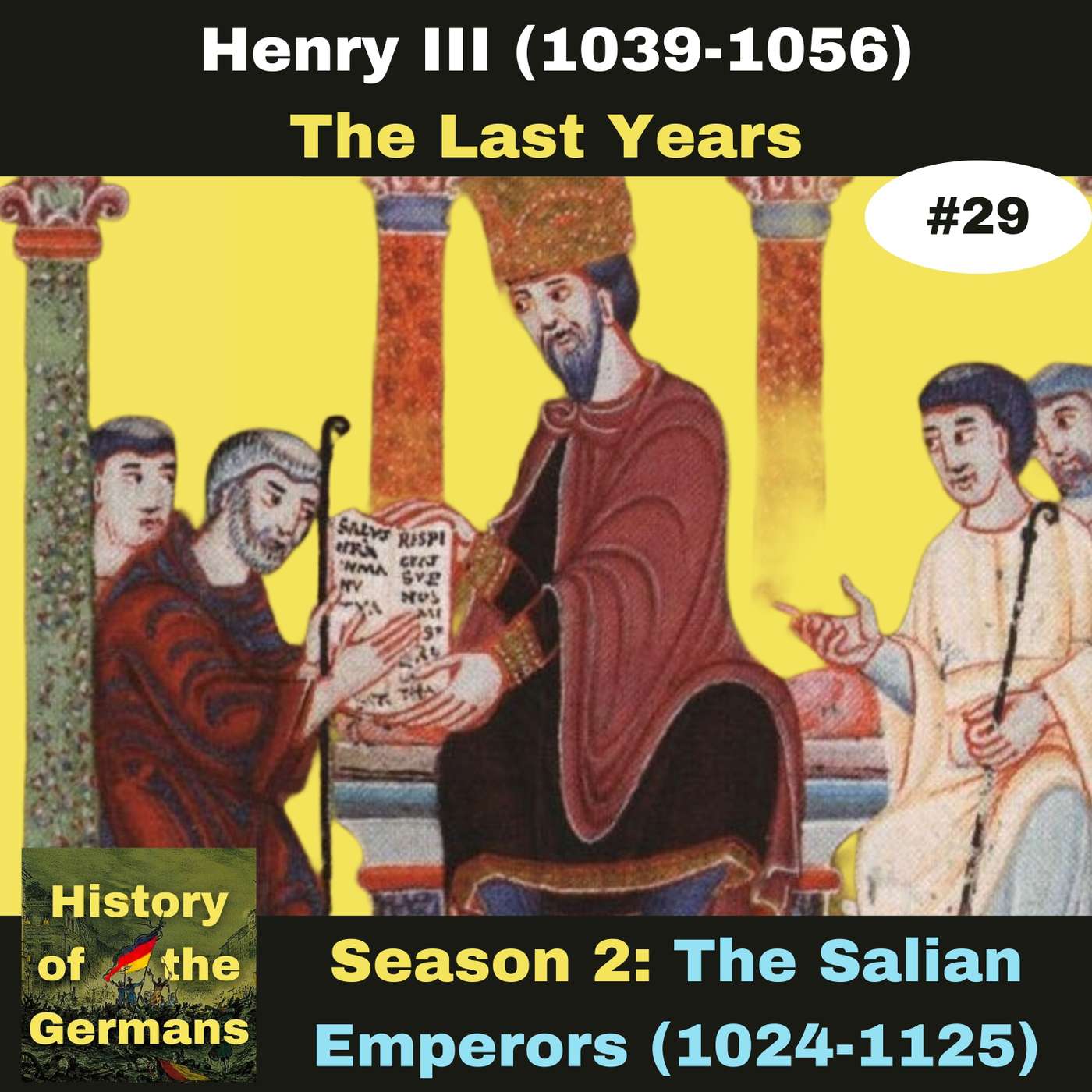
Ep. 29: Henry III (1039-1056) - The Medieval Empire at its Zenith
In 1046 Henry III reached the zenith of his rule. He deposed three unworthy popes and replaced them with serious churchmen who will bring the necessary reforms about. Domestically he is in control of the three Eastern European states, Poland, Bohemia and Hungary and the restless Lotharingians seem settled.How did it come about that by 1056 the chronicler writes that "both the foremost men
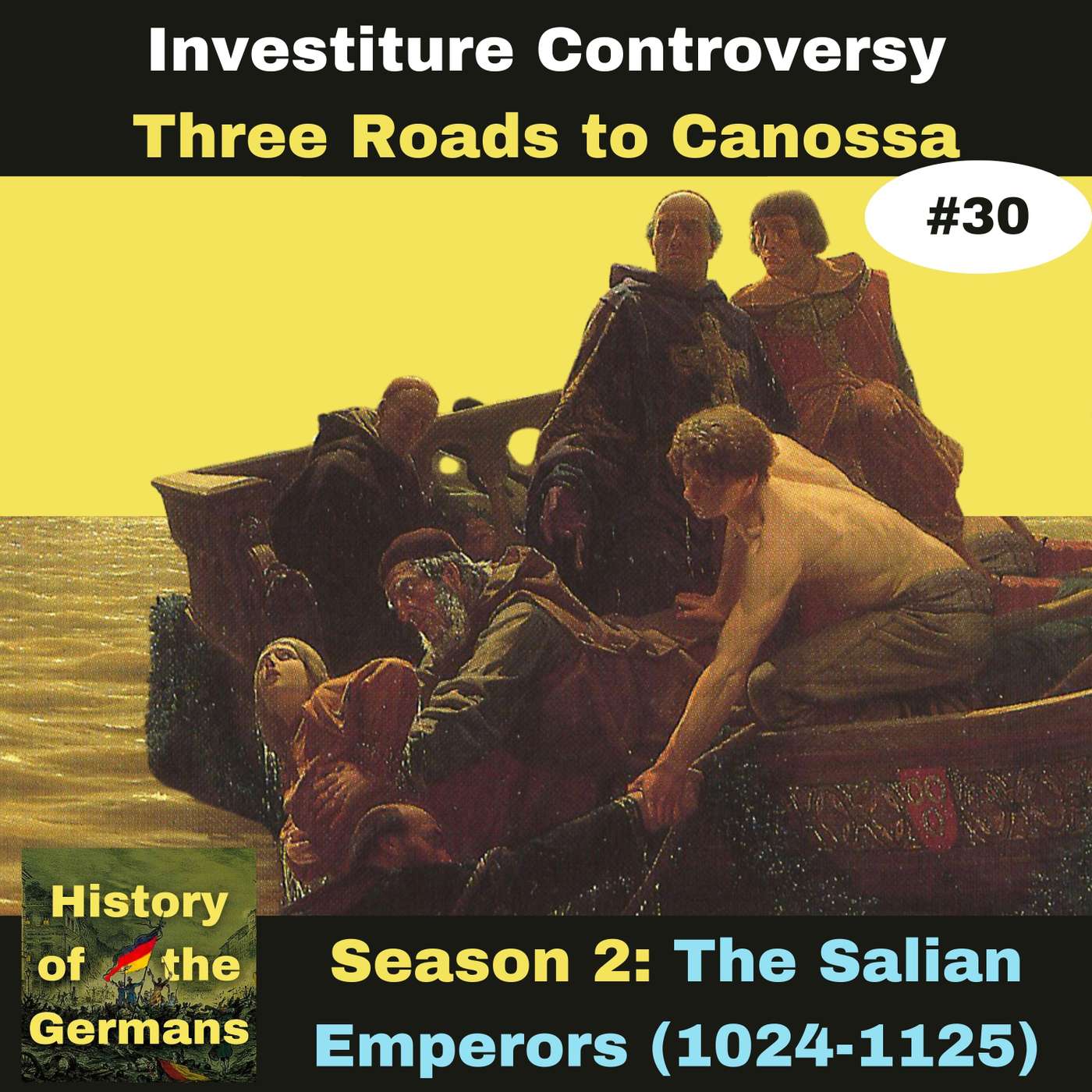
Ep. 30: Investiture Controversy (1065-1122) - Three Roads to Canossa
Emperor Henry III is dead. The realm is now in the hands of his widow, Agnes of Poitou who rules on behalf of the six-year-old king Henry IV. Agnes is no Theophanu and no Adelheid. Not that she is incompetent, she just isn't absolutely brilliant, and absolutely brilliant is the baseline necessary to manage this fragile situation.The relationship between the central imperial power and the
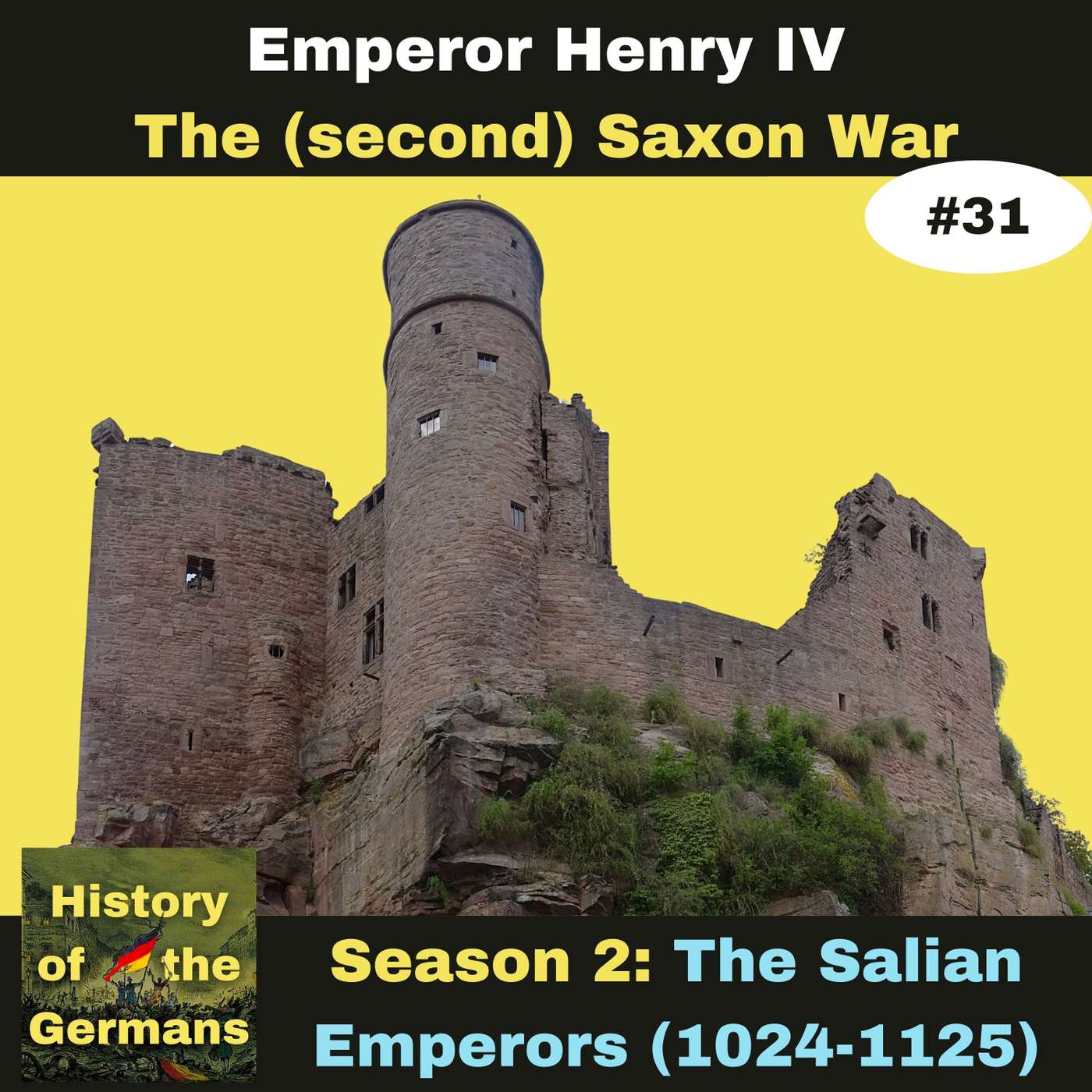
Ep. 31: Investiture Controversy (1065-1122) - The (second) Saxon War
In 1065 king Henry IV begins his personal rule. After 9 years of regency., the last 3 of which under a government of barons headed by archbishop Anno of Cologne, imperial power is much diminished. Prelates and lords are raiding the imperial purse, when the barons force the young king to dismiss his main adviser, he realises that the previous model of kingship no longer operates. He cannot
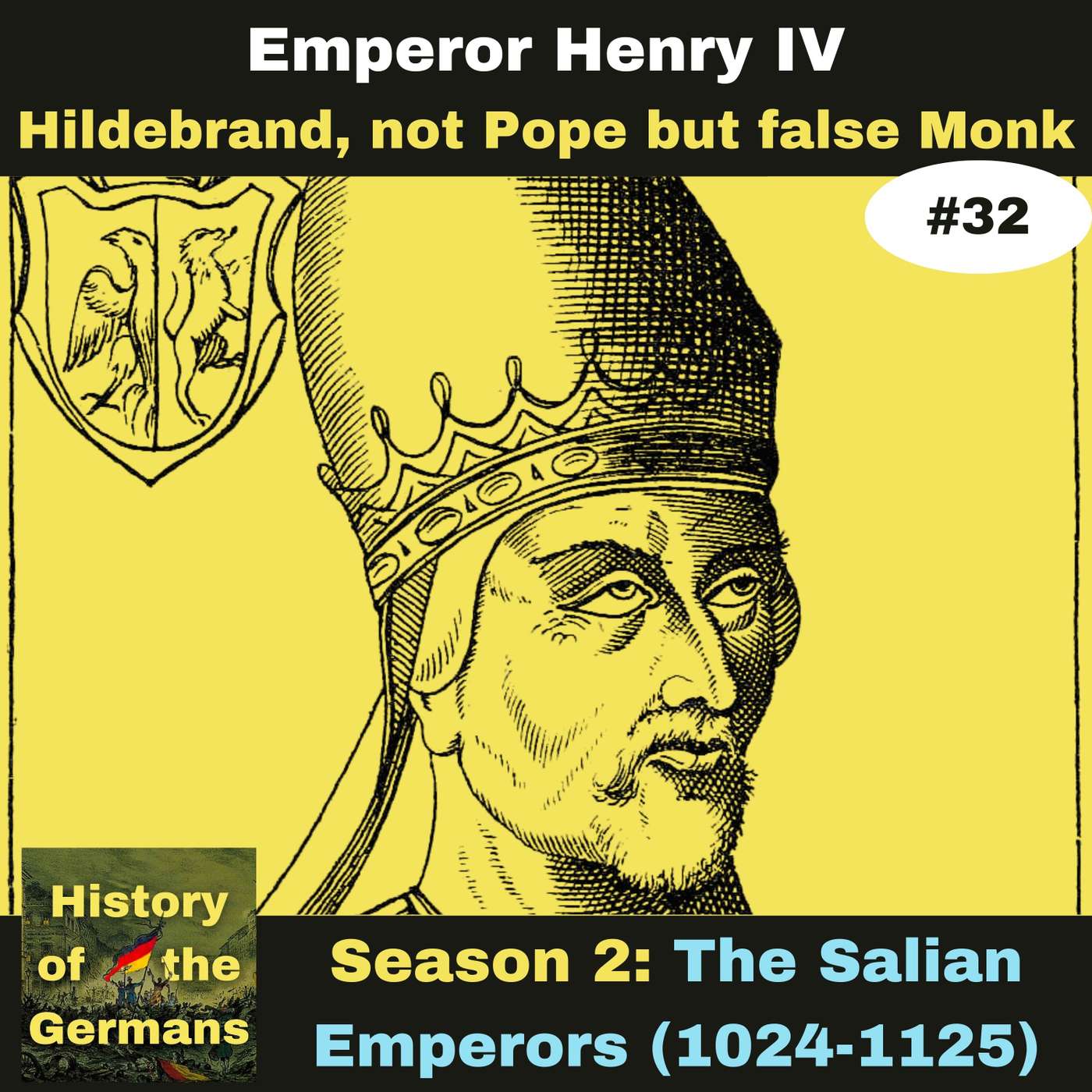
Ep. 32: Investiture Controversy (1065-1122) - Hildebrand, not Pope but False Monk
The rise of the papacy since 1046 is almost linear. The popes throw off the chokehold of the roman aristocracy, they take over leadership of the church reform movement from the emperors, and by the end of the pontificate of Alexander II the Holy See has become universal with kings hailing the pope and not the emperor as their overlord.In 1073 Hildebrand, the eminence grise of the last 20
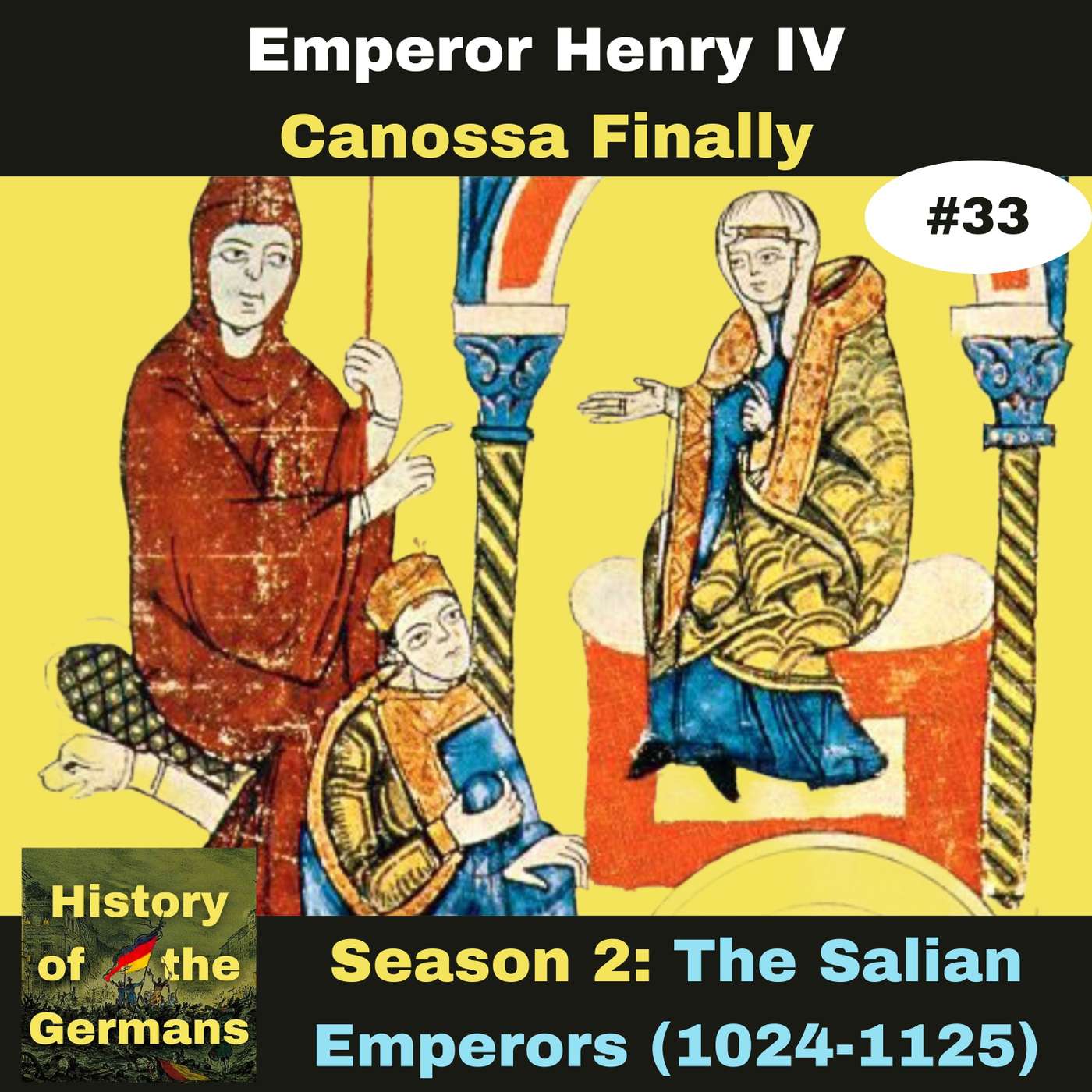
Ep. 33: Investiture Controversy (1065-1122) - Canossa Finally!
It is time - we are finally going to Canossa. Expect imperial power to disappear in smoke, greedy mothers-in-laws, frozen passes, hoisted horses and tobogganing empresses. All that ends with the enduring picture of a king first kneeling before a woman and then before a pope.....That is the the episode you have to listen to!The music for the show is Flute Sonata in E-flat major, H.545 by C
Ep. 34: Investiture Controversy (1065-1122) - Gaining the Upper Hand
Henry IV departs from Canossa having been released from the ban. But does that mean all his troubles are over? Far from it. His enemies in Germany gather to elect a new king and the war of words turns into a war of swords.The music for the show is Flute Sonata in E-flat major, H.545 by Carl Phillip Emmanuel Bach (or some claim it as BWV 1031 Johann Sebastian Bach) performed and arranged b
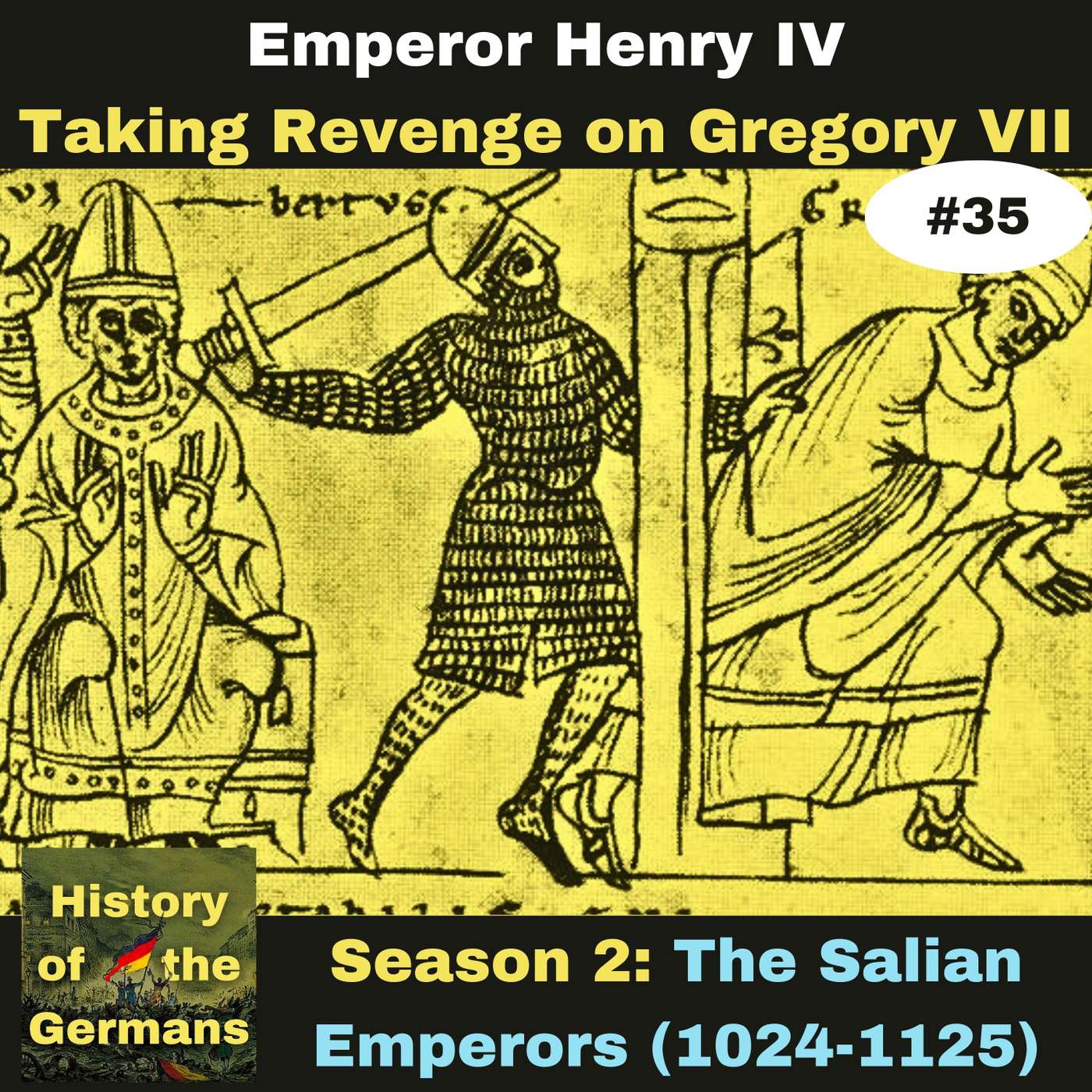
Ep. 35: Investiture Controversy (1065-1122) - Taking Revenge on Gregory VII
The Rebellion in Germany under control Henry can finally go after his true nemesis, Pope Gregory VII. He sets out for Rome on a journey he thought may just take four months but ended up taking four years..The music for the show is Flute Sonata in E-flat major, H.545 by Carl Phillip Emmanuel Bach (or some claim it as BWV 1031 Johann Sebastian Bach) performed and arranged by Michel Rondeau
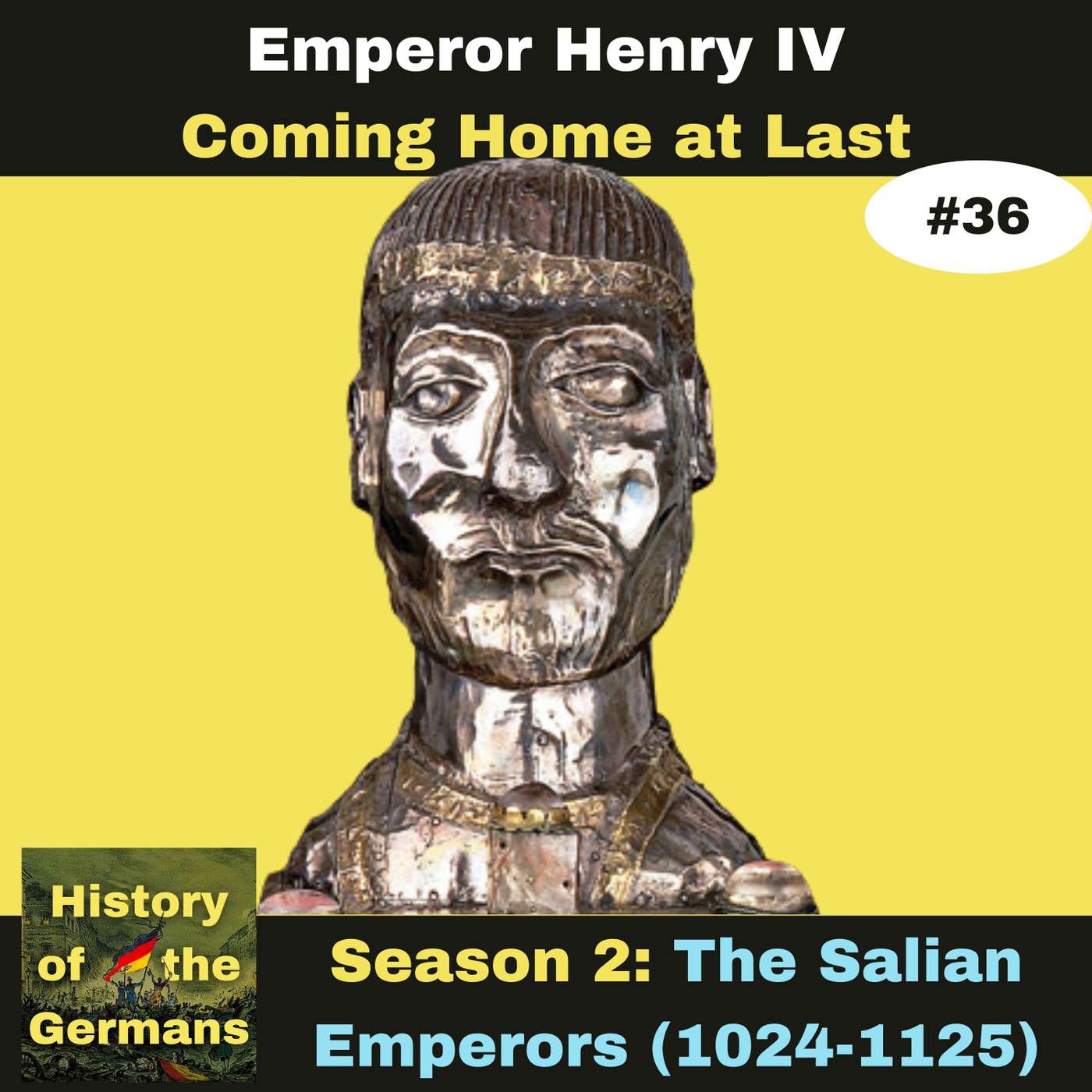
Ep. 36: Investiture Controversy (1065-1122) - Henry IV Coming Home at Last
His coronation barely two months hence, Henry IV leaves Rome without capturing Gregory VII. The Pope's powerful vassal, Robert Guiscard, Duke of Apulia and greatest of Norman warlords was approaching with an army of 36,000. Henry no longer needs Rome, what he needs to do is get back to Germany and bring peace to the war-ravaged country. A u-turn in his policies helps to gain support among
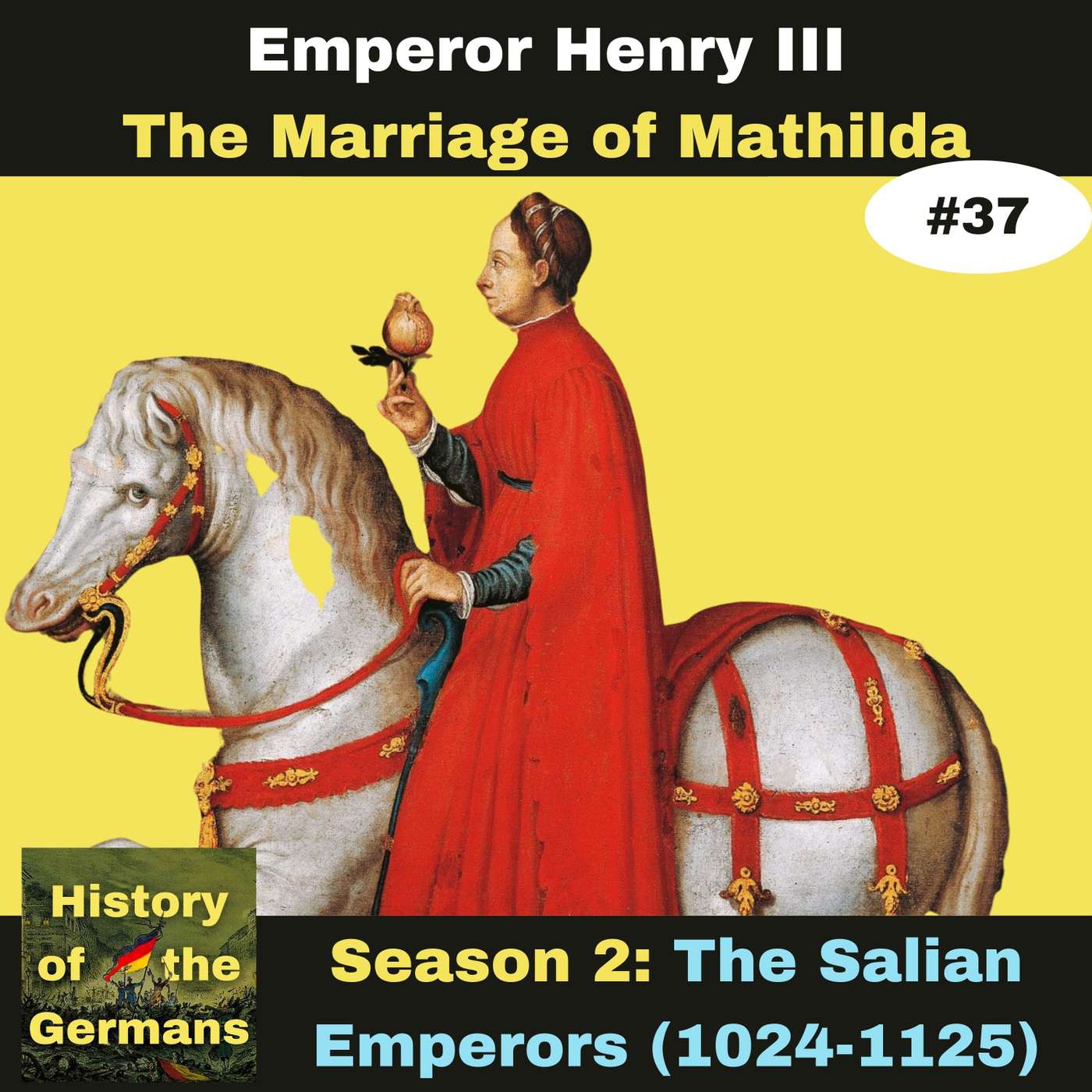
Ep. 37: Investiture Controversy (1065-1122) - The Marriage of Matilda of Tuscany
The wheel of fortune turns again, tumbling our antihero Henry IV down from the heights he had so recently scaled. We will see him sink to the point of utter despair. And all that because a 43 year old woman marries an 18 year old.The music for the show is Flute Sonata in E-flat major, H.545 by Carl Phillip Emmanuel Bach (or some claim it as BWV 1031 Johann Sebastian Bach) performed and ar
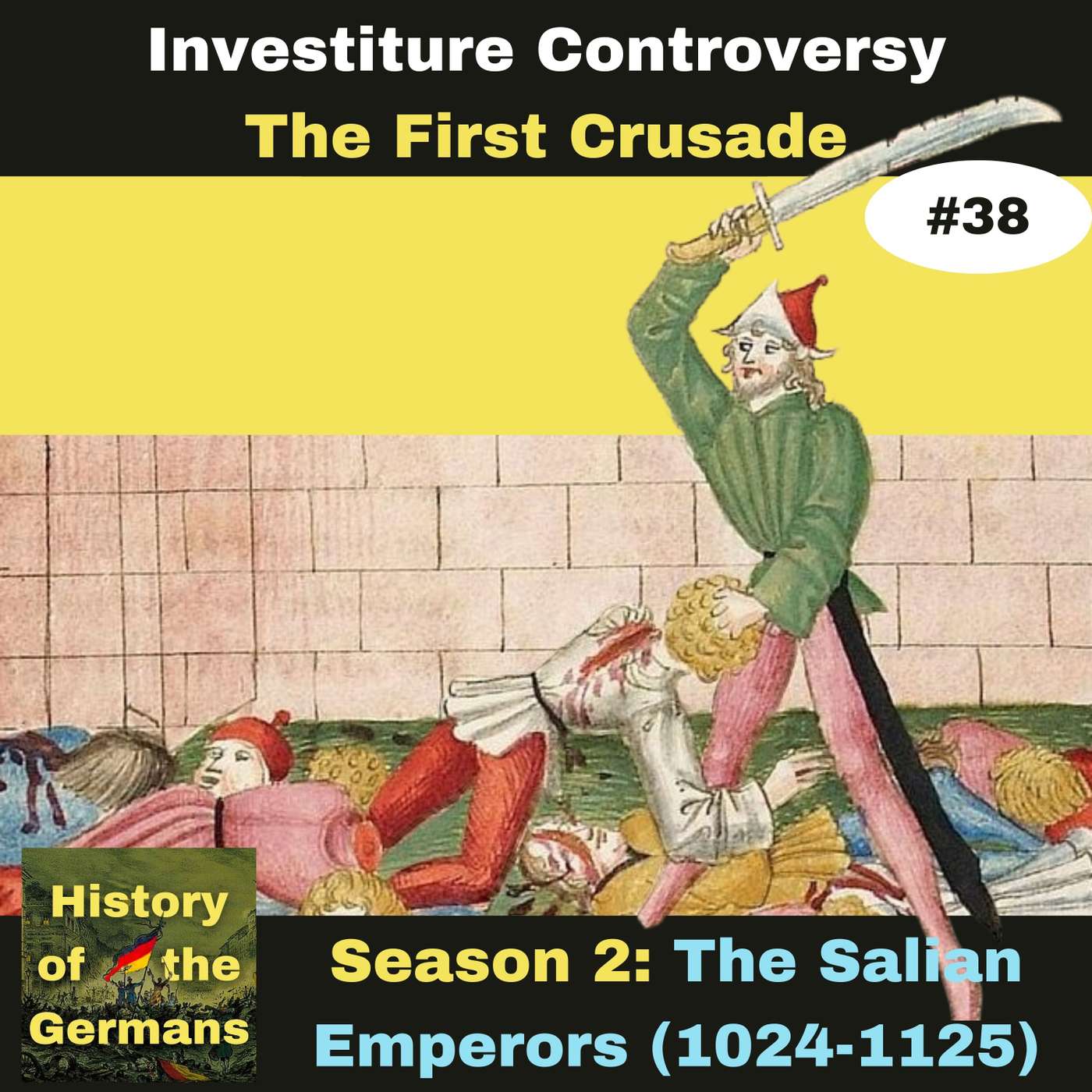
Ep. 38: The First Crusade (1096-99)
In 1095 Pope Urban II launches the First crusade. Emperor Henry IV and his allies would rather be strung up below a beehive covered in honey than join a scheme devised by the Gregorian Pope.The lack of support by the high aristocrats did not stop the common people most of whom perish before the crusade had really begun. And some turn their religious fervour into a very different endeavour
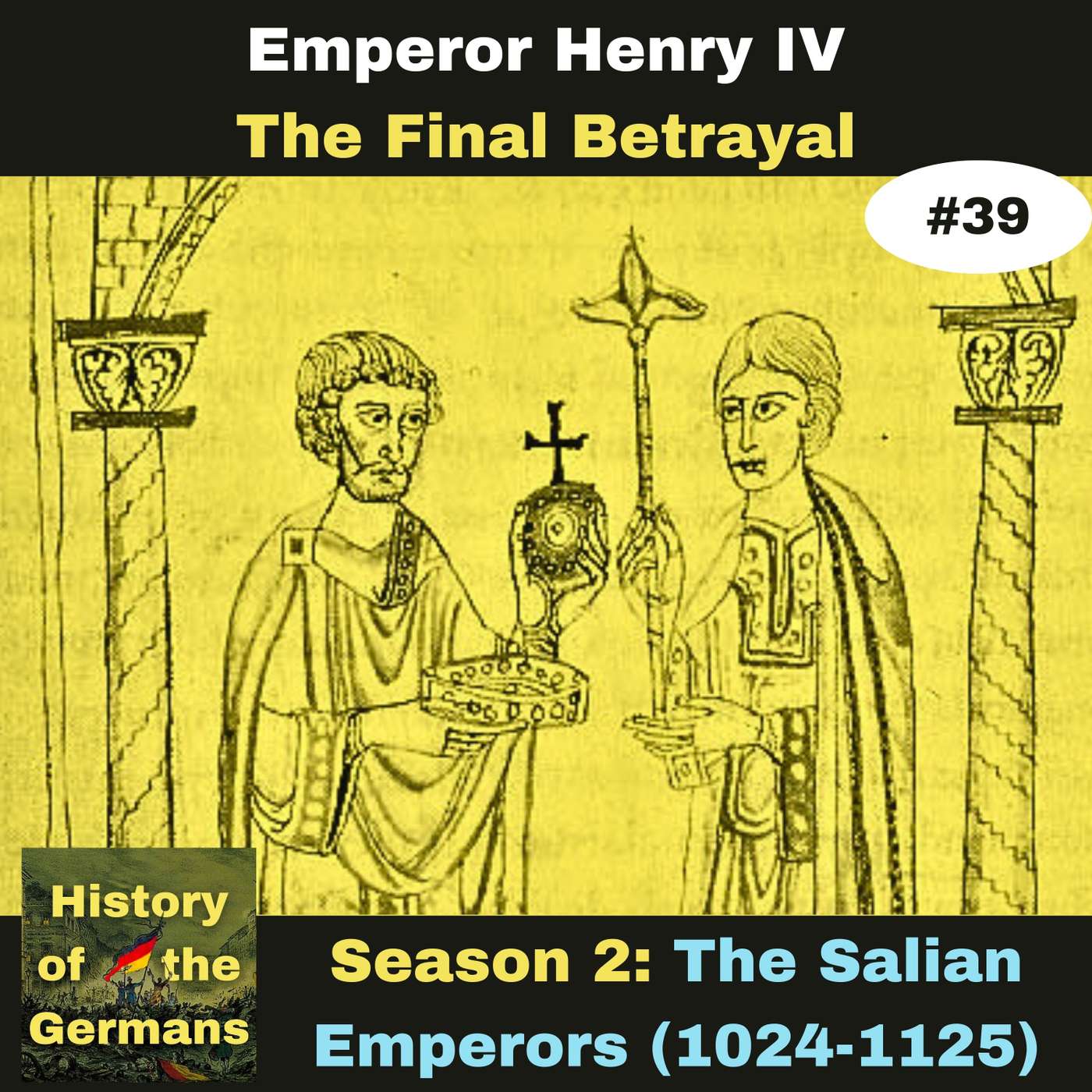
Ep. 39: Investiture Controversy (1065-1122) - The Final Betrayal
This week we will talk about the last years of Henry IV, which, as hard as it is to believe, holds a final humiliation that capped the pain this man had already endured.The music for the show is Flute Sonata in E-flat major, H.545 by Carl Phillip Emmanuel Bach (or some claim it as BWV 1031 Johann Sebastian Bach) performed and arranged by Michel Rondeau under Common Creative Licence 3.0.As
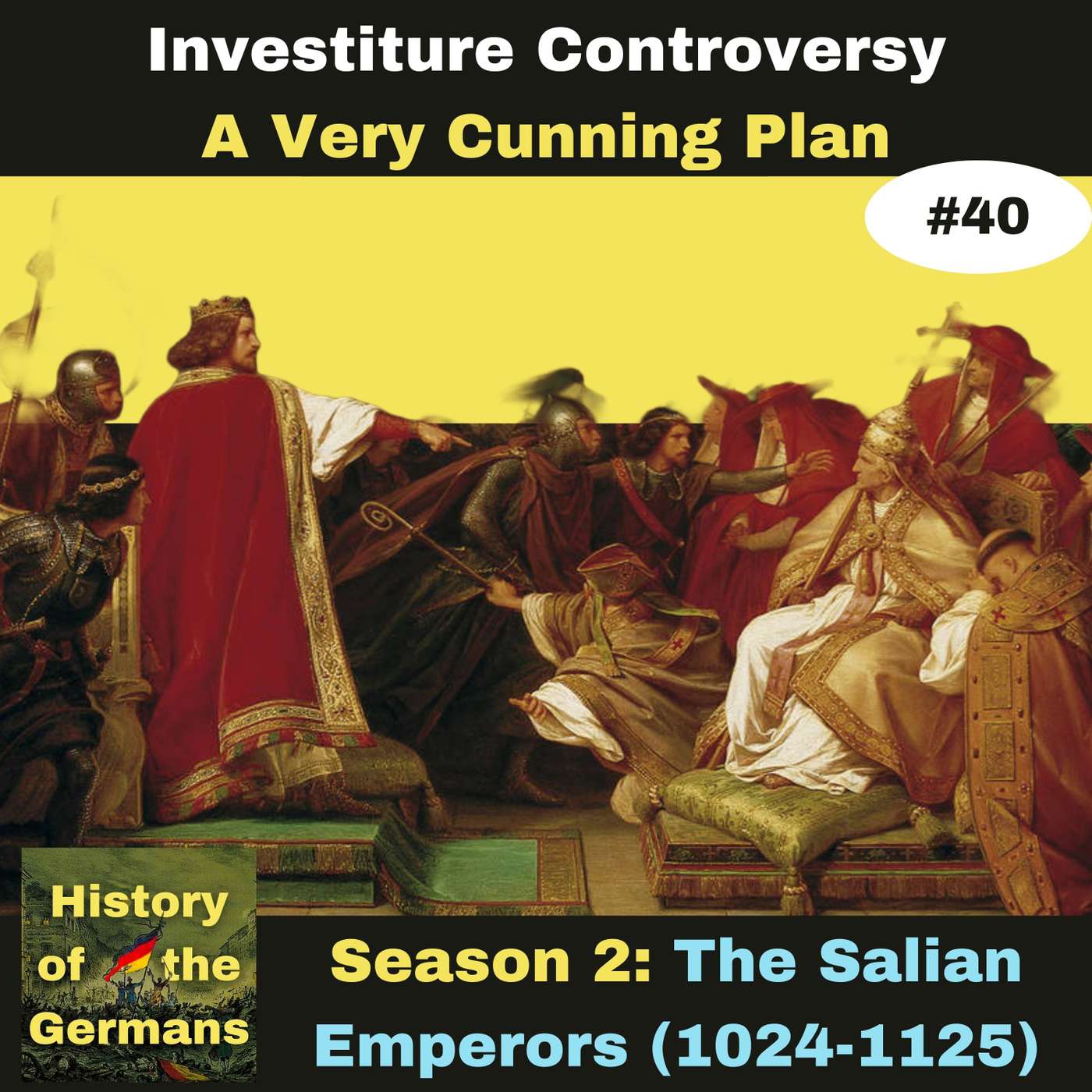
Ep. 40: Investiture Controversy (1065-1122) - Henry V has a Cunning Plan
In this episode we will see whether young Henry V will do any better at ending the conflict between Pope and Emperor, featuring one of the most audacious political moves seen in this conflict.The music for the show is Flute Sonata in E-flat major, H.545 by Carl Phillip Emmanuel Bach (or some claim it as BWV 1031 Johann Sebastian Bach) performed and arranged by Michel Rondeau under Common
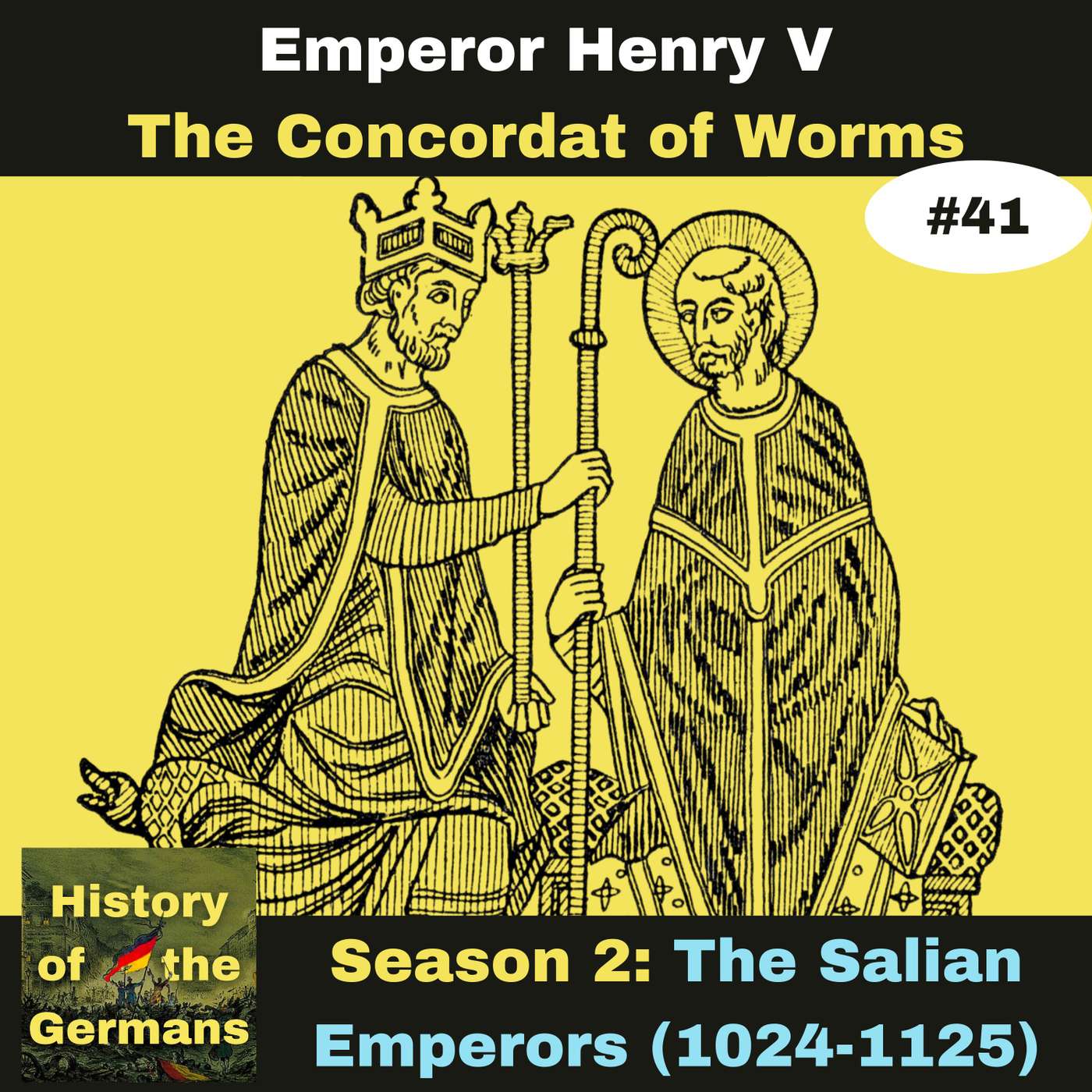
Ep. 41: Investiture Controversy (1065-1122) - The Concordat of Worms
In this week’s episode the last of the Salians will find that despite all his efforts, the tide of history cannot be stemmed, almost leaving him in exactly the same place his father ended up in 1076.The music for the show is Flute Sonata in E-flat major, H.545 by Carl Phillip Emmanuel Bach (or some claim it as BWV 1031 Johann Sebastian Bach) performed and arranged by Michel Rondeau under
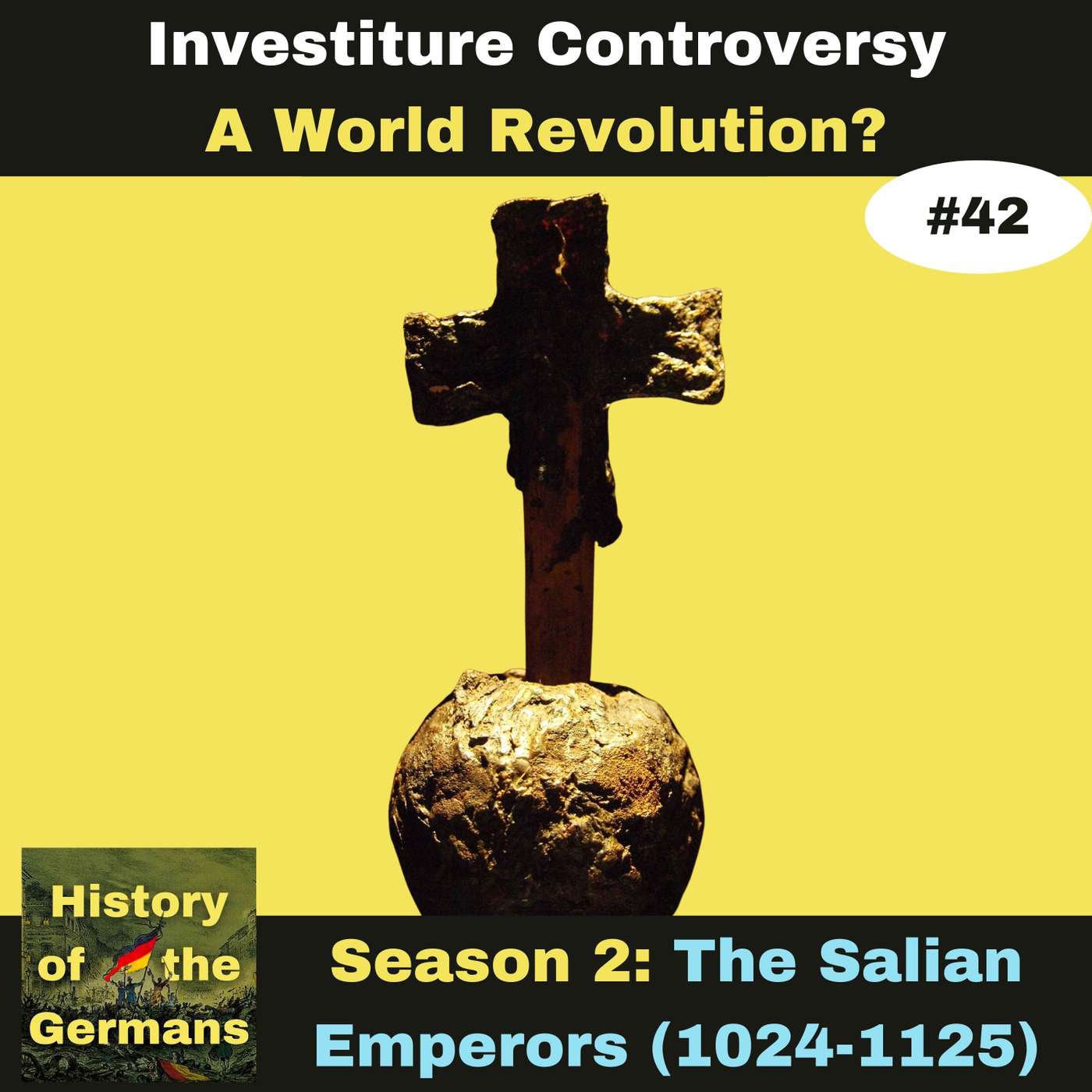
Ep. 42: Investiture Controversy (1065-1122) - A World Revolution?
In this episode we will come to the end of the Investiture controversy, the end of the Salian dynasty and the end of Season 2 – and ask the question, what was all that about?The music for the show is Flute Sonata in E-flat major, H.545 by Carl Phillip Emmanuel Bach (or some claim it as BWV 1031 Johann Sebastian Bach) performed and arranged by Michel Rondeau under Common Creative Licence 3
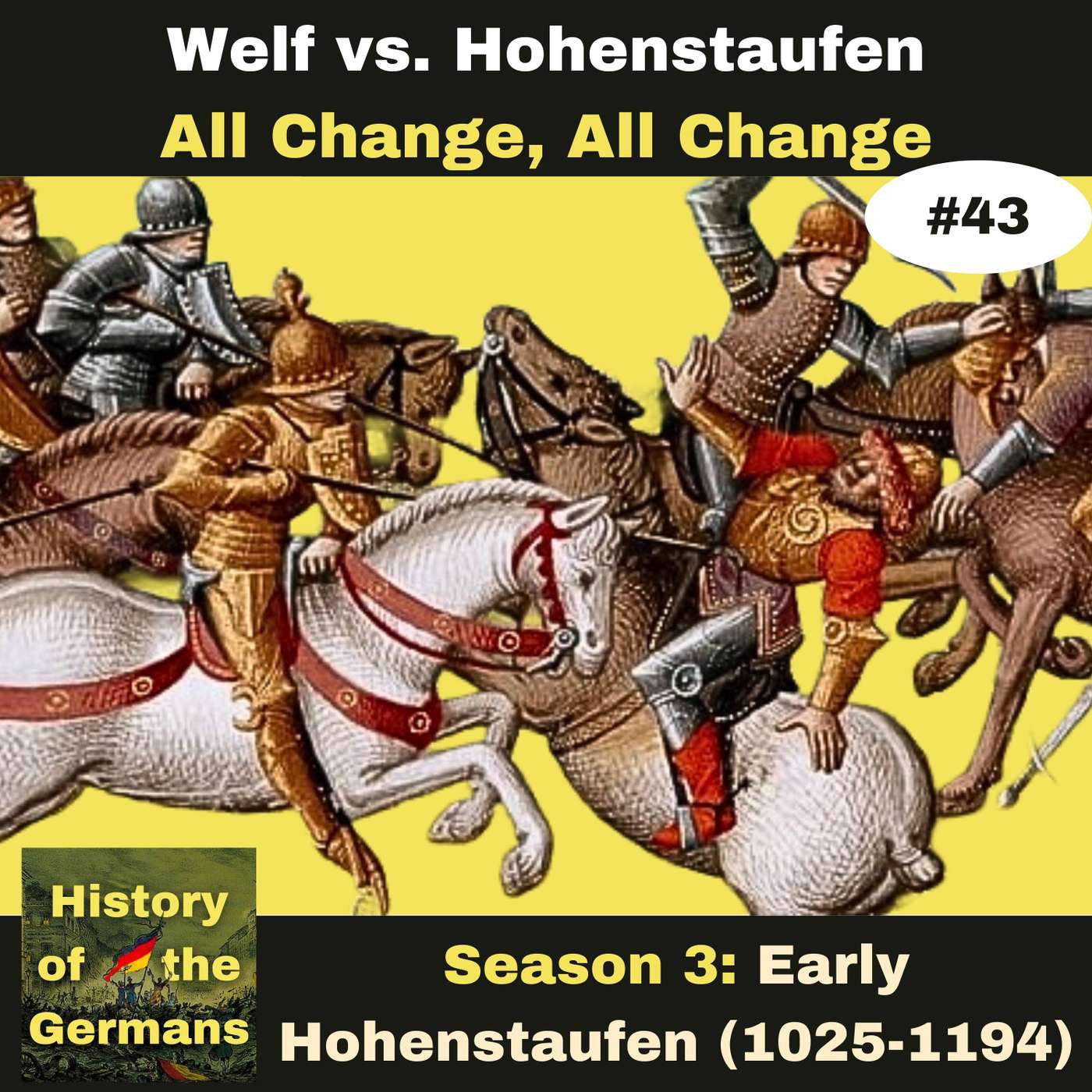
Ep. 43: Welf vs Staufer - Lothar III (1125-1137) - All Change, All Change
Welcome to Season 3 of the History of the Germans, diving into one of the most dramatic and consequential periods of medieval German history — the age of the Hohenstaufen. But before the Hohenstaufen can take centre stage, someone else has to get out of the way first.It is 1125, and the Salian dynasty is dying with Emperor Henry V in the palace of the Bishop of Utrecht. After a century of
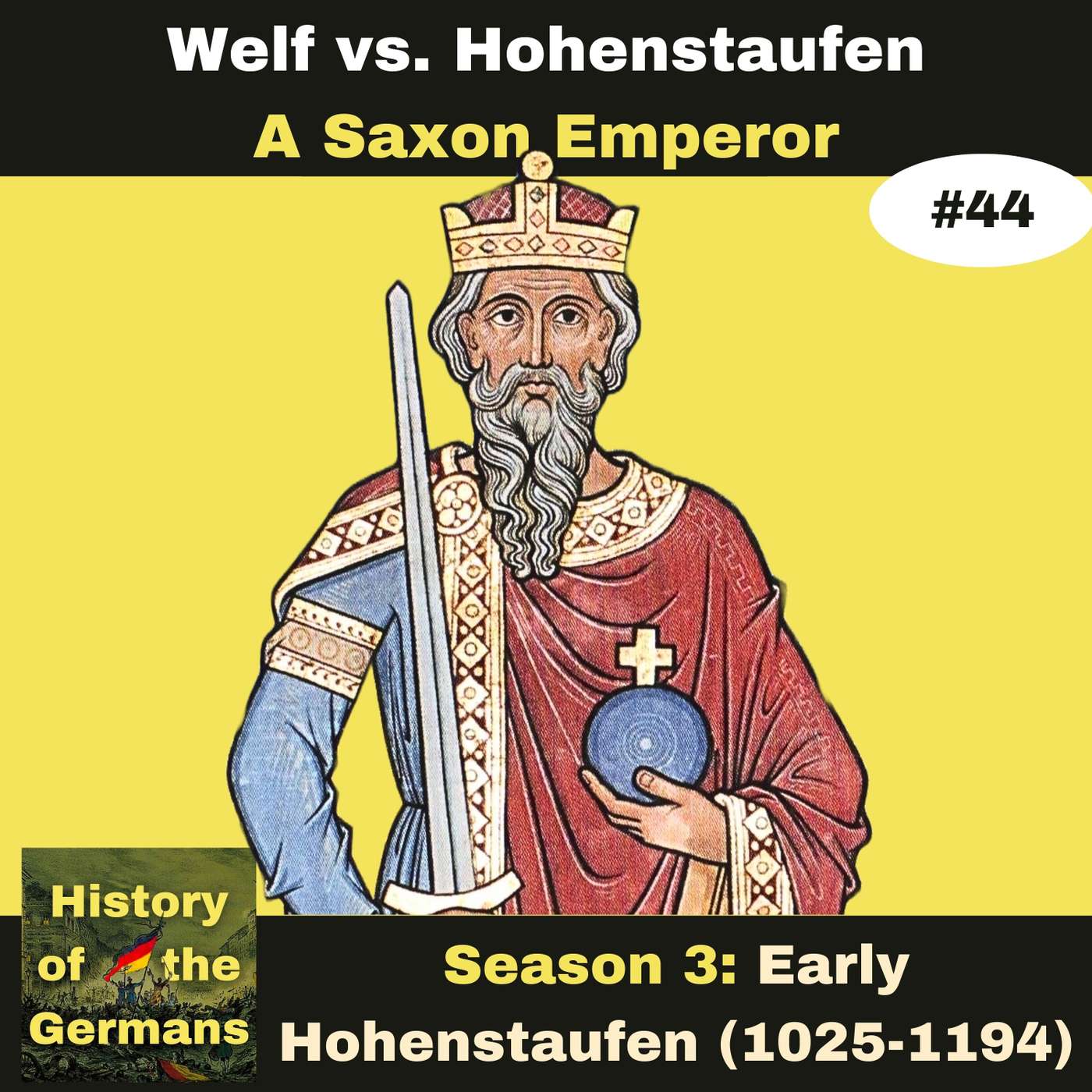
Ep. 44: Welf vs Staufer - Lothar III (1125-1137) - A Saxon Emperor
The election of Lothar III in 1125 was a humiliation for the House of Hohenstaufen — nephews of the last emperor, passed over in favour of their greatest rival. But Frederick and Konrad of Hohenstaufen are not the type to quietly accept defeat. What follows is nearly a decade of civil war, a daring Italian adventure, and one of the most ambitious power grabs in medieval German history.In
Ep. 45: Bernard of Clairvaux - Lothar III (1125-1137) - Triple Division
Before Lothar III can claim the imperial crown, he needs a pope to give it to him. There's just one problem — in 1130, Rome has two of them.In this episode we take a vital detour to the eternal city, where medieval papal politics are every bit as violent, corrupt, and compelling as anything happening north of the Alps. Murder, torture, family vendettas, a pope dragged through the streets
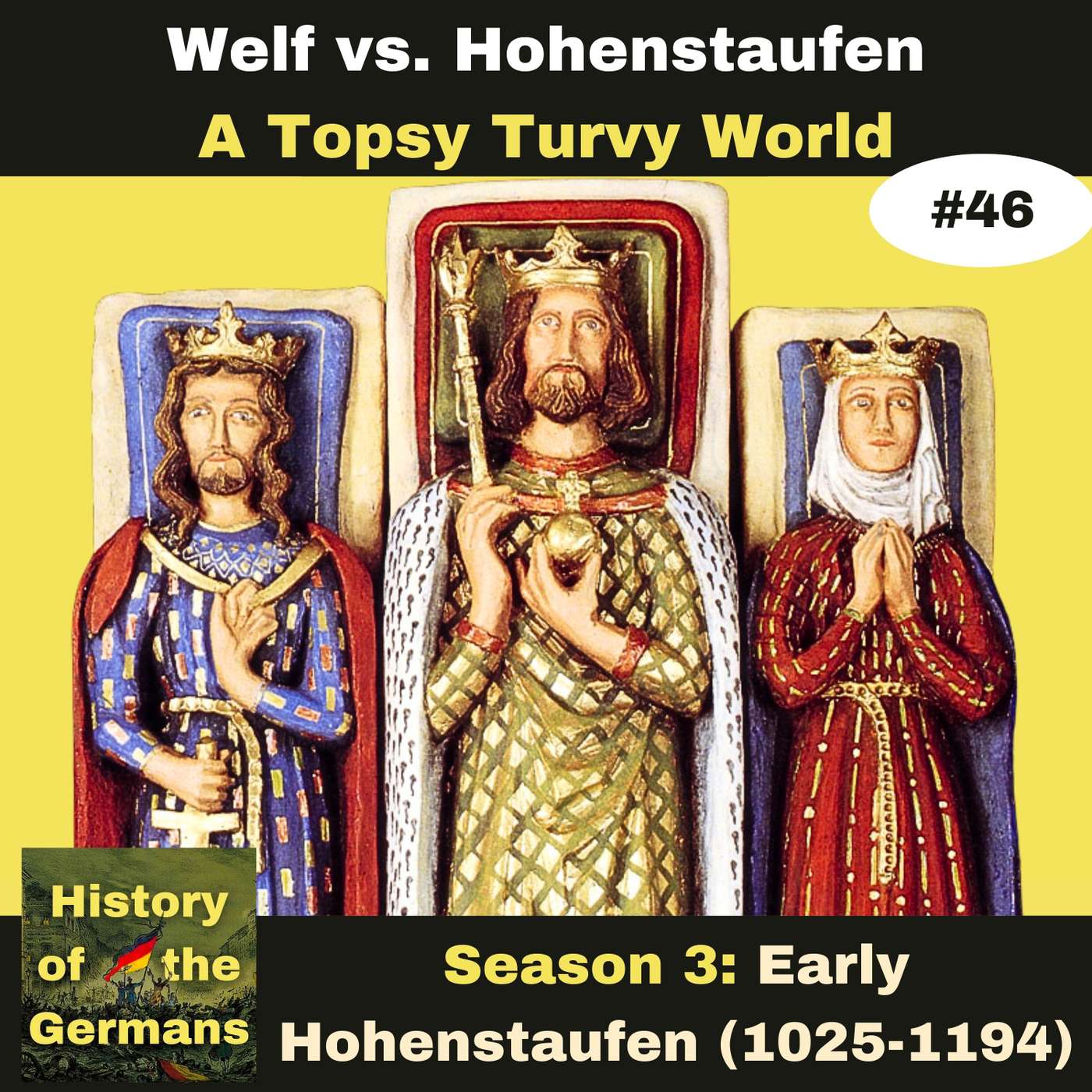
Ep. 46: Welf vs Staufer - Lothar III (1125-1137) - A Topsy Turvy World
1130-1137 - Emperor Lothar III is getting embroiled in the schism between popes Innocent II and Anaclet II. Anaclet II is properly elected and holds Rome whilst Innocent II enjoys the support of the most influential church leader of the time, St. Bernard of Clairvaux.Fear of St. Bernard drives Lothar into the camp of Innocent II which means he has to go down to Italy and conquer Rome for
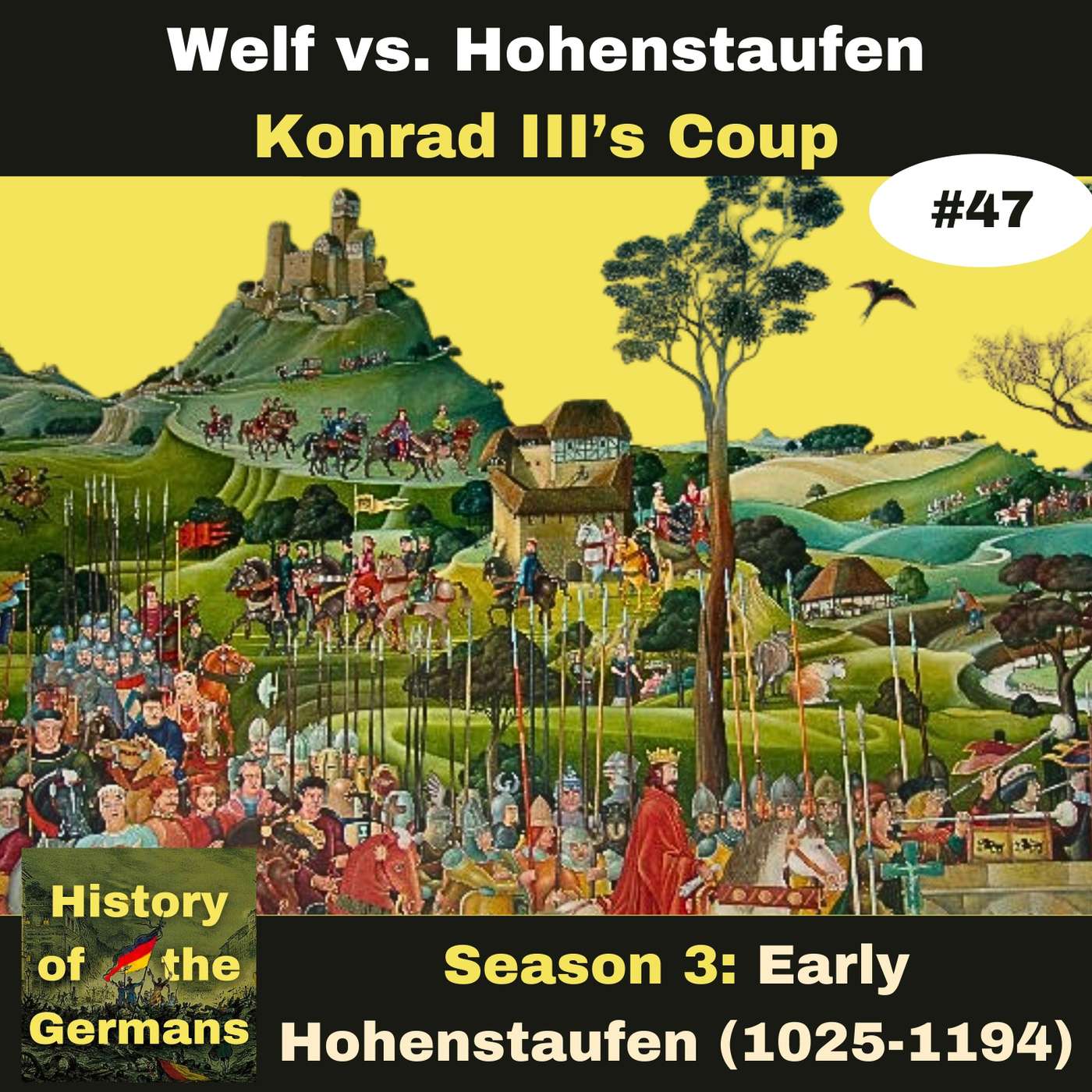
Ep. 47: Welf vs Staufer - Konrad III (1137-1152) - Konrad's Coup
1138-1142 This week we will watch another candidate having the royal title snatched from his fingers. Henry the Proud, duke of Bavaria, duke of Saxony, Margrave of Tuscany and Este, richest landowner in Germany and Italy, son-in-law of the previous emperor and his designated successor is a shoo in for the imperial title.Only Conrad of Hohenstaufen, failed anti-king and hero of the Italian
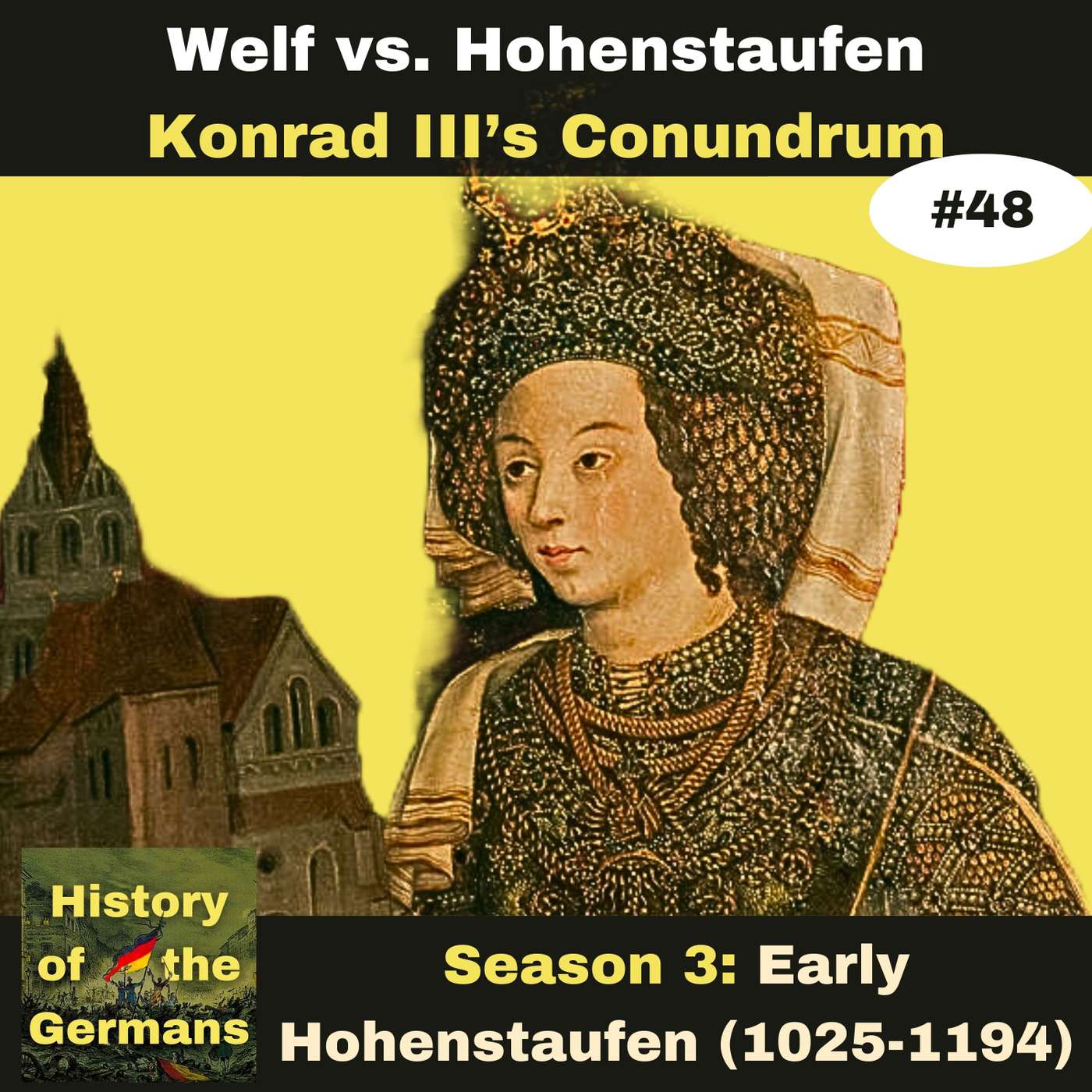
Ep. 48: Welf vs Staufer - Konrad III (1137-1152) - Konrad's Conundrum
1144-1147 - King, not really Emperor Conrad III may have signed a precarious peace with his greatest opponent, Henry the Lion, duke of Saxony. But the kingdom remains in turmoil. Feuds are everywhere, devastating the land. His half-brother bishop Otto of Freising sees all that death and destruction as a clear portend of the imminent arrival of the Antichrist.Though Conrad is methodically
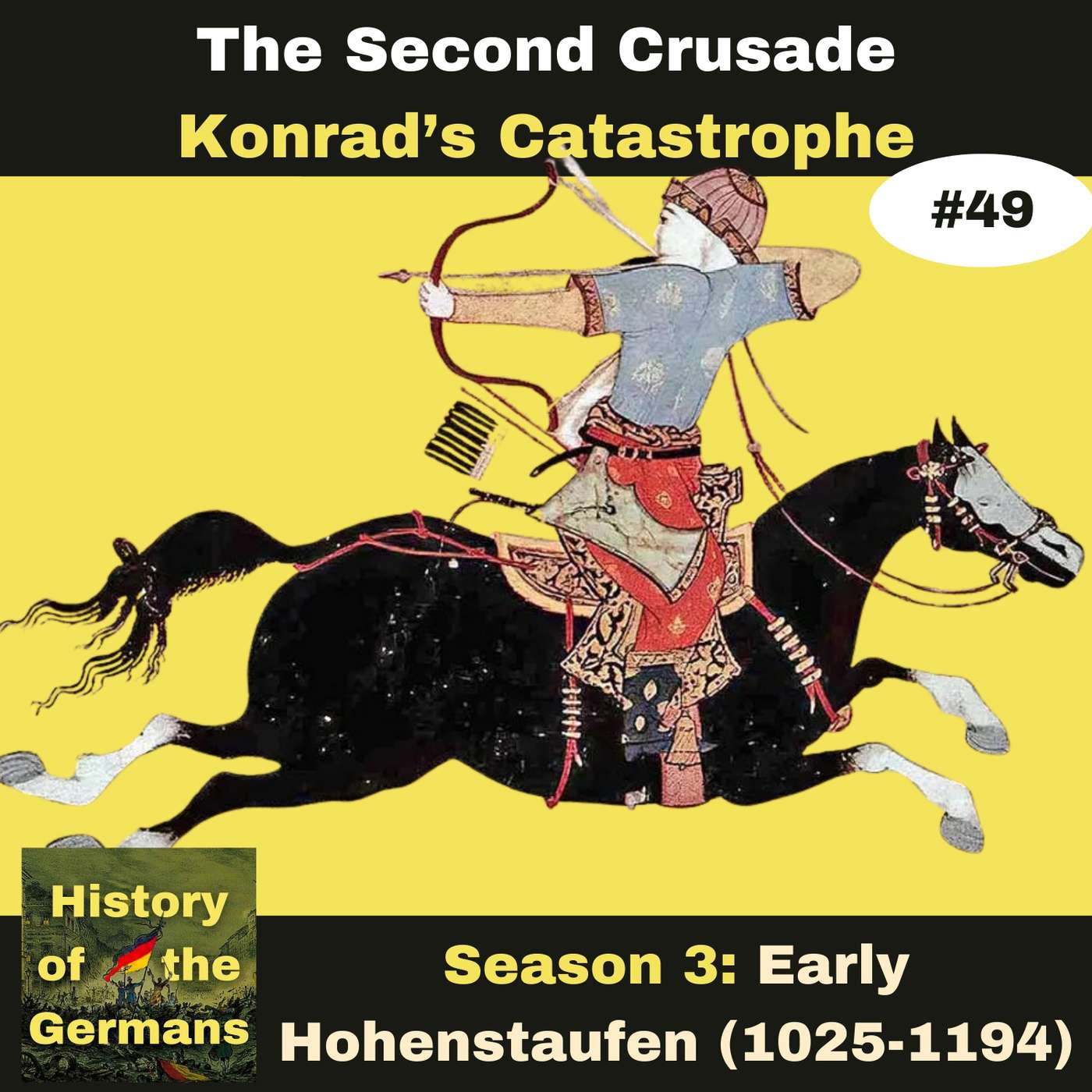
Ep. 49: Second Crusade (1147-1149) - Konrad's Catastrophe
1147-1149 The title is a bit of a spoiler. Suffice to say that Cornad III's great crusade does not go quite as planned.He had set off with an army of between 20,000 and 60,000 from Regensburg in June 1147 making his way doen to Constantinople via Hungary and the Balkans. Ever eager for glory he had set off a month before his rival, king Louis VII of France and he presses on towards Jerusa
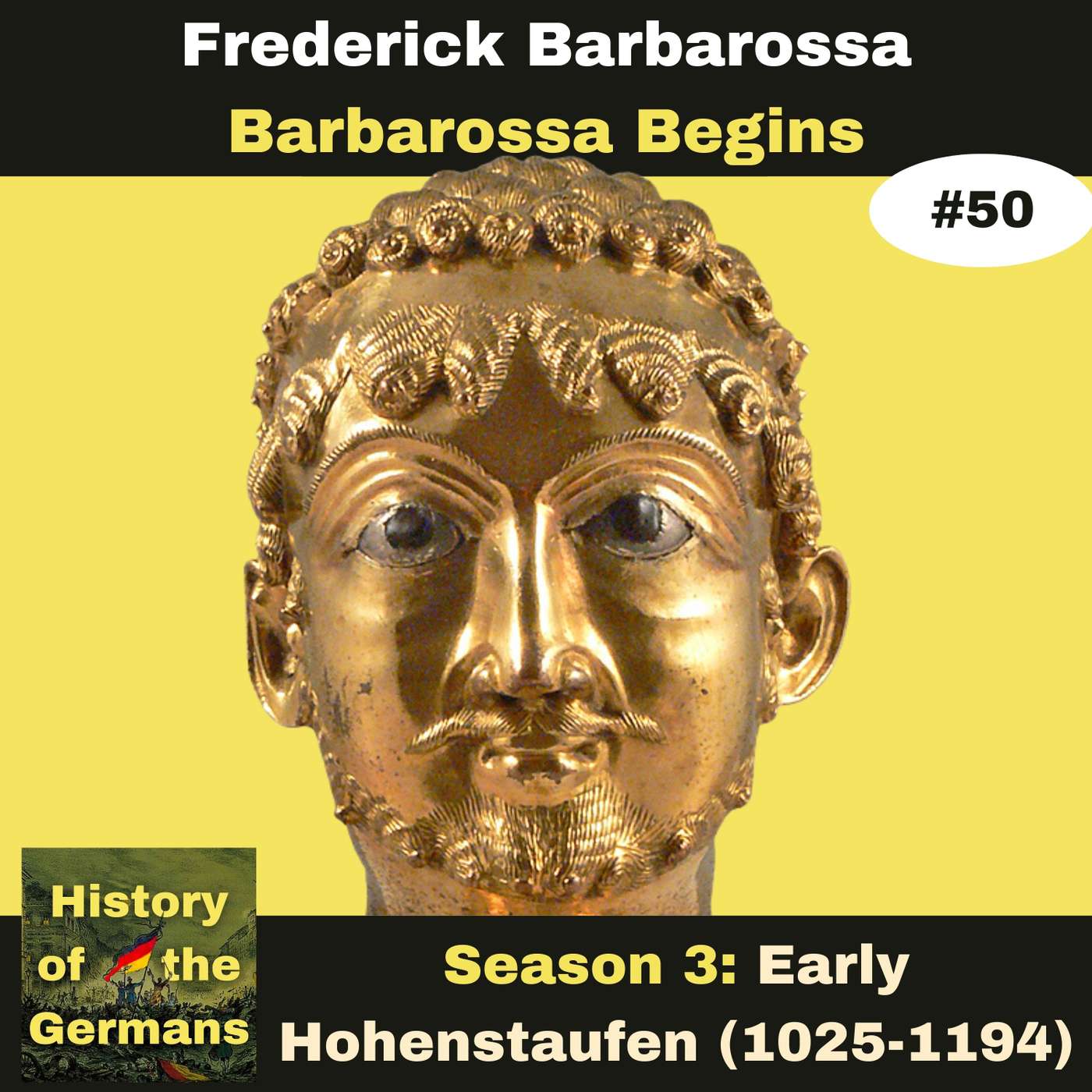
Ep. 50: Frederick Barbarossa (1152-1190) - Unification of the Empire - Barbarossa Begins
(1149-1152)In his last few years the ill and exhausted king Conrad III relies more and more on his nephew, Frederick, the duke of Swabia called Barbarossa because of his ginger beard.Barbarossa forms the cornerstone linking the warring houses of Welf and Waiblingen. His military capabilities and diplomatic skills propell the barely 30 year old to the top of domestic and international poli
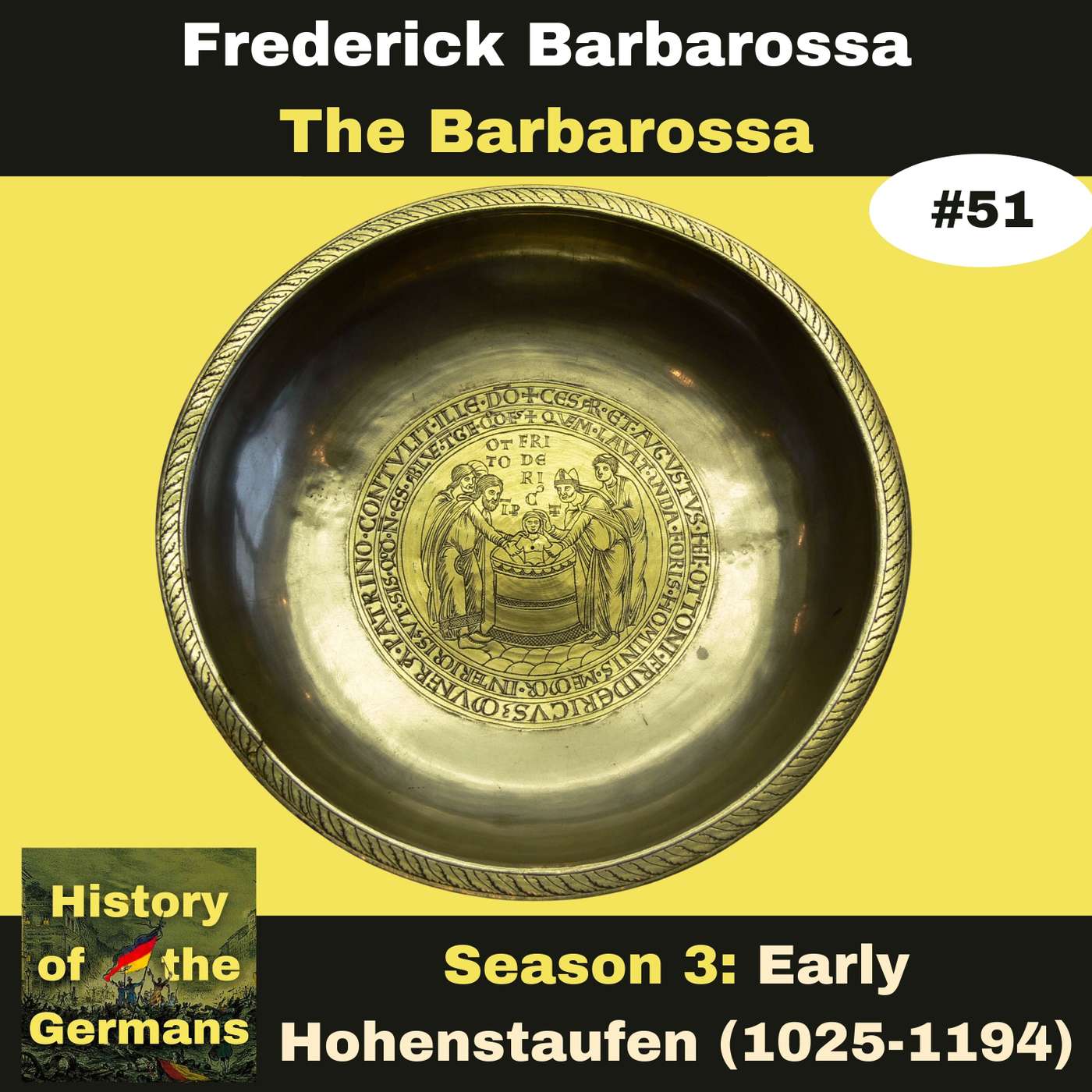
Ep. 51: Frederick Barbarossa (1152-1190) - Unification of the Empire - The Barbarossa
1152In this episoe we examine Barbarossa's background, childhood and education. What is it that made him so exceptional? And we investigate whether the Cappenberger Head is indeed an individual likeness of the emperor, or just another image of what an emperor is supposed to look like.The music for the show is Flute Sonata in E-flat major, H.545 by Carl Phillip Emmanuel Bach (or some claim
Ep. 52: Frederick Barbarossa (1152-1190) - Unification of the Empire - The Honour of the Empire
1153-1155This week we finally get our narrative going. Barbarossa will boost the honour of the empire by burning cities, hanging heretics, slaughtering rabble-rousing Romans and inventing the concept of the university.With an introduction by Robin Pearson from the History of Byzantium. Check out his website here: https://thehistoryofbyzantium.com/The music for the show is Flute Sonata in
Ep. 53: Frederick Barbarossa (1152-1190) - Unification of the Empire - Sacrum Imperium
(1155-1158) This week we will see how Barbarossa addresses the big issue he had in his first Italian campaign, the size of the army and how he creates the Holy Roman Empire in the process.The music for the show is Flute Sonata in E-flat major, H.545 by Carl Phillip Emmanuel Bach (or some claim it as BWV 1031 Johann Sebastian Bach) performed and arranged by Michel Rondeau under Common Crea
Ep. 54: Frederick Barbarossa (1152-1190) - Wars in Italy - A Bohemian Bluff
(1158) This week we will see Barbarossa try using his freshly minted army to take down the city of Milan, a city of 150,000 and the one commune that he needs to defeat if he really wants to establish imperial rule in ItalyThe music for the show is Flute Sonata in E-flat major, H.545 by Carl Phillip Emmanuel Bach (or some claim it as BWV 1031 Johann Sebastian Bach) performed and arranged b
Ep. 55: Frederick Barbarossa (1152-1190) - Wars in Italy - The Laws of Roncaglia
By September 1158 Barbarossa had completed one of the shortest and most efficient Italian campaigns of the medieval period. He had set off from Augsburg in mid-July and by early September Milan had capitulated. By October, most troop contingents both those from north of the Alps and those of the communes were on their way home and all of Italy was his.Barbarossa meanwhile is not going hom
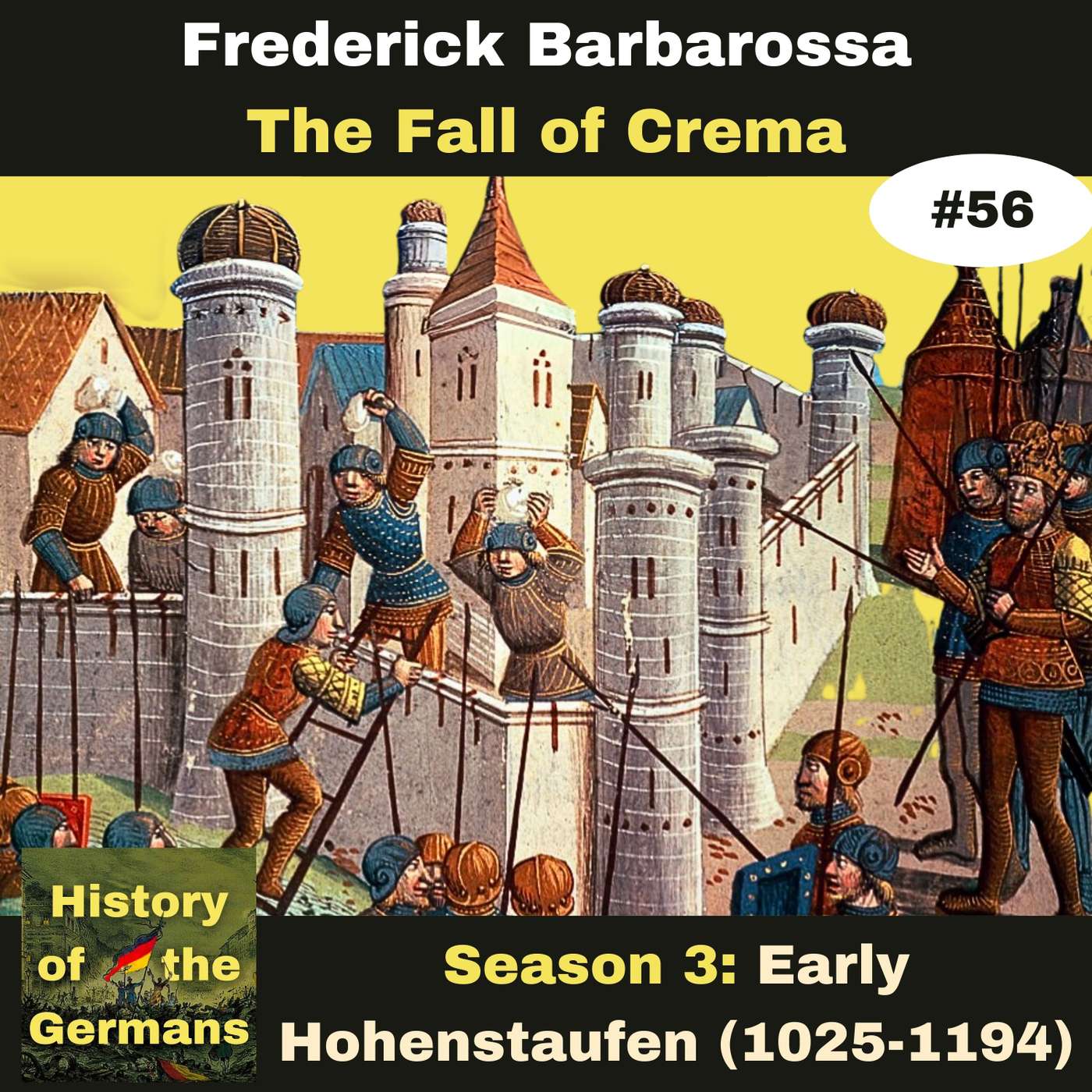
Ep. 56: Frederick Barbarossa (1152-1190) - Wars in Italy - The Fall of Crema
1159-1162 This week we will see how the Italian Communes take the Laws of Roncaglia. Not well is the understatement of the 12th century. Prepare for some epic sieges and harsh imperial justice.The music for the show is Flute Sonata in E-flat major, H.545 by Carl Phillip Emmanuel Bach (or some claim it as BWV 1031 Johann Sebastian Bach) performed and arranged by Michel Rondeau under Common
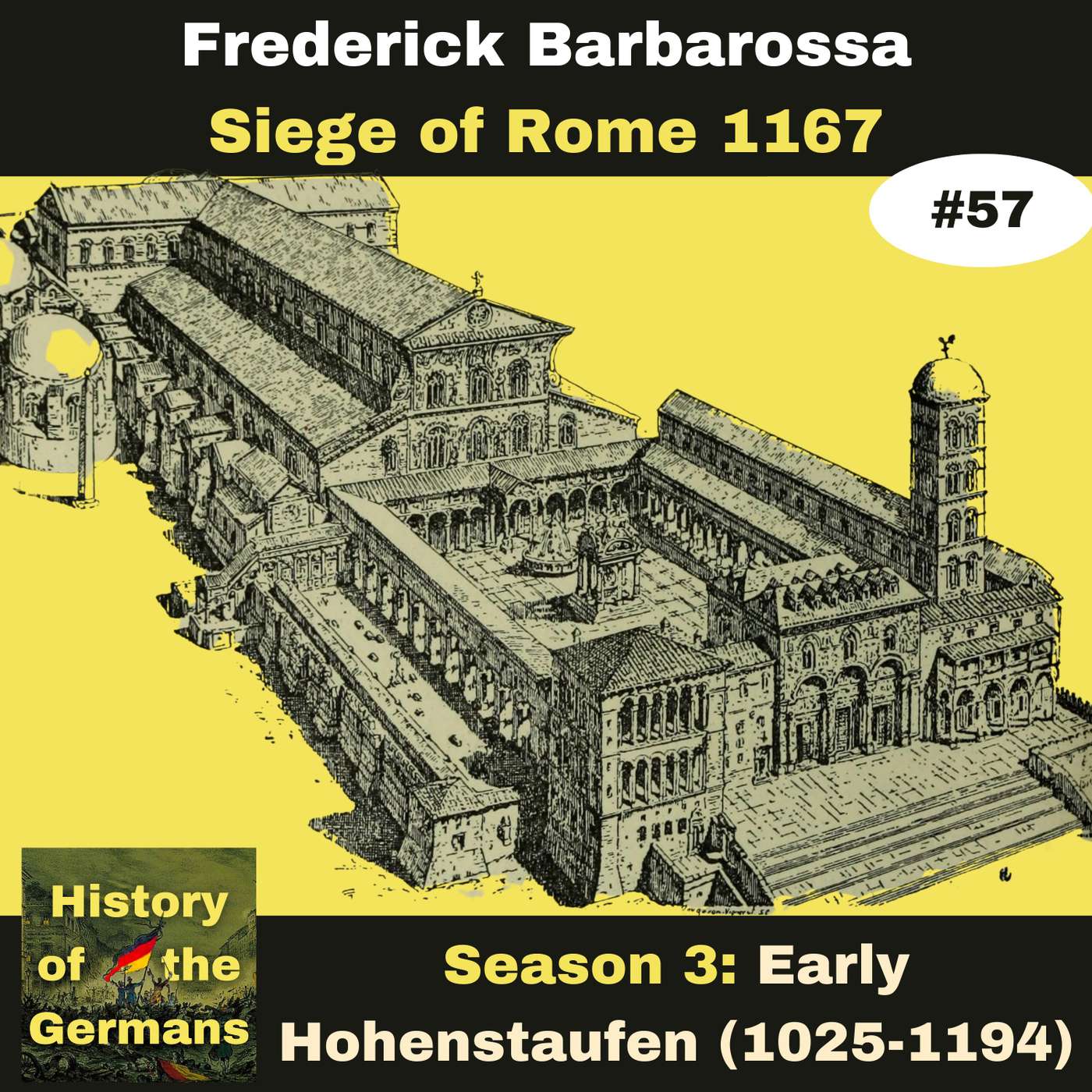
Ep. 57: Frederick Barbarossa (1152-1190) - Wars in Italy - Siege of Rome 1167
This week we do what we have done so many times and seem to be unable to avoid, talk about the conflict between pope and emperor. And that always means trouble, bad decisions and a siege of Rome. But boy, this time is not another standard schism, this time it is showdown.The music for the show is Flute Sonata in E-flat major, H.545 by Carl Phillip Emmanuel Bach (or some claim it as BWV 10
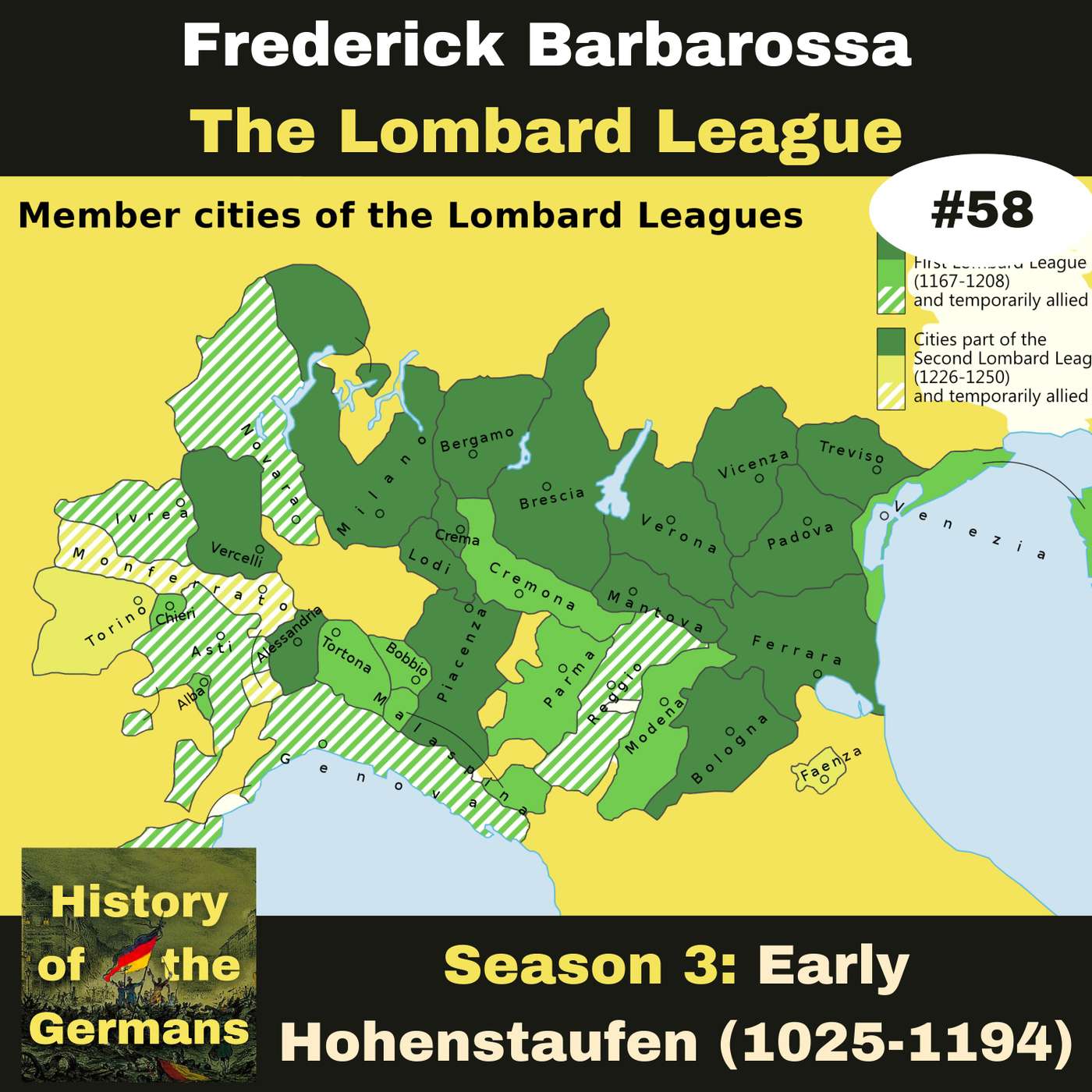
Ep. 58: Frederick Barbarossa (1152-1190) - Wars in Italy - The Lombard League
(1162-1167 again) This week we will talk about the second part of the pincer movement that brought that Hohenstaufen construct of imperial power crashing down to earth. The first was the schism in the Latin church and the second was the link-up of almost all northern Italian communes in a coalition against Barbarossa, the Lombard League.The music for the show is Flute Sonata in E-flat maj
Ep. 59: Frederick Barbarossa (1152-1190) - Wars in Italy - The City of Straw
(1168-1174) This week we talk about Barbarossa’s next moves after his disastrous fourth Italian campaign. It takes him a few years to come to grips with the failure of his great imperial programme before he makes one last attempt to resurrect it.The siege of Alessandria turned into a nightmare...The music for the show is Flute Sonata in E-flat major, H.545 by Carl Phillip Emmanuel Bach (o
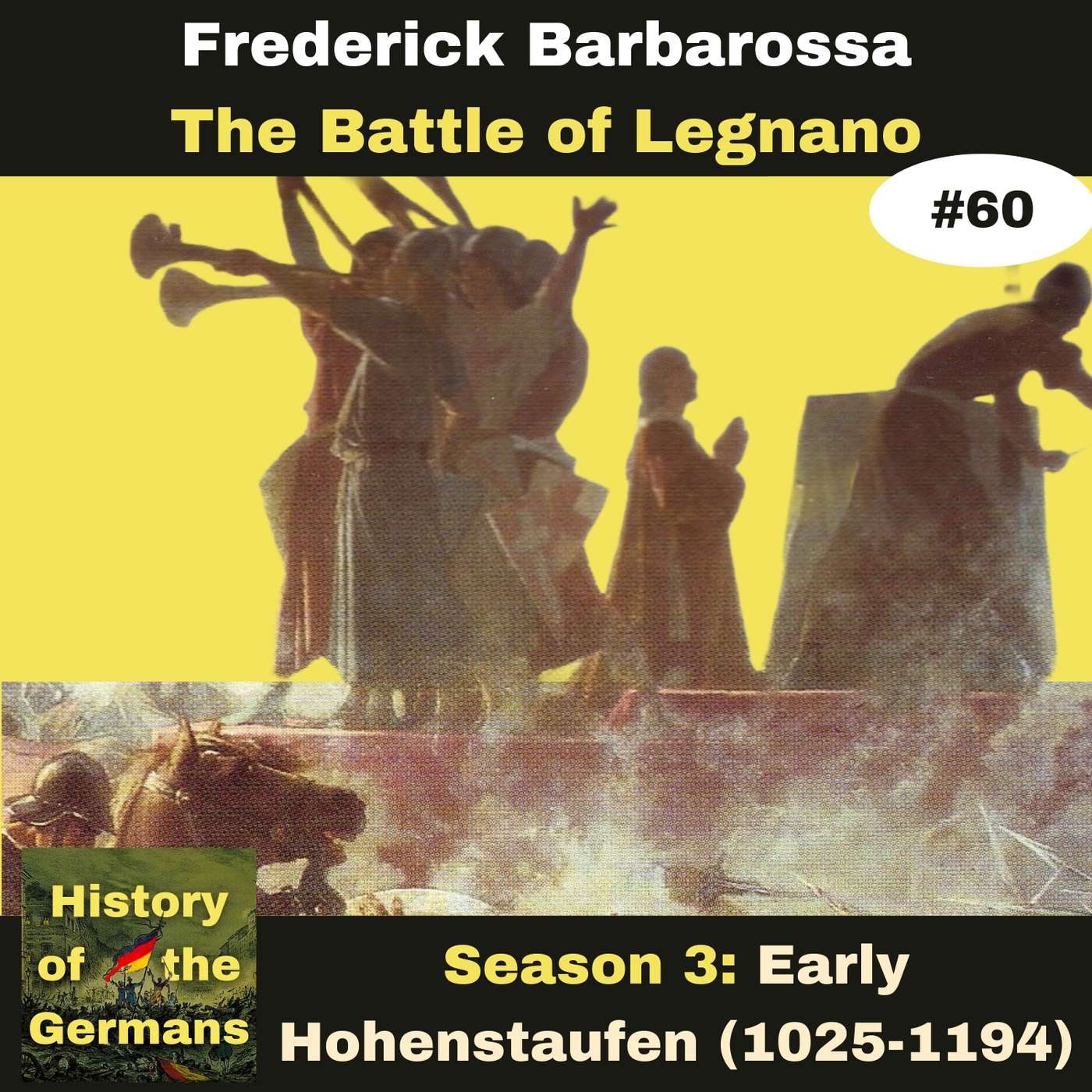
Ep. 60: Frederick Barbarossa (1152-1190) - Wars in Italy - Battle of Legnano
1176 This week we talk about the next leg in this the fifth Italian campaign Barbarossa undertakes. It involves an aborted battle, attempts at peace, a mediation award, a refusal of support and the most significant battle of not just his reign but one that reverberates into the present dayThe music for the show is Flute Sonata in E-flat major, H.545 by Carl Phillip Emmanuel Bach (or some
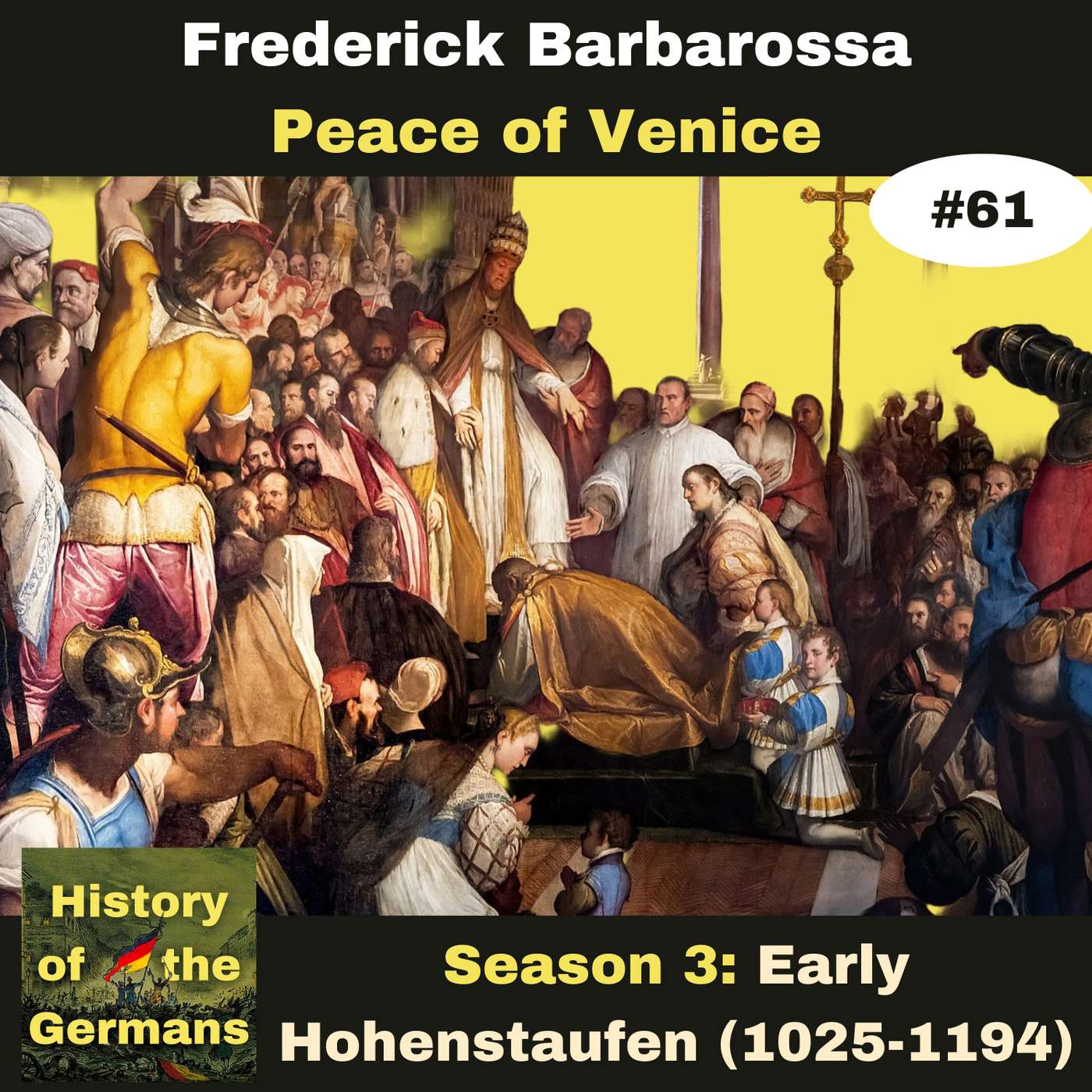
Ep. 61: Frederick Barbarossa (1152-1190) - Wars in Italy - The Peace of Venice
This week we will talk about the great peace conference in Venice where Barbarossa is finally reconciled with the papacy, the Lombards and the Sicilians.It is also the time he has to bend the knee before his implacable foe, Pope Alexander III in a grand ceremony before all of Europe.The music for the show is Flute Sonata in E-flat major, H.545 by Carl Phillip Emmanuel Bach (or some claim
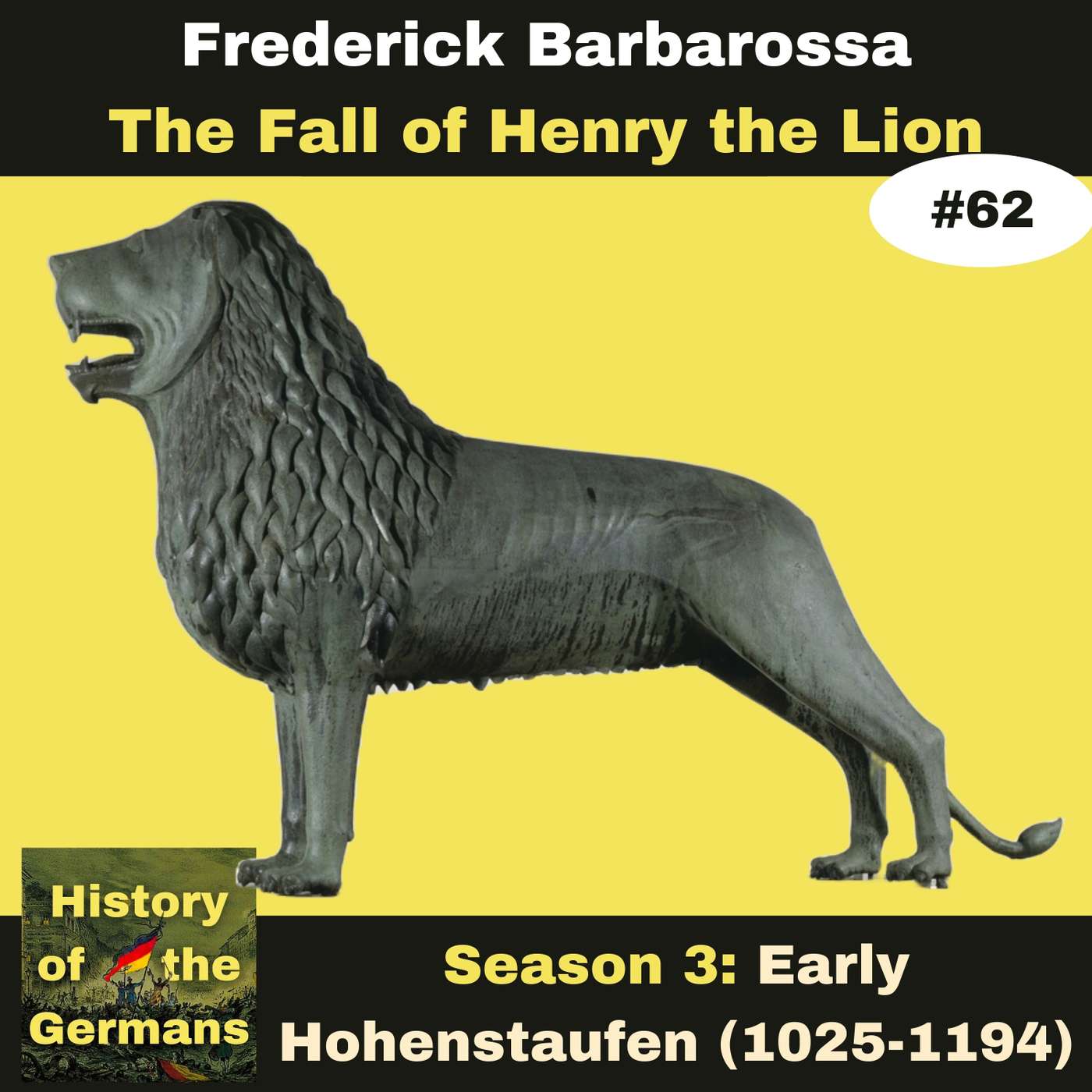
Ep. 62: Frederick Barbarossa (1152-1190) - Consolidating Power - The Fall of Henry the Lion
This episode deals with, guess what, the fall of Henry the Lion from his position as duke of Saxony and Bavaria. The interesting bit is not so much whether it happened, that is pretty obvious, but why it happened. When I learned about it in school, it was seen as the greatest moment of Barbarossa’s career, taking down the eternal rival of the Hohenstaufen family, but today, historians see
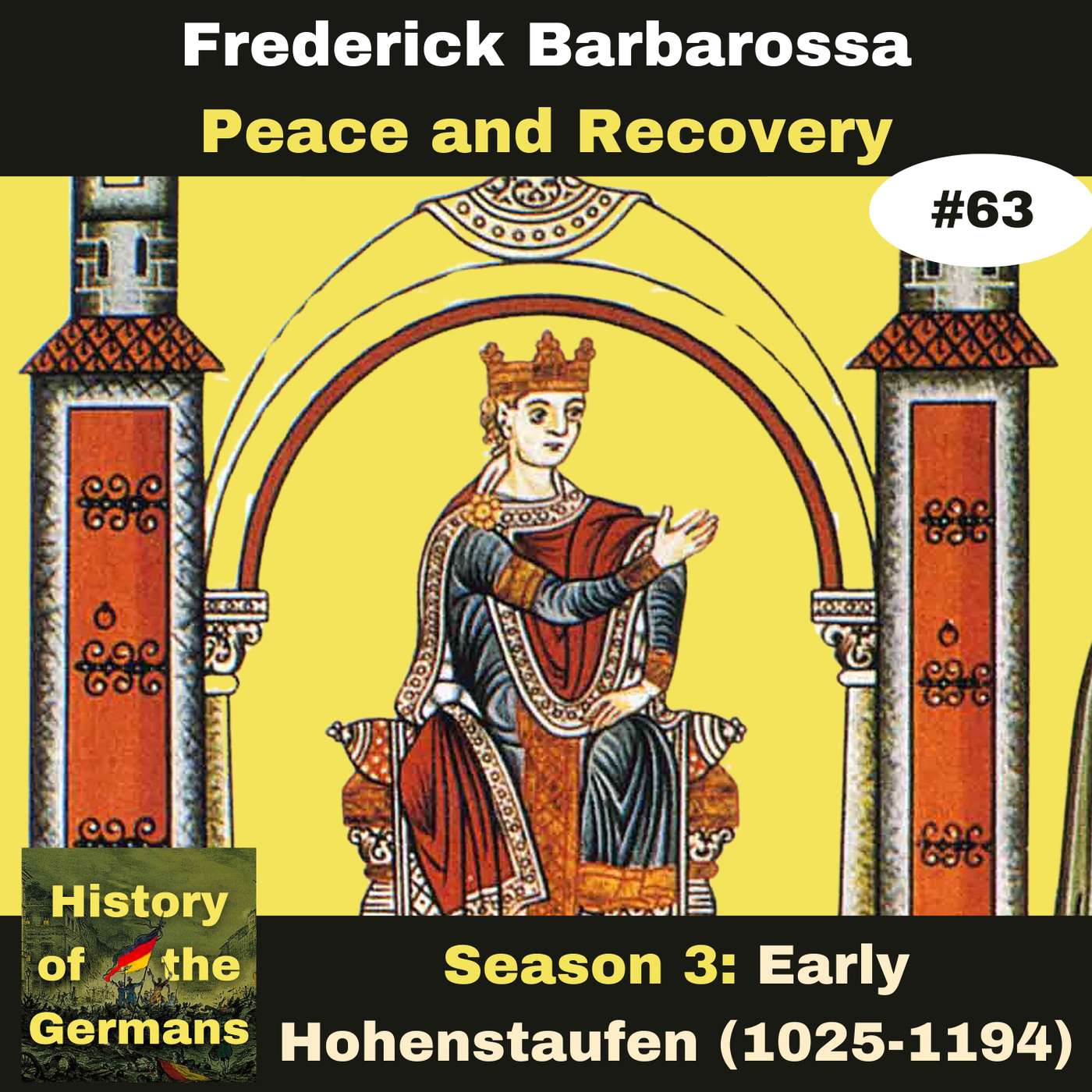
Ep. 63: Frederick Barbarossa (1152-1190) - Consolidating Power - Peace and Recovery
Following the Peace of Venice and the Fall of Henry the Lion, our great emperor Barbarossa has reached the end of the road. Being a man of infinite resource and sagacity he climbs out of the hole, resets his political allegiances and recovers some of his previous standing.As always, this episode has a dedicated website with the transcript and maps, pictures and additional comments to read
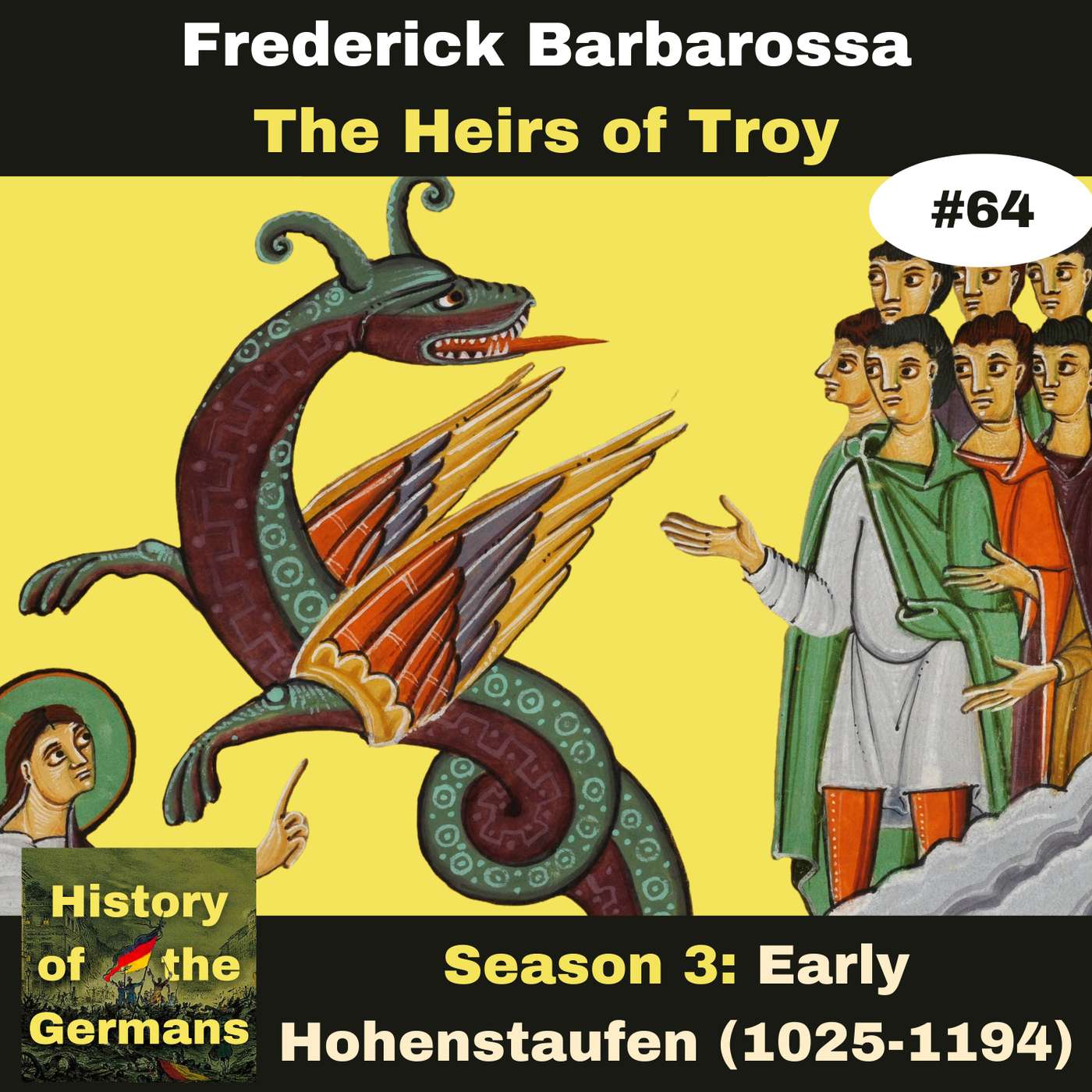
Ep. 64: Frederick Barbarossa (1152-1190) - Consolidating Power - The Heirs of Troy
This week we will discuss how Barbarossa attempts to rebuild a new ideological underpinning of his role and how that leads to renewed conflict with the popes. But then one of the most devastating events of the Middle Ages solves all his issues and presents him with an opportunity to turn the mythmaking up to 11.As always, this episode has a dedicated website with the transcript and maps,
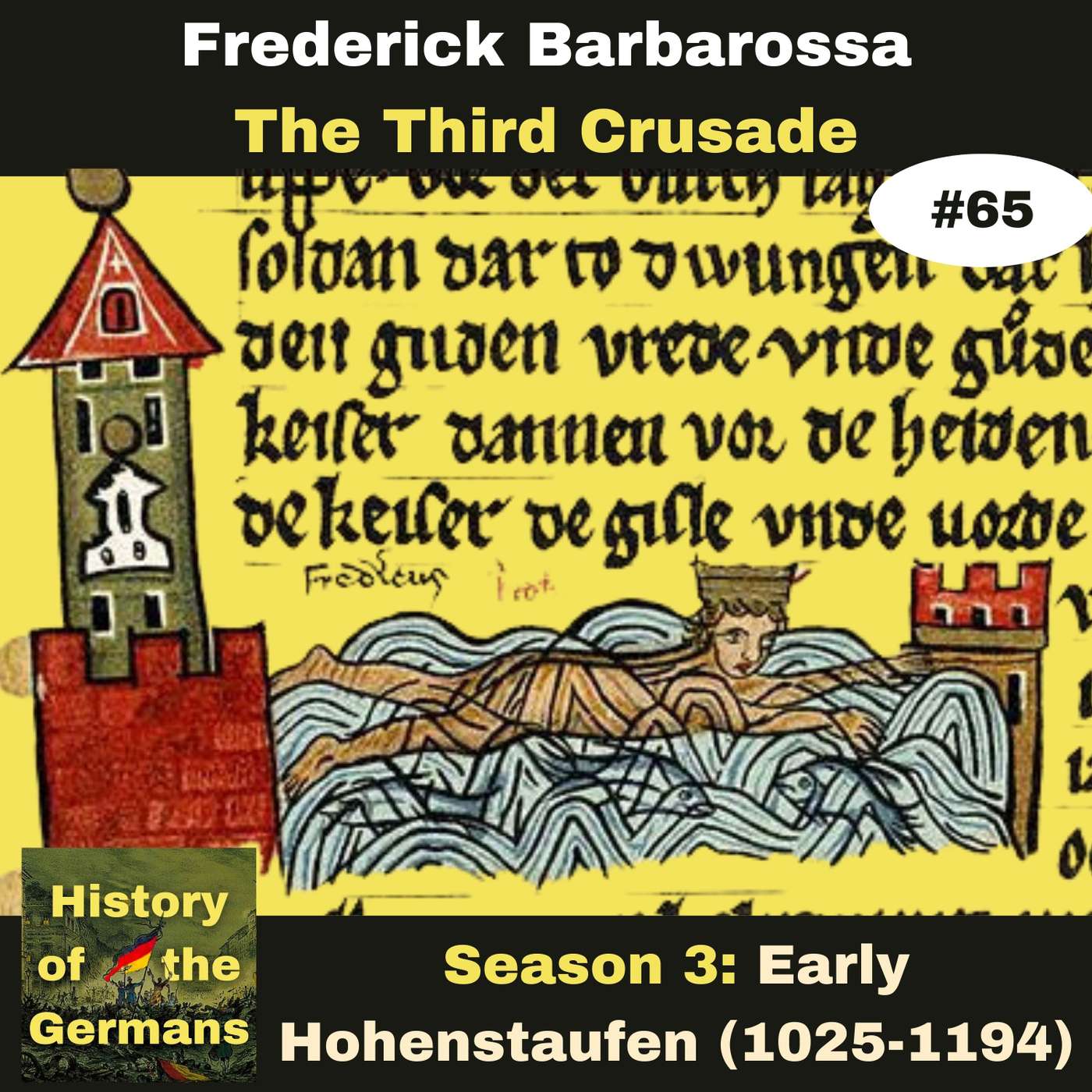
Ep. 65: The Third Crusade (1189-1192)
This week, after 15 episodes we will finally leave the emperor Barbarossa behind, though it is almost impossible to ever get away from him. No other medieval ruler is still so present in the national psyche, not as the man he was but as the myth he was turned into. So today we say goodbye to the man and next time we will take a look at the myth..As always, this episode has a dedicated web
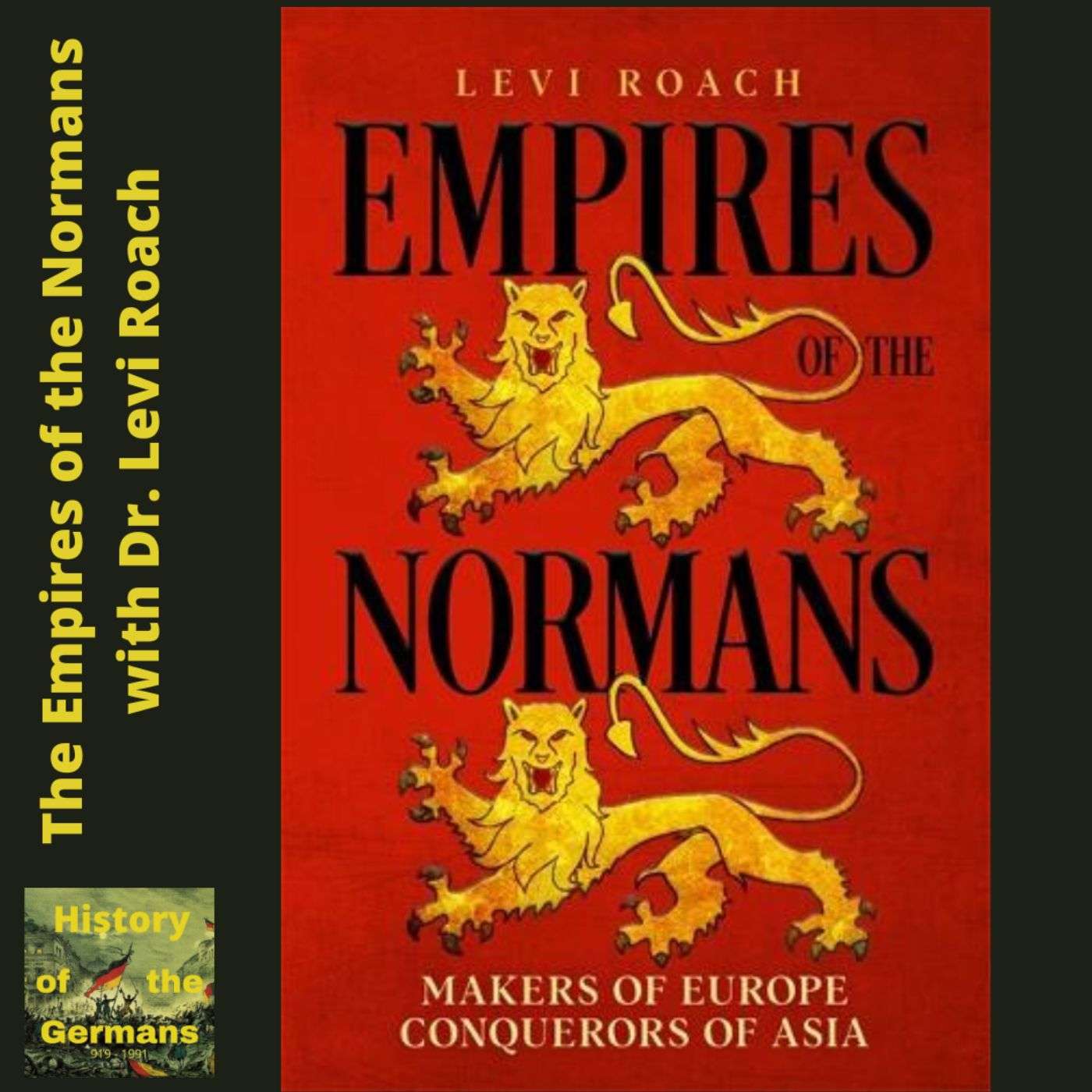
Empires of the Normans with Dr. Levi Roach
We had the great pleasure to interview Dr. Levi Roach, Prize-winning author and Associate Professor at the University of Exeter about his new book, The Empires of the Normans..We have encountered the Normans many times in the History of the Germans. This is the chance to get the whole story.It is a tale of ambitious adventures and fierce freebooters, of fortunes made and fortunes lost. Th
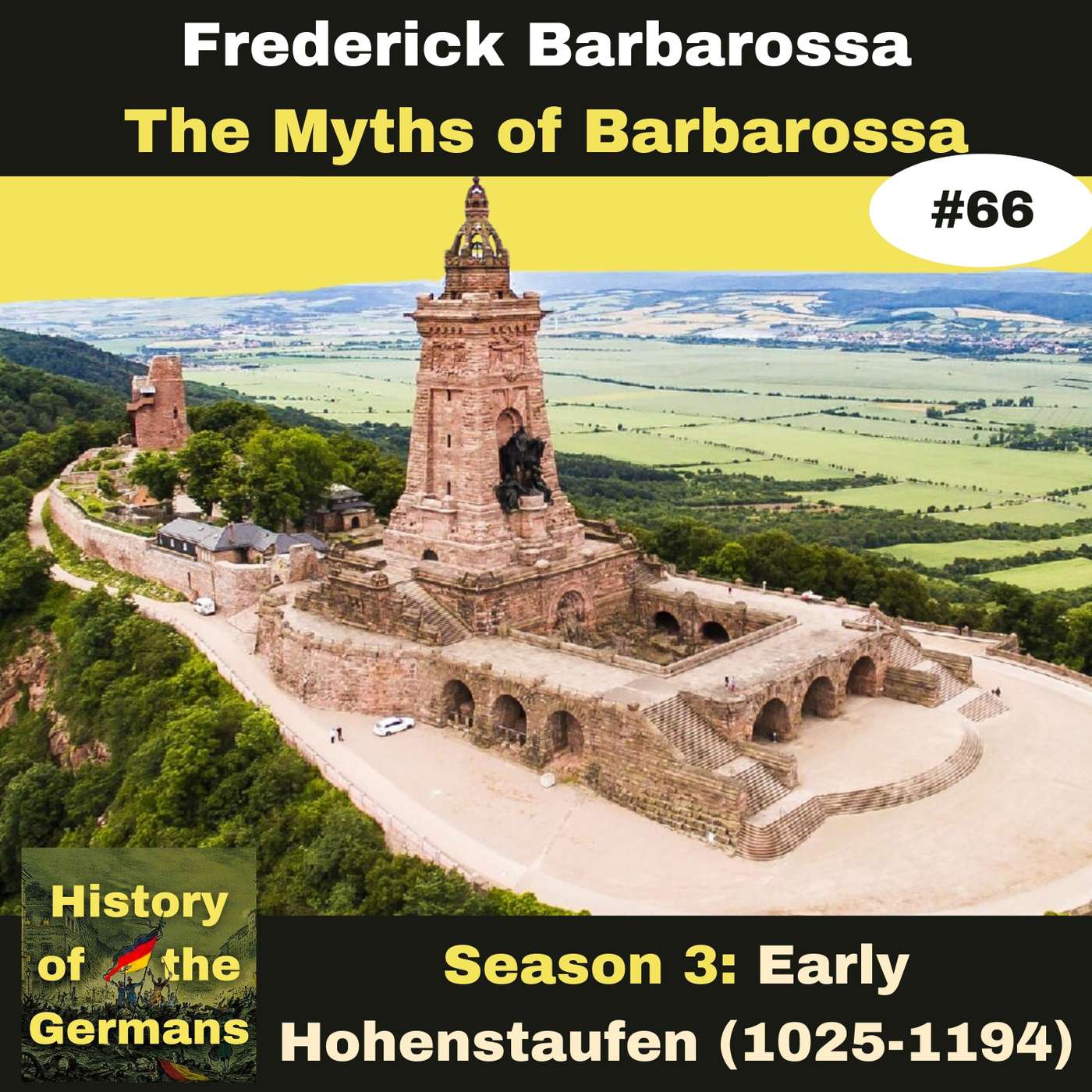
Ep. 66: The Myths of Frederick Barbarossa (1152-1190)
We have just spent 15 episodes talking about the life and times of the actual Frederick Barbarossa. Exciting as his life was, his afterlife is almost as interesting. Don’t panic I will not go on for 15 episodes talking about the perception of the great emperor. Just give me 30 minutes and I promise it is worth it.As always, this episode has a dedicated website with the transcript and maps
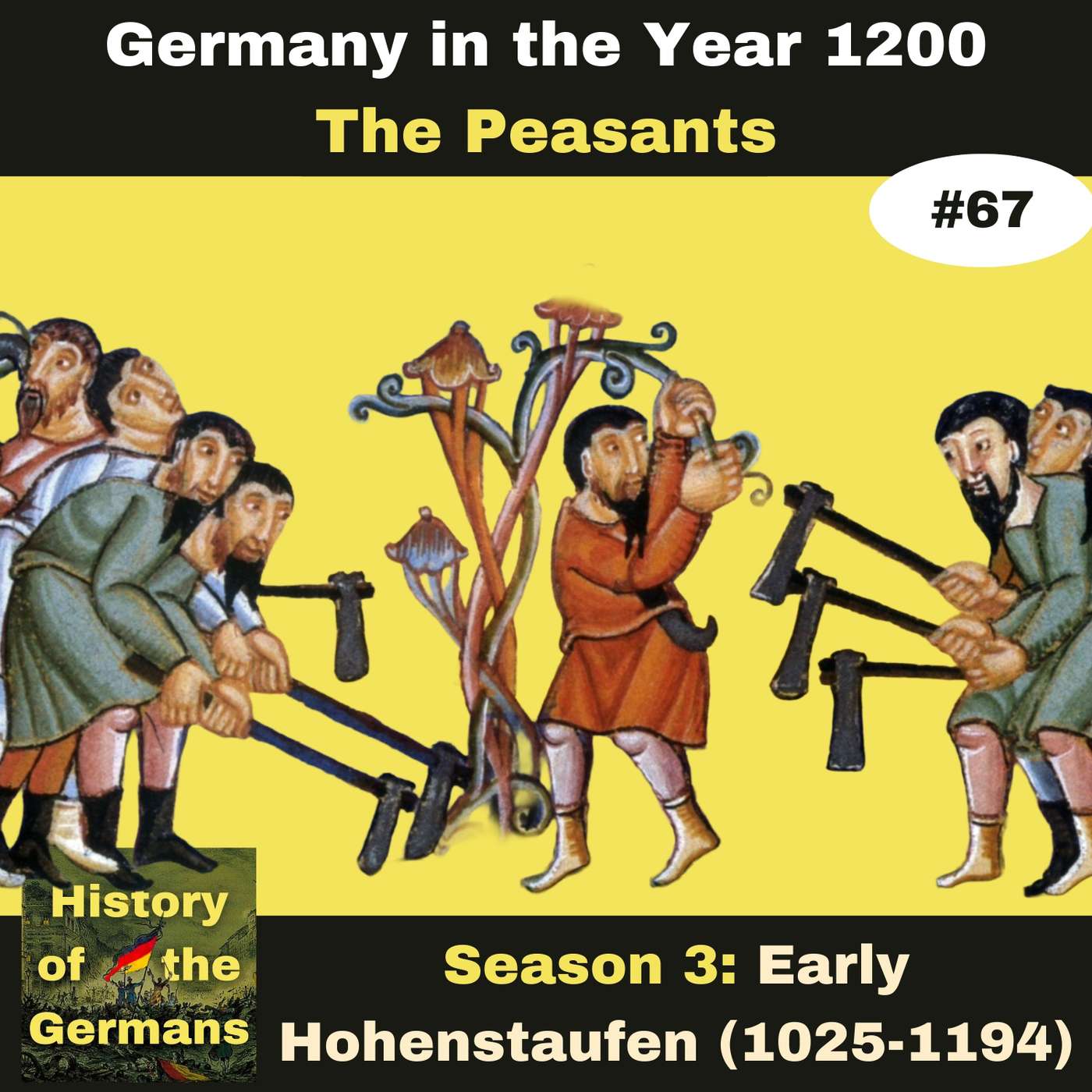
Ep. 67: Germany in the Year 1200 - The Peasants
This is about the peasants, no kings, emperors, popes, bishops at all. Ok one brother of a duke at the end because I simply cannot help myself. But yes, peasants. What was the life of a peasant in Germany in around 1200 really like? How much do we actually know about their living conditions? Did it differ much from country to country?The correct answer to all of these is – we are not real
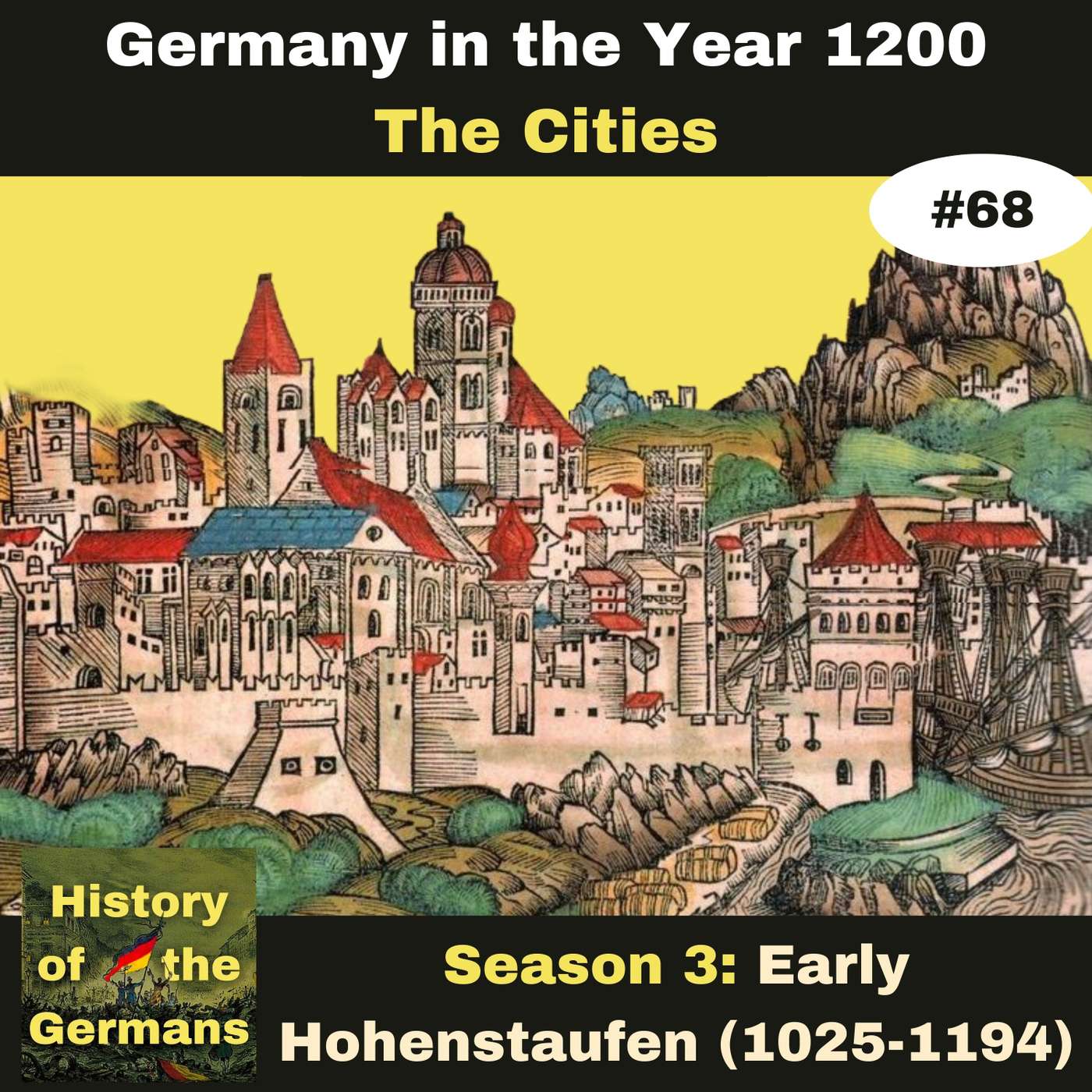
Ep. 68: Germany in 1200 - The Cities
This week we take a tour of how cities in Germany worked around 1200 with a brief detour to look at what happened later and how they differ from Italian and French cities.The music for the show is Flute Sonata in E-flat major, H.545 by Carl Phillip Emmanuel Bach (or some claim it as BWV 1031 Johann Sebastian Bach) performed and arranged by Michel Rondeau under Common Creative Licence 3.0.
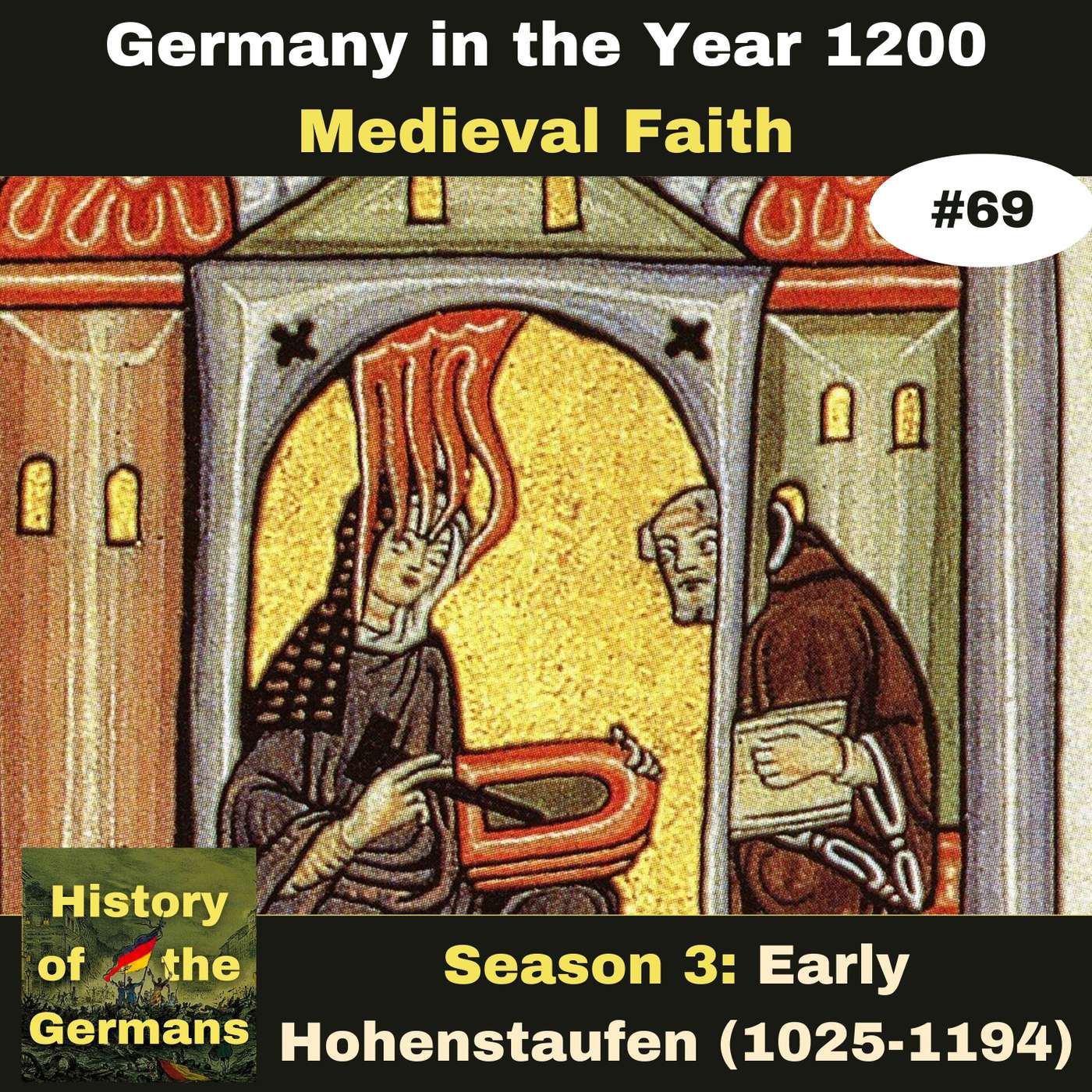
Ep. 69: Germany in 1200 Medieval Faith
Way back when, in Episode 30 we identified three drivers of the Investiture Controversy. These were: the conflict between the emperor and the princes, the conflict of the emperor with the popes and the rise and rise of piety amongst the lay people. These last 38 episodes we did talk at length about the how the princes established their own territorial lordships against the imperial centra
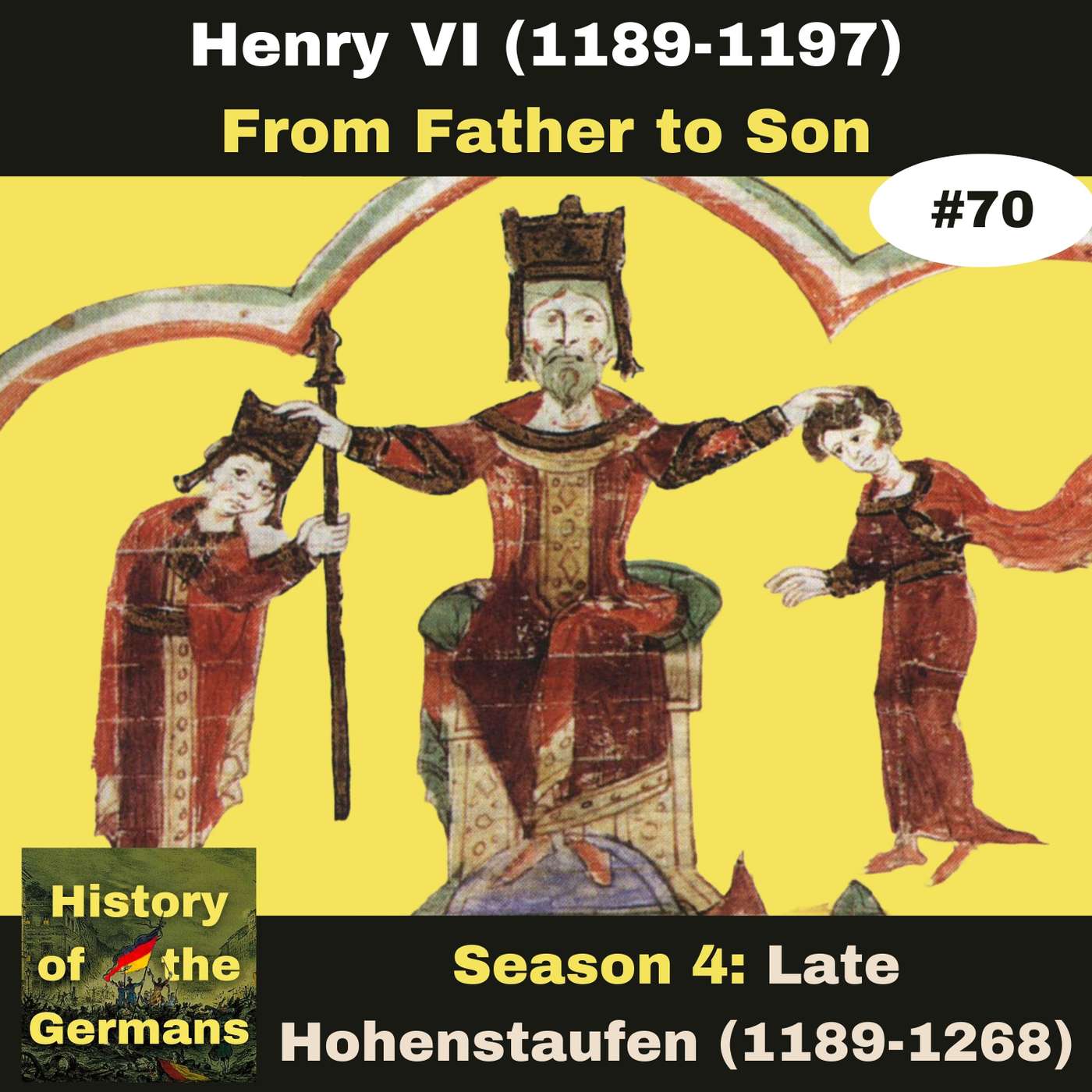
Ep. 70: Henry VI (1189-1197) - Conquest of Sicily - From Father to Son
When Barbarossa drowns in the river Saleph in 1190 the crown transfers to his eldest surviving son, Henry, known to History as Henry VI.This is the first time since the accession to personal rule of Emperor Henry III in 1039 that the imperial crown moves from father to grown up son without a glitch. In the previous 150 years, the passing of an emperor had been a dramatic event where all t
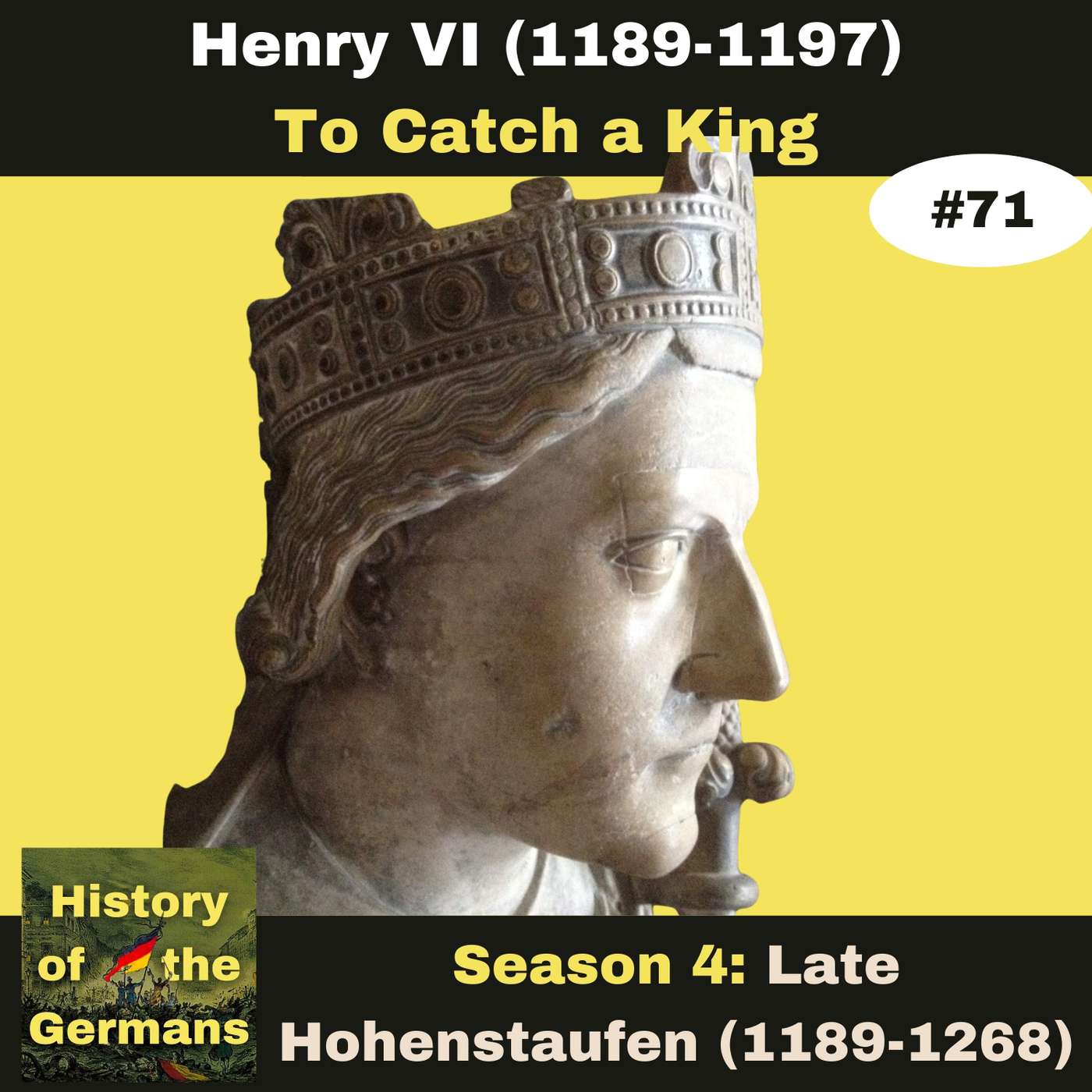
Ep. 71: Henry VI (1189-1197) - Conquest of Sicily - To Catch a King
There is one story from the Middle Ages that most people know, the imprisonment and ransom of King Richard the Lionheart of England. The chivalric knight and hero of the Third Crusade is cowardly set upon by a gallery of villains, his brother, John Lackland, the King of France, Phillippe Auguste and the money grabbing emperor Henry VI, ably assisted by duke Leopold of Austria. We will loo
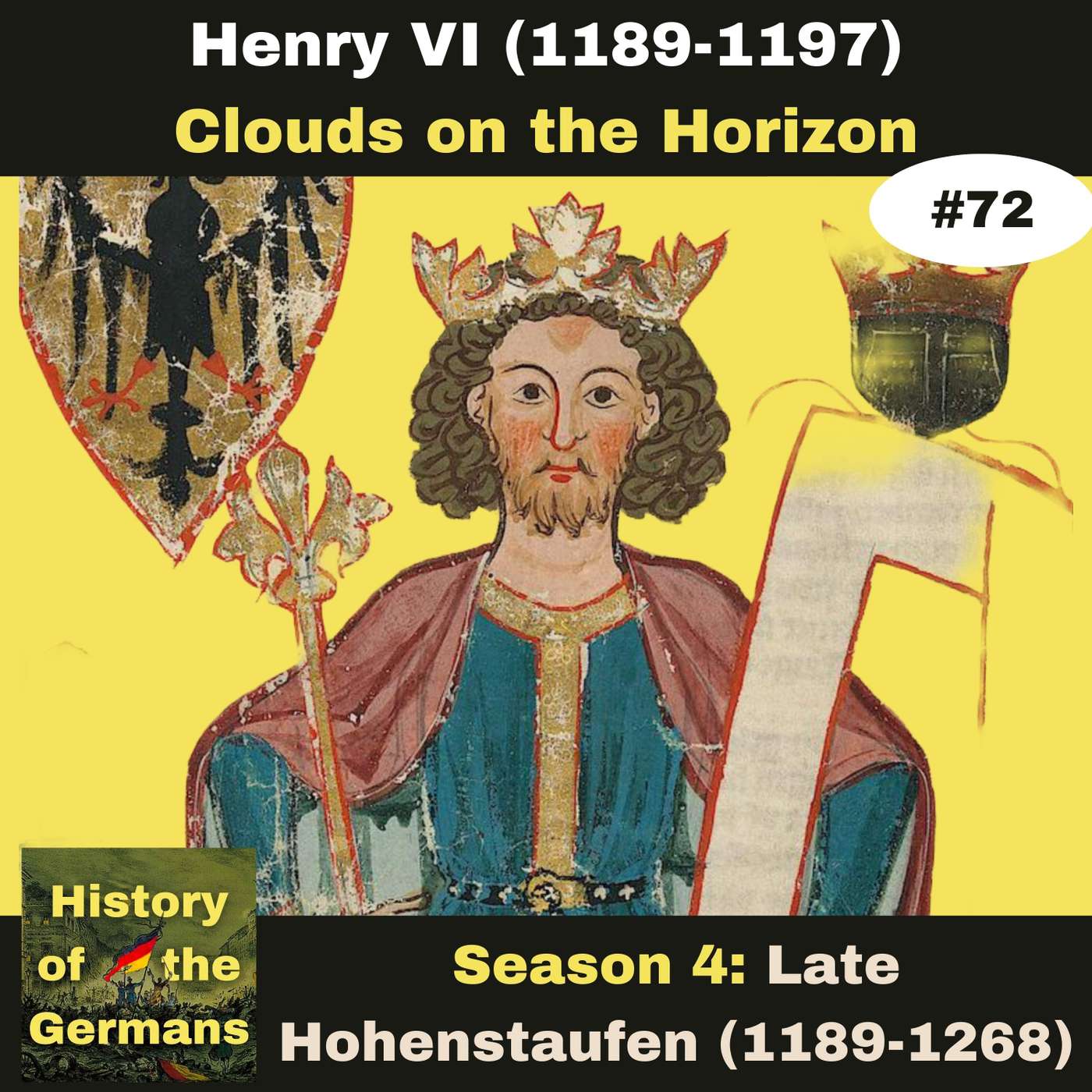
Ep. 72: Henry VI (1189-1197) - Conquest of Sicily - Clouds on the Horizon
This week we will watch Henry VI’s attempts to make the papacy comfortable with the fact that their neighbour to the south is now the same as their neighbour to the North. Pope Celestin may see it as encirclement by a family whose track record as sons of mother church had been to say it politely, a bit patchy. But Henry VI thinks there is a way to make this work.Let’s see…As always, this
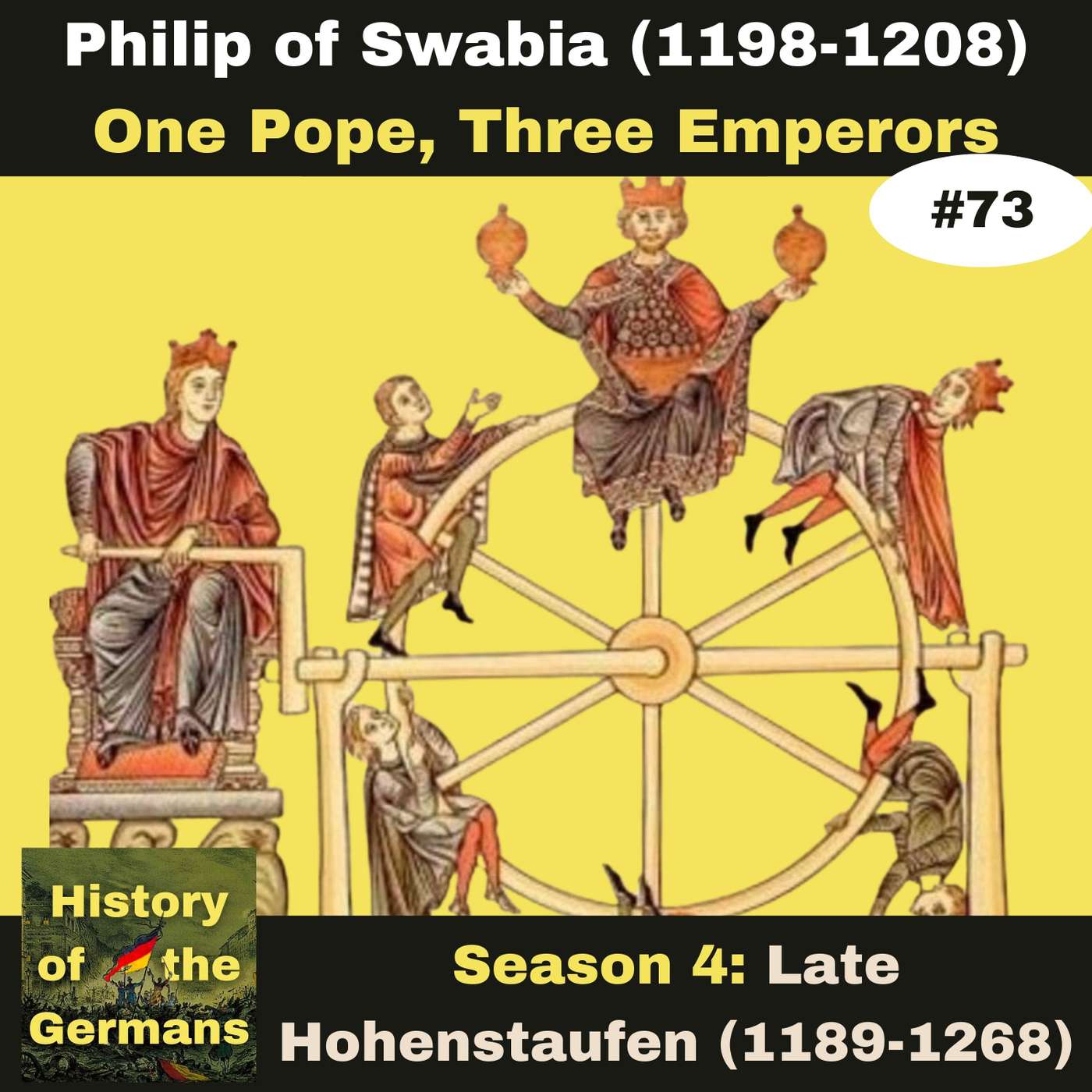
Ep. 73: Philipp of Swabia (1198-1208) - One Pope, Three Emperors
This week we will see the reverse of 1046 when there was one emperor choosing between three popes. Today, we have one Pope, given the choice between three emperors. How could that happen? Last time we looked we had Henry VI. at the peak of his reign, being king of Sicily, having pushed through the inheritability of the imperial title and de-facto encircled the pope militarily. But now, ju
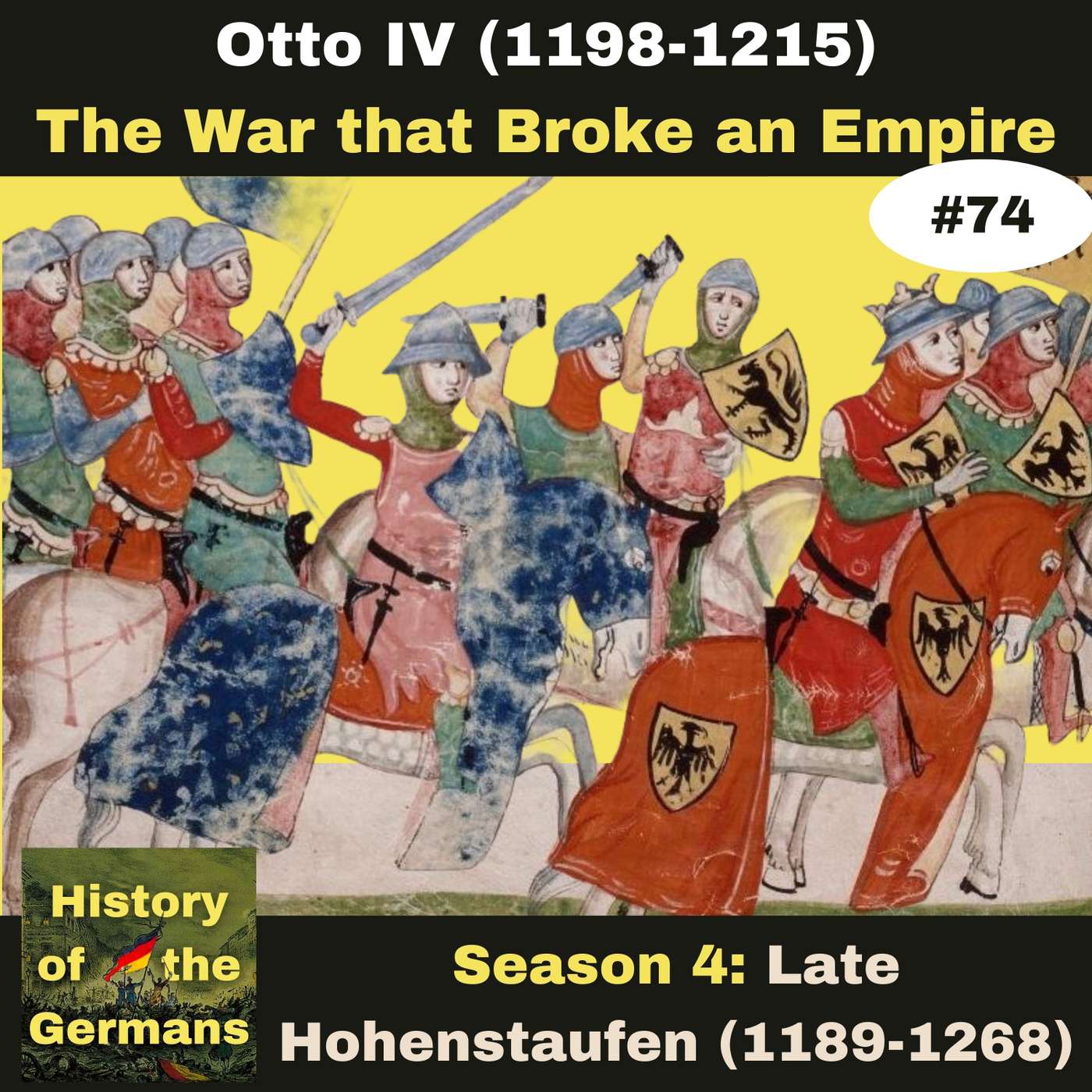
Ep. 74: Otto IV (1198-1215) - The War that Broke the Empire
The kingdom is in turmoil. Two pretenders fight for supremacy. On the one side, Philipp of Swabia, son of the emperor Barbarossa, brother of Emperor Henry VI. and head of the House of Hohenstaufen. In the opposite corner stands Otto IV., son of Henry the Lion, protégé of king Richard the Lionheart and preferred candidate of pope Innocent III. protagonists are the imperial princes who play
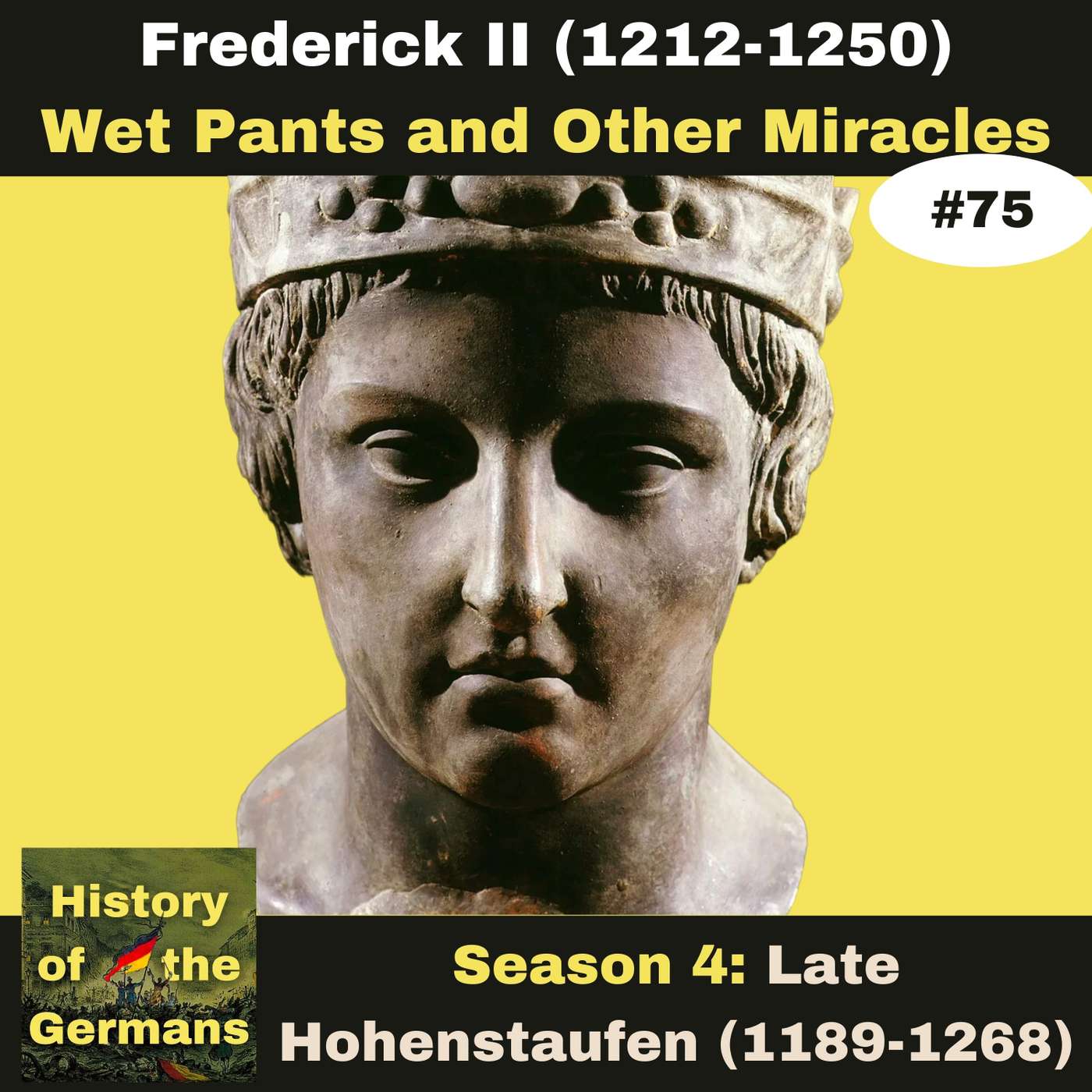
Ep. 75: Frederick II (1196-1250) - Becoming Emperor - Wet Pants and other Miracles
Otto IV, scion of one of the oldest and most aristocratic families in the world had achieved what so many of his ancestors have craved, ruling the empire. This week we will follow him to his coronation and the sequence of errors that will leave him back home in Brunswick, alone and forgotten. At the same time his nemesis, the child of Pulle, the impoverished 15-year-old king of Sicily and
Empfohlen

Hörsaal - Deutschlandfunk Nova
Interpretationssache - Der Musikpodcast
Augstein & Blome

KI-Briefing Daily - Tägliche KI-News in 5 Minuten
Was tun, Herr General? - Der Podcast zum Ukraine-Krieg

DeutschFluss - German Podcast For Beginners

WDR 2 Einfach Fußball

WDR 5 Das philosophische Radio

Deutschlandfunk aktuell

Langsam Gesprochene Nachrichten | Audios | DW Deutsch lernen

1001 Nacht

Learn German with Thomas
